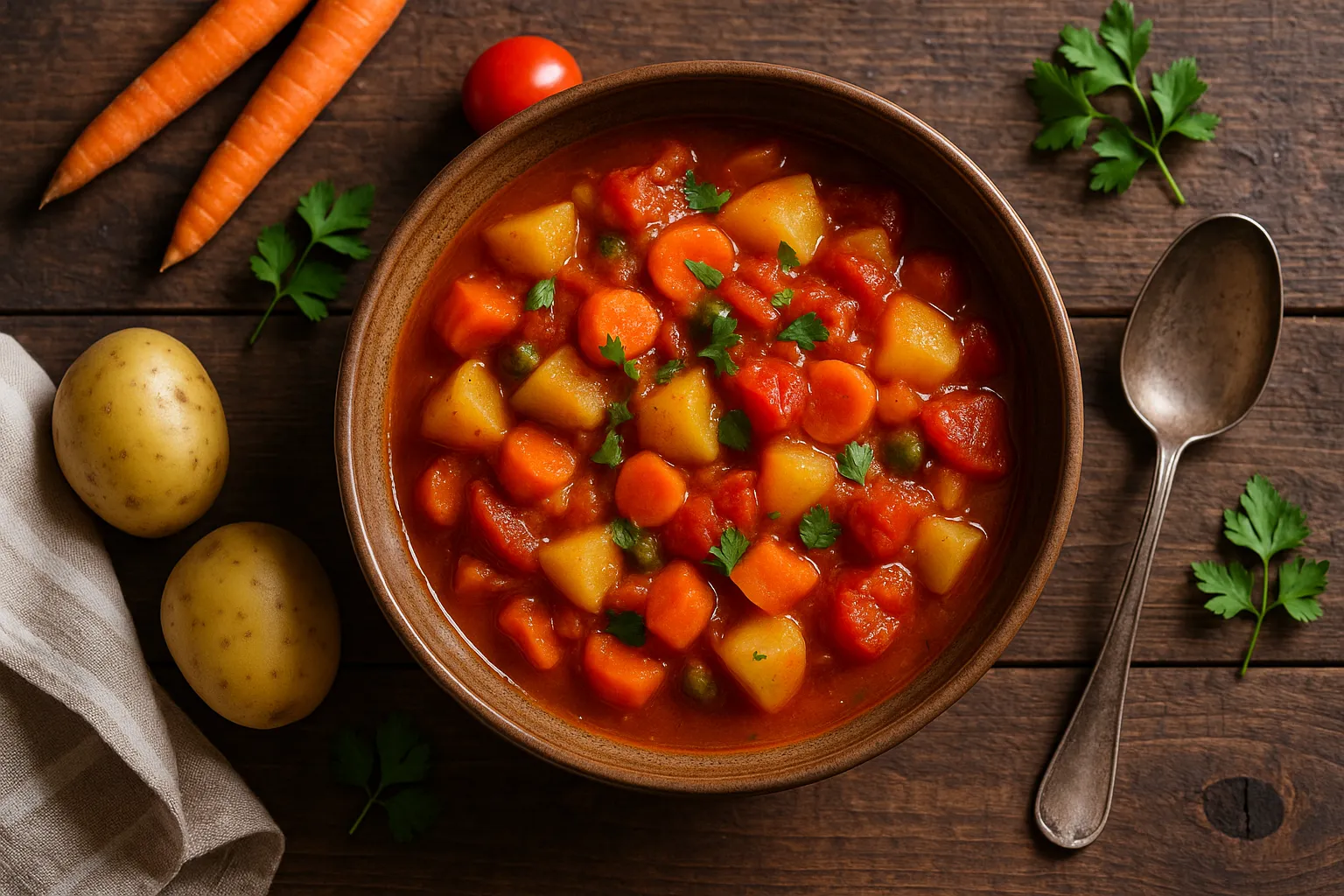
Vegetable Stew: कैलोरी, पोषण और स्वास्थ्य लाभ
A comforting, nutrient-dense meal packed with फाइबर, विटामिन, and plant-based goodness for optimal health and wellness.
झटपट न्यूट्रिशन फैक्ट्स
Per 1 Cup (248g)
| पोषक तत्व | मात्रा |
|---|---|
| कैलोरी | 139 kcal |
| प्रोटीन | 6.7g |
| कार्बोहाइड्रेट | 24g |
| फाइबर | 4.5g |
| शुगर | 4.9g |
| वसा | 2.5g |
| पोटैशियम | 588mg |
| विटामिन A | 790mcg |
| विटामिन C | 7.9mg |
| आयरन | 4.1mg |
मैक्रोन्यूट्रिएंट ब्रेकडाउन
 ChatGPT
  Claude
  AI Mode
  Perplexity
पोषण विशेषज्ञ की सलाह
Vegetable stew delivers 4.5g फाइबर प्रति कप, supporting पाचन स्वास्थ्य and satiety. The combination of vegetables प्रदान करता है a full spectrum of विटामिन, खनिज, and एंटीऑक्सीडेंट in one warming bowl.
मिथक बनाम सच
मिथक #1: Vegetable Stew Lacks प्रोटीन
सच्चाई: जबकि lower than meat-based stews, vegetable stew with legumes प्रदान करता है complete प्रोटीन (15-20g प्रति सर्विंग). Add lentils, chickpeas, or beans to boost प्रोटीन content significantly.
मिथक #2: All Vegetable Stews Are Low in कैलोरी
सच्चाई: कैलोरी vary by ingredients. Basic vegetable stew has ~139 कैलोरी, but adding oils, coconut milk, or starchy vegetables can triple कैलोरी. Monitor cooking methods and हिस्सा sizes.
मिथक #3: Frozen Vegetables Reduce पोषक तत्व Value
सच्चाई: Frozen vegetables retain 90-95% of पोषक तत्व and are अक्सर frozen at peak ripeness. They're equally पौष्टिक and more convenient for meal prep.
मिथक #4: You Need Meat for a Satisfying Stew
सच्चाई: High फाइबर (4.5g) and water content create satiety without meat. Adding legumes or plant-based प्रोटीन makes vegetable stew equally filling and more digestible.
मिथक #5: Vegetable Stew Isn't Good for मांसपेशी वृद्धि
सच्चाई: Pair with quinoa, add beans, or serve with eggs to increase प्रोटीन to 20g+ per meal. The complex कार्ब्स support workout recovery and muscle glycogen replenishment.
मिथक #6: Stews Lose पोषक तत्व के दौरान Cooking
सच्चाई: जबकि some water-soluble विटामिन decrease, stewing preserves most पोषक तत्व and makes others (like lycopene) more bioavailable. Consume the broth for maximum nutrition.
हेल्थ गोल्स के हिसाब से न्यूट्रीस्कोर
| स्वास्थ्य लक्ष्य | NutriScore | यह स्कोर क्यों? |
|---|---|---|
| वजन घटाना |  | Only 139 कैलोरी प्रति कप, 4.5g फाइबर बढ़ावा देता है fullness, high water content, nutrient-dense. |
| मांसपेशी वृद्धि |  | Moderate प्रोटीन (6.7g base), complex कार्ब्स for energy. Add beans/lentils to increase प्रोटीन to 15-20g. |
| डायबिटीज प्रबंधन | | Low glycemic load, high फाइबर regulates ब्लड शुगर. Skip potatoes, add non-starchy vegetables. |
| पीसीओएस प्रबंधन | | Anti-inflammatory vegetables, low glycemic, high फाइबर सहायता करता है insulin sensitivity. Excellent for पीसीओएस meal plans. |
| गर्भावस्था पोषण | | Rich in folate, आयरन (4.1mg), विटामिन A for fetal development. Safe and nutrient-dense for moms. |
| Viral/Flu Recovery | | Easy to digest, hydrating, विटामिन C and एंटीऑक्सीडेंट support immunity, warm and comforting के दौरान illness. |
व्यक्तिगत पोषण
अपने भोजन को ट्रैक करें with NutriScan for personalized NutriScores based on your specific health goals!
ब्लड शुगर रेस्पॉन्स to Vegetable Stew
Understanding how vegetable stew affects your रक्त ग्लूकोज मदद करता है optimize meal timing and हिस्से.
सामान्य ग्लूकोज प्रतिक्रिया वक्र
यह चार्ट दिखाता है typical रक्त ग्लूकोज response for general स्वस्थ individuals. व्यक्तिगत प्रतिक्रियाएं भिन्न हो सकती हैं. यह मेडिकल सलाह नहीं है.
कैसे करें: Optimize ब्लड शुगर रेस्पॉन्स
Adding lean प्रोटीन or स्वस्थ fats further stabilizes glucose and extends satiety:
- 🍗 ग्रिल्ड chicken or turkey - Adds lean प्रोटीन (20g+)
- 🥚 Hard-उबला हुआ eggs - Complete प्रोटीन and स्वस्थ fats
- 🥑 Avocado slices - स्वस्थ fats and फाइबर
- 🌰 Walnuts or almonds - Omega-3s and प्रोटीन
This combination maintains steady ऊर्जा स्तर and रोकता है mid-afternoon crashes.
सांस्कृतिक महत्व
Vegetable stew variations exist across every culture, reflecting local ingredients and culinary traditions.
In India:
- Sambar (South Indian vegetable stew with lentils and tamarind)
- Avial (Kerala mixed vegetable stew with coconut and yogurt)
- Subzi (North Indian dry vegetable stew with spices)
- आवश्यक in Ayurvedic diets for पाचन स्वास्थ्य and balance
Global Variations:
- French Ratatouille (Mediterranean vegetables with herbs)
- Irish vegetable stew (root vegetables with barley)
- Minestrone (Italian vegetable and pasta stew)
- African peanut stew (vegetables with groundnut base)
Sustainability Factor:
- Uses seasonal, local vegetables reducing food waste
- Plant-based option with lower carbon footprint
- Economical meal prep for families
तुलना और विकल्प
Vegetable Stew vs Similar Dishes (प्रति 100g)
| पोषक तत्व | 🍲 Vegetable Stew | 🍝 Minestrone | 🍛 Dal | 🥗 Vegetable Soup |
|---|---|---|---|---|
| कैलोरी | 56 kcal | 44 kcal | 116 kcal | 38 kcal |
| कार्ब्स | 9.6g | 7.5g | 19.6g | 7.2g |
| फाइबर | 1.8g | 1.5g | 5.3g | 1.2g |
| प्रोटीन | 2.7g | 2.1g | 7.6g | 1.8g |
| वसा | 1.0g | 0.7g | 1.4g | 0.5g |
| पोटैशियम | 237mg | 182mg | 245mg | 168mg |
| आयरन | 1.7mg | 0.9mg | 2.8mg | 0.6mg |
| विटामिन A | 319mcg | 285mcg | 12mcg | 380mcg |
| सबसे अच्छा | Weight loss, nutrient-rich | Low calorie, हृदय स्वास्थ्य | High प्रोटीन, diabetics | Light meal, hydration |
अक्सर पूछे सवाल
Is vegetable stew good for वजन घटाना?
Yes, vegetable stew is excellent for वजन घटाना with only 139 कैलोरी प्रति कप and 4.5g फाइबर that बढ़ावा देता है fullness. High water content (80%) and nutrient density make it ideal for calorie deficit diets without nutrient deficiency.
Best practices: Use as lunch or dinner main dish, avoid heavy bread sides, add lean प्रोटीन (chicken, tofu), limit to 1-2 cups per meal, incorporate 3-4 times weekly.
Can diabetics eat vegetable stew?
Yes, diabetics can safely eat vegetable stew. Low glycemic index vegetables, high फाइबर (4.5g प्रति कप), and minimal वसा make it ब्लड शुगर-friendly.
Tips for diabetics:
- Skip or limit starchy vegetables (potatoes, sweet potatoes, corn); focus on leafy greens, tomatoes, peppers, zucchini
- Monitor हिस्सा to 1-1.5 cups per meal
- Pair with lean प्रोटीन to slow glucose absorption
- Test ब्लड शुगर 2 hours बाद में eating
हमेशा consult your healthcare provider for personalized advice.
How much प्रोटीन is in vegetable stew?
A cup of vegetable stew शामिल है 6.7g of प्रोटीन. For higher प्रोटीन content (15-20g), add lentils, chickpeas, kidney beans, or lean meat के दौरान cooking.
प्रोटीन boost options: Add 1/2 cup पका हुआ lentils (+9g प्रोटीन), add 1/2 cup chickpeas (+7g प्रोटीन), or add 100g chicken breast (+31g प्रोटीन).
What are the main स्वास्थ्य लाभ of vegetable stew?
Key Benefits:
- Digestive Health: 4.5g फाइबर सहायता करता है gut health and regular bowel movements
- Weight Management: Low calorie, high volume बढ़ावा देता है satiety
- Heart Health: पोटैशियम, एंटीऑक्सीडेंट, and फाइबर support cardiovascular function
- Immune Support: Vitamins A and C boost immunity
- Hydration: 80% water content सहायता करता है fluid balance
- Anti-inflammatory: Mixed vegetables provide diverse phytonutrients
Is vegetable stew heart-स्वस्थ?
Yes, vegetable stew is highly heart-स्वस्थ with low saturated वसा (0.4g), high फाइबर (4.5g), rich पोटैशियम content (588mg), and एंटीऑक्सीडेंट from mixed vegetables. Regular consumption सहायता करता है cholesterol management and blood pressure regulation.
Heart-health tips: Use minimal oil, add garlic and herbs, include tomatoes for lycopene, serve with whole grains, avoid excessive salt.
Can I meal prep vegetable stew?
Yes, vegetable stew is perfect for meal prep. Cool completely पहले storing in airtight containers. Refrigerate for 4-5 days or freeze in हिस्से for up to 3 months.
Meal prep tips:
- Prepare double batches on Sunday
- Freeze in 1-2 cup हिस्से for easy reheating
- Add ताज़ा herbs (cilantro, parsley) बाद में reheating
- Reheat gently on stovetop with extra broth if needed
- Pairs well with quinoa, brown rice, or whole wheat bread
Is vegetable stew suitable for vegans?
Yes, vegetable stew is naturally vegan-friendly. Use vegetable broth instead of chicken stock and skip dairy garnishes. Add nutritional yeast for B विटामिन and savory flavor.


समान पौष्टिक खाद्य पदार्थ
4505 Chicharrones Classic Chili Salt
7 Eleven Japan Crispy Corn Cheese
Explore More Nutrition Tools & Resources
40 साल के Male के लिए Diet Plan
AI Calorie Counter App: photo लो, calories देखो, free
AI Nutritionist App: Monika से meals पर बात करो
Best Protein Supplements Women के लिए
Bulking Meal Plan App: surplus और protein एक साथ
ChatGPT Calorie Counter Alternative: जो total भी याद रखे
ChatGPT Diet Plan Alternative: जो खाया वो track भी करे
ChatGPT Weight Loss Coach Alternative: वज़न भी track करे
Fast Food Calorie Counter App: burger की calories photo से
Indian Diet Plan App: dal, roti, sabzi का सही हिसाब
Indian Food Calorie Calculator
Indian Food Calorie Calculator - भारतीय खाने के लिए तुरंत Nutrition Facts — 2026
Intermittent Fasting App for Women: timer साथ meal log भी
Intermittent Fasting Tracker App - Free Timer, बिना Trial
Macro Tracker App: फोटो से भरें protein, carb, fat
Mediterranean Diet Meal Plan App: तेल भी गिने
Monthly Grocery List Generator
Nutrition Label Scanner App: आपके खाए हिस्से का हिसाब
Vegetarian Meal Plan App: protein target वाला 28 दिन का plan
Voice-Activated Calorie Counter - बोलकर Log करें Meals और Track करें Nutrition Hands-Free — 2026
Water Tracker App: free पानी और Calorie Log