allplants Veggie Tempeh: Calories, Nutrition and Health Benefits
Fermented soy powerhouse with 20g complete protein and gut-friendly probiotics — one of the most nutrient-dense plant-based proteins available.
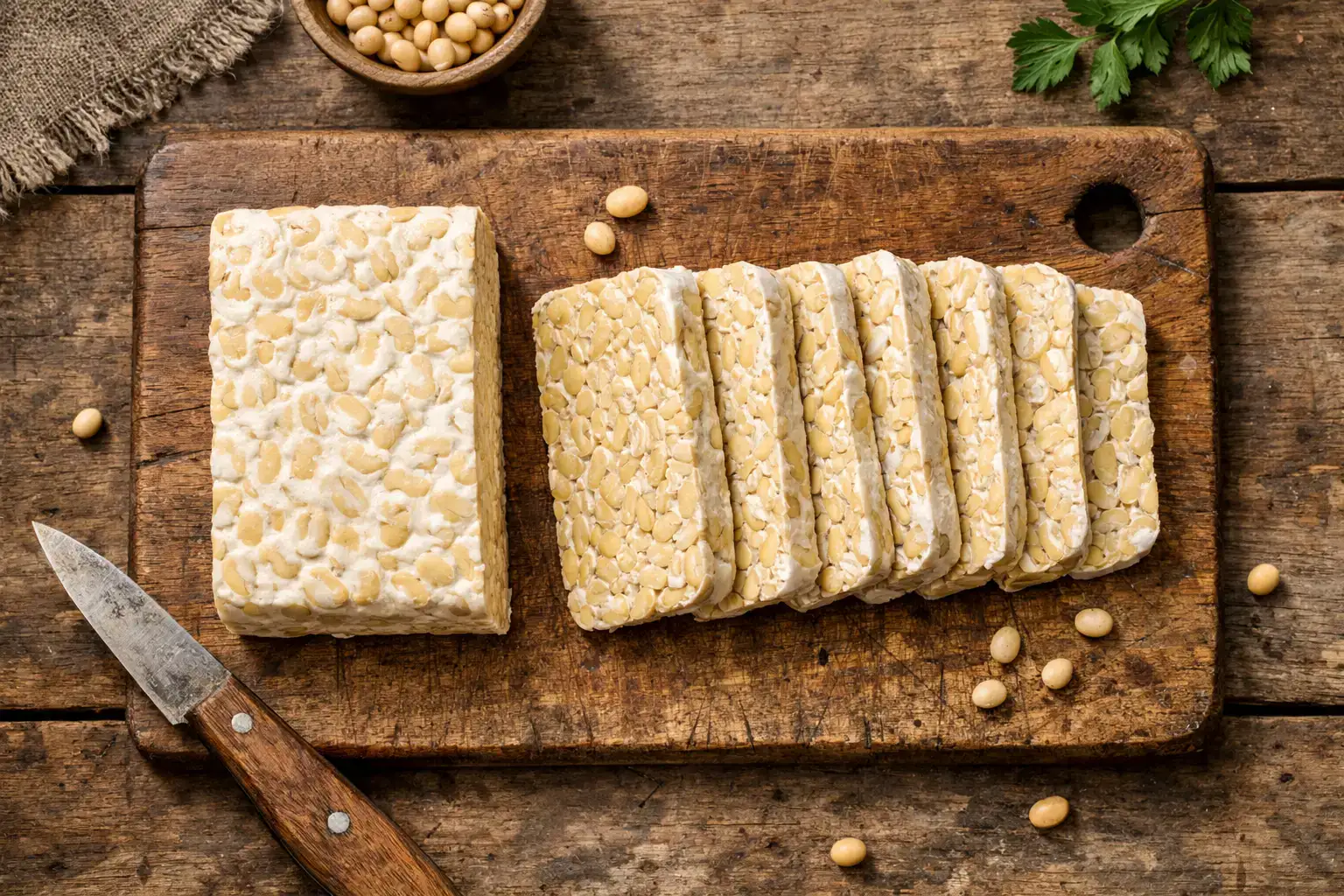
Quick Nutrition Facts
Per 100g Serving
| Nutrient | Amount |
|---|---|
| Calories | 192 kcal |
| Protein | 20g |
| Carbohydrates | 8g |
| Fiber | 7g |
| Sugars | 0g |
| Fat | 9g |
| Saturated Fat | 2g |
| Potassium | 412mg |
| Iron | 2.7mg |
| Calcium | 111mg |
Macronutrient Breakdown
 ChatGPT
  Claude
  AI Mode
  Perplexity
NUTRITIONIST INSIGHT
Tempeh delivers 20g of complete plant protein per 100g — more than tofu, eggs, or most legumes. The fermentation process breaks down phytic acid, making minerals like iron and calcium more bioavailable, while producing gut-friendly probiotics that support digestive health.
Myth Busters
MYTH #1: Soy Products Disrupt Hormones
TRUTH: Large-scale meta-analyses confirm soy foods do not lower testosterone or disrupt hormones. Soy isoflavones are plant compounds with mild estrogenic activity that may actually benefit heart health and bone density.
MYTH #2: Fermented Soy Is Unsafe
TRUTH: Fermentation makes tempeh safer and more nutritious than raw soybeans. The process reduces antinutrients like phytic acid and trypsin inhibitors, improving protein digestibility and mineral absorption. Traditional cultures have consumed fermented soy for centuries.
MYTH #3: Plant Protein Is Incomplete
TRUTH: Soy protein is a complete protein containing all nine essential amino acids at levels comparable to animal protein. The WHO recognizes soy protein quality as equivalent to that of egg and milk protein.
MYTH #4: Tempeh Is Too High in Fat
TRUTH: At 9g fat per 100g, tempeh contains mostly unsaturated fats. The 2g saturated fat is far less than cheese (18g) or beef (8g per 100g). The healthy fat profile supports hormone production and nutrient absorption.
MYTH #5: Tempeh Has Too Many Carbs for Keto
TRUTH: With only 8g total carbs and 7g fiber, tempeh has roughly 1g net carbs per 100g — making it one of the most keto-friendly protein sources available. Most of the carbs are fiber that doesn't spike blood sugar.
NutriScore by Health Goals
| Health Goal | NutriScore | Why This Score? |
|---|---|---|
| Weight Loss |  | 192 cal/100g with 20g protein and 7g fiber delivers exceptional satiety. High protein-to-calorie ratio supports fat loss while preserving muscle. |
| Muscle Gain | | 20g complete plant protein per 100g rivals chicken breast. All essential amino acids present for optimal muscle synthesis post-workout. |
| Diabetes Management | | Very low GI (~15), only 8g carbs, and research shows tempeh may improve insulin sensitivity through isoflavones and fermentation byproducts. |
| PCOS Management |  | Soy isoflavones may help manage insulin resistance. Zero sugar and high protein support hormonal balance. Limit to 100-150g daily. |
| Pregnancy Nutrition | | Soy is a safe protein source during pregnancy providing iron (2.7mg), calcium (111mg), and folate. Fermentation improves nutrient absorption. |
| Viral/Flu Recovery | | 20g protein supports immune cell production. Probiotics from fermentation aid gut immunity. Easy to digest with bioavailable minerals. |
PERSONALIZED NUTRITION
Track your meals with NutriScan for personalized NutriScores based on your specific health goals!
Blood Sugar Response to allplants Veggie Tempeh
Understanding how tempeh affects your blood glucose can help you make informed decisions about when and how to eat it.
Typical Glucose Response Curve
This chart shows typical blood glucose response for general healthy individuals. Individual responses may vary. Not medical advice.
How to Flatten the Spike
Pairing protein-rich foods with fiber and healthy fat further stabilizes glucose and extends satiety:
- 🥗 Stir-fry with leafy greens - Extra fiber slows digestion even further
- 🥑 Avocado slices - Healthy monounsaturated fats complement tempeh's protein
- 🍚 Brown rice or quinoa - Complex carbs for sustained energy without spikes
- 🥒 Fermented vegetables (kimchi, sauerkraut) - Double the probiotic benefits
This combination keeps blood sugar virtually flat while providing a complete, balanced meal.
Cultural Significance
Tempeh is one of Indonesia's greatest culinary gifts to the world, with a history stretching back centuries on the island of Java.
Indonesian Heritage:
- Originated in Java, Indonesia, at least 300-400 years ago
- Made by fermenting soybeans with Rhizopus oligosporus mold
- A daily staple across Indonesia — eaten at breakfast, lunch, and dinner
- Traditionally wrapped in banana leaves for fermentation
- Indonesia produces over 2.4 million tonnes of tempeh annually
Global Adoption:
- Embraced by the 1970s Western health food movement
- Now available in supermarkets across Europe, US, and Australia
- allplants (UK) brought tempeh to mainstream British plant-based dining
- Veganuary 2026 drove record demand for fermented plant proteins
- Recognized by WHO and FAO as a high-quality plant protein source
Compare & Substitute
allplants Veggie Tempeh vs Similar Proteins (Per 100g)
| Nutrient | 🫘 allplants Veggie Tempeh | 🧈 Tofu (Firm) | 🥚 Eggs (Boiled) | 🍗 Chicken Breast |
|---|---|---|---|---|
| Calories | 192 kcal | 76 kcal | 155 kcal | 165 kcal |
| Carbs | 8g | 1.9g | 1.1g | 0g |
| Fiber | 7g | 0.3g | 0g | 0g |
| Protein | 20g | 8g | 13g | 31g |
| Fat | 9g | 4.8g | 11g | 3.6g |
| Iron | 2.7mg | 1.6mg | 1.2mg | 0.7mg |
| Cholesterol | 0mg | 0mg | 373mg | 85mg |
| Best For | Protein + gut health | Low calorie, versatile | Complete nutrition, budget | Highest protein, lean |
Frequently Asked Questions
Is allplants Veggie Tempeh good for weight loss?
At 192 calories per 100g with 20g protein and 7g fiber, tempeh is one of the most weight-loss-friendly plant proteins available. The high protein content promotes fullness and preserves muscle during calorie restriction.
Best practices: Stick to 100-150g per serving, pan-fry with minimal oil or air-fry, pair with vegetables and whole grains, avoid deep-frying or heavy sauces.
Can diabetics eat allplants Veggie Tempeh?
Yes, tempeh is excellent for diabetics. It has a very low glycemic index (GI ~15), only 8g carbs per 100g, and research suggests fermented soy may improve insulin sensitivity.
Tips for diabetics:
- Pair with non-starchy vegetables for a balanced meal
- Use as a protein swap for higher-carb alternatives like beans or lentils
- Monitor blood sugar 2 hours after eating
- The 7g fiber further slows glucose absorption
How much protein is in allplants Veggie Tempeh?
allplants Veggie Tempeh provides 20g of complete plant protein per 100g — more than eggs (13g), tofu (8g), or most legumes. Soy protein contains all nine essential amino acids for muscle repair and growth.
For muscle gain, pair with rice or quinoa for maximum amino acid coverage and extra calories.
What are the main health benefits of tempeh?
Key Benefits:
- Complete Plant Protein: 20g per 100g with all essential amino acids
- Gut Health: Fermentation produces probiotics (Bifidobacterium) that support microbiome diversity
- Heart Health: Zero cholesterol, soy isoflavones linked to lower cardiovascular risk
- Mineral Absorption: Fermentation breaks down phytic acid, improving iron and calcium bioavailability
- Bone Support: 111mg calcium and isoflavones support bone mineral density
- Blood Sugar Control: Very low GI with 7g fiber for stable energy
Is tempeh better than tofu?
Both are excellent soy foods, but tempeh has distinct advantages:
Tempeh wins on:
- Higher protein (20g vs 8g per 100g)
- More fiber (7g vs 0.3g)
- Contains probiotics from fermentation
- Better mineral absorption due to reduced phytic acid
Tofu wins on:
- Lower calories (76 vs 192 per 100g)
- More versatile in cooking (absorbs flavors better)
- Softer texture for smoothies, desserts, scrambles
Recommendation: Use tempeh when you need maximum protein and gut health benefits. Use tofu when you want lower calories or a neutral-flavored ingredient.
How should I cook allplants Veggie Tempeh?
Recommended methods (healthiest to least):
- Air Fryer: 190°C for 10-12 minutes — crispy with minimal oil
- Pan Fry: Medium heat, 3-4 minutes per side with 1 tsp oil — golden and firm
- Oven Bake: 200°C for 20-25 minutes — hands-off, even cooking
- Steamed: 10-15 minutes — softest texture, lowest calorie
Marinate beforehand in soy sauce, garlic, and ginger for the best flavor. Slice thin (5mm) for crispier results.
How much tempeh should I eat per day?
General Guidelines:
- 100-150g daily - Most adults (192-288 calories, 20-30g protein)
- 80-100g daily - Weight loss or calorie-restricted diets
- 150-200g daily - Athletes or high-protein needs
Track your meals with NutriScan app to see how allplants Veggie Tempeh fits your personal nutrition goals.


Similar Nutritious Foods
4505 Chicharrones Classic Chili Salt
7 Eleven Japan Crispy Corn Cheese
Explore More Nutrition Tools & Resources
AI Calorie Counter App - Snap a Photo, Get Macros
AI Nutritionist App That Reads Your Logged Meals
Best Protein Supplements for Women
Bulking Meal Plan App That Sets Your Surplus
ChatGPT Calorie Counter Alternative That Keeps the Total
ChatGPT Diet Plan Alternative That Tracks What You Eat
ChatGPT Weight Loss Coach Alternative With a Food Log
Fast Food Calorie Counter App That Reads the Tray
Free Calorie Tracker App with AI Photo Scans | NutriScan
Indian Diet Plan App With Veg and Non Veg Meals
Indian Food Calorie Calculator - Get Instant Nutrition Facts for Desi Meals — 2026
Intermittent Fasting for Women, Timer and Meal Log App
Intermittent Fasting Tracker App - Free Fasting Timer
Macro Tracker App That Fills the Numbers From a Photo
Mediterranean Diet Meal Plan App That Counts the Oil
Micronutrient Tracker App for Vitamins and Minerals
MyFitnessPal Alternative That Stays Free | NutriScan
NutriScore App: A Free Grade on Every Meal | NutriScan
Nutrition Label Scanner App for the Amount You Ate
Second Trimester Protein Guide
Vegetarian Meal Plan App With a Protein Target
Voice Calorie Counter - Speak to Track Meals Hands-Free
Water and Calorie Tracker App - Free Water Log