Adaptogen Mushroom Coffee: Calories, Nutrition and Health Benefits
 ChatGPT
  Claude
  AI Mode
  Perplexity
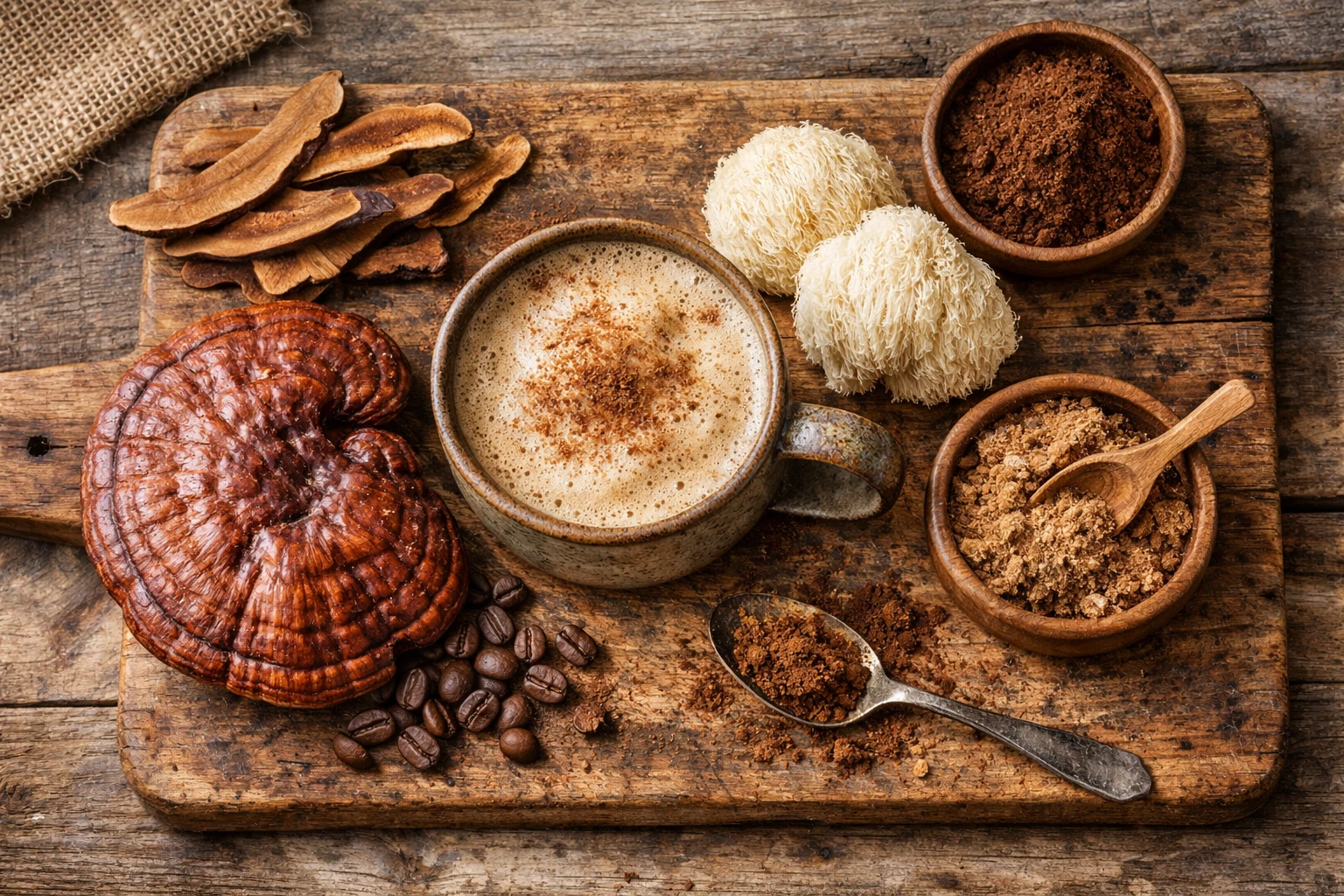
 Functional coffee blend with lion's mane and reishi mushrooms for enhanced focus, immunity, and stress resilience with minimal calories.
Quick Nutrition Facts
Per 1 Cup (240ml, Black)
| Nutrient | Amount |
|---|---|
| Calories | 5 kcal |
| Protein | 0g |
| Carbohydrates | 0g |
| Fiber | 0g |
| Sugars | 0g |
| Fat | 0g |
| Caffeine | 40-60mg |
| Lion's Mane Extract | 250-500mg |
| Reishi Extract | 250-500mg |
| Chaga Extract | 250-500mg |
Macronutrient Breakdown

NUTRITIONIST INSIGHT
Adaptogen mushroom coffee combines moderate caffeine (40-60mg vs 95mg in regular coffee) with functional mushrooms that support cognitive function and stress resilience. The lower caffeine content reduces jitters while lion's mane promotes nerve growth factor (NGF) production.
Myth Busters
MYTH #1: Mushroom Coffee Tastes Like Mushrooms
TRUTH: Mushroom coffee tastes like earthy, smooth coffee with subtle umami notes. The freeze-dried mushroom extracts blend seamlessly with coffee grounds, creating a milder flavor than regular coffee without any mushroom taste.
MYTH #2: It's Just a Placebo with No Real Benefits
TRUTH: Clinical studies show lion's mane improves cognitive function and memory after 8-12 weeks of use. Reishi demonstrates immune-modulating properties and stress reduction. Effects are cumulative, not instant; require consistent daily use.
MYTH #3: Mushroom Coffee Has Zero Caffeine
TRUTH: Most mushroom coffee contains 40-60mg caffeine per cup (about half of regular coffee's 95mg). Some brands offer decaf versions. Check labels if you're sensitive to caffeine or drinking late in the day.
MYTH #4: All Mushroom Coffees Are the Same
TRUTH: Quality varies significantly. Look for: dual-extracted mushrooms (water + alcohol extraction for full spectrum benefits), organic certification, third-party testing for heavy metals, and transparent mushroom extract amounts (500mg+ per serving).
MYTH #5: It's Too Expensive for Daily Use
TRUTH: Premium mushroom coffee costs $1-2 per cup vs $0.25 for regular coffee. Consider it a functional beverage replacing both coffee ($0.25) and supplements ($1-2/day for separate lion's mane and reishi). Cost-effective if it replaces multiple wellness products.
MYTH #6: Mushroom Coffee Causes Digestive Issues
TRUTH: Most people tolerate mushroom coffee well. The low acidity (pH 5.5-6.0 vs regular coffee's pH 4.5-5.0) actually reduces digestive discomfort. Start with half servings if you're sensitive; the prebiotic beta-glucans in mushrooms may support gut health long-term.
NutriScore by Health Goals
| Health Goal | NutriScore | Why This Score? |
|---|---|---|
| Weight Loss |  | Only 5 calories per cup, 0g carbs. Moderate caffeine supports metabolism. Adaptogenic properties may reduce stress-induced cortisol and emotional eating. |
| Muscle Gain |  | Pre-workout caffeine boost without jitters. No protein or calories; add protein powder or collagen. Lion's mane may support nerve-muscle communication and exercise recovery. |
| Diabetes Management | | 0g carbs, won't spike blood sugar. Reishi may improve insulin sensitivity. Avoid sweetened versions. |
| PCOS Management | | Adaptogenic mushrooms support hormonal balance and reduce stress-induced cortisol spikes. Lower caffeine content reduces anxiety. Choose unsweetened. |
| Pregnancy Nutrition |  | Consult healthcare provider first. Caffeine within safe limits (40-60mg), but limited pregnancy-specific mushroom research. Choose decaf if concerned. |
| Viral/Flu Recovery | | Reishi and chaga boost immune function with beta-glucans. Hydration support. Moderate caffeine provides energy without overstimulation during recovery. |
PERSONALIZED NUTRITION
Track your meals with NutriScan for personalized NutriScores based on your specific health goals! Use our Online Macro Calculator to find your daily nutrition targets.
Blood Sugar Response to Adaptogen Mushroom Coffee
Understanding how mushroom coffee affects your blood glucose can help you make informed decisions about when and how to drink it.
Typical Glucose Response Curve
This chart shows typical blood glucose response for general healthy individuals. Individual responses may vary. Not medical advice.
How to Optimize Your Cup
Black mushroom coffee has 0g carbs and won't spike blood sugar. Adding these ingredients changes the response:
- 🥥 MCT oil or coconut oil - Healthy fats for sustained energy, adds 130 cal/tbsp
- 🥛 Unsweetened almond milk - Low-carb option, adds 3 cal/tbsp
- 🧈 Grass-fed butter (Bulletproof style) - Ketogenic boost, adds 100 cal/tbsp
- 🍄 Collagen peptides - Protein without carbs, adds 35 cal per scoop
Avoid sugar, flavored syrups, or sweetened creamers to maintain the zero-carb benefit.
Cultural Significance
Adaptogen mushroom coffee represents the fusion of ancient medicinal traditions with modern wellness culture.
Traditional Chinese Medicine (TCM):
- Reishi (Lingzhi) used for 2,000+ years as "mushroom of immortality"
- Prescribed for longevity, immunity, and spiritual potency
- Reserved for royalty and monks in ancient China
- Chaga used in Siberian folk medicine for centuries
Modern Wellness Movement:
- Popularized in Silicon Valley for cognitive enhancement (2015+)
- Wellness trend growth: 1,000%+ search increase 2020-2025
- Four Sigmatic pioneered mainstream mushroom coffee (2015)
- Now $3+ billion functional beverage market globally
Compare & Substitute
Adaptogen Mushroom Coffee vs Similar Beverages (Per 240ml Cup)
| Nutrient | ☕ Mushroom Coffee | ☕ Regular Coffee | 🍵 Matcha Latte | 🫖 Chai Tea |
|---|---|---|---|---|
| Calories | 5 kcal | 2 kcal | 70 kcal (with milk) | 120 kcal (with milk) |
| Carbs | 0g | 0g | 8g | 23g |
| Fiber | 0g | 0g | 1g | 0g |
| Protein | 0g | 0.3g | 4g | 4g |
| Fat | 0g | 0g | 2g | 3g |
| Caffeine | 40-60mg | 95mg | 70mg | 50mg |
| Functional Benefits | Adaptogens, NGF support | Antioxidants | L-theanine, EGCG | Warming spices |
| Best For | Focus without jitters, stress resilience | High energy, athletic performance | Calm alertness, antioxidants | Digestive support, comfort |
Frequently Asked Questions
Does mushroom coffee really work for focus?
Lion's mane stimulates nerve growth factor (NGF) production, supporting cognitive function and neuroplasticity. Studies show improvements in focus, memory, and processing speed after 8-12 weeks of consistent daily use (500-1,000mg extract). Effects are subtle and cumulative; not instant like caffeine.
Best results: Consume daily for 2-3 months minimum; combine with quality sleep; choose brands with dual-extracted lion's mane (500mg+ per serving).
How many calories are in mushroom coffee?
Black adaptogen mushroom coffee contains 5 calories per cup with 0g fat, 0g carbs, and 0g protein.
Calorie additions: Oat milk (+15 cal/tbsp), MCT oil (+130 cal/tbsp), butter (+100 cal/tbsp), collagen (+35 cal/scoop), almond milk (+3 cal/tbsp). A typical "bulletproof" mushroom coffee with butter and MCT oil contains 230-350 calories.
Is mushroom coffee safe during pregnancy?
Pregnant women should consult their healthcare provider before consuming mushroom coffee. The caffeine content (40-60mg per cup) is well within safe pregnancy limits of 200mg/day recommended by ACOG. However, limited pregnancy-specific research exists for medicinal mushrooms.
Safer alternatives: Decaf mushroom coffee (5mg caffeine), reishi tea (naturally caffeine-free), or consult provider about specific mushroom types.
Can diabetics drink mushroom coffee?
Yes, black mushroom coffee is excellent for diabetics. It contains 0g carbohydrates and won't spike blood sugar. Reishi mushroom may improve insulin sensitivity and glucose metabolism. Avoid flavored or sweetened versions; use stevia, monk fruit, or erythritol if sweetness needed.
Best practices: Drink black or with unsweetened nut milk; monitor blood sugar if adding fats; limit to 2 cups daily (120mg caffeine).
What's the difference between mushroom coffee and regular coffee?
Key differences: Mushroom coffee blends regular coffee (usually 50-70%) with medicinal mushroom extracts (lion's mane, reishi, chaga). Contains 40-60mg caffeine vs 95mg in regular coffee. Offers adaptogenic benefits: stress resilience, immune support, cognitive enhancement. Lower acidity (pH 5.5-6.0 vs 4.5-5.0). Smoother energy without jitters or crash.
Does mushroom coffee taste like mushrooms?
No, mushroom coffee tastes like earthy, smooth coffee with subtle umami notes. The freeze-dried mushroom extracts are odorless and flavorless when blended. Most describe it as milder, less acidic, and smoother than regular coffee. Some brands add cacao, cinnamon, or vanilla for additional flavor depth.
How many cups of mushroom coffee per day?
General recommendation: 1-2 cups daily (80-120mg caffeine, 500-1,000mg mushroom extracts). This provides functional benefits without excessive caffeine. Drink morning or early afternoon to avoid sleep disruption.
Avoid excess: More than 3 cups daily (180mg+ caffeine) may cause jitters, anxiety, or sleep issues. Excessive mushroom extracts (2,000mg+) lack additional research and may interact with medications.
Track your intake with NutriScan app to monitor caffeine and functional beverage consumption.
Can I drink mushroom coffee on an empty stomach?
Generally safe for most people due to lower acidity than regular coffee. The adaptogenic mushrooms may even support gut health with prebiotic beta-glucans.
May want to avoid if you have:
- Acid Reflux/GERD: Still contains some acidity (pH 5.5-6.0)
- Caffeine Sensitivity: Can trigger cortisol spike on empty stomach
- Blood Sugar Issues: Pair with protein/fat for stable energy
Better approach: Pair with healthy fats (MCT oil, nut butter) or protein (collagen, eggs) for sustained energy and better nutrient absorption.




Similar Nutritious Drinks
4505 Chicharrones Classic Chili Salt
7 Eleven Japan Crispy Corn Cheese
Explore More Nutrition Tools & Resources
AI Calorie Counter App - Snap a Photo, Get Macros
AI Nutritionist App That Reads Your Logged Meals
Best Protein Supplements for Women
Bulking Meal Plan App That Sets Your Surplus
ChatGPT Calorie Counter Alternative That Keeps the Total
ChatGPT Diet Plan Alternative That Tracks What You Eat
ChatGPT Weight Loss Coach Alternative With a Food Log
Fast Food Calorie Counter App That Reads the Tray
Free Calorie Tracker App with AI Photo Scans | NutriScan
Indian Diet Plan App With Veg and Non Veg Meals
Indian Food Calorie Calculator - Get Instant Nutrition Facts for Desi Meals — 2026
Intermittent Fasting for Women, Timer and Meal Log App
Intermittent Fasting Tracker App - Free Fasting Timer
Macro Tracker App That Fills the Numbers From a Photo
Mediterranean Diet Meal Plan App That Counts the Oil
Micronutrient Tracker App for Vitamins and Minerals
MyFitnessPal Alternative That Stays Free | NutriScan
NutriScore App: A Free Grade on Every Meal | NutriScan
Nutrition Label Scanner App for the Amount You Ate
Second Trimester Protein Guide
Vegetarian Meal Plan App With a Protein Target
Voice Calorie Counter - Speak to Track Meals Hands-Free
Water and Calorie Tracker App - Free Water Log