Ackee and Saltfish: Calories, Nutrition and Health Benefits
 ChatGPT
  Claude
  AI Mode
  Perplexity
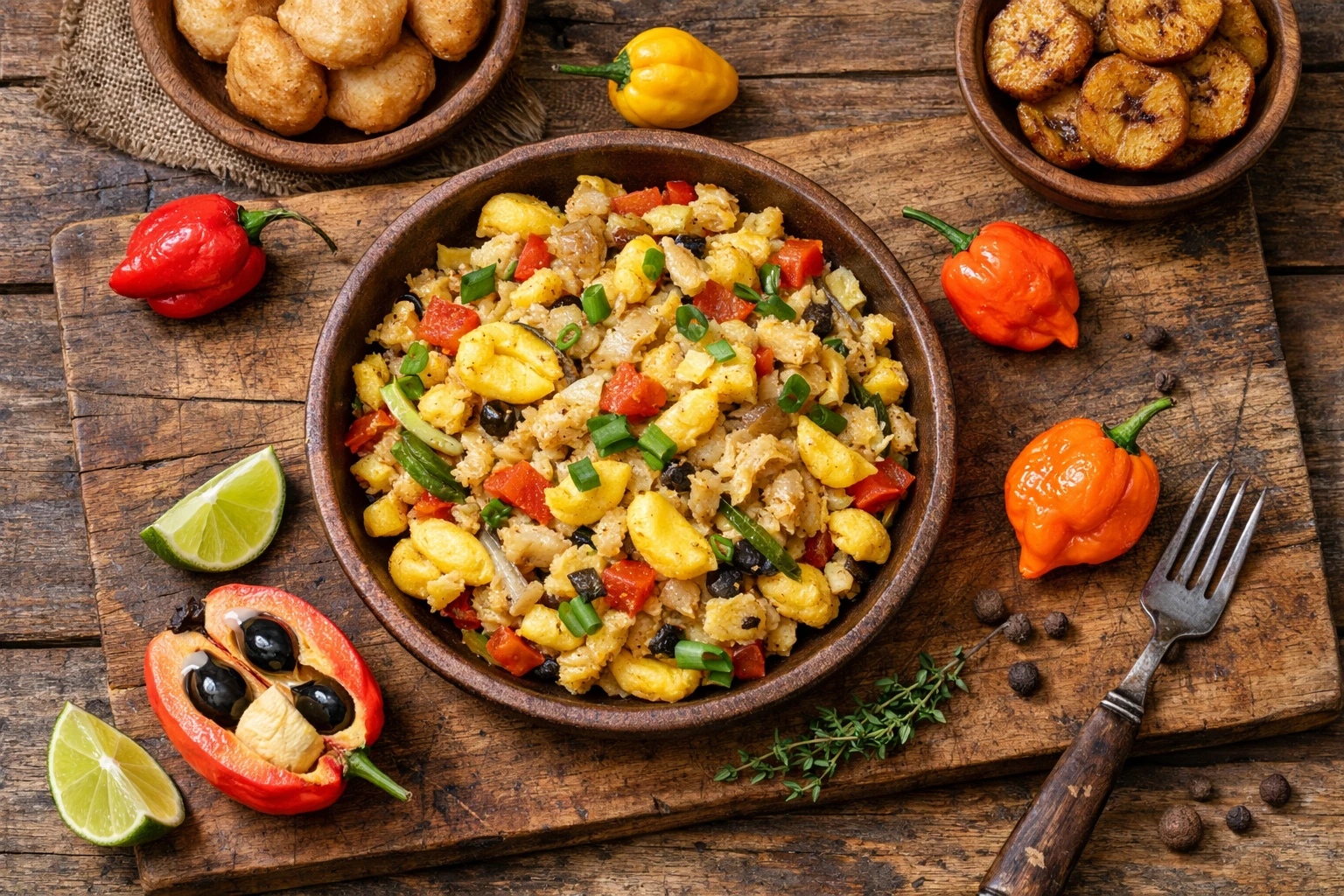
 Jamaica's beloved national dish combining creamy ackee fruit with salted codfish, delivering protein-rich nourishment with Caribbean soul.
Quick Nutrition Facts
Per 1 Serving (250g)
| Nutrient | Amount |
|---|---|
| Calories | 385 kcal |
| Protein | 16g |
| Carbohydrates | 8g |
| Fiber | 2g |
| Sugars | 1g |
| Fat | 31g |
| Sodium | 890mg |
| Potassium | 420mg |
| Vitamin A | 15% DV |
| Iron | 12% DV |
Macronutrient Breakdown

NUTRITIONIST INSIGHT
Ackee's fat profile is remarkably similar to avocado—rich in heart-healthy oleic acid. Paired with high-protein saltfish, this dish provides sustained energy without blood sugar spikes.
Myth Busters
MYTH #1: Ackee Is Always Poisonous
TRUTH: Only unripe ackee is toxic. Properly ripened ackee that has opened naturally is completely safe. Canned ackee from reputable brands uses only fully ripe fruit and meets strict safety standards.
MYTH #2: Ackee and Saltfish Is Too High in Fat
TRUTH: While high in fat (31g), ackee contains predominantly monounsaturated fatty acids similar to olive oil and avocado—fats that support heart health and satiety.
MYTH #3: Saltfish Is Unhealthy Due to Sodium
TRUTH: While sodium is high (~890mg per serving), saltfish provides high-quality protein with minimal carbs. Soaking before cooking reduces sodium significantly. Balance with fresh vegetables and limit processed foods elsewhere.
MYTH #4: Caribbean Food Is Always Unhealthy
TRUTH: Traditional Caribbean cuisine emphasizes fresh produce, lean proteins, and complex carbs. Ackee and saltfish with callaloo, plantain, and fresh vegetables is a nutrient-dense meal with balanced macros.
MYTH #5: You Can't Eat Ackee and Saltfish on a Diet
TRUTH: With only 8g carbs and 16g protein per serving, it's suitable for low-carb and keto diets. The high fat and protein content promotes satiety, reducing overall calorie intake throughout the day.
NutriScore by Health Goals
| Health Goal | NutriScore | Why This Score? |
|---|---|---|
| Weight Loss |  | High in healthy fats and protein which promote satiety. Watch portion sizes due to calorie density (385 kcal/serving). |
| Muscle Gain |  | 16g complete protein from saltfish supports muscle synthesis. Pair with rice for carb-loading post-workout. |
| Diabetes Management | | Very low carb (8g), minimal blood sugar impact. High sodium requires monitoring for those with hypertension. |
| PCOS Management | | Low glycemic impact, high in healthy fats. Helps maintain stable insulin levels. |
| Pregnancy Nutrition | | Good protein source, but high sodium warrants caution. Limit to occasional consumption; ensure ackee is from trusted source. |
| Viral/Flu Recovery | | Protein supports immune function, easily digestible fats provide energy. Sodium helps with electrolyte replenishment. |
PERSONALIZED NUTRITION
Track your meals with NutriScan for personalized NutriScores based on your specific health goals!
Blood Sugar Response to Ackee and Saltfish
Understanding how this dish affects your blood glucose can help you make informed decisions about when and how to eat it.
Typical Glucose Response Curve
This chart shows typical blood glucose response for general healthy individuals. Individual responses may vary. Not medical advice.
How to Optimize Blood Sugar Response
Pairing protein-rich meals with fiber helps maintain steady blood glucose levels:
- 🥬 Serve with callaloo - Leafy greens add fiber and nutrients
- 🍅 Add fresh tomatoes and peppers - Low-GI vegetables enhance nutrition
- 🥑 Include avocado slices - Additional healthy fats slow digestion
- 🫘 Pair with small portion of rice and peas - Kidney beans add resistant starch
This combination provides sustained energy release and keeps you satisfied for hours.
Cultural Significance
Ackee and saltfish is Jamaica's official national dish, representing centuries of cultural fusion and resilience.
In Jamaica:
- Breakfast staple served with fried dumplings, boiled green bananas, or breadfruit
- Ackee tree (Blighia sapida) brought from West Africa in the 18th century
- Named after Captain William Bligh who transported the breadfruit tree to Jamaica
- Saltfish was historically an affordable protein for plantation workers
Global Impact:
- Jamaican diaspora brought the dish to UK, US, and Canada
- Featured in Caribbean restaurants worldwide
- UNESCO-recognized as part of Jamaica's intangible cultural heritage
- Canned ackee exports generate significant revenue for Jamaica
Compare & Substitute
Ackee and Saltfish vs Similar Dishes (Per Serving)
| Nutrient | 🇯🇲 Ackee & Saltfish | 🥚 Scrambled Eggs w/ Salmon | 🥑 Avocado Toast | 🍳 Corned Beef Hash |
|---|---|---|---|---|
| Calories | 385 kcal | 350 kcal | 280 kcal | 420 kcal |
| Carbs | 8g | 3g | 28g | 25g |
| Fiber | 2g | 0g | 7g | 2g |
| Protein | 16g | 22g | 8g | 15g |
| Fat | 31g | 26g | 18g | 28g |
| Sodium | 890mg | 580mg | 420mg | 1100mg |
| Best For | Low-carb, Caribbean flavor | High protein, omega-3s | Fiber, plant-based fats | Comfort food, iron |
Frequently Asked Questions
Is ackee and saltfish healthy?
Yes, when prepared properly with quality ingredients. It provides 16g protein, heart-healthy monounsaturated fats, and only 8g carbs per serving. The main concern is sodium—soaking saltfish before cooking and balancing with fresh vegetables makes it a nutritious meal.
Can diabetics eat ackee and saltfish?
Yes, it's suitable for diabetics due to very low carbohydrate content (8g per serving). The high protein and fat content minimizes blood sugar spikes. Monitor sodium intake if you have hypertension alongside diabetes.
Is ackee fruit poisonous?
Unripe ackee contains hypoglycin A, which can cause Jamaican vomiting sickness. Only consume ackee that has ripened and opened naturally on the tree, or purchase canned ackee from reputable brands that follow safety protocols.
How much protein is in ackee and saltfish?
One serving (250g) provides approximately 16g of protein, primarily from the salted codfish. This represents about 32% of the daily recommended intake for adults.
Why is ackee and saltfish Jamaica's national dish?
The dish represents Jamaica's cultural history—ackee arrived from West Africa while saltfish was introduced as affordable protein during the colonial era. Together they symbolize resilience and the blending of African and British influences in Jamaican cuisine.
How do I reduce sodium in ackee and saltfish?
Soak saltfish overnight in fresh water, changing the water 2-3 times. Boil before cooking to further reduce salt content. Use fresh ackee or low-sodium canned varieties when available.




Similar Nutritious Foods
4505 Chicharrones Classic Chili Salt
7 Eleven Japan Crispy Corn Cheese
Track Your Nutrition with NutriScan
AI Calorie Counter App - Snap a Photo, Get Macros
AI Nutritionist App That Reads Your Logged Meals
Best Protein Supplements for Women
Bulking Meal Plan App That Sets Your Surplus
ChatGPT Calorie Counter Alternative That Keeps the Total
ChatGPT Diet Plan Alternative That Tracks What You Eat
ChatGPT Weight Loss Coach Alternative With a Food Log
Fast Food Calorie Counter App That Reads the Tray
Free Calorie Tracker App with AI Photo Scans | NutriScan
Indian Diet Plan App With Veg and Non Veg Meals
Indian Food Calorie Calculator - Get Instant Nutrition Facts for Desi Meals — 2026
Intermittent Fasting for Women, Timer and Meal Log App
Intermittent Fasting Tracker App - Free Fasting Timer
Macro Tracker App That Fills the Numbers From a Photo
Mediterranean Diet Meal Plan App That Counts the Oil
Micronutrient Tracker App for Vitamins and Minerals
MyFitnessPal Alternative That Stays Free | NutriScan
NutriScore App: A Free Grade on Every Meal | NutriScan
Nutrition Label Scanner App for the Amount You Ate
Second Trimester Protein Guide
Vegetarian Meal Plan App With a Protein Target
Voice Calorie Counter - Speak to Track Meals Hands-Free
Water and Calorie Tracker App - Free Water Log