Adobo: Calories, Nutrition and Health Benefits
The Philippines' beloved national dish—tender meat braised in vinegar and soy sauce, delivering bold flavor with impressive protein content.
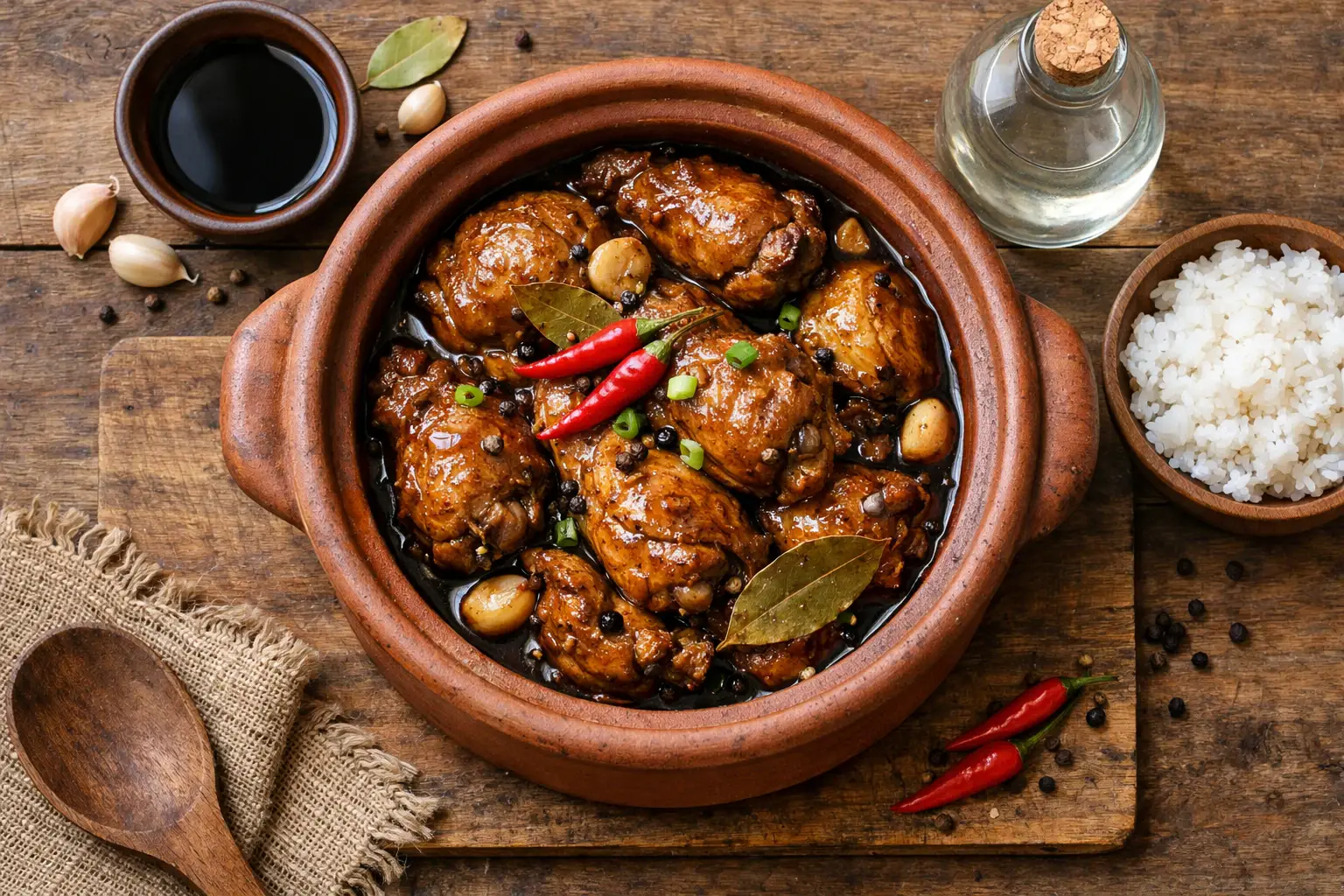
Quick Nutrition Facts
Per 1 Serving Chicken Adobo (200g)
| Nutrient | Amount |
|---|---|
| Calories | 215 kcal |
| Protein | 35g |
| Carbohydrates | 5g |
| Fiber | 0.5g |
| Sugars | 2g |
| Fat | 6g |
| Sodium | 950mg |
| Vitamin B6 | 0.8mg |
| Niacin (B3) | 12mg |
| Iron | 1.5mg |
Macronutrient Breakdown
 ChatGPT
  Claude
  AI Mode
  Perplexity
NUTRITIONIST INSIGHT
Adobo's vinegar-based cooking method isn't just for flavor—acetic acid in vinegar can improve blood sugar response by 20% when consumed with carbohydrates. For a healthier version, use skinless chicken and low-sodium soy sauce.
Myth Busters
MYTH #1: Adobo Is Unhealthy Because It's Fried
TRUTH: Traditional adobo is braised (slow-simmered), not deep-fried. The meat cooks in vinegar and soy sauce, making it a lower-fat cooking method compared to frying. Chicken adobo has only 6g of fat per serving when made with skinless meat.
MYTH #2: Adobo Is Too High in Sodium for Anyone to Eat
TRUTH: While traditional adobo contains significant sodium (950mg per serving), you can easily reduce this by using low-sodium soy sauce or coconut aminos. The DASH diet recommends 2,300mg daily limit, so one serving of modified adobo can fit a healthy diet.
MYTH #3: Diabetics Cannot Eat Adobo
TRUTH: Adobo can actually be diabetes-friendly. Vinegar consumption attenuates postprandial glucose by up to 20%. Skip the white rice or use cauliflower rice, and the high-protein, low-carb nature of adobo helps stabilize blood sugar.
MYTH #4: Pork Adobo and Chicken Adobo Have the Same Nutrition
TRUTH: There's a significant difference. Chicken adobo (skinless) has 215 calories and 6g fat per serving, while pork adobo can have 380+ calories and 22g fat. For weight loss and heart health, lean protein sources like chicken are recommended.
MYTH #5: Adobo Loses All Nutrients During Cooking
TRUTH: While some B vitamins decrease with cooking, the braising liquid retains nutrients that would otherwise be lost. The protein remains intact, and garlic's beneficial compounds (allicin) are preserved. Eating the sauce ensures you get these nutrients.
NutriScore by Health Goals
| Health Goal | NutriScore | Why This Score? |
|---|---|---|
| Weight Loss |  | High protein (35g) promotes satiety. Only 215 calories per serving with skinless chicken. Skip the rice for best results. |
| Muscle Gain | | Excellent protein source (35g) with complete amino acids for muscle synthesis. B vitamins support energy metabolism. |
| Diabetes Management |  | Low carbs (5g), vinegar reduces blood sugar response. Avoid rice or pair with fiber-rich sides. Watch sodium if you have related kidney concerns. |
| PCOS Management | | Low-glycemic, high-protein meal supports insulin sensitivity. Choose chicken over pork for lower saturated fat. |
| Pregnancy Nutrition | | Provides 35g protein toward the 71g daily requirement. Good source of iron and B vitamins. Ensure meat is fully cooked. Watch sodium intake. |
| Viral/Flu Recovery | | Easy to digest protein, antimicrobial garlic, and the warm broth aids hydration. A comforting, nutritious recovery food. |
PERSONALIZED NUTRITION
Track your meals with NutriScan for personalized NutriScores based on your specific health goals!
Blood Sugar Response to Adobo
Understanding how adobo affects your blood glucose can help you make informed decisions about pairing it with carbohydrates.
Typical Glucose Response Curve
*This chart shows typical blood glucose response for adobo with 1 cup rice. Adobo alone (without rice) produces minimal glucose response. Individual responses may vary. Not medical advice.*
How to Flatten the Spike
Protein and fat in adobo already help moderate blood sugar response when eaten with rice. To further reduce glucose impact:
- 🥬 Add fiber-rich vegetables - Kangkong (water spinach), bok choy, or green beans
- 🍚 Swap white rice for brown rice or cauliflower rice - Lower glycemic alternatives
- 🥒 Include pickled vegetables (atchara) - More vinegar benefits
- ⏰ Eat vegetables first - Fiber slows carbohydrate absorption
The vinegar in adobo provides natural blood sugar support, making it one of the more diabetes-friendly Filipino dishes when eaten mindfully.
Cultural Significance
Adobo holds the distinction of being the Philippines' unofficial national dish, with origins tracing back to pre-colonial times when vinegar was used to preserve meat in the tropical climate.
In the Philippines:
- Every region and family has their own adobo recipe—some sweeter, some more sour
- The word "adobo" comes from Spanish "adobar" (to marinate), though the cooking method predates Spanish colonization
- Traditional adobo uses native palm vinegar (sukang tuba) or coconut vinegar
- Served at celebrations, daily meals, and as comfort food during illness
Global Recognition:
- Featured in CNN's "World's 50 Best Foods" list
- Growing popularity in Asian-fusion restaurants worldwide
- Variations now include seafood, vegetable, and even tofu adobo
- The debate over "perfect" adobo recipe continues as a beloved cultural conversation
Compare & Substitute
Adobo vs Similar Braised Dishes (Per 200g Serving)
| Nutrient | 🍗 Chicken Adobo | 🍖 Pork Adobo | 🥘 Beef Stew | 🍛 Chicken Curry |
|---|---|---|---|---|
| Calories | 215 kcal | 380 kcal | 250 kcal | 280 kcal |
| Carbs | 5g | 8g | 15g | 12g |
| Fiber | 0.5g | 0.5g | 2g | 1.5g |
| Protein | 35g | 35g | 28g | 25g |
| Fat | 6g | 22g | 10g | 14g |
| Sodium | 950mg | 1100mg | 600mg | 700mg |
| Best For | Weight loss, muscle gain | High-energy needs | Balanced nutrition | Flavor variety |
Frequently Asked Questions
Is adobo good for weight loss?
Yes, chicken adobo is excellent for weight loss. At 215 calories with 35g protein per serving, it keeps you full longer and supports muscle maintenance during calorie deficit.
Best practices: Use skinless chicken, skip the rice or use cauliflower rice, choose low-sodium soy sauce, and include extra vegetables like bok choy or kangkong.
Can diabetics eat adobo?
Diabetics can enjoy adobo as part of a balanced diet. The vinegar in adobo may improve insulin sensitivity and reduce post-meal blood sugar spikes.
Tips for diabetics:
- Skip white rice or use very small portions
- Add fiber-rich vegetables to the meal
- Choose chicken over pork for less saturated fat
- Monitor sodium if you have related kidney concerns
- Check blood sugar 2 hours after eating
How much protein is in adobo?
Chicken adobo provides 35g of protein per 200g serving—nearly half the daily protein needs for most adults. This makes it an excellent choice for muscle building and recovery.
Pork adobo provides similar protein but with significantly more fat and calories.
What are the main health benefits of adobo?
Key Benefits:
- High-Quality Protein: 35g complete protein for muscle health and satiety
- Blood Sugar Support: Vinegar's acetic acid helps moderate glucose response
- B Vitamins: Niacin (B3) and B6 support energy metabolism
- Garlic Benefits: Antimicrobial properties and cardiovascular support
- Low Carb: Only 5g carbs per serving (without rice)
Main Concern: Sodium content (950mg per serving) from soy sauce.
Is adobo high in sodium?
Traditional adobo can be high in sodium (800-1200mg per serving) due to soy sauce.
To reduce sodium:
- Use low-sodium soy sauce (reduces sodium by 40%)
- Try coconut aminos as a soy sauce substitute
- Increase vinegar and reduce soy sauce ratio
- Skip adding extra salt
- Balance with potassium-rich foods (bananas, leafy greens)
If you have hypertension, limit adobo to 1-2 servings per week or always use the low-sodium modifications.
What is healthier: chicken or pork adobo?
Chicken adobo (skinless) is generally healthier:
- 215 calories vs 380 calories (pork)
- 6g fat vs 22g fat
- Lower saturated fat content
- Similar protein content
Pork adobo advantages:
- Higher iron content
- More flavorful due to fat content
- Good for those needing higher calorie intake
Recommendation: Choose chicken for weight loss and heart health. Pork is acceptable occasionally for those without weight or cardiovascular concerns.
How do I make adobo healthier?
Healthier Adobo Tips:
- Use skinless chicken thighs or breast
- Replace regular soy sauce with low-sodium version
- Increase vinegar ratio for more blood sugar benefits
- Add vegetables like kangkong, bok choy, or green beans
- Serve with brown rice or cauliflower rice instead of white rice
- Skim off excess oil after cooking
- Add extra garlic for antimicrobial benefits




Similar Nutritious Foods
4505 Chicharrones Classic Chili Salt
7 Eleven Japan Crispy Corn Cheese
Explore More Nutrition Tools & Resources
AI Calorie Counter App - Snap a Photo, Get Macros
AI Nutritionist App That Reads Your Logged Meals
Best Protein Supplements for Women
Bulking Meal Plan App That Sets Your Surplus
ChatGPT Calorie Counter Alternative That Keeps the Total
ChatGPT Diet Plan Alternative That Tracks What You Eat
ChatGPT Weight Loss Coach Alternative With a Food Log
Fast Food Calorie Counter App That Reads the Tray
Free Calorie Tracker App with AI Photo Scans | NutriScan
Indian Diet Plan App With Veg and Non Veg Meals
Indian Food Calorie Calculator - Get Instant Nutrition Facts for Desi Meals — 2026
Intermittent Fasting for Women, Timer and Meal Log App
Intermittent Fasting Tracker App - Free Fasting Timer
Macro Tracker App That Fills the Numbers From a Photo
Mediterranean Diet Meal Plan App That Counts the Oil
Micronutrient Tracker App for Vitamins and Minerals
MyFitnessPal Alternative That Stays Free | NutriScan
NutriScore App: A Free Grade on Every Meal | NutriScan
Nutrition Label Scanner App for the Amount You Ate
Second Trimester Protein Guide
Vegetarian Meal Plan App With a Protein Target
Voice Calorie Counter - Speak to Track Meals Hands-Free
Water and Calorie Tracker App - Free Water Log