Acarajé: Calories, Nutrition and Health Benefits
 ChatGPT
  Claude
  AI Mode
  Perplexity
 Acarajé: 350 calories, 30 g carbs, 12 g protein and 20 g fat per 1 Large Acarajé (~100g).
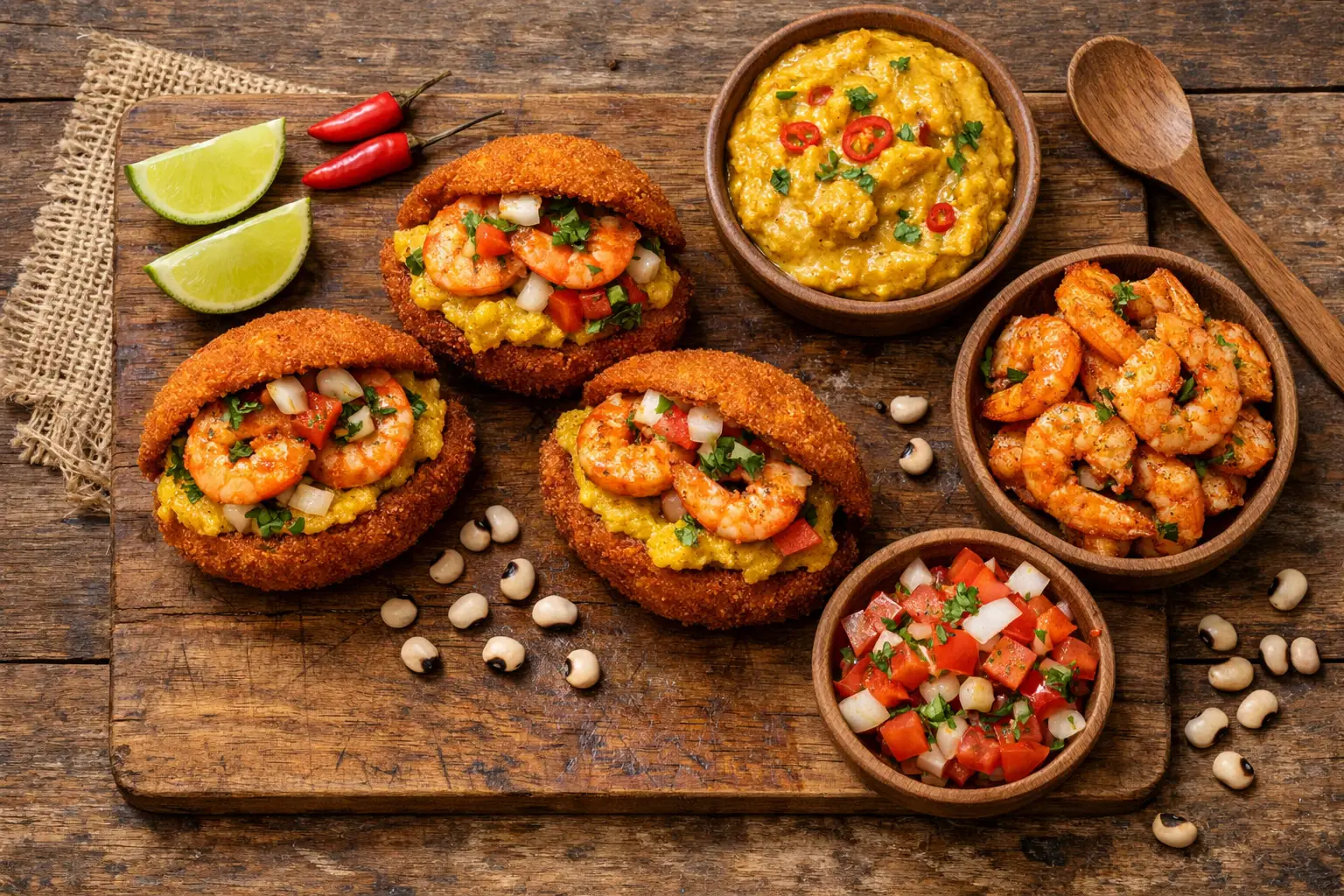
Quick Nutrition Facts
Per 1 Large Acarajé (~100g)
| Nutrient | Amount |
|---|---|
| Calories | 350 kcal |
| Protein | 12g |
| Carbohydrates | 30g |
| Fiber | 4g |
| Sugars | 2g |
| Fat | 20g |
| Saturated Fat | 8g |
| Sodium | 380mg |
| Iron | 2.5mg |
| Folate | 85mcg |
Macronutrient Breakdown
NUTRITIONIST INSIGHT
Black-eyed peas (cowpeas) are among the most nutritious legumes, providing 23-25% protein and significant fiber. While acarajé is deep-fried, the base ingredient offers anti-diabetic and anti-inflammatory properties.
Myth Busters
MYTH #1: Acarajé Is Just Empty Calories
TRUTH: Despite being fried, acarajé provides 12g protein and 4g fiber per serving from black-eyed peas. Cowpeas contain 20-30% protein plus vitamins, minerals, and phenolics that support health.
MYTH #2: Black-Eyed Peas Spike Blood Sugar
TRUTH: Black-eyed peas have a low glycemic index (GI 33-42). Legumes help reduce fasting blood glucose and improve insulin sensitivity through their fiber and resistant starch content.
MYTH #3: All Fried Foods Are Equally Bad
TRUTH: The nutritional value depends on what's being fried. Acarajé's black-eyed pea base provides plant protein, fiber, and minerals that pure starch-based fried foods lack.
MYTH #4: You Should Avoid Acarajé Completely During Pregnancy
TRUTH: Occasional consumption is fine, but limit frequency due to acrylamide formation in fried foods. The folate from black-eyed peas (85mcg per serving) actually supports fetal development.
MYTH #5: Palm Oil Makes Acarajé Unhealthy
TRUTH: Dendê (palm) oil contains vitamin E and beta-carotene. While high in saturated fat, moderate consumption within daily limits is acceptable. The antioxidants in palm oil may offer some health benefits.
NutriScore by Health Goals
| Health Goal | NutriScore | Why This Score? |
|---|---|---|
| Weight Loss |  | 350 calories and 20g fat per fritter is significant. Limit to 1/2 fritter occasionally; choose grilled fish instead. |
| Muscle Gain |  | Good protein content (12g) from black-eyed peas and shrimp. The carbs (30g) help with post-workout glycogen replenishment. |
| Diabetes Management |  | Black-eyed peas have low GI but portion control is key. Limit to 1/2 fritter, pair with vegetables. |
| PCOS Management | | High fat content may affect hormone balance. Choose steamed black-eyed peas instead for the legume benefits without excess fat. |
| Pregnancy Nutrition | | Folate (85mcg) supports fetal development, but limit fried food frequency due to acrylamide. 1-2x per month is reasonable. |
| Viral/Flu Recovery | | Protein aids recovery, but heavy fried food may be difficult to digest when ill. Try lighter black-eyed pea soup instead. |
PERSONALIZED NUTRITION
Track your meals with NutriScan for personalized NutriScores based on your specific health goals!
Blood Sugar Response to Acarajé
Understanding how acarajé affects your blood glucose can help you make informed decisions about when and how to eat it.
Typical Glucose Response Curve
This chart shows typical blood glucose response for general healthy individuals. Individual responses may vary. Not medical advice.
How to Flatten the Spike
Pairing carbohydrate foods with protein or fiber slows glucose absorption and reduces the peak blood sugar level:
- 🥗 Side salad with vinaigrette - Fiber and acidity slow digestion
- 🥒 Fresh vegetables - Add fiber without extra calories
- 🍋 Lime juice - Acidity helps moderate glucose response
- 🥬 Couve (collard greens) - Traditional pairing that adds fiber and nutrients
This combination not only reduces the glucose spike but also extends energy release, keeping you fuller for longer.
Cultural Significance
Acarajé is one of the most iconic dishes of Afro-Brazilian cuisine, with deep roots in the Yoruba culture brought by enslaved Africans.
In Brazil:
- Sacred food in Candomblé religion, offered to the orixá Iansã (goddess of storms)
- Traditionally sold by Baianas de Acarajé, women in white traditional dress
- Recognized as Brazilian Intangible Cultural Heritage since 2005
- Salvador, Bahia is the epicenter of acarajé culture
African Origins:
- Originated from akara in West Africa (Nigeria, Ghana, Benin)
- The name comes from Yoruba: "akará" (ball of fire) + "jé" (to eat)
- Represents the African diaspora's culinary resilience and adaptation
- Each Baiana has her own secret family recipe passed down generations
Global Influence:
- Similar dishes exist across Africa: akara (Nigeria), koose (Ghana)
- Caribbean variations include accra (Jamaica, Trinidad)
- Growing popularity in international food scenes
- UNESCO considers it an important element of intangible cultural heritage
Compare & Substitute
Acarajé vs Similar Foods (Per 100g)
| Nutrient | 🫘 Acarajé | 🥙 Falafel | 🍟 Samosa | 🥟 Pakora |
|---|---|---|---|---|
| Calories | 350 kcal | 333 kcal | 308 kcal | 290 kcal |
| Carbs | 30g | 32g | 33g | 28g |
| Fiber | 4g | 5g | 3g | 3g |
| Protein | 12g | 13g | 6g | 6g |
| Fat | 20g | 18g | 17g | 16g |
| Iron | 2.5mg | 3.3mg | 1.8mg | 1.5mg |
| Best For | Protein, cultural experience | High fiber, vegan protein | Portable snack, lower fat | Vegetable variety, lighter |
Frequently Asked Questions
Is acarajé healthy?
Acarajé offers nutritional benefits from its black-eyed pea base including 12g plant protein and 4g fiber per serving. However, deep-frying adds 20g fat and 350 calories. The base ingredient provides valuable nutrients, but enjoy in moderation as part of a balanced diet.
Best practices: Limit to 1-2 per week, share a fritter, pair with vegetables and skip other fried foods that day.
How many calories are in acarajé?
One large acarajé (~100g) contains approximately 350 calories. The breakdown includes:
- Carbohydrates: 30g (primarily from black-eyed peas)
- Protein: 12g (from peas and shrimp)
- Fat: 20g (from dendê oil frying)
- Fiber: 4g
The shrimp filling and vatapá sauce add extra protein but also additional calories.
Can diabetics eat acarajé?
Diabetics can enjoy acarajé occasionally with precautions. Black-eyed peas have a low glycemic index (33-42), and legumes have been shown to improve glycemic control.
Tips for diabetics:
- Eat half a fritter at a time
- Pair with a fiber-rich salad
- Best timing: at lunch, not as evening snack
- Monitor blood sugar 2 hours after eating
What are the health benefits of black-eyed peas?
Key Benefits:
- Protein source: 23-25% protein content, excellent for plant-based diets
- Blood sugar control: Low GI legume that improves insulin sensitivity
- Heart health: Fiber and folate support cardiovascular function
- Digestive health: 4g fiber per serving promotes gut bacteria
- Pregnancy support: Rich in folate (85mcg) for fetal development
- Anti-inflammatory: Contains phenolic compounds with antioxidant properties
Is acarajé vegan?
Traditional acarajé is not vegan as it contains:
- Dried shrimp ground into the batter
- Vatapá (shrimp and cashew paste) filling
- Caruru (okra and shrimp stew)
Vegan alternative: Request abará, a steamed version wrapped in banana leaf, or ask for acarajé without shrimp fillings. Some vendors offer vegetarian versions.
What is acarajé made of?
Main ingredients:
- Black-eyed peas (cowpeas): Soaked overnight, skinned, and ground
- Onion: Blended with the peas for flavor
- Salt: Seasoning
- Dendê oil (palm oil): For deep frying, gives distinctive orange color
Traditional fillings:
- Vatapá: Creamy paste of bread, shrimp, coconut milk, palm oil, cashews
- Caruru: Okra stew with dried shrimp
- Fresh shrimp: Added as topping
- Pepper sauce: Spicy malagueta pepper condiment
How is acarajé traditionally served?
Acarajé is served hot from the fryer, split open like a sandwich and filled with:
"Quente" (hot/spicy): Vatapá, caruru, dried shrimp, pepper sauce "Frio" (cold/mild): Same fillings without pepper sauce
The Baiana asks "quente ou frio?" (hot or cold?) referring to spice level, not temperature.




Similar Nutritious Foods
4505 Chicharrones Classic Chili Salt
7 Eleven Japan Crispy Corn Cheese
Explore More Nutrition Tools & Resources
AI Calorie Counter App - Snap a Photo, Get Macros
AI Nutritionist App That Reads Your Logged Meals
Best Protein Supplements for Women
Bulking Meal Plan App That Sets Your Surplus
ChatGPT Calorie Counter Alternative That Keeps the Total
ChatGPT Diet Plan Alternative That Tracks What You Eat
ChatGPT Weight Loss Coach Alternative With a Food Log
Fast Food Calorie Counter App That Reads the Tray
Free Calorie Tracker App with AI Photo Scans | NutriScan
Indian Diet Plan App With Veg and Non Veg Meals
Indian Food Calorie Calculator - Get Instant Nutrition Facts for Desi Meals — 2026
Intermittent Fasting for Women, Timer and Meal Log App
Intermittent Fasting Tracker App - Free Fasting Timer
Macro Tracker App That Fills the Numbers From a Photo
Mediterranean Diet Meal Plan App That Counts the Oil
Micronutrient Tracker App for Vitamins and Minerals
MyFitnessPal Alternative That Stays Free | NutriScan
NutriScore App: A Free Grade on Every Meal | NutriScan
Nutrition Label Scanner App for the Amount You Ate
Second Trimester Protein Guide
Vegetarian Meal Plan App With a Protein Target
Voice Calorie Counter - Speak to Track Meals Hands-Free
Water and Calorie Tracker App - Free Water Log