Agedashi Tofu: Calories, Nutrition and Health Benefits
A beloved Japanese appetizer featuring lightly fried silken tofu in savory dashi broth, delivering complete plant protein and bone-building calcium.
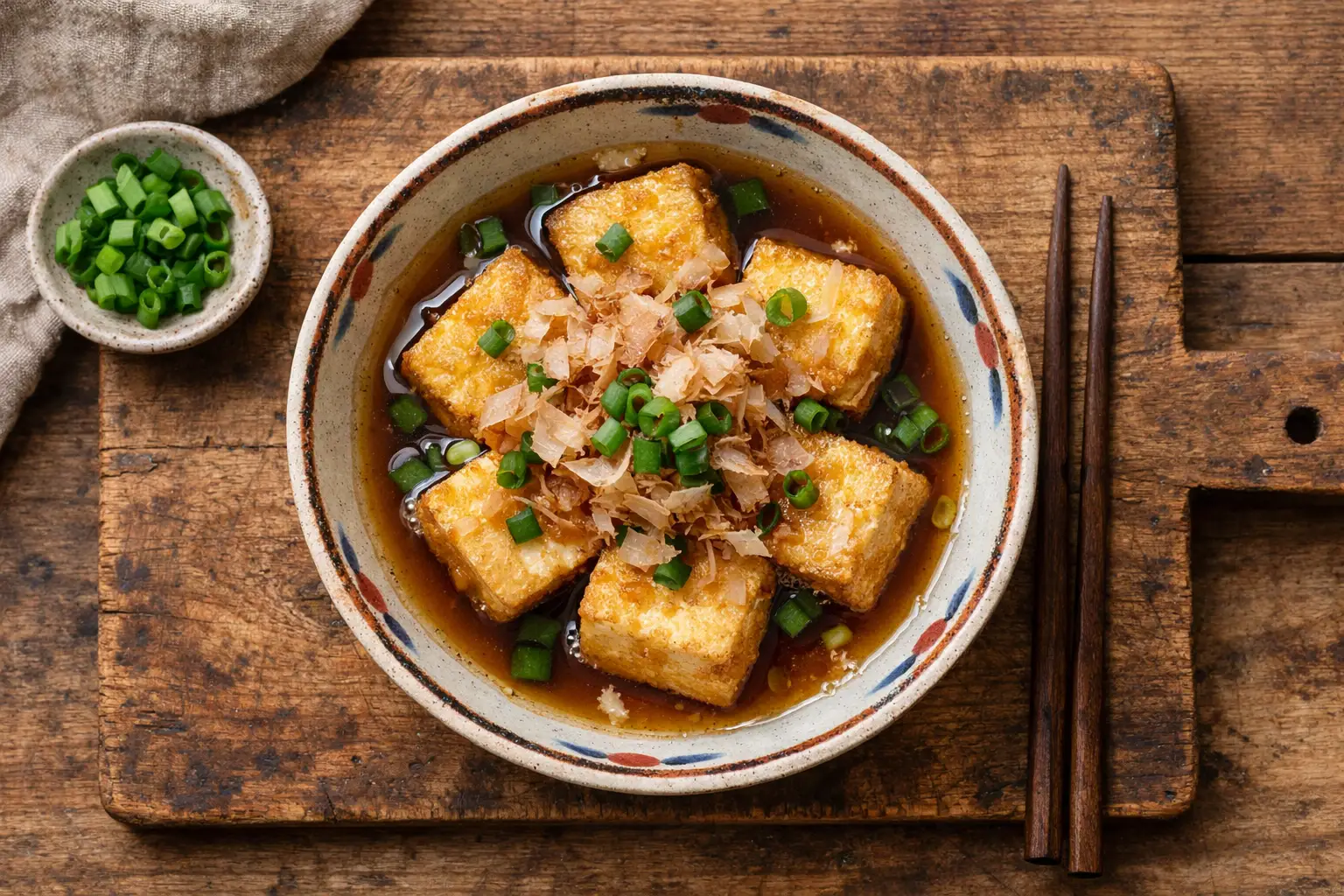
Quick Nutrition Facts
Per 1 Serving (150g, 3-4 pieces)
| Nutrient | Amount |
|---|---|
| Calories | 180 kcal |
| Protein | 10g |
| Carbohydrates | 12g |
| Fiber | 1.5g |
| Sugars | 2g |
| Fat | 11g |
| Saturated Fat | 1.8g |
| Calcium | 150mg |
| Iron | 2.1mg |
| Sodium | 520mg |
Macronutrient Breakdown
 ChatGPT
  Claude
  AI Mode
  Perplexity
NUTRITIONIST INSIGHT
Agedashi tofu delivers complete plant protein with all nine essential amino acids. The soy isoflavones may help reduce cholesterol and support bone health, making it an excellent choice for vegetarians and those reducing meat intake.
Myth Busters
MYTH #1: Fried Tofu Is Unhealthy
TRUTH: Agedashi tofu uses light frying with minimal oil absorption due to the potato starch coating. At 11g fat per serving, it's comparable to a tablespoon of olive oil. Plant-based proteins like tofu are linked to lower heart disease risk.
MYTH #2: Soy Causes Hormonal Problems
TRUTH: Research shows soy isoflavones do not disrupt hormones in healthy adults. Studies find soy may actually support hormonal balance and reduce menopause symptoms in women.
MYTH #3: Tofu Lacks Complete Protein
TRUTH: Tofu is one of the few plant foods with all nine essential amino acids, making it a complete protein. One serving provides 10g of high-quality protein comparable to eggs.
MYTH #4: Diabetics Should Avoid Tofu Dishes
TRUTH: Tofu has a low glycemic index (GI 15) and soy isoflavones may improve insulin sensitivity. The protein and fat in agedashi tofu help slow carbohydrate absorption.
MYTH #5: Agedashi Tofu Is High in Sodium
TRUTH: While the dashi sauce contains sodium (~520mg per serving), you can control intake by using less sauce or making low-sodium dashi. The tofu itself is naturally low in sodium.
NutriScore by Health Goals
| Health Goal | NutriScore | Why This Score? |
|---|---|---|
| Weight Loss |  | 180 calories with 10g protein promotes satiety. Light frying adds moderate fat. Best as appetizer, not main course. |
| Muscle Gain | | Complete plant protein with all essential amino acids. Good post-workout option for vegetarians. Pair with rice for complete meal. |
| Diabetes Management |  | Low GI (15), soy isoflavones improve glycemic control. Protein slows glucose absorption. Watch sodium in sauce. |
| PCOS Management | | Plant protein with beneficial isoflavones. May help balance hormones. Limit to 1 serving; monitor soy intake. |
| Pregnancy Nutrition | | Good calcium (150mg) and iron (2.1mg) for fetal development. Soy intake linked to lower gestational diabetes risk. Limit to 1-2 servings weekly. |
| Viral/Flu Recovery | | Easy to digest, warm dashi broth soothes throat. Provides protein for immune function without heavy digestion load. |
PERSONALIZED NUTRITION
Track your meals with NutriScan for personalized NutriScores based on your specific health goals!
Blood Sugar Response to Agedashi Tofu
Understanding how agedashi tofu affects your blood glucose can help you make informed decisions about when and how to eat it.
Typical Glucose Response Curve
*This chart shows typical blood glucose response for general healthy individuals. Individual responses may vary. Not medical advice.*
How to Flatten the Spike
Pairing protein-rich tofu with fiber and healthy fats helps maintain stable blood sugar:
- 🥬 Steamed vegetables - Add fiber with spinach, broccoli, or edamame
- 🍚 Brown rice or soba noodles - Complex carbs over white rice
- 🥒 Pickled vegetables (tsukemono) - Low-calorie fiber addition
- 🍵 Green tea - May further support glucose metabolism
This combination keeps blood sugar stable while creating a balanced, satisfying Japanese meal.
Cultural Significance
Agedashi tofu (揚げ出し豆腐) originated in Japan's Edo period (1603-1868) as a way to add texture and flavor to plain tofu.
In Japan:
- Traditional izakaya (pub) appetizer served nationwide
- Name means "deep-fried and served" (age = fried, dashi = broth)
- Often topped with grated daikon, bonito flakes, and green onions
- Considered a refined dish showcasing tofu's versatility
Tofu Heritage:
- Tofu originated in China over 2,000 years ago, introduced to Japan around 8th century
- Buddhist monks popularized tofu as a meat substitute
- Japan developed unique soft silken tofu (kinugoshi) ideal for agedashi
- Now a global plant-protein staple consumed in 180+ countries
Compare & Substitute
Agedashi Tofu vs Similar Foods (Per 100g)
| Nutrient | 🍢 Agedashi Tofu | 🫛 Plain Firm Tofu | 🍣 Tempura | 🥚 Egg Omelette |
|---|---|---|---|---|
| Calories | 120 kcal | 76 kcal | 200 kcal | 154 kcal |
| Carbs | 8g | 2g | 20g | 1.6g |
| Fiber | 1g | 0.9g | 0.5g | 0g |
| Protein | 7g | 8g | 5g | 11g |
| Fat | 7g | 4.5g | 12g | 12g |
| Calcium | 100mg | 350mg | 20mg | 50mg |
| Sodium | 350mg | 7mg | 400mg | 140mg |
| Best For | Appetizer, vegetarian meal | Low-cal protein, stir-fry | Occasional treat | Quick protein, keto |
Frequently Asked Questions
Is agedashi tofu healthy?
Agedashi tofu is moderately healthy. The tofu provides 10g complete plant protein, calcium, iron, and beneficial isoflavones. Light frying adds ~7g fat per 100g, which is reasonable for an appetizer.
Best practices: Enjoy as a starter rather than main course, pair with vegetables, and use less dipping sauce to reduce sodium.
Can diabetics eat agedashi tofu?
Yes, diabetics can safely enjoy agedashi tofu. Tofu has a very low glycemic index (15) and the protein-fat combination prevents blood sugar spikes.
Tips for diabetics:
- Choose as appetizer over carb-heavy options
- Watch sodium in dashi sauce
- Pair with non-starchy vegetables
- Limit to 1 serving per meal
Studies show soy isoflavones may improve insulin sensitivity over time.
How much protein is in agedashi tofu?
One serving (150g, 3-4 pieces) contains 10g of complete plant protein with all nine essential amino acids. Per 100g, agedashi tofu provides about 7g protein.
For vegetarians or those reducing meat intake, agedashi tofu is an excellent protein choice that also provides calcium and iron.
What are the main health benefits of agedashi tofu?
Key Benefits:
- Complete Plant Protein: All 9 essential amino acids for muscle and tissue repair
- Bone Health: Calcium (150mg) and isoflavones support bone density
- Heart Health: Soy protein may help lower LDL cholesterol
- Digestive Comfort: Light, easy to digest compared to heavy proteins
- Hormonal Balance: Isoflavones may ease menopause symptoms
- Low Glycemic: Minimal impact on blood sugar levels
Is agedashi tofu vegan?
Traditional agedashi tofu is not vegan because the dashi broth contains katsuobushi (bonito fish flakes).
Vegan alternatives:
- Use kombu (kelp) and shiitake mushroom dashi
- Substitute with vegetable broth and soy sauce
- The fried tofu itself is 100% plant-based
Many restaurants now offer vegan agedashi tofu options.
How many calories are in agedashi tofu?
One serving (150g) contains approximately 180 calories. Per 100g, it provides about 120 calories.
Calorie breakdown:
- Fat: 99 calories (55%)
- Carbs: 48 calories (27%)
- Protein: 40 calories (18%)
For weight management, enjoy as an appetizer and balance with lower-calorie vegetable sides.
What's the difference between agedashi tofu and regular tofu?
Agedashi tofu is silken tofu coated in potato starch and lightly fried, then served in warm dashi broth. It has a crispy exterior with soft, custardy interior.
Plain tofu comes in silken, soft, firm, or extra-firm varieties without coating or cooking. It has fewer calories but less flavor complexity.
Agedashi tofu is best enjoyed fresh; plain tofu is more versatile for various cooking methods.




Similar Nutritious Foods
4505 Chicharrones Classic Chili Salt
7 Eleven Japan Crispy Corn Cheese
Explore More Nutrition Tools & Resources
AI Calorie Counter App - Snap a Photo, Get Macros
AI Nutritionist App That Reads Your Logged Meals
Best Protein Supplements for Women
Bulking Meal Plan App That Sets Your Surplus
ChatGPT Calorie Counter Alternative That Keeps the Total
ChatGPT Diet Plan Alternative That Tracks What You Eat
ChatGPT Weight Loss Coach Alternative With a Food Log
Fast Food Calorie Counter App That Reads the Tray
Free Calorie Tracker App with AI Photo Scans | NutriScan
Indian Diet Plan App With Veg and Non Veg Meals
Indian Food Calorie Calculator - Get Instant Nutrition Facts for Desi Meals — 2026
Intermittent Fasting for Women, Timer and Meal Log App
Intermittent Fasting Tracker App - Free Fasting Timer
Macro Tracker App That Fills the Numbers From a Photo
Mediterranean Diet Meal Plan App That Counts the Oil
Micronutrient Tracker App for Vitamins and Minerals
MyFitnessPal Alternative That Stays Free | NutriScan
NutriScore App: A Free Grade on Every Meal | NutriScan
Nutrition Label Scanner App for the Amount You Ate
Second Trimester Protein Guide
Vegetarian Meal Plan App With a Protein Target
Voice Calorie Counter - Speak to Track Meals Hands-Free
Water and Calorie Tracker App - Free Water Log