Almond Butter: Calories, Nutrition and Health Benefits
A nutrient-dense nut butter packed with heart-healthy monounsaturated fats, vitamin E, and plant-based protein for every health goal.
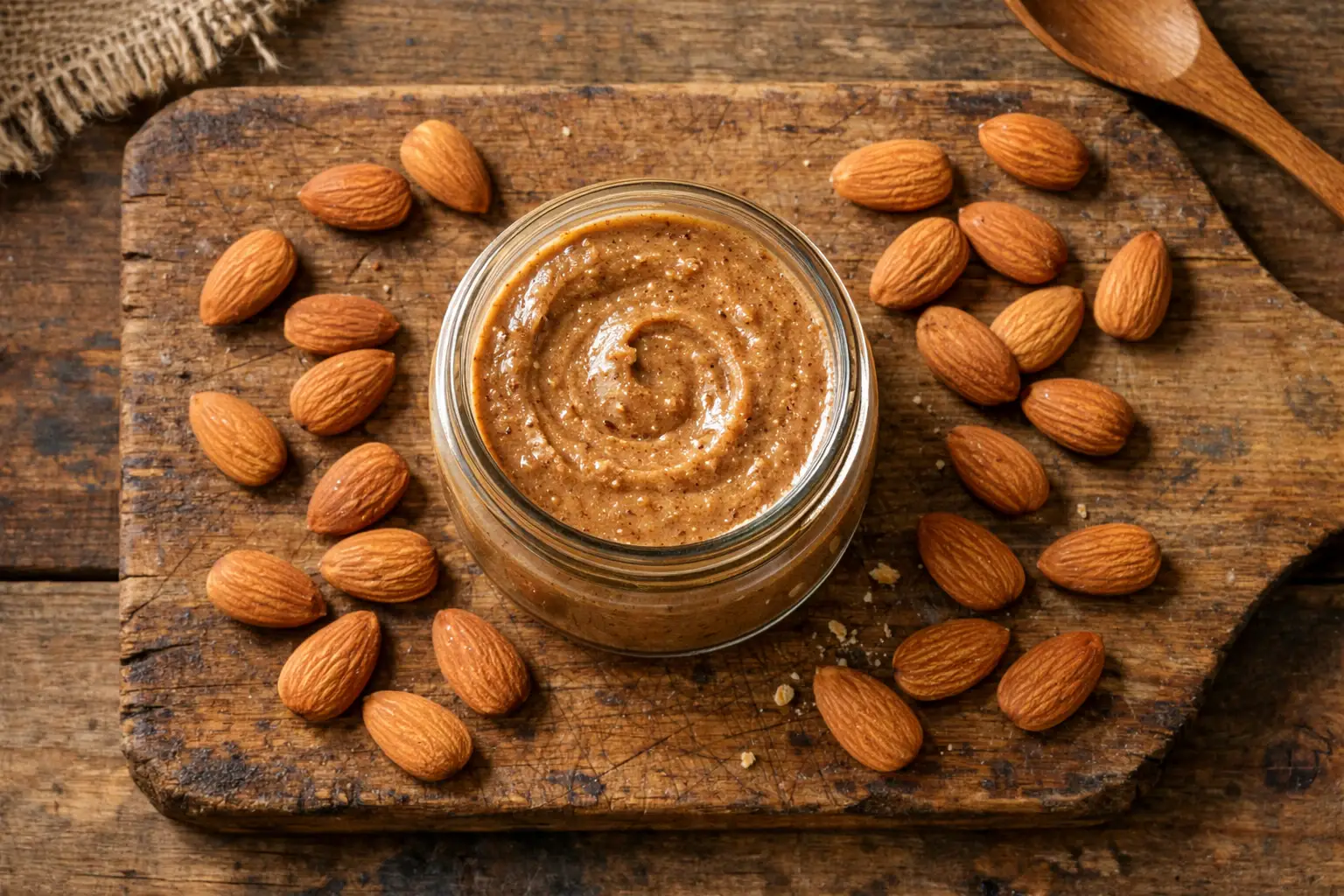
Quick Nutrition Facts
Per 1 Tablespoon (16g)
| Nutrient | Amount |
|---|---|
| Calories | 98 kcal |
| Protein | 3.4g |
| Carbohydrates | 3g |
| Fiber | 1.6g |
| Sugars | 0.7g |
| Fat | 9g |
| Vitamin E | 3.9mg |
| Magnesium | 45mg |
| Calcium | 56mg |
| Potassium | 121mg |
Macronutrient Breakdown
 ChatGPT
  Claude
  AI Mode
  Perplexity
NUTRITIONIST INSIGHT
Almond butter delivers 49% of your daily vitamin E in just one ounce. The combination of monounsaturated fats, fiber, and protein makes it one of the most satiating spreads available, helping control hunger between meals.
Myth Busters
MYTH #1: Almond Butter Is Too High in Fat to Be Healthy
TRUTH: The 9g fat per tablespoon is predominantly monounsaturated fat (the same heart-healthy fat in olive oil). Studies show almond consumption reduces total and LDL cholesterol and lowers heart disease risk.
MYTH #2: Diabetics Should Avoid Almond Butter
TRUTH: Almond butter is one of the best foods for diabetics. It has a very low glycemic index. Research shows almonds reduce postprandial blood sugar by up to 30% and can reduce HbA1c by 4% over 12 weeks.
MYTH #3: Almond Butter Causes Weight Gain
TRUTH: Despite being calorie-dense, almonds are associated with less weight gain and lower obesity risk because the fat and fiber content promotes fullness. Portion control (1-2 tbsp) is key.
MYTH #4: Peanut Butter Is Just as Nutritious
TRUTH: While both are healthy, almond butter has significantly more vitamin E (3.9mg vs 1.9mg per tbsp), more magnesium (45mg vs 26mg), more calcium (56mg vs 8mg), and more fiber. Peanut butter provides slightly more protein at a lower cost.
MYTH #5: Almond Butter Has No Protein
TRUTH: One tablespoon provides 3.4g of protein; two tablespoons deliver 7g of plant-based protein. Combined with whole grain bread, it forms a complete protein with all essential amino acids.
NutriScore by Health Goals
| Health Goal | NutriScore | Why This Score? |
|---|---|---|
| Weight Loss |  | 98 cal per tbsp, high satiety from fat + protein + fiber. Stick to 1 tbsp serving to control calories. |
| Muscle Gain |  | 7g protein per 2 tbsp, calorie-dense for bulking, magnesium supports muscle function and recovery. |
| Diabetes Management | | Very low GI, almonds reduce postprandial glycemia by 30%, healthy fats slow glucose absorption. |
| PCOS Management | | Monounsaturated fats support hormone balance, magnesium aids insulin sensitivity. Limit to 1-2 tbsp daily. |
| Pregnancy Nutrition | | Excellent calcium source for pregnancy, vitamin E for fetal development, folate, and magnesium for bone health. |
| Viral/Flu Recovery | | Vitamin E boosts immune function, calorie-dense for maintaining energy, easy to consume when appetite is low. |
PERSONALIZED NUTRITION
Track your meals with NutriScan for personalized NutriScores based on your specific health goals!
Blood Sugar Response to Almond Butter
Understanding how almond butter affects your blood glucose can help you make informed decisions about when and how to eat it.
Typical Glucose Response Curve
This chart shows typical blood glucose response for general healthy individuals. Individual responses may vary. Not medical advice.
How to Flatten the Spike
Pairing almond butter with fiber-rich foods further slows glucose absorption and extends energy release:
- 🍞 Whole grain toast - Adds fiber for sustained energy
- 🍎 Apple or celery slices - Provides additional fiber and crunch
- 🥣 Oatmeal - Complex carbs paired with healthy fats
- 🫐 Berries or banana slices - Antioxidants plus natural sweetness
This combination not only minimizes blood sugar fluctuations but also keeps you fuller for longer.
Cultural Significance
Almond butter has deep roots across multiple civilizations, dating back over 4,000 years to ancient Persia where almonds were first cultivated.
In India:
- Almonds (badam) are central to Ayurvedic medicine for brain health and vitality
- Badam paste used in traditional Indian sweets like badam halwa and badam milk
- Soaked almonds given to children daily for cognitive development
- Almond oil used in traditional massage and skincare rituals
Global Impact:
- California produces 80% of the world's almonds, making it a $6 billion industry
- Almond butter gained mainstream popularity in the 2010s as a health food staple
- Widely adopted in plant-based and paleo diets as a nutritious spread
- Used in Mediterranean, Middle Eastern, and Asian cuisines for centuries
Compare & Substitute
Almond Butter vs Similar Nut Butters (Per 100g)
| Nutrient | 🥜 Almond Butter | 🥜 Peanut Butter | 🌻 Sunflower Seed Butter | 🥥 Cashew Butter |
|---|---|---|---|---|
| Calories | 614 kcal | 588 kcal | 617 kcal | 587 kcal |
| Carbs | 19g | 20g | 23g | 28g |
| Fiber | 10g | 6g | 5g | 2g |
| Protein | 21g | 25g | 17g | 18g |
| Fat | 56g | 50g | 55g | 49g |
| Vitamin E | 24mg | 9mg | 7mg | 1mg |
| Magnesium | 279mg | 168mg | 325mg | 267mg |
| Calcium | 347mg | 54mg | 65mg | 43mg |
| Best For | Heart health, vitamin E | Protein, affordability | Nut-free alternative | Creaminess, lower fat |
Frequently Asked Questions
Is almond butter good for weight loss?
Yes, almond butter supports weight loss when eaten in moderation. One tablespoon has 98 calories with 3.4g protein and 1.6g fiber that promote satiety. The monounsaturated fats help control hunger hormones and reduce cravings.
Best practices: Stick to 1 tablespoon per serving, measure with a spoon (not eyeball), pair with fiber-rich foods like apple slices or celery, and choose unsweetened varieties without added oils.
Can diabetics eat almond butter?
Almond butter is one of the best foods for diabetes management. It has a very low glycemic index due to its high fat and protein content with minimal carbohydrates (3g per tbsp).
Tips for diabetics:
- Pair with whole grain crackers or vegetable sticks
- Use as a blood sugar stabilizer between meals
- Choose natural varieties without added sugars
- 1-2 tablespoons per serving is ideal
Research shows almonds can reduce HbA1c by 4% over 12 weeks. Always consult your healthcare provider.
How much protein is in almond butter?
One tablespoon of almond butter contains 3.4g of protein. A two-tablespoon serving provides about 7g of plant-based protein. While not the highest-protein nut butter (peanut butter has 8g per 2 tbsp), it offers superior vitamin E, calcium, and fiber.
For muscle gain or high-protein diets, combine almond butter with protein-rich foods like Greek yogurt, protein smoothies, or whole grain bread.
What are the main health benefits of almond butter?
Key Benefits:
- Heart Health: Monounsaturated fats lower LDL cholesterol and reduce cardiovascular risk
- Antioxidant Protection: 24mg vitamin E per 100g fights oxidative stress
- Blood Sugar Control: Low GI with healthy fats slows glucose absorption
- Bone Health: 347mg calcium per 100g supports bone density
- Digestive Health: 10g fiber per 100g promotes gut regularity
- Brain Function: Vitamin E and magnesium support cognitive health
Is almond butter healthier than peanut butter?
Both are nutritious, but almond butter leads in several areas:
Almond butter advantages: More vitamin E (24mg vs 9mg per 100g), more calcium (347mg vs 54mg), more fiber (10g vs 6g), and more magnesium (279mg vs 168mg).
Peanut butter advantages: More protein (25g vs 21g per 100g), more affordable, and slightly lower calories.
Recommendation: Choose almond butter for micronutrient density and heart health. Choose peanut butter for protein and budget. Both are excellent healthy fat sources.
How much almond butter should I eat per day?
General Guidelines:
- 1 tablespoon daily - Weight loss or calorie-controlled diets (98 calories)
- 2 tablespoons daily - General health, muscle gain, pregnancy (196 calories)
- 1-2 tablespoons daily - Diabetes management, paired with whole grains or vegetables
Avoid excess: More than 3 tablespoons per day adds 300+ calories and may lead to calorie surplus. Always choose natural, unsweetened varieties.
Track your meals with NutriScan app to see how almond butter fits your personal nutrition goals.
How should I store almond butter?
Natural almond butter (ingredients: just almonds) should be stored in the refrigerator after opening to prevent the oils from going rancid. Stir well before each use as natural separation is normal.
Commercial almond butter with stabilizers can be stored at room temperature. Check the label for storage instructions and consume within 3-6 months of opening.


Similar Nutritious Foods
4505 Chicharrones Classic Chili Salt
7 Eleven Japan Crispy Corn Cheese
Explore More Nutrition Tools & Resources
AI Calorie Counter App - Snap a Photo, Get Macros
AI Nutritionist App That Reads Your Logged Meals
Best Protein Supplements for Women
Bulking Meal Plan App That Sets Your Surplus
ChatGPT Calorie Counter Alternative That Keeps the Total
ChatGPT Diet Plan Alternative That Tracks What You Eat
ChatGPT Weight Loss Coach Alternative With a Food Log
Fast Food Calorie Counter App That Reads the Tray
Free Calorie Tracker App with AI Photo Scans | NutriScan
Indian Diet Plan App With Veg and Non Veg Meals
Indian Food Calorie Calculator - Get Instant Nutrition Facts for Desi Meals — 2026
Intermittent Fasting for Women, Timer and Meal Log App
Intermittent Fasting Tracker App - Free Fasting Timer
Macro Tracker App That Fills the Numbers From a Photo
Mediterranean Diet Meal Plan App That Counts the Oil
Micronutrient Tracker App for Vitamins and Minerals
MyFitnessPal Alternative That Stays Free | NutriScan
NutriScore App: A Free Grade on Every Meal | NutriScan
Nutrition Label Scanner App for the Amount You Ate
Second Trimester Protein Guide
Vegetarian Meal Plan App With a Protein Target
Voice Calorie Counter - Speak to Track Meals Hands-Free
Water and Calorie Tracker App - Free Water Log