Ash Reshteh: Calories, Nutrition and Health Benefits
A hearty Persian noodle soup loaded with legumes, herbs, and tangy kashk—delivering plant protein, fiber, and gut-friendly probiotics in every bowl.
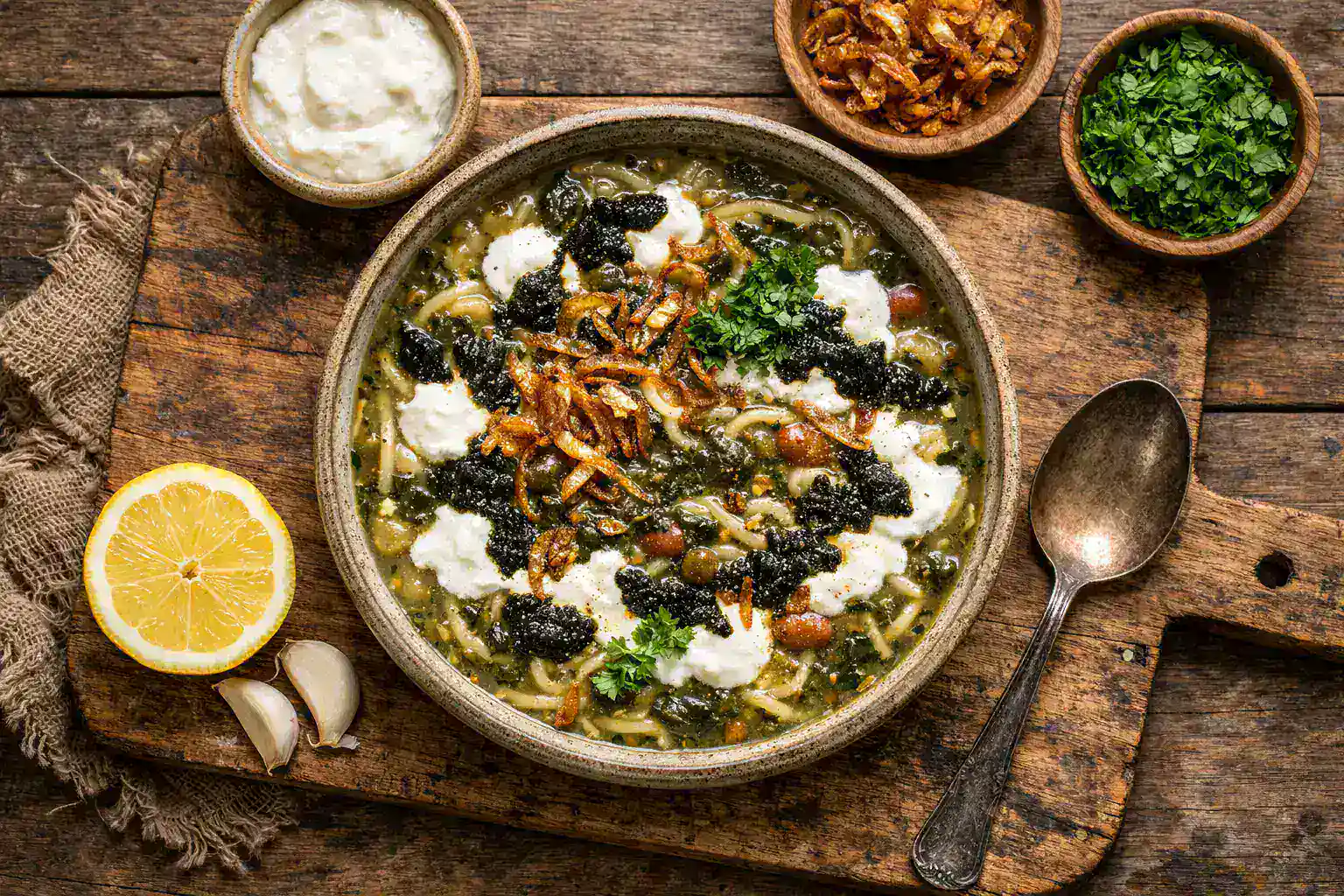
Quick Nutrition Facts
Per 1 Bowl (350g)
| Nutrient | Amount |
|---|---|
| Calories | 280 kcal |
| Protein | 14g |
| Carbohydrates | 38g |
| Fiber | 9g |
| Sugars | 4g |
| Fat | 8g |
| Sodium | 680mg |
| Iron | 3.2mg |
| Potassium | 420mg |
| Calcium | 85mg |
Macronutrient Breakdown
 ChatGPT
  Claude
  AI Mode
  Perplexity
NUTRITIONIST INSIGHT
Ash Reshteh combines three legume types (chickpeas, kidney beans, lentils) with herbs and fermented kashk. This delivers 9g fiber and 14g plant protein per bowl, plus probiotics that support gut health and nutrient absorption.
Myth Busters
MYTH #1: Ash Reshteh Is Too Heavy for Weight Loss
TRUTH: At 280 calories per bowl with 9g fiber and 14g protein, Ash Reshteh promotes satiety. Legumes contain dietary fiber that promotes fullness and may aid weight loss by increasing feelings of satisfaction while reducing overall calorie intake.
MYTH #2: Diabetics Should Avoid Persian Soups with Noodles
TRUTH: The combination of legumes, fiber, and protein in Ash Reshteh helps slow glucose absorption. Legumes have a low glycemic index and help prevent sharp rises in blood sugar, making them suitable for diabetics in controlled portions.
MYTH #3: Kashk Is Unhealthy Processed Dairy
TRUTH: Kashk is a traditional fermented whey product. Research shows kashk contains probiotic lactic acid bacteria that support gut health, digestion, and immunity—similar to yogurt and kefir.
MYTH #4: Plant-Based Soups Don't Provide Enough Protein
TRUTH: Ash Reshteh delivers 14g protein per bowl from legumes alone. Legumes contain 20-25% protein by weight, 2-3 times more than grains, making them excellent meat alternatives.
MYTH #5: Ash Reshteh Is Too High in Sodium
TRUTH: While kashk adds sodium (~680mg per bowl), you can control this by using less kashk or low-sodium broth. The potassium from legumes (420mg) helps balance sodium's effects on blood pressure.
NutriScore by Health Goals
| Health Goal | NutriScore | Why This Score? |
|---|---|---|
| Weight Loss |  | 280 calories, 9g fiber, 14g protein promote fullness. Control portions and reduce kashk for fewer calories. |
| Muscle Gain | | 14g plant protein from legumes, complex carbs for energy. Add extra beans or serve with bread for more protein. |
| Diabetes Management | | Legumes have low GI and help regulate blood sugar. High fiber slows glucose absorption. Monitor portion size. |
| PCOS Management | | High fiber and plant protein support insulin sensitivity. Reduce noodle portion if limiting carbs. |
| Pregnancy Nutrition |  | Iron and folate from legumes support fetal development. Probiotics from kashk aid digestion. |
| Viral/Flu Recovery | | Warm, easy to digest, rich in vitamins and minerals. Herbs like turmeric provide anti-inflammatory benefits. |
PERSONALIZED NUTRITION
Track your meals with NutriScan for personalized NutriScores based on your specific health goals!
Blood Sugar Response to Ash Reshteh
Understanding how Ash Reshteh affects your blood glucose helps you time your meals and pair foods strategically.
Typical Glucose Response Curve
This chart shows typical blood glucose response for general healthy individuals. Individual responses may vary. Not medical advice.
How to Flatten the Spike
Pairing carbohydrate-rich foods with protein and fiber slows glucose absorption and reduces blood sugar peaks:
- 🥗 Start with vegetables - Begin your meal with a salad or vegetable side
- 🧀 Add extra protein - Include paneer, tofu, or a boiled egg
- 🥒 Pair with pickled vegetables - Torshi (Persian pickles) add fiber and acidity
- 🚶 Walk after eating - A 10-15 minute walk helps glucose uptake
The legumes in Ash Reshteh already provide natural blood sugar regulation, making it one of the more diabetes-friendly traditional dishes.
Cultural Significance
Ash Reshteh is one of Persia's most beloved traditional soups, with roots stretching back thousands of years.
In Iran:
- Traditionally served during Nowruz (Persian New Year) celebrations
- The noodles (reshteh) symbolize the many paths of life and good fortune
- Served on Chaharshanbe Suri (Festival of Fire) for purification
- Made to celebrate new beginnings: new jobs, new homes, new journeys
- Each family has their own treasured recipe passed through generations
Key Ingredients & Their Meanings:
- Reshteh (noodles): Represent life's journey and tangled paths
- Kashk: Fermented whey adding tangy depth and probiotics
- Legumes: Abundance and prosperity
- Fresh herbs: Connection to nature and spring renewal
Global Appreciation:
- Featured in UNESCO's intangible cultural heritage of Iranian cuisine
- Gaining popularity in Middle Eastern restaurants worldwide
- Celebrated for its complex flavors and nutritional density
Compare & Substitute
Ash Reshteh vs Similar Soups (Per 350g Serving)
| Nutrient | 🍲 Ash Reshteh | 🍜 Minestrone | 🥣 Dal Soup | 🍲 Lentil Soup |
|---|---|---|---|---|
| Calories | 280 kcal | 180 kcal | 220 kcal | 200 kcal |
| Carbs | 38g | 24g | 32g | 30g |
| Fiber | 9g | 6g | 8g | 10g |
| Protein | 14g | 7g | 12g | 12g |
| Fat | 8g | 5g | 4g | 3g |
| Sodium | 680mg | 850mg | 520mg | 480mg |
| Best For | High protein, gut health | Low calorie, vegetable-rich | Vegan protein, Indian cuisine | High fiber, heart health |
Frequently Asked Questions
Is Ash Reshteh good for weight loss?
Yes, Ash Reshteh supports weight loss at 280 calories per bowl with 9g fiber and 14g protein. The legumes provide resistant starch that increases satiety and may boost metabolism.
Best practices: Control portion to one bowl, reduce kashk for fewer calories, add extra vegetables for volume without added calories.
Can diabetics eat Ash Reshteh?
Diabetics can enjoy Ash Reshteh in moderation. The high fiber content (9g) and protein from legumes help slow glucose absorption.
Tips for diabetics:
- Reduce noodle portion by half
- Add extra vegetables and legumes
- Use less kashk to reduce calories
- Monitor blood sugar 2 hours after eating
The legumes provide low-glycemic carbohydrates that support stable blood sugar levels.
How much protein is in Ash Reshteh?
A bowl of Ash Reshteh (350g) contains 14g of plant protein from chickpeas, kidney beans, and lentils. This represents about 25-28% of daily protein needs.
For higher protein, add extra legumes or serve with yogurt on the side.
What are the main health benefits of Ash Reshteh?
Key Benefits:
- Gut Health: Kashk probiotics support digestive balance and immunity
- Heart Health: Fiber from legumes helps lower cholesterol
- Blood Sugar Control: Low-GI legumes prevent glucose spikes
- Plant Protein: Complete amino acids from legume combination
- Anti-Inflammatory: Turmeric and fenugreek provide natural anti-inflammatory compounds
- Iron & B Vitamins: Legumes deliver essential nutrients for energy
Is Ash Reshteh vegan?
Traditional Ash Reshteh contains kashk (fermented dairy whey) and is not vegan. For a plant-based version:
- Replace kashk with coconut cream, cashew cream, or vegan sour cream
- The base soup with legumes, noodles, and herbs is naturally vegan
- Omit or substitute the fried onion garnish if using butter
What is kashk and how does it affect nutrition?
Kashk is a fermented whey product traditional to Persian, Turkish, and Central Asian cuisines. Nutritional profile:
- Rich in probiotics for gut health
- Contains calcium and B vitamins
- High in sodium (use sparingly if watching salt)
- Adds tangy umami depth to dishes
Research shows kashk contains beneficial lactic acid bacteria with probiotic properties.
How many calories are in Ash Reshteh with extra kashk?
A standard bowl has 280 calories. Each tablespoon of kashk adds approximately 25-30 calories. Heavy kashk servings can add 50-100 extra calories per bowl.
Can I freeze Ash Reshteh?
Yes, Ash Reshteh freezes well for up to 3 months. Tips:
- Freeze without the kashk and fresh herb garnish
- Add kashk and garnishes when reheating
- Noodles may soften slightly after freezing
- Best consumed within 1 month for optimal texture


Similar Nutritious Foods
4505 Chicharrones Classic Chili Salt
7 Eleven Japan Crispy Corn Cheese
Explore More Nutrition Tools & Resources
AI Calorie Counter App - Snap a Photo, Get Macros
AI Nutritionist App That Reads Your Logged Meals
Best Protein Supplements for Women
Bulking Meal Plan App That Sets Your Surplus
ChatGPT Calorie Counter Alternative That Keeps the Total
ChatGPT Diet Plan Alternative That Tracks What You Eat
ChatGPT Weight Loss Coach Alternative With a Food Log
Fast Food Calorie Counter App That Reads the Tray
Free Calorie Tracker App with AI Photo Scans | NutriScan
Indian Diet Plan App With Veg and Non Veg Meals
Indian Food Calorie Calculator - Get Instant Nutrition Facts for Desi Meals — 2026
Intermittent Fasting for Women, Timer and Meal Log App
Intermittent Fasting Tracker App - Free Fasting Timer
Macro Tracker App That Fills the Numbers From a Photo
Mediterranean Diet Meal Plan App That Counts the Oil
Micronutrient Tracker App for Vitamins and Minerals
MyFitnessPal Alternative That Stays Free | NutriScan
NutriScore App: A Free Grade on Every Meal | NutriScan
Nutrition Label Scanner App for the Amount You Ate
Second Trimester Protein Guide
Vegetarian Meal Plan App With a Protein Target
Voice Calorie Counter - Speak to Track Meals Hands-Free
Water and Calorie Tracker App - Free Water Log