BEAST LIFE Magnesium Glycinate: Dosage, Sleep Benefits and Facts
Highly bioavailable magnesium supplement chelated with glycine for superior absorption, optimal for sleep quality, stress reduction, and muscle recovery.
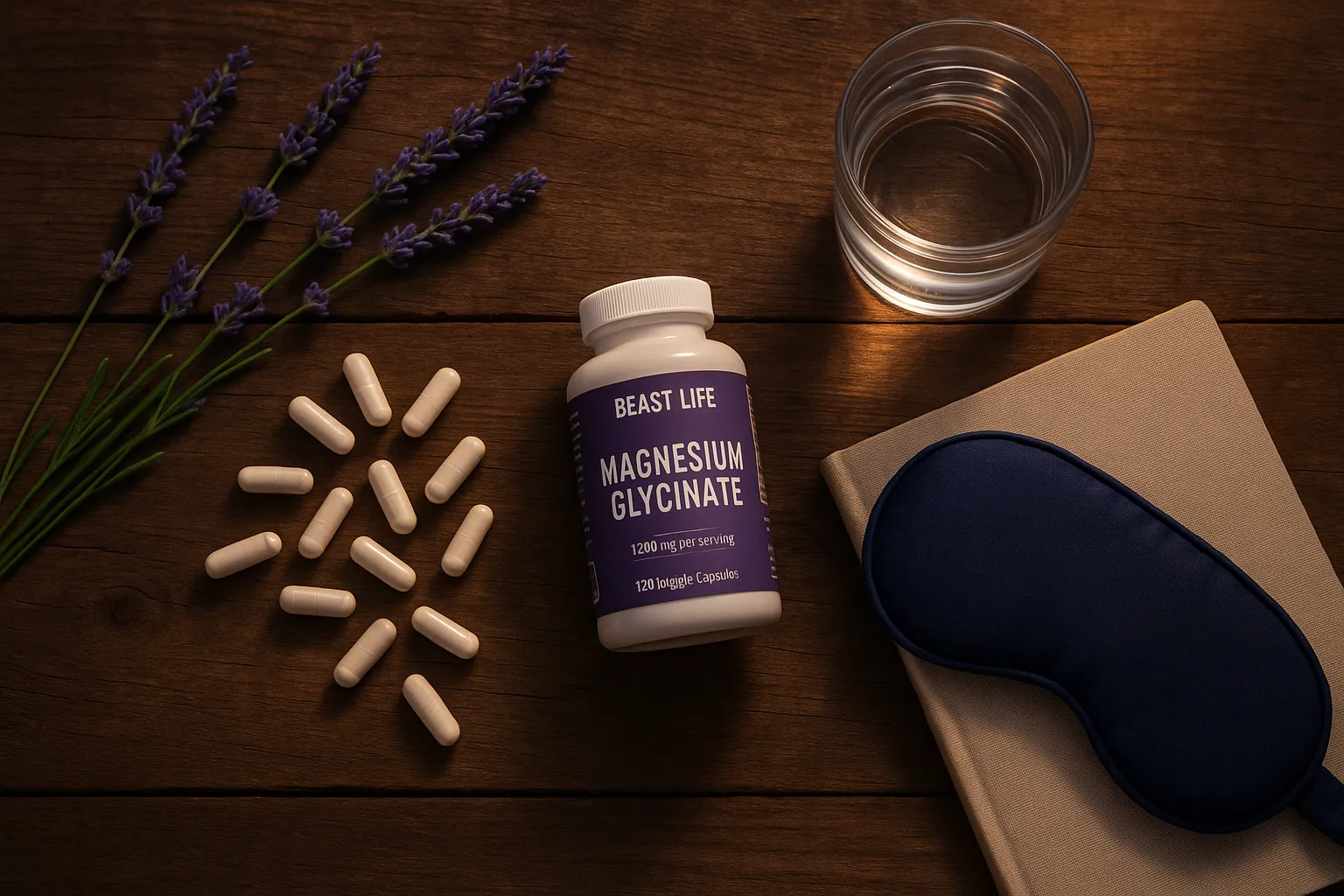
Quick Nutrition Facts
Per 1 Serving (Typical: 200mg elemental Mg)
| Nutrient | Amount |
|---|---|
| Calories | 0 kcal |
| Protein | 0g |
| Carbohydrates | 0g |
| Fiber | 0g |
| Sugars | 0g |
| Fat | 0g |
| Elemental Magnesium | 200mg (50% DV) |
| Glycine (from chelate) | ~1400mg |
Recommended Dosage: 200-400mg elemental magnesium daily
Macronutrient Breakdown
 ChatGPT
  Claude
  AI Mode
  Perplexity
NUTRITIONIST INSIGHT
Magnesium Glycinate combines elemental magnesium with glycine amino acid, providing dual benefits: superior absorption without digestive upset plus calming effects from glycine. 50-60% of adults don't meet daily magnesium requirements (310-420mg), making supplementation valuable for sleep, stress, and muscle function.
Myth Busters
MYTH #1: All Magnesium Forms Are the Same
TRUTH: Absorption varies dramatically by form. Glycinate offers 40-50% absorption vs 4-5% for oxide. Glycinate and citrate are most bioavailable; oxide is cheap but poorly absorbed. Choose based on goals: glycinate for sleep/stress, citrate for constipation, oxide not recommended.
MYTH #2: High Doses Work Better for Sleep
TRUTH: 200-400mg is optimal for sleep. Higher doses (600mg+) don't improve sleep quality and may cause morning grogginess or diarrhea. Studies show 200-400mg improves sleep onset and quality without next-day effects. More is not better.
MYTH #3: Magnesium and Calcium Should Always Be Taken Together
TRUTH: Magnesium and calcium compete for absorption. Best practice: calcium in morning, magnesium at night for optimal uptake. Maintain 2:1 calcium to magnesium ratio overall (800mg Ca to 400mg Mg daily) but separate dosing times.
MYTH #4: You Can Get Enough Magnesium from Food Alone
TRUTH: Modern diets often fall short due to soil depletion, food processing, and low intake of magnesium-rich foods (leafy greens, nuts, seeds). 48% of Americans consume less than required amounts. Athletes, diabetics, and older adults have higher needs. Supplementation fills gaps effectively.
MYTH #5: Magnesium Causes Kidney Stones
TRUTH: Magnesium actually prevents calcium oxalate kidney stones by binding oxalate in intestines and reducing urinary calcium. Calcium supplements without magnesium increase stone risk. 400mg magnesium daily is protective, not harmful to kidneys in healthy individuals.
MYTH #6: Immediate Sleep Results After First Dose
TRUTH: Magnesium supports sleep through gradual tissue restoration, not immediate sedation. Benefits appear after 1-4 weeks of consistent use as magnesium levels normalize. Some notice improved relaxation within days, but full sleep quality improvements require sustained supplementation.
NutriScore by Health Goals
| Health Goal | NutriScore | Why This Score? |
|---|---|---|
| Weight Loss |  | Supports metabolism and sleep quality crucial for fat loss. 200-300mg daily aids recovery and stress management. Doesn't directly burn fat but optimizes conditions for weight loss. |
| Muscle Gain |  | Essential for protein synthesis, muscle contraction, and recovery. 300-400mg daily prevents cramps, supports testosterone production, and enhances workout performance. |
| Diabetes Management | | Improves insulin sensitivity and glucose control in type 2 diabetes. 300-400mg daily lowers fasting glucose and HbA1c. Monitor blood sugar with doctor. |
| PCOS Management | | Reduces insulin resistance and inflammation in PCOS. 300-400mg daily improves metabolic markers and menstrual regularity. Combine with lifestyle changes. |
| Pregnancy Nutrition | | Prevents leg cramps, supports fetal development, and reduces preeclampsia risk. 350-360mg daily recommended during pregnancy. Consult OB-GYN for dosage. |
| Viral/Flu Recovery | | Supports immune function and reduces inflammation. 200-300mg daily aids recovery and sleep quality during illness. Not a cure but supports overall healing. |
PERSONALIZED NUTRITION
Track your meals with NutriScan for personalized NutriScores based on your specific health goals!
Sleep Quality Improvement Timeline
Understanding how magnesium glycinate affects sleep quality over time helps set realistic expectations.
Sleep Quality Enhancement Over Weeks
This chart shows typical sleep quality improvement with consistent Magnesium Glycinate supplementation (200-400mg nightly). Individual responses vary. Not medical advice.
How to Maximize Sleep Benefits
Combining magnesium glycinate with proper sleep hygiene enhances sleep quality:
- ⏰ Take 1-2 hours before bed - Allows absorption and onset of calming effects
- 🌙 Consistent timing - Same time nightly reinforces circadian rhythm
- 🚫 Avoid screens - Blue light counteracts magnesium's relaxation benefits
- 🛏️ Cool, dark room - Magnesium supports melatonin; optimize sleep environment
This combination leverages magnesium's GABA regulation and melatonin support while creating ideal conditions for deep, restorative sleep.
Cultural Significance
Magnesium was first isolated in 1808 by Sir Humphry Davy and named after Magnesia, a region in Greece rich in magnesium compounds.
In Medicine:
- Recognized as essential nutrient in early 1900s
- Used in hospitals for eclampsia treatment since 1906
- Deficiency linked to 300+ enzymatic reactions in human body
- Critical for ATP energy production, discovered in 1940s
Global Impact:
- Fourth most abundant mineral in human body (25g total)
- Required for DNA/RNA synthesis and cellular function
- 48% of Americans don't meet daily requirements due to processed foods
- Global supplement market exceeds $500 million annually for sleep and wellness
- Glycinate form patented in 1980s for superior absorption
Compare & Substitute
Magnesium Glycinate vs Other Magnesium Forms (Per 200mg Elemental Magnesium)
| Nutrient | 🧠 Glycinate | 🍋 Citrate | 💊 Oxide | 🧂 Chloride |
|---|---|---|---|---|
| Bioavailability | 40-50% | 30-40% | 4-5% | 12-20% |
| Absorption Rate | High | High | Very Low | Moderate |
| Digestive Upset | Minimal | Moderate | High | Low |
| Laxative Effect | None | Yes (mild) | Yes (strong) | Minimal |
| Best For | Sleep, stress | Constipation | Not recommended | Deficiency |
| Cost | Higher | Moderate | Low | Moderate |
| Calming Effect | Yes (glycine) | No | No | No |
Frequently Asked Questions
Does Magnesium Glycinate really improve sleep?
Yes, magnesium glycinate supports sleep quality by regulating GABA neurotransmitters (calming brain activity) and improving melatonin production. Studies show improvements in sleep duration, sleep onset latency, and reduced insomnia symptoms.
Best practices: 200-400mg 1-2 hours before bed; consistent nightly timing; allow 1-4 weeks for full benefits; combine with sleep hygiene practices.
What is the best dosage for Magnesium Glycinate?
Standard dosage is 200-400mg elemental magnesium daily depending on goals and deficiency status.
Dosing by goal:
- Sleep improvement: 200-400mg 1-2 hours before bed
- Muscle recovery: 200-300mg post-workout or evening
- General health: 200-300mg with dinner
- Deficiency correction: 300-400mg daily (split if needed)
Start with 200mg to assess tolerance; increase to 300-400mg after 1 week if no digestive upset. Never exceed 400mg supplemental magnesium without medical supervision.
Why Magnesium Glycinate instead of other forms?
Glycinate offers superior absorption (40-50% vs 4-5% for oxide) with minimal digestive side effects. Chelated to amino acid glycine, which itself has calming properties and enhances sleep benefits.
Choose glycinate for: Sleep improvement; stress reduction; muscle recovery; sensitive digestive system. Choose citrate for: Constipation relief. Avoid oxide: Poor absorption makes it ineffective despite low cost.
Can I take Magnesium Glycinate with Calcium?
Yes, but optimal timing separates doses. Magnesium and calcium compete for absorption pathways. Take magnesium at night (sleep benefits), calcium in morning with food for best uptake.
Best practices: Maintain 2:1 calcium to magnesium ratio overall (800mg Ca to 400mg Mg daily); separate dosing by 6-8 hours; both support bone health when balanced; avoid high-dose calcium without magnesium (increases stone risk).
When should I take Magnesium Glycinate?
Best taken 1-2 hours before bed for sleep improvement. Consistent evening timing enhances effectiveness by supporting natural relaxation rhythms.
Timing by goal:
- Sleep quality: 1-2 hours before bed (8-10pm typical)
- Muscle recovery: Post-workout or before bed
- General wellness: With dinner or before bed
- Split dosing: Half morning, half evening (if taking 400mg)
Taking with small amount of food reduces potential stomach upset without significantly affecting absorption.
Is Magnesium Glycinate safe for daily use?
Yes, safe for long-term daily use at 200-400mg doses. Glycinate form has minimal side effects compared to citrate or oxide. Upper limit is 350mg from supplements for adults (dietary magnesium unlimited).
Avoid or consult doctor if you have:
- Kidney disease: Reduced clearance may cause accumulation
- Heart block or AV block: May worsen conduction issues
- Myasthenia gravis: May increase muscle weakness
- Taking antibiotics: May reduce antibiotic absorption (separate by 2 hours)
Safe during pregnancy at recommended doses (350-360mg); always inform your healthcare provider.
How long does it take to feel effects?
Sleep and relaxation benefits may appear within 3-7 days, but full effects develop over 1-4 weeks as magnesium tissue stores normalize. Muscle recovery improvements noticed within 1-2 weeks of consistent use.
Timeline expectations: Days 1-3: Mild relaxation, slight sleep ease; Week 1-2: Improved sleep onset, reduced muscle tension; Week 3-4: Consistent deep sleep, better stress resilience. Patience and consistency required for sustained benefits.


Similar Nutritious Supplements
4505 Chicharrones Classic Chili Salt
7 Eleven Japan Crispy Corn Cheese
Explore More Nutrition Tools & Resources
AI Calorie Counter App - Snap a Photo, Get Macros
AI Nutritionist App That Reads Your Logged Meals
Best Protein Supplements for Women
Bulking Meal Plan App That Sets Your Surplus
ChatGPT Calorie Counter Alternative That Keeps the Total
ChatGPT Diet Plan Alternative That Tracks What You Eat
ChatGPT Weight Loss Coach Alternative With a Food Log
Fast Food Calorie Counter App That Reads the Tray
Free Calorie Tracker App with AI Photo Scans | NutriScan
Indian Diet Plan App With Veg and Non Veg Meals
Indian Food Calorie Calculator - Get Instant Nutrition Facts for Desi Meals — 2026
Intermittent Fasting for Women, Timer and Meal Log App
Intermittent Fasting Tracker App - Free Fasting Timer
Macro Tracker App That Fills the Numbers From a Photo
Mediterranean Diet Meal Plan App That Counts the Oil
Micronutrient Tracker App for Vitamins and Minerals
MyFitnessPal Alternative That Stays Free | NutriScan
NutriScore App: A Free Grade on Every Meal | NutriScan
Nutrition Label Scanner App for the Amount You Ate
Second Trimester Protein Guide
Vegetarian Meal Plan App With a Protein Target
Voice Calorie Counter - Speak to Track Meals Hands-Free
Water and Calorie Tracker App - Free Water Log