Beet Hummus: Calories, Nutrition and Health Benefits
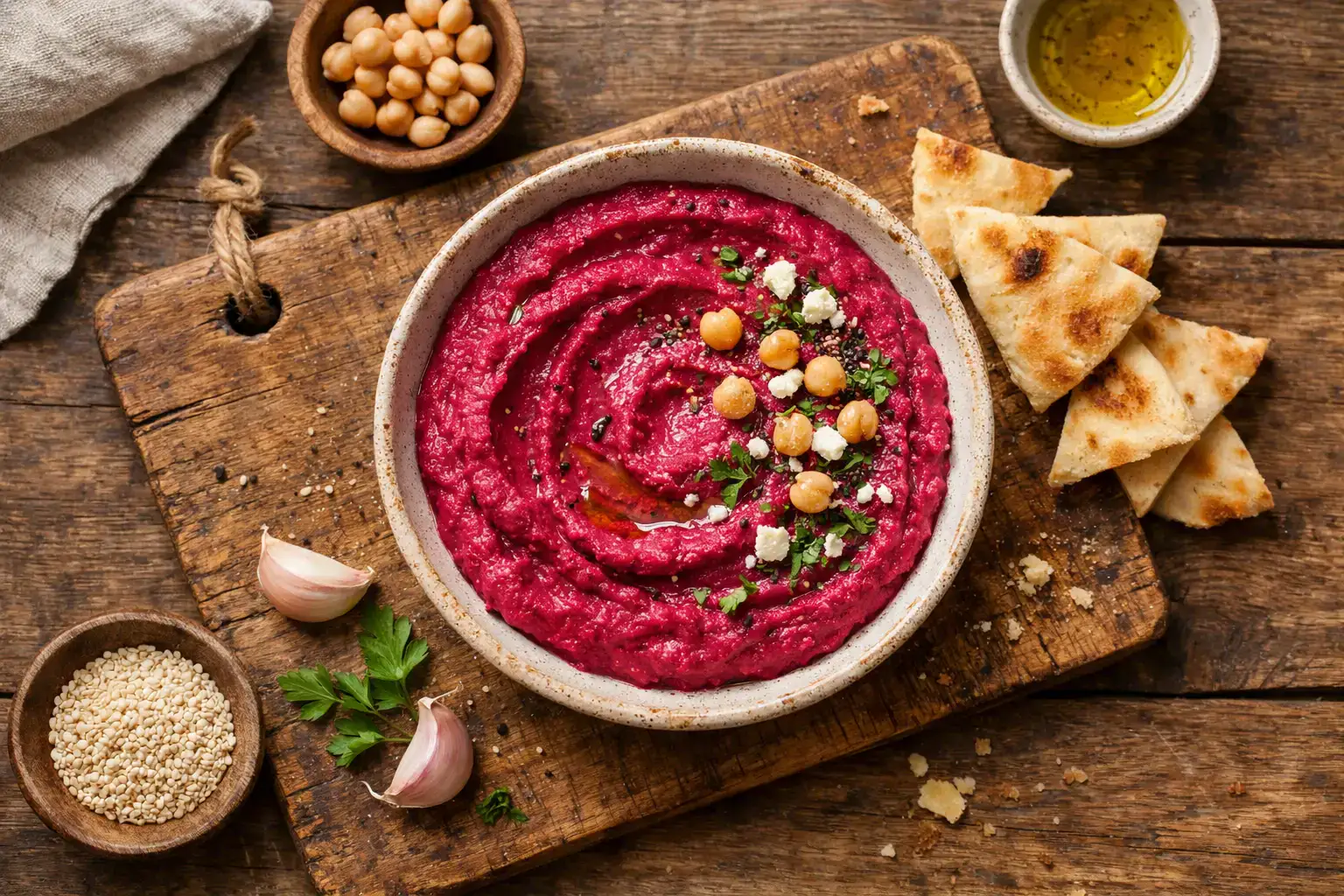
A vibrant, nutrient-dense dip combining chickpea protein and fiber with beetroot nitrates for heart health, blood pressure support, and antioxidant power.
Quick Nutrition Facts
Per 2 tbsp (30g)
| Nutrient | Amount |
|---|---|
| Calories | 70 kcal |
| Protein | 2g |
| Carbohydrates | 7g |
| Fiber | 1.5g |
| Sugars | 1.5g |
| Fat | 4g |
| Sodium | 130mg |
| Iron | 0.6mg |
| Folate | 15mcg |
| Potassium | 65mg |
Macronutrient Breakdown
 ChatGPT
  Claude
  AI Mode
  Perplexity
NUTRITIONIST INSIGHT
Beet hummus delivers a unique nutritional advantage: beetroot nitrates can lower systolic blood pressure by 3-5 mmHg, while chickpea fiber and protein keep you fuller for longer. The betalain pigments giving it that vibrant color are powerful antioxidants linked to reduced inflammation.
Myth Busters
MYTH #1: Beet Hummus Is High in Calories
TRUTH: A 2 tbsp serving has only 70 calories. The chickpea fiber and protein promote satiety, making it a smart snack choice that helps control overall calorie intake throughout the day.
MYTH #2: Beet Hummus Spikes Blood Sugar
TRUTH: Hummus has a very low glycemic index of approximately 15. Studies show hummus reduces postprandial glucose response by 4x compared to white bread, making it one of the most blood-sugar-friendly dips available.
MYTH #3: The Red Color Means It's Full of Artificial Dyes
TRUTH: The vibrant pink-red color comes entirely from natural betalain pigments in beetroot. These are potent antioxidants with anti-inflammatory and blood pressure-lowering properties. No artificial colors needed.
MYTH #4: Hummus Is Too High in Fat to Be Healthy
TRUTH: The 4g fat per serving comes from tahini and olive oil - heart-healthy monounsaturated and polyunsaturated fats. Research shows hummus consumers have better diet quality and are 53% less likely to be obese.
MYTH #5: Beet Hummus Has No Real Protein
TRUTH: With 7g protein per 100g from chickpeas and tahini, beet hummus provides meaningful plant-based protein. Chickpeas and sesame together offer a complementary amino acid profile, making it a quality protein source for vegetarians.
NutriScore by Health Goals
| Health Goal | NutriScore | Why This Score? |
|---|---|---|
| Weight Loss |  | Only 70 cal/serving, high satiety from fiber + protein, very low GI (~15). Pair with raw veggies for a filling 100-calorie snack. |
| Muscle Gain |  | Plant protein from chickpeas + tahini, beetroot nitrates may enhance exercise performance and blood flow to muscles. |
| Diabetes Management | | Very low GI (~15), hummus reduces postprandial glucose 4x vs bread. Fiber slows carb absorption. |
| PCOS Management | | Low GI minimizes insulin spikes, anti-inflammatory betalains, fiber supports hormonal balance. Stick to 2-4 tbsp daily. |
| Pregnancy Nutrition | | Chickpeas are rich in folate essential for fetal development, plant-based iron, and fiber. Beetroot provides additional nitrate support for blood pressure. |
| Viral/Flu Recovery | | Easy to eat when appetite is low, provides protein and iron for immune support, antioxidant betalains reduce inflammation. |
PERSONALIZED NUTRITION
Track your meals with NutriScan for personalized NutriScores based on your specific health goals!
Blood Sugar Response to Beet Hummus
Understanding how beet hummus affects your blood glucose can help you make informed snacking decisions.
Typical Glucose Response Curve
This chart shows typical blood glucose response for general healthy individuals. Individual responses may vary. Not medical advice.
How to Flatten the Spike
Pairing hummus with fiber-rich vegetables further slows glucose absorption and maximizes nutritional value:
- 🥕 Carrot and celery sticks - Extra fiber and crunch with minimal calories
- 🥒 Cucumber slices - Hydrating, low-calorie vehicle for the dip
- 🫑 Bell pepper strips - Adds vitamin C for better iron absorption
- 🥦 Broccoli florets - Additional fiber and sulforaphane antioxidants
This combination keeps blood sugar remarkably stable while delivering a satisfying, nutrient-dense snack.
Cultural Significance
Hummus has ancient roots in the Middle East, dating back thousands of years. The addition of beetroot is a modern twist that has gained popularity worldwide.
Middle Eastern Heritage:
- Hummus originates from the Levant region (Lebanon, Palestine, Syria, Israel)
- The word "hummus" means "chickpeas" in Arabic
- Traditional preparation involves slow-cooking chickpeas with tahini, lemon, and garlic
- Considered a staple food, served at nearly every meal
Beetroot Addition - Global Trend:
- Beet hummus emerged from health-food movements in the 2010s
- Popular in Mediterranean, Nordic, and plant-based cuisines
- Beetroot has been used medicinally since Roman times for blood and liver health
- India uses beetroot in chutneys, raitas, and Ayurvedic preparations for blood purification
Modern Adoption:
- Among the fastest-growing hummus varieties globally
- Featured in wellness cafes, meal prep services, and grocery stores worldwide
- Appeals to the visual food culture on social media due to its vibrant color
Compare & Substitute
Beet Hummus vs Similar Dips (Per 100g)
| Nutrient | Beet Hummus | Classic Hummus | Guacamole | Tzatziki |
|---|---|---|---|---|
| Calories | 233 kcal | 266 kcal | 160 kcal | 66 kcal |
| Carbs | 23g | 14g | 9g | 4g |
| Fiber | 5g | 6g | 7g | 0g |
| Protein | 7g | 8g | 2g | 3g |
| Fat | 13g | 18g | 15g | 3g |
| Potassium | 215mg | 228mg | 485mg | 155mg |
| Iron | 2mg | 2.4mg | 0.6mg | 0.1mg |
| Best For | Heart health, blood pressure | Classic protein dip, versatile | Healthy fats, potassium | Low-calorie, probiotics |
Frequently Asked Questions
Is beet hummus good for weight loss?
Yes, beet hummus is excellent for weight loss. At only 70 calories per 2 tbsp, it provides satisfying protein and fiber that promote fullness. The very low glycemic index (~15) prevents blood sugar spikes and cravings.
Best practices: Stick to 2 tbsp per serving, pair with raw vegetables instead of pita, and use as a salad dressing alternative.
Can diabetics eat beet hummus?
Beet hummus is one of the best dip choices for diabetics. Hummus has a glycemic index of approximately 15, and studies show it reduces postprandial glucose response significantly.
Tips for diabetics:
- Enjoy 2-4 tbsp per serving with raw vegetables
- Use as a spread instead of higher-GI condiments
- The fiber and healthy fats slow carbohydrate absorption
- Monitor blood sugar response as individual results vary
How much protein is in beet hummus?
A 2 tbsp serving contains 2g of protein, or about 7g per 100g. The protein comes from chickpeas and tahini, which together provide a complementary amino acid profile.
For higher protein intake, pair beet hummus with whole grain crackers or add extra chickpeas on top.
What are the main health benefits of beet hummus?
Key Benefits:
- Blood Pressure Support: Beetroot nitrates lower systolic BP by 3-5 mmHg
- Gut Health: Chickpea fiber acts as a prebiotic, supporting beneficial bacteria
- Anti-inflammatory: Betalain antioxidants reduce systemic inflammation
- Heart Health: Healthy fats from tahini and olive oil support cardiovascular function
- Blood Sugar Control: Very low GI prevents glucose spikes
- Iron and Folate: Plant-based iron and folate support pregnancy and energy
Is beet hummus healthier than regular hummus?
Beet hummus has a slight nutritional edge over classic hummus. The beetroot adds dietary nitrates for blood pressure support, betalain antioxidants for inflammation, and additional folate. Calorie and macro profiles are similar, but the added beetroot provides unique phytonutrients not found in regular hummus.
Choose beet hummus if: You want blood pressure support, extra antioxidants, or pregnancy-friendly folate.
How much beet hummus should I eat per day?
General Guidelines:
- 2 tbsp daily - Weight loss or calorie-conscious goals (70 calories)
- 2-4 tbsp daily - General health and balanced eating (70-140 calories)
- 4-6 tbsp daily - Athletes, pregnancy, or higher calorie needs (140-210 calories)
Avoid excess: More than 6 tbsp per day adds significant sodium (390mg+). Balance with other protein sources throughout the day.
Track your meals with NutriScan app to see how beet hummus fits your personal nutrition goals.
Can I eat beet hummus during pregnancy?
Absolutely safe and recommended. Beet hummus provides folate from chickpeas (critical for neural tube development), plant-based iron, and beetroot nitrates for healthy blood pressure during pregnancy.
Tips for pregnant women:
- Store-bought: Check expiration date and keep refrigerated
- Homemade: Consume within 3-4 days
- Pair with: Whole grain crackers or vegetables for extra nutrients
- Avoid: Unpasteurized or improperly stored hummus


Similar Nutritious Foods
4505 Chicharrones Classic Chili Salt
7 Eleven Japan Crispy Corn Cheese
Explore More Nutrition Tools & Resources
AI Calorie Counter App - Snap a Photo, Get Macros
AI Nutritionist App That Reads Your Logged Meals
Best Protein Supplements for Women
Bulking Meal Plan App That Sets Your Surplus
ChatGPT Calorie Counter Alternative That Keeps the Total
ChatGPT Diet Plan Alternative That Tracks What You Eat
ChatGPT Weight Loss Coach Alternative With a Food Log
Fast Food Calorie Counter App That Reads the Tray
Free Calorie Tracker App with AI Photo Scans | NutriScan
Indian Diet Plan App With Veg and Non Veg Meals
Indian Food Calorie Calculator - Get Instant Nutrition Facts for Desi Meals — 2026
Intermittent Fasting for Women, Timer and Meal Log App
Intermittent Fasting Tracker App - Free Fasting Timer
Macro Tracker App That Fills the Numbers From a Photo
Mediterranean Diet Meal Plan App That Counts the Oil
Micronutrient Tracker App for Vitamins and Minerals
MyFitnessPal Alternative That Stays Free | NutriScan
NutriScore App: A Free Grade on Every Meal | NutriScan
Nutrition Label Scanner App for the Amount You Ate
Second Trimester Protein Guide
Vegetarian Meal Plan App With a Protein Target
Voice Calorie Counter - Speak to Track Meals Hands-Free
Water and Calorie Tracker App - Free Water Log