Beetroot Koshimbir: Calories, Nutrition and Health Benefits
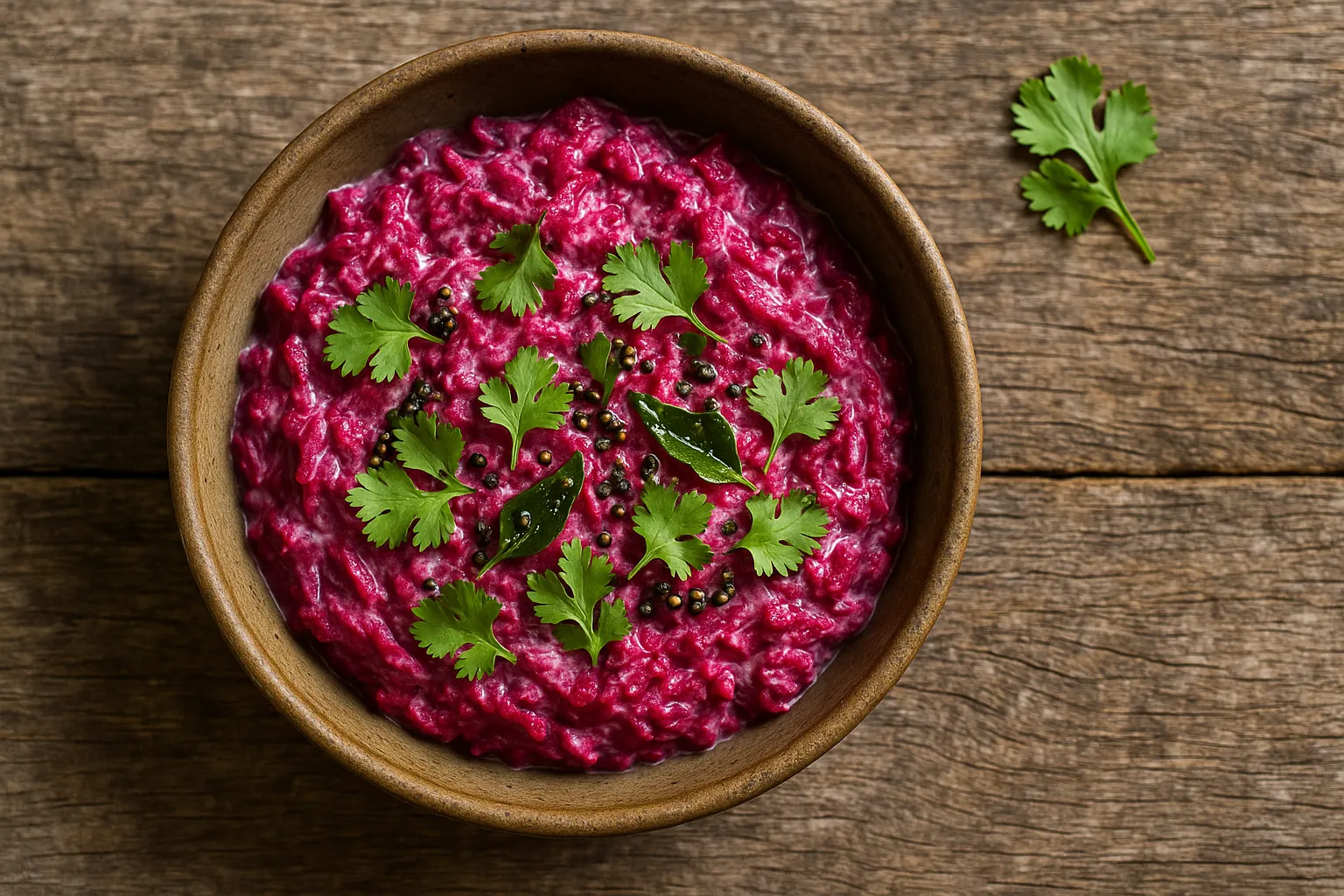
Traditional Maharashtrian probiotic salad combining grated beetroot with yogurt, delivering powerful nitrates, gut-friendly bacteria, and vibrant nutrition in every bite.
Quick Nutrition Facts
Per 100g Serving
| Nutrient | Amount |
|---|---|
| Calories | 65 kcal |
| Protein | 2.5g |
| Carbohydrates | 10g |
| Fiber | 2.5g |
| Sugars | 6.5g |
| Fat | 1.5g |
| Folate | 80mcg |
| Vitamin C | 5mg |
| Potassium | 280mg |
| Calcium | 110mg |
Macronutrient Breakdown
 ChatGPT
  Claude
  AI Mode
  Perplexity
NUTRITIONIST INSIGHT
Beetroot koshimbir combines nitrate-rich beetroot with probiotic yogurt, creating a synergistic effect for blood pressure control and gut health. The tempering with mustard seeds adds anti-inflammatory compounds.
Myth Busters
MYTH #1: Beetroot Has Too Much Sugar for Diabetics
TRUTH: While beetroot contains natural sugars, it has a moderate glycemic index (64) and high fiber that slows absorption. Studies show raw beetroot consumption improves glucose metabolism in Type 2 diabetes when eaten in moderation.
MYTH #2: Koshimbir Spoils Quickly and Isn't Safe
TRUTH: When prepared hygienically, koshimbir stays fresh for 24 hours refrigerated. The yogurt's lactic acid bacteria actually inhibit harmful pathogens. Always use fresh yogurt and clean vegetables.
MYTH #3: Beetroot Stains Are Permanent in Digestion
TRUTH: Pink/red urine or stools after eating beetroot (beeturia) affects 10-14% of people and is completely harmless. It indicates you're absorbing betalain pigments, powerful antioxidants that protect cells.
MYTH #4: Probiotics in Yogurt Don't Survive Digestion
TRUTH: Live cultures in fresh yogurt do reach the intestines and provide benefits. Use fresh curd (dahi) rather than heated yogurt. The probiotic strains improve gut barrier function and immunity.
MYTH #5: Beetroot Increases Blood Sugar Too Much
TRUTH: Research shows beetroot actually improves insulin sensitivity and glucose metabolism. The fiber and nitrates work together to stabilize blood sugar when consumed as part of balanced meals.
MYTH #6: Raw Beetroot Is Hard to Digest
TRUTH: Grated beetroot in koshimbir is easily digestible. The yogurt provides enzymes and probiotics that aid digestion. Only avoid if you have kidney stones (high oxalate content).
NutriScore by Health Goals
| Health Goal | NutriScore | Why This Score? |
|---|---|---|
| Weight Loss |  | Only 65 calories, 2.5g fiber, probiotics promote fullness and gut health. Nitrates may enhance exercise performance. |
| Muscle Gain |  | Low protein (2.5g), but nitrates improve blood flow to muscles. Pair with protein-rich dals for better results. |
| Diabetes Management |  | Moderate GI, high fiber, probiotics improve insulin sensitivity. Limit to 1/2 cup serving. |
| PCOS Management | | Anti-inflammatory nitrates, probiotics for gut-hormone axis, low calorie. Supports insulin sensitivity. |
| Pregnancy Nutrition | | Rich in folate (80mcg per 100g) essential for fetal development, probiotics support maternal immunity, easily digestible. |
| Viral/Flu Recovery | | Probiotics boost immunity, easy to digest, hydrating, vitamin C supports recovery, anti-inflammatory compounds. |
PERSONALIZED NUTRITION
Track your meals with NutriScan for personalized NutriScores based on your specific health goals!
Blood Sugar Response to Beetroot Koshimbir
Understanding how beetroot koshimbir affects your blood glucose helps you incorporate this traditional salad optimally.
Typical Glucose Response Curve
*This chart shows typical blood glucose response for general healthy individuals. Individual responses may vary. Not medical advice.*
How to Flatten the Spike
The combination of fiber, probiotics, and fat in koshimbir already moderates blood sugar, but these pairings enhance the effect:
- 🍛 With dal-rice - Complete protein balances the meal
- 🥘 With roti and vegetable curry - Fiber from vegetables slows absorption
- 🥚 Add roasted papad - Protein and healthy fat combination
- 🌰 Sprinkle roasted peanuts - Adds protein, healthy fats, and crunch
This traditional Indian meal structure naturally creates balanced blood sugar responses.
Cultural Significance
Koshimbir is a cornerstone of Maharashtrian cuisine, representing the region's emphasis on fresh, probiotic-rich foods for digestive health.
In Maharashtra:
- Served daily with main meals, especially lunch
- Variations include carrot, cucumber, cabbage, or mixed vegetable koshimbir
- Tempering (tadka) with mustard seeds, cumin, curry leaves adds medicinal properties
- Fresh homemade curd (dahi) is preferred over store-bought yogurt
- Part of the traditional thali with dal, bhakri/chapati, sabzi, and rice
Regional Variations:
- Karnataka: Called Kosambari, often with moong dal and coconut
- Tamil Nadu: Similar salads called pachadi, more liquid consistency
- Gujarat: Raita-style preparations with different spice profiles
Health Philosophy:
- Ayurveda recognizes beetroot as blood purifier and liver tonic
- Fermented foods like curd considered essential for digestion (agni)
- Raw vegetable salads balance heavy cooked meals
- Mustard seed tempering aids digestion and adds omega-3
Compare & Substitute
Beetroot Koshimbir vs Similar Salads (Per 100g)
| Nutrient | 🥗 Beetroot Koshimbir | 🥒 Cucumber Raita | 🥕 Carrot Koshimbir | 🥗 Mixed Vegetable Raita |
|---|---|---|---|---|
| Calories | 65 kcal | 45 kcal | 60 kcal | 55 kcal |
| Carbs | 10g | 5g | 9g | 7g |
| Fiber | 2.5g | 1g | 2g | 1.5g |
| Protein | 2.5g | 2g | 2g | 2.5g |
| Fat | 1.5g | 1g | 1.2g | 1.3g |
| Folate | 80mcg | 15mcg | 20mcg | 35mcg |
| Nitrates | High | None | Low | Low |
| Vitamin A | 35mcg | 10mcg | 850mcg | 200mcg |
| Best For | Blood pressure, folate needs | Weight loss, hydration | Eye health, vitamin A | General nutrition, variety |
Frequently Asked Questions
Is beetroot koshimbir good for weight loss?
Yes, beetroot koshimbir is excellent for weight loss. At only 65 calories per 100g, it provides 2.5g fiber that promotes fullness; probiotics from yogurt support gut health and metabolism; nitrates may enhance exercise performance for better fat burning.
Best practices: Serve as side dish with main meals, use low-fat curd, limit to 100-150g per serving, add extra cucumber or carrot to increase volume with minimal calories.
Can diabetics eat beetroot koshimbir?
Diabetics can eat beetroot koshimbir in moderation. Beetroot has moderate GI (64) but high fiber content; yogurt's probiotics improve insulin sensitivity; serving size matters most.
Tips for diabetics:
- Limit to 1/2 cup (75-100g) per meal
- Always pair with protein-rich main course
- Best timing: with lunch or dinner, not as snack
- Monitor blood sugar 2 hours after eating
- Choose fresh curd over store-bought sweetened yogurt
Studies show raw beetroot improves glucose metabolism in Type 2 diabetes. Always consult your healthcare provider.
How much protein is in beetroot koshimbir?
Beetroot koshimbir contains 2.5g of protein per 100g, primarily from yogurt. While not a high-protein food, it complements protein-rich dals, legumes, or grilled meats in traditional Indian meals.
For higher protein, add roasted chickpeas, peanuts, or serve with protein-focused main dishes.
What are the main health benefits of koshimbir?
Key Benefits:
- Blood Pressure Control: Dietary nitrates convert to nitric oxide, lowering blood pressure
- Gut Health: Probiotics from fresh curd support digestive health and immunity
- Weight Management: Low calories, high fiber, probiotic-rich for metabolism
- Exercise Performance: Nitrates improve oxygen efficiency during physical activity
- Pregnancy Nutrition: 80mcg folate per 100g supports fetal neural tube development
- Inflammation: Betalains and mustard seeds provide anti-inflammatory compounds
When is the best time to eat beetroot koshimbir?
Depends on your goal:
- Weight Loss: With lunch or dinner as low-calorie side (avoid late night)
- Diabetes: With main meals to slow sugar absorption, preferably lunch
- Exercise Performance: 2-3 hours before workout for nitrate benefits
- Digestion: Anytime, probiotics aid gut health throughout the day
- Pregnancy: With lunch for folate absorption with other nutrients
IMPORTANT NOTE
Consume fresh koshimbir within 24 hours. Refrigerate immediately after preparation. Avoid if pregnant and using unpasteurized yogurt.
Does beetroot koshimbir cause red urine?
Yes, 10-14% of people experience beeturia (pink/red urine or stools) after eating beetroot. This is completely harmless and indicates you're absorbing betalain pigments, which are powerful antioxidants. It's not blood and doesn't indicate any health problem.
Why it happens: Genetic variation affects betalain metabolism; low stomach acid increases likelihood; iron deficiency may increase beeturia. No treatment needed.
How long does beetroot koshimbir stay fresh?
Storage Guidelines:
- Room temperature: 2-3 hours maximum (yogurt spoils quickly)
- Refrigerated: Up to 24 hours in airtight container
- After 24 hours: Discard (yogurt bacteria multiply, beetroot oxidizes)
Best practices: Prepare fresh daily, use clean utensils, refrigerate immediately, don't add salt until serving (salt draws water and makes it watery), store tempering separately if preparing advance.
Can I eat beetroot koshimbir daily?
Generally safe and beneficial for most people when consumed in 100-150g portions daily.
May want to limit if you have:
- Kidney stones: Beetroot is high in oxalates
- IBS/sensitive digestion: Raw vegetables and probiotics may cause bloating initially
- Low blood pressure: Nitrates lower blood pressure further
Optimal approach: Rotate with other koshimbir varieties (cucumber, carrot, cabbage) for diverse nutrients; pair with balanced meals for best results; use fresh ingredients and proper hygiene.




Similar Nutritious Foods
4505 Chicharrones Classic Chili Salt
7 Eleven Japan Crispy Corn Cheese
Explore More Nutrition Tools & Resources
AI Calorie Counter App - Snap a Photo, Get Macros
AI Nutritionist App That Reads Your Logged Meals
Best Protein Supplements for Women
Bulking Meal Plan App That Sets Your Surplus
ChatGPT Calorie Counter Alternative That Keeps the Total
ChatGPT Diet Plan Alternative That Tracks What You Eat
ChatGPT Weight Loss Coach Alternative With a Food Log
Fast Food Calorie Counter App That Reads the Tray
Free Calorie Tracker App with AI Photo Scans | NutriScan
Indian Diet Plan App With Veg and Non Veg Meals
Indian Food Calorie Calculator - Get Instant Nutrition Facts for Desi Meals — 2026
Intermittent Fasting for Women, Timer and Meal Log App
Intermittent Fasting Tracker App - Free Fasting Timer
Macro Tracker App That Fills the Numbers From a Photo
Mediterranean Diet Meal Plan App That Counts the Oil
Micronutrient Tracker App for Vitamins and Minerals
MyFitnessPal Alternative That Stays Free | NutriScan
NutriScore App: A Free Grade on Every Meal | NutriScan
Nutrition Label Scanner App for the Amount You Ate
Second Trimester Protein Guide
Vegetarian Meal Plan App With a Protein Target
Voice Calorie Counter - Speak to Track Meals Hands-Free
Water and Calorie Tracker App - Free Water Log