Bikaji Kaju Katli: Calories, Nutrition and Health Benefits
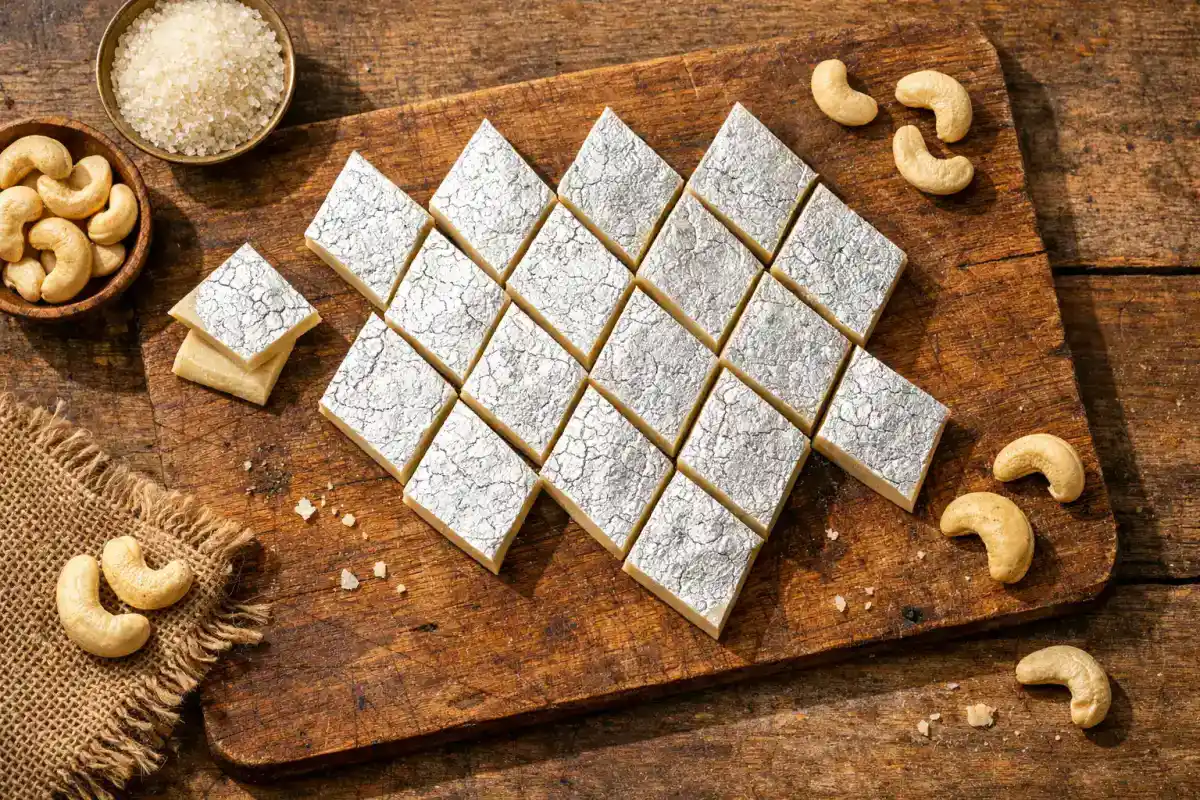
India's beloved diamond-shaped cashew fudge sweet: rich, nutty, and topped with silver leaf. A festive indulgence with 480 calories and 8g protein per 100g.
Quick Nutrition Facts
Per 1 Piece of Kaju Katli (25g)
| Nutrient | Amount |
|---|---|
| Calories | 120 kcal |
| Protein | 2g |
| Carbohydrates | 15.5g |
| Fiber | 0.3g |
| Sugars | 10g |
| Fat | 5.5g |
| Saturated Fat | 1g |
| Copper | 0.5mg |
| Magnesium | 18mg |
| Phosphorus | 30mg |
Macronutrient Breakdown
 ChatGPT
  Claude
  AI Mode
  Perplexity
NUTRITIONIST INSIGHT
Kaju Katli gets its richness from cashews, which provide heart-healthy monounsaturated fats and copper. One piece (25g) delivers 120 calories, so portion control is key during festivals. Pair with a fiber-rich meal to slow sugar absorption.
Myth Busters
MYTH #1: Kaju Katli Is Pure Protein Because It's Made from Nuts
TRUTH: While cashews offer protein, Kaju Katli is primarily sugar and fat. Per 100g it contains 62g carbs (mostly sugar) vs only 8g protein. The sugar syrup and ghee dominate the nutritional profile.
MYTH #2: Silver Leaf (Vark) on Kaju Katli Is Harmful
TRUTH: Edible silver leaf used on authentic Kaju Katli is food-grade pure silver, which passes through the body without absorption. It has been used in Indian sweets for centuries and is recognized as safe by food authorities.
MYTH #3: Kaju Katli Is a Healthy Snack Because Cashews Are Healthy
TRUTH: Raw cashews are nutritious, but Kaju Katli adds 40g sugar per 100g during preparation. The health benefits of cashews are partially offset by the high sugar content in the finished sweet. Treat it as an occasional indulgence, not a health food.
MYTH #4: Diabetics Can Eat Kaju Katli Freely Because Nuts Lower Blood Sugar
TRUTH: While cashew consumption may improve HDL cholesterol, Kaju Katli's 40g sugar per 100g causes significant blood glucose spikes. Diabetics should limit to half a piece and always pair with fiber.
MYTH #5: Homemade Kaju Katli Is Much Healthier Than Store-Bought
TRUTH: Homemade versions use the same core ingredients: cashews, sugar, and ghee. You can reduce sugar by 15-20%, but the calorie-dense nature remains. The main advantage of homemade is freshness and absence of preservatives.
NutriScore by Health Goals
| Health Goal | NutriScore | Why This Score? |
|---|---|---|
| Weight Loss |  | 480 cal/100g is very calorie-dense. Limit to 1 piece (120 cal) on special occasions only. |
| Muscle Gain |  | Provides 8g protein per 100g from cashews plus quick carbs for post-workout energy, but sugar-heavy. |
| Diabetes Management | | High sugar (40g/100g) causes blood glucose spikes. Cashews alone improve glycemic markers, but the added sugar negates benefits. |
| PCOS Management | | High glycemic load worsens insulin resistance. Avoid regular consumption; limit to half a piece if craving. |
| Pregnancy Nutrition | | Cashews provide copper and magnesium beneficial during pregnancy, but high sugar intake increases gestational diabetes risk. Limit to 1 piece. |
| Viral/Flu Recovery | | Quick energy from sugar, plus zinc and copper from cashews support immune function. Acceptable in small amounts during recovery. |
PERSONALIZED NUTRITION
Track your meals with NutriScan for personalized NutriScores based on your specific health goals!
Blood Sugar Response to Kaju Katli
Understanding how Kaju Katli affects your blood glucose can help you make informed decisions about portion size and pairing.
Typical Glucose Response Curve
*This chart shows typical blood glucose response for general healthy individuals. Individual responses may vary. Not medical advice.*
How to Flatten the Spike
Pairing high-sugar sweets with protein or fiber slows glucose absorption and reduces the peak blood sugar level:
- 🥛 A glass of warm milk - Protein and fat slow sugar absorption
- 🥜 A handful of almonds or walnuts - Healthy fats and fiber buffer the glucose spike
- 🫘 Chana or sprouts beforehand - Fiber-rich starter reduces glycemic impact
- 🚶 A 15-minute walk after eating - Physical activity helps muscles absorb glucose faster
This combination not only reduces the glucose spike but also extends energy release, keeping you more stable after indulging.
Cultural Significance
Kaju Katli is one of India's most iconic and premium sweets, deeply woven into festive and ceremonial life.
In India:
- The most gifted sweet during Diwali, Raksha Bandhan, and weddings
- Diamond shape and silver leaf symbolize prosperity and purity
- Originated in Rajasthan; Bikaji (est. 1986, Bikaner) is among the most recognized brands
- Every Indian state has its own variation: some add saffron, rose water, or pistachios
Global Impact:
- Exported worldwide to Indian diaspora communities in 50+ countries
- One of the first Indian sweets to gain popularity in Western markets
- Premium versions use A-grade cashews (W240/W320 grade) for smoother texture
Compare & Substitute
Kaju Katli vs Similar Indian Sweets (Per 100g)
| Nutrient | Kaju Katli | Gulab Jamun | Soan Papdi | Barfi (Milk) |
|---|---|---|---|---|
| Calories | 480 kcal | 387 kcal | 450 kcal | 380 kcal |
| Carbs | 62g | 54g | 55g | 50g |
| Fiber | 1g | 0.3g | 0.5g | 0.2g |
| Protein | 8g | 4g | 5g | 7g |
| Fat | 22g | 18g | 24g | 16g |
| Sugar | 40g | 45g | 38g | 42g |
| Key Micro | Copper 2mg | Calcium 80mg | Iron 1.5mg | Calcium 120mg |
| Best For | Nut-based indulgence | Syrup-soaked celebrations | Flaky, lighter texture | Milk-based nutrition |
Frequently Asked Questions
How many calories are in one piece of Kaju Katli?
1 piece of Kaju Katli (approximately 25g) contains about 120 calories, with 15.5g carbohydrates, 5.5g fat, and 2g protein. During festivals, people typically eat 3-5 pieces, which adds up to 360-600 calories.
Portion tip: Limit to 1-2 pieces per sitting and track with NutriScan to stay within your daily calorie goals.
Is Kaju Katli good for weight loss?
Kaju Katli is not ideal for weight loss at 480 kcal per 100g. However, complete restriction leads to cravings and binge eating.
Smart approach:
- Limit to 1 small piece (25g, 120 cal) on special occasions
- Eat after a protein-rich meal to reduce overall consumption
- Choose smaller, thinner pieces over thick cuts
- Track festive eating with the NutriScan app to stay accountable
Can diabetics eat Kaju Katli?
Diabetics should exercise caution. The 40g sugar per 100g causes significant blood glucose elevation.
Tips for diabetics:
- Limit to half a piece (12g, ~60 cal)
- Always eat after a fiber-rich meal, never on empty stomach
- Monitor blood sugar 2 hours after eating
- Choose sugar-free Kaju Katli alternatives when available
Consult your healthcare provider for personalized advice on festive sweet consumption.
What is Kaju Katli made of?
Traditional Kaju Katli contains finely ground cashew nuts (50-60%), sugar (30-35%), water, ghee, and sometimes cardamom for flavoring. It is topped with edible silver leaf (vark) for its signature appearance.
Bikaji uses premium W240/W320 grade cashews and follows traditional Rajasthani recipes for authentic taste and smooth texture.
Is Kaju Katli healthier than other Indian sweets?
Among Indian sweets, Kaju Katli is a relatively better choice because cashews provide 8g protein, healthy monounsaturated fats, copper, and magnesium per 100g.
Compared to alternatives:
- Better than gulab jamun (mostly sugar syrup, minimal protein)
- Better than jalebi (pure sugar, zero protein or healthy fats)
- Similar to pista barfi (pistachio-based, comparable nutrition)
- Worse than dry fruit ladoo (less sugar, more fiber)
How should I store Kaju Katli?
Storage guidelines:
- Room temperature (cool, dry place): up to 2 weeks in airtight container
- Refrigerated: up to 4 weeks in sealed container
- Avoid moisture, direct sunlight, and strong odors
- Bring to room temperature 15-20 minutes before serving for best flavor and texture




Similar Nutritious Foods
4505 Chicharrones Classic Chili Salt
7 Eleven Japan Crispy Corn Cheese
Explore More Nutrition Tools & Resources
AI Calorie Counter App - Snap a Photo, Get Macros
AI Nutritionist App That Reads Your Logged Meals
Best Protein Supplements for Women
Bulking Meal Plan App That Sets Your Surplus
ChatGPT Calorie Counter Alternative That Keeps the Total
ChatGPT Diet Plan Alternative That Tracks What You Eat
ChatGPT Weight Loss Coach Alternative With a Food Log
Fast Food Calorie Counter App That Reads the Tray
Free Calorie Tracker App with AI Photo Scans | NutriScan
Indian Diet Plan App With Veg and Non Veg Meals
Indian Food Calorie Calculator - Get Instant Nutrition Facts for Desi Meals — 2026
Intermittent Fasting for Women, Timer and Meal Log App
Intermittent Fasting Tracker App - Free Fasting Timer
Macro Tracker App That Fills the Numbers From a Photo
Mediterranean Diet Meal Plan App That Counts the Oil
Micronutrient Tracker App for Vitamins and Minerals
MyFitnessPal Alternative That Stays Free | NutriScan
NutriScore App: A Free Grade on Every Meal | NutriScan
Nutrition Label Scanner App for the Amount You Ate
Second Trimester Protein Guide
Vegetarian Meal Plan App With a Protein Target
Voice Calorie Counter - Speak to Track Meals Hands-Free
Water and Calorie Tracker App - Free Water Log