Blood Oranges: Calories, Nutrition and Health Benefits
Winter's ruby-red citrus gem packed with anthocyanins, vitamin C, and heart-protective antioxidants not found in regular oranges.
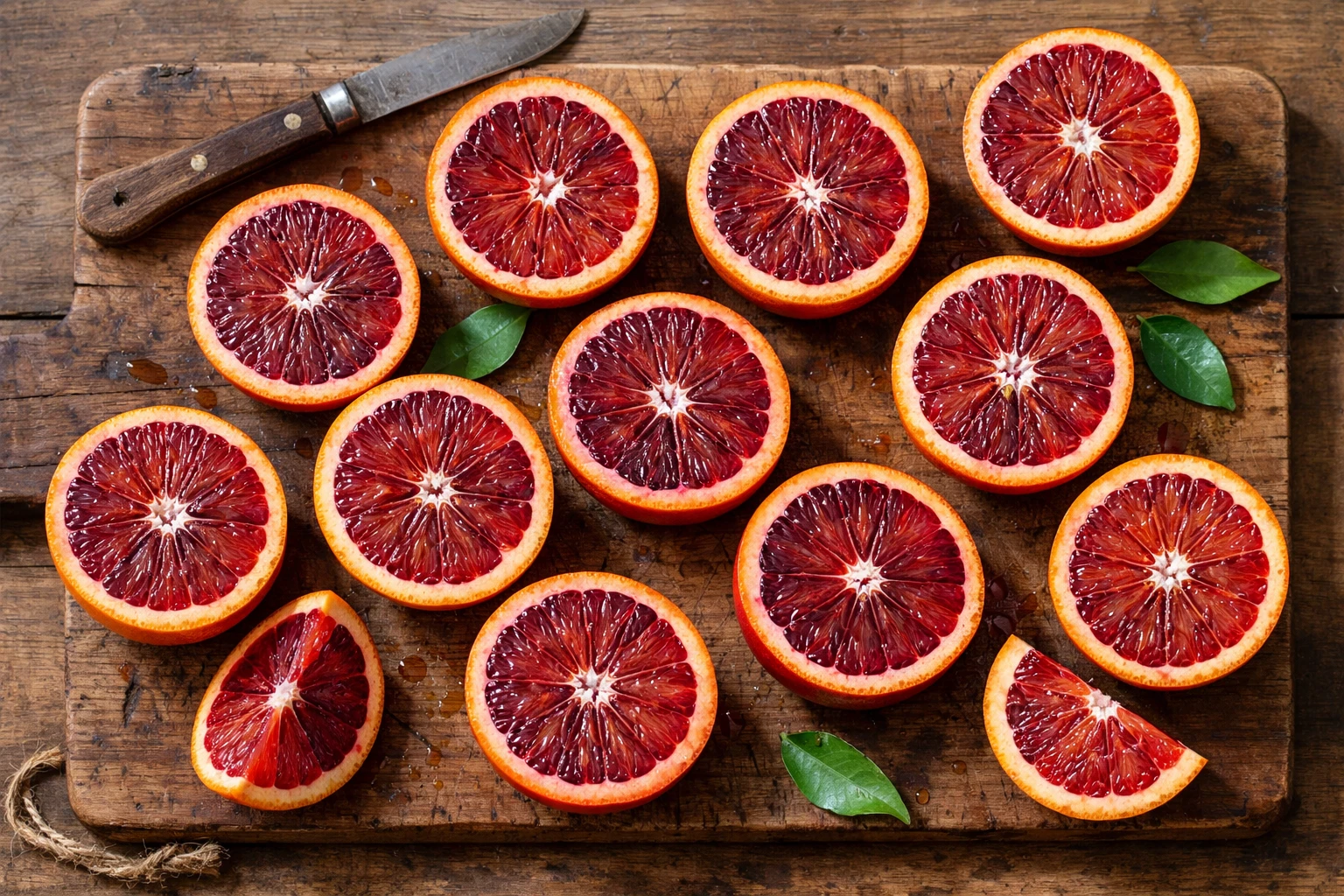
Quick Nutrition Facts
Per 1 Medium Blood Orange (131g)
| Nutrient | Amount |
|---|---|
| Calories | 56 kcal |
| Protein | 1.2g |
| Carbohydrates | 12g |
| Fiber | 2.8g |
| Sugars | 9g |
| Fat | 0.2g |
| Vitamin C | 70mg |
| Potassium | 232mg |
| Folate | 39mcg |
| Anthocyanins | 20-60mg |
Macronutrient Breakdown
 ChatGPT
  Claude
  AI Mode
  Perplexity
NUTRITIONIST INSIGHT
Blood oranges are unique among citrus for containing anthocyanins—the same antioxidants found in berries. These develop during cold winter nights and provide cardiovascular benefits beyond what regular oranges offer.
Myth Busters
MYTH #1: Blood Oranges Are Genetically Modified
TRUTH: Blood oranges are a natural mutation that occurred centuries ago in Sicily. The red pigment develops when cold night temperatures activate anthocyanin production—no genetic engineering involved.
MYTH #2: The Red Color Means They're Higher in Sugar
TRUTH: Blood oranges contain similar sugar (9g per fruit) to regular oranges. The red color comes from anthocyanins, not extra sugar. They actually have a slightly lower glycemic impact due to these antioxidants.
MYTH #3: Regular Oranges Are Just as Healthy
TRUTH: While all citrus is nutritious, blood oranges contain anthocyanins that regular oranges lack. These compounds provide additional anti-inflammatory and heart-protective benefits unique to blood oranges.
MYTH #4: Blood Oranges Are Only Good for Juicing
TRUTH: Blood oranges are excellent eaten fresh—their flavor is more complex with raspberry notes. Eating whole preserves fiber (2.8g) that's lost in juicing. The segments make beautiful additions to salads.
MYTH #5: You Can Get Blood Oranges Year-Round
TRUTH: Blood oranges are seasonal (December-April). Their anthocyanin content is highest during peak season. Off-season, opt for frozen blood orange juice or other anthocyanin-rich foods like berries.
NutriScore by Health Goals
| Health Goal | NutriScore | Why This Score? |
|---|---|---|
| Weight Loss |  | Only 43 cal/100g, 2.4g fiber promotes satiety, natural sweetness curbs cravings without excess calories. |
| Muscle Gain |  | Vitamin C supports collagen synthesis for recovery; potassium helps muscle function. Low protein—pair with Greek yogurt. |
| Diabetes Management | | GI 40-45; anthocyanins may improve insulin sensitivity. Eat half at a time with protein. |
| PCOS Management | | Anti-inflammatory anthocyanins support hormone balance. Moderate sugar—limit to 1 fruit daily. |
| Pregnancy Nutrition | | 39mcg folate supports neural development; vitamin C enhances iron absorption; potassium prevents leg cramps. |
| Viral/Flu Recovery | | 70mg vitamin C (78% DV) boosts immunity; easy to digest; hydrating; anthocyanins reduce inflammation. |
PERSONALIZED NUTRITION
Track your meals with NutriScan for personalized NutriScores based on your specific health goals!
Blood Sugar Response to Blood Orange
Understanding how blood oranges affect your blood glucose can help you make informed decisions about when and how to eat them.
Typical Glucose Response Curve
*This chart shows typical blood glucose response for general healthy individuals. Individual responses may vary. Not medical advice.*
How to Flatten the Spike
Pairing blood orange with protein or healthy fat slows glucose absorption and reduces the peak blood sugar level:
- 🥜 Handful of almonds or walnuts - Adds healthy fats and protein
- 🧀 Cottage cheese or ricotta - Provides protein and calcium
- 🥛 Greek yogurt - Complete protein with probiotics
- 🥚 Hard-boiled eggs - Portable protein pairing
This combination not only reduces the glucose spike but also extends energy release, keeping you fuller for longer.
Cultural Significance
Blood oranges originated in Sicily, Italy, around the 17th-18th century as a natural mutation of the sweet orange.
In Italy & Mediterranean:
- Sicilian blood oranges (Tarocco, Moro, Sanguinello) are protected geographic indication (PGI) products
- Peak harvest celebrated in winter festivals
- Traditional ingredient in Italian granita and sorbets
- Prized for fresh eating and high-quality juice
Global Cultivation:
- California produces most US blood oranges (December-April)
- Spain and Morocco are major European suppliers
- Requires Mediterranean climate with cold winter nights
- Premium pricing reflects limited seasonal availability
Culinary Uses:
- Salads (pairs with fennel, arugula, goat cheese)
- Cocktails and craft beverages
- Marmalades and preserves
- Reduction sauces for duck and pork
Compare & Substitute
Blood Orange vs Similar Citrus (Per 100g)
| Nutrient | 🩸 Blood Orange | 🍊 Navel Orange | 🍋 Grapefruit | 🍊 Cara Cara Orange |
|---|---|---|---|---|
| Calories | 43 kcal | 47 kcal | 42 kcal | 47 kcal |
| Carbs | 9.2g | 12g | 11g | 12g |
| Fiber | 2.4g | 2.4g | 1.6g | 2.4g |
| Vitamin C | 53mg | 53mg | 31mg | 59mg |
| Anthocyanins | 20-60mg | 0mg | 0mg | 0mg |
| Sugar | 6.9g | 9.4g | 7g | 9g |
| Best For | Heart health, antioxidants | Daily vitamin C | Weight loss, low sugar | Pink flesh, lycopene |
Frequently Asked Questions
What makes blood oranges different from regular oranges?
Blood oranges contain anthocyanins—powerful antioxidants that give them red flesh and provide benefits not found in regular oranges. They have a more complex flavor with berry notes and slightly lower sugar content.
Are blood oranges good for weight loss?
Yes; only 43 calories per 100g with 2.4g fiber for fullness. Natural sweetness satisfies cravings without excess calories. The anthocyanins may also support metabolic health.
When is blood orange season?
December through April; peak quality January-February. Cold winter nights intensify red color and anthocyanin content. Buy in season for best flavor and nutrition.
How much vitamin C is in a blood orange?
One medium blood orange provides 70mg vitamin C (78% daily value). This supports immune function, collagen production, and iron absorption—especially valuable during winter months.
Can diabetics eat blood oranges?
Diabetics can enjoy blood oranges in moderation. GI of 40-45 is lower than many fruits; anthocyanins may improve insulin sensitivity. Eat half a fruit with protein or nuts to minimize blood sugar impact.
What are the health benefits of anthocyanins in blood oranges?
Anthocyanins reduce inflammation; support heart health by improving blood vessel function; may lower blood pressure; linked to reduced chronic disease risk. These benefits are unique to blood oranges among citrus fruits.
How should I store blood oranges?
Room temperature for up to 1 week; refrigerator for 2-3 weeks. Don't stack heavy items on them. Let refrigerated oranges come to room temperature before eating for best flavor.
Are blood oranges safe during pregnancy?
Yes; blood oranges are excellent during pregnancy. They provide folate for neural tube development, vitamin C for iron absorption, and potassium for fluid balance. Wash the peel before cutting.




Similar Nutritious Fruits
4505 Chicharrones Classic Chili Salt
7 Eleven Japan Crispy Corn Cheese
Explore More Nutrition Tools & Resources
AI Calorie Counter App - Snap a Photo, Get Macros
AI Nutritionist App That Reads Your Logged Meals
Best Protein Supplements for Women
Bulking Meal Plan App That Sets Your Surplus
ChatGPT Calorie Counter Alternative That Keeps the Total
ChatGPT Diet Plan Alternative That Tracks What You Eat
ChatGPT Weight Loss Coach Alternative With a Food Log
Fast Food Calorie Counter App That Reads the Tray
Free Calorie Tracker App with AI Photo Scans | NutriScan
Indian Diet Plan App With Veg and Non Veg Meals
Indian Food Calorie Calculator - Get Instant Nutrition Facts for Desi Meals — 2026
Intermittent Fasting for Women, Timer and Meal Log App
Intermittent Fasting Tracker App - Free Fasting Timer
Macro Tracker App That Fills the Numbers From a Photo
Mediterranean Diet Meal Plan App That Counts the Oil
Micronutrient Tracker App for Vitamins and Minerals
MyFitnessPal Alternative That Stays Free | NutriScan
NutriScore App: A Free Grade on Every Meal | NutriScan
Nutrition Label Scanner App for the Amount You Ate
Second Trimester Protein Guide
Vegetarian Meal Plan App With a Protein Target
Voice Calorie Counter - Speak to Track Meals Hands-Free
Water and Calorie Tracker App - Free Water Log