Borek: Calories, Nutrition and Health Benefits
A beloved Turkish layered pastry with flaky phyllo, savory cheese or meat filling, and rich Mediterranean flavors.
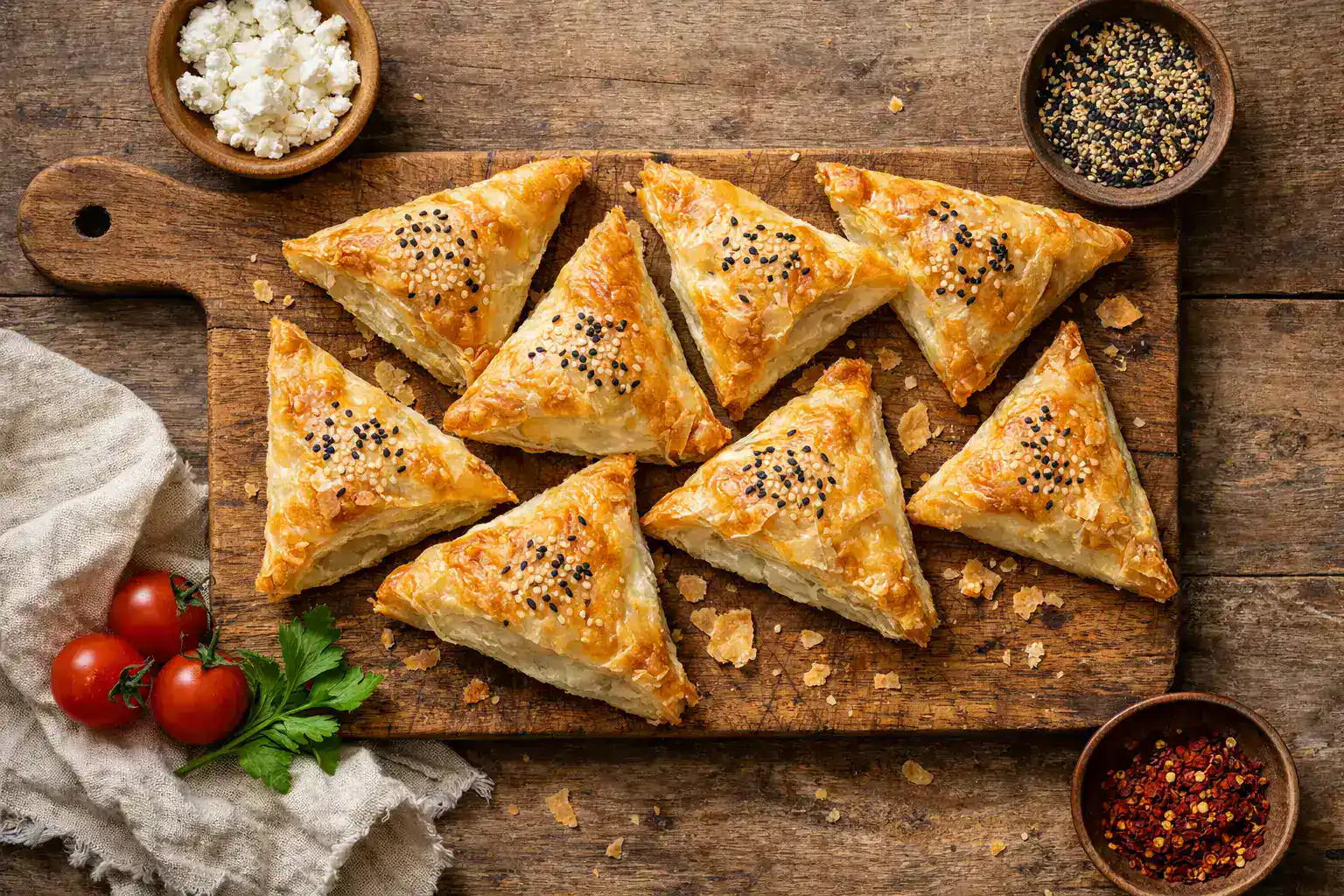
Quick Nutrition Facts
Per 1 Serving (100g)
| Nutrient | Amount |
|---|---|
| Calories | 330 kcal |
| Protein | 12g |
| Carbohydrates | 24g |
| Fiber | 1.3g |
| Sugars | 0.7g |
| Fat | 18g |
| Saturated Fat | 8g |
| Cholesterol | 96mg |
| Sodium | 415mg |
| Calcium | 180mg |
Macronutrient Breakdown
 ChatGPT
  Claude
  AI Mode
  Perplexity
NUTRITIONIST INSIGHT
Borek is a calorie-dense traditional food best enjoyed in moderation. Choose spinach-filled versions for added nutrients and baked over fried preparations to reduce saturated fat intake.
Myth Busters
MYTH #1: All Borek Is Unhealthy
TRUTH: While calorie-dense, borek provides 12g protein and calcium from cheese. Choosing baked over fried and spinach fillings makes it a reasonable occasional indulgence with nutritional benefits.
MYTH #2: Borek Is Too High in Fat to Ever Eat
TRUTH: The 18g of fat per serving includes some from cheese, which provides calcium and protein. Portion control is key - one small piece (50-75g) can fit into a balanced diet without excess.
MYTH #3: Pregnant Women Should Avoid Borek
TRUTH: Borek made with pasteurized cheese is safe during pregnancy. The protein and calcium benefit fetal development. Ensure cheese is pasteurized and borek is thoroughly cooked.
MYTH #4: Spinach Borek Has No Nutritional Value
TRUTH: Spinach borek adds iron, folate, vitamin K, and fiber to the phyllo base. The iron content supports blood health, making spinach borek a more nutritious choice than plain cheese varieties.
MYTH #5: Homemade Is Always Healthier
TRUTH: Homemade borek can be healthier with controlled butter amounts, but traditional recipes often use generous butter between phyllo layers. Reduce butter by 30% and brush olive oil instead for a heart-healthier version.
MYTH #6: Borek Is Just Empty Carbs
TRUTH: Beyond the 24g of carbs, borek provides 12g protein, calcium (15% DV), vitamin A, and B vitamins. The protein and fat content slows carbohydrate digestion for more sustained energy.
NutriScore by Health Goals
| Health Goal | NutriScore | Why This Score? |
|---|---|---|
| Weight Loss |  | High calories (330/serving) and saturated fat. Limit to 1 small piece weekly, pair with salad. |
| Muscle Gain |  | Good protein (12g), carbs for energy. Meat-filled versions provide 15-18g protein for post-workout meals. |
| Diabetes Management | | Refined carbs from phyllo raise blood sugar. Small portions, pair with protein/fiber to slow glucose absorption. |
| PCOS Management | | Refined carbs and saturated fat can worsen insulin resistance. Enjoy rarely in small portions. |
| Pregnancy Nutrition | | Safe with pasteurized cheese. Provides protein, calcium, folate from spinach borek. |
| Viral/Flu Recovery |  | Provides calories and protein for recovery, but may be heavy on digestion. Light spinach versions preferred. |
PERSONALIZED NUTRITION
Track your meals with NutriScan for personalized NutriScores based on your specific health goals!
Blood Sugar Response to Borek
Understanding how borek affects your blood glucose can help you make informed decisions about when and how to eat it.
Typical Glucose Response Curve
This chart shows typical blood glucose response for general healthy individuals. Individual responses may vary. Not medical advice.
How to Flatten the Spike
Pairing borek with protein-rich sides or fiber slows glucose absorption and reduces the peak blood sugar level:
- 🥗 Large green salad - Adds fiber to slow digestion
- 🥒 Turkish cacik (yogurt cucumber) - Provides protein and probiotics
- 🫒 Olives and olive oil - Healthy fats slow glucose absorption
- 🍅 Fresh tomato and cucumber - Low-calorie fiber addition
This combination not only reduces the glucose spike but also provides vitamins and extends satiety.
Cultural Significance
Borek is one of the oldest pastries in Mediterranean and Middle Eastern cuisine, with roots tracing back to the Ottoman Empire.
In Turkey:
- A staple breakfast and tea-time food enjoyed daily
- Regional varieties: sigara borek (cigarette-shaped), su borek (water borek), kol borek (arm-shaped)
- Often served during Ramadan iftar meals and celebrations
- Traditionally made by layering hand-stretched yufka dough
Across the Region:
- Known as burek in the Balkans (Bosnia, Serbia, Croatia)
- Popular in Greece as bougatsa and tiropita
- Israeli and Middle Eastern versions called borekas
- Each region has distinctive fillings: meat, spinach, potato, or cheese
Compare & Substitute
Borek vs Similar Pastries (Per 100g)
| Nutrient | 🥟 Borek | 🥧 Spanakopita | 🥐 Croissant | 🥟 Samosa |
|---|---|---|---|---|
| Calories | 330 kcal | 280 kcal | 406 kcal | 262 kcal |
| Carbs | 24g | 22g | 45g | 28g |
| Fiber | 1.3g | 2.5g | 2g | 2g |
| Protein | 12g | 8g | 8g | 6g |
| Fat | 18g | 16g | 21g | 14g |
| Sat. Fat | 8g | 6g | 12g | 4g |
| Sodium | 415mg | 380mg | 430mg | 350mg |
| Best For | Protein-rich savory snack | Lower-cal spinach option | Sweet breakfast indulgence | Lower-fat savory option |
Frequently Asked Questions
Is borek good for weight loss?
Borek is calorie-dense (320-330 calories per 100g serving) with significant saturated fat, making it less ideal for active weight loss diets.
Best practices: Limit to 1 small piece (50g) weekly as a treat, pair with a large salad, choose baked over fried varieties, and opt for spinach filling over cheese-only for added fiber.
Can diabetics eat borek?
Diabetics should eat borek in moderation due to refined carbohydrates from phyllo dough that can raise blood sugar.
Tips for diabetics:
- Limit to one small piece (50g, ~12g carbs)
- Choose cheese or meat-filled over potato
- Always pair with vegetables or protein-rich sides
- Best timing: with a balanced meal, not as a standalone snack
- Monitor blood sugar 2 hours after eating
How much protein is in borek?
A 100g serving of cheese borek contains 12g of protein, primarily from feta cheese and eggs. Meat-filled borek can provide 15-18g protein per serving.
For higher protein content, choose meat-filled varieties or pair cheese borek with Greek yogurt or cacik.
What are the main health benefits of borek?
Key Benefits:
- Protein Content: 12g per serving supports muscle maintenance
- Calcium: 15% DV from cheese supports bone health
- B Vitamins: Support energy metabolism
- Iron: Spinach versions provide iron for blood health
- Quick Energy: Carbohydrates provide fast fuel
- Comfort Food: Satisfying taste may prevent later overeating
Is borek safe during pregnancy?
Borek is safe during pregnancy when made with pasteurized cheese and thoroughly cooked.
Pregnancy tips:
- Ensure feta or other cheese is labeled pasteurized
- Make sure borek is heated through (piping hot)
- Spinach borek adds beneficial folate
- Provides protein (12g) and calcium for fetal development
- Avoid unpasteurized artisanal cheese varieties
What is the healthiest type of borek?
Spinach borek is the healthiest variety:
- Adds iron, vitamin K, folate, and fiber
- Lower calorie density than cheese-only
- Antioxidants from spinach support overall health
Other healthy choices:
- Baked versions over fried
- Whole wheat phyllo when available
- Reduced butter between layers
- Olive oil brushed instead of melted butter
How many pieces of borek should I eat?
General Guidelines:
- Weight management: 1 small piece (50g) weekly
- Maintenance diet: 1-2 pieces (100-150g) weekly
- Athletes/muscle gain: 2-3 pieces with protein can fuel workouts
- Diabetes: 1 small piece occasionally, with protein sides
Track your meals with NutriScan app to see how borek fits your personal nutrition goals.
How can I make borek healthier at home?
Healthier homemade borek tips:
- Reduce butter by 30-40% between layers
- Use olive oil spray instead of brushed butter
- Add vegetables: Spinach, leeks, or zucchini
- Choose low-fat cheese or mix with cottage cheese
- Bake at higher temperature (400°F/200°C) for crispier layers
- Use whole wheat phyllo when available


Similar Nutritious Foods
4505 Chicharrones Classic Chili Salt
7 Eleven Japan Crispy Corn Cheese
Explore More Nutrition Tools & Resources
AI Calorie Counter App - Snap a Photo, Get Macros
AI Nutritionist App That Reads Your Logged Meals
Best Protein Supplements for Women
Bulking Meal Plan App That Sets Your Surplus
ChatGPT Calorie Counter Alternative That Keeps the Total
ChatGPT Diet Plan Alternative That Tracks What You Eat
ChatGPT Weight Loss Coach Alternative With a Food Log
Fast Food Calorie Counter App That Reads the Tray
Free Calorie Tracker App with AI Photo Scans | NutriScan
Indian Diet Plan App With Veg and Non Veg Meals
Indian Food Calorie Calculator - Get Instant Nutrition Facts for Desi Meals — 2026
Intermittent Fasting for Women, Timer and Meal Log App
Intermittent Fasting Tracker App - Free Fasting Timer
Macro Tracker App That Fills the Numbers From a Photo
Mediterranean Diet Meal Plan App That Counts the Oil
Micronutrient Tracker App for Vitamins and Minerals
MyFitnessPal Alternative That Stays Free | NutriScan
NutriScore App: A Free Grade on Every Meal | NutriScan
Nutrition Label Scanner App for the Amount You Ate
Second Trimester Protein Guide
Vegetarian Meal Plan App With a Protein Target
Voice Calorie Counter - Speak to Track Meals Hands-Free
Water and Calorie Tracker App - Free Water Log