Cabbage Alfredo: Calories, Nutrition and Health Benefits
The viral low-carb pasta swap — creamy alfredo sauce over tender cabbage noodles delivers comfort food satisfaction at 220 calories with 70% fewer carbs than traditional pasta.
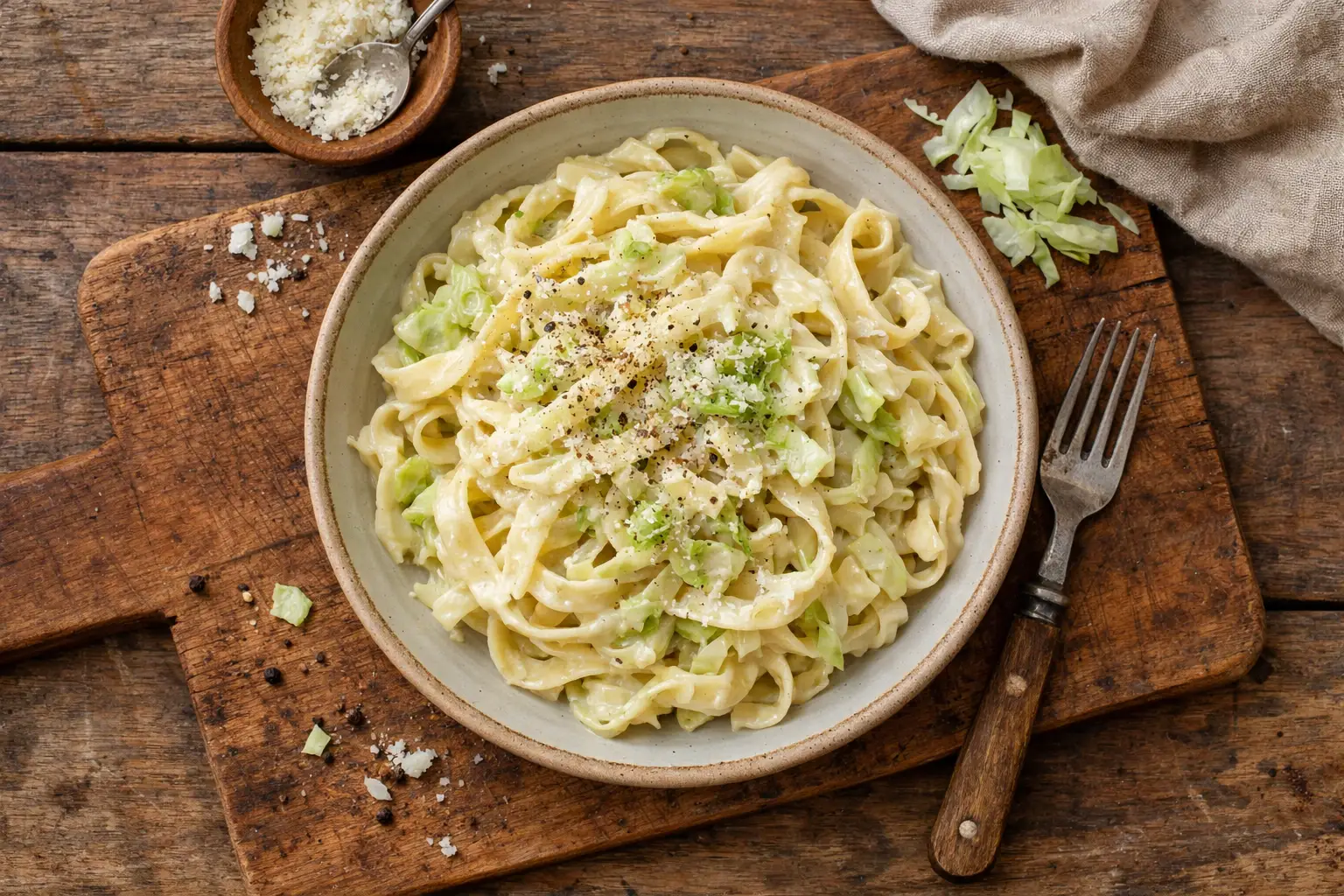
Quick Nutrition Facts
Per 1 Serving Cabbage Alfredo (~300g)
| Nutrient | Amount |
|---|---|
| Calories | 220 kcal |
| Protein | 8g |
| Carbohydrates | 16g |
| Fiber | 4g |
| Sugars | 7g |
| Fat | 14g |
| Saturated Fat | 8g |
| Vitamin C | 45mg |
| Vitamin K | 90mcg |
| Calcium | 180mg |
Macronutrient Breakdown
 ChatGPT
  Claude
  AI Mode
  Perplexity
NUTRITIONIST INSIGHT
Swapping pasta for cabbage noodles in alfredo cuts carbs from 75g to just 16g per serving. You still get the creamy, indulgent taste while gaining vitamin C, vitamin K, and cancer-fighting glucosinolates from the cruciferous cabbage base.
Myth Busters
MYTH #1: Low-Carb Pasta Swaps Taste Terrible
TRUTH: Cabbage noodles absorb alfredo sauce beautifully, creating a rich, satisfying dish. The natural sweetness from sautéed cabbage actually complements the creamy sauce. Cruciferous vegetables develop complex flavors when cooked through caramelization.
MYTH #2: Alfredo Sauce Is Always Unhealthy
TRUTH: By using cabbage noodles, the total dish calories drop to 220 from 450-600. A controlled portion of cream-based sauce provides calcium and protein. Moderate dairy fat consumption shows no increased cardiovascular risk in recent research.
MYTH #3: You Can't Get Enough Protein Without Pasta
TRUTH: Cabbage alfredo provides 8g protein per serving from cheese and cream. Add grilled chicken (25g protein) or shrimp (20g) to make it a complete high-protein meal over 30g total.
MYTH #4: Cabbage Noodles Are Soggy and Watery
TRUTH: Properly sautéed cabbage develops a tender-crisp texture similar to al dente pasta. The key is cooking over high heat to evaporate moisture before adding sauce, which concentrates flavor and maintains texture.
MYTH #5: Low-Carb Means Low Nutrition
TRUTH: Cabbage alfredo actually delivers more micronutrients than regular pasta alfredo. Cabbage provides 60% DV vitamin C, 85% DV vitamin K, and sulforaphane — nutrients completely absent from refined wheat pasta.
NutriScore by Health Goals
| Health Goal | NutriScore | Why This Score? |
|---|---|---|
| Weight Loss |  | 220 calories with 4g fiber. Saves 200-400 calories vs regular alfredo. Satisfying comfort food within calorie goals. |
| Muscle Gain |  | 8g protein base — add grilled chicken or shrimp for 30g+ total protein. Good post-workout carb source. |
| Diabetes Management |  | Only 16g carbs vs 75g in pasta alfredo. Cabbage has a GI of just 10 with compounds that support glucose regulation. |
| PCOS Management | | Low glycemic impact, anti-inflammatory cruciferous compounds. Watch saturated fat from cream — use lighter sauce if needed. |
| Pregnancy Nutrition | | Provides folate from cabbage, calcium from cheese. Adequate folate intake is essential for preventing neural tube defects. Safe comfort food choice. |
| Viral/Flu Recovery | | Vitamin C from cabbage boosts immunity, creamy texture is soothing, easy to eat when unwell. |
PERSONALIZED NUTRITION
Track your meals with NutriScan for personalized NutriScores based on your specific health goals!
Blood Sugar Response to Cabbage Alfredo
Understanding how cabbage alfredo affects your blood glucose can help you choose it over traditional pasta for better blood sugar control.
Typical Glucose Response Curve
This chart shows typical blood glucose response for general healthy individuals. Individual responses may vary. Not medical advice.
How to Flatten the Spike
Eating vegetables before carbohydrates significantly reduces post-meal glucose excursions — cabbage alfredo naturally provides this benefit:
- 🍗 Add grilled chicken breast - Protein slows glucose absorption significantly
- 🥑 Top with sliced avocado - Healthy fats extend satiety and flatten the curve
- 🥜 Sprinkle toasted pine nuts or walnuts - Adds crunch plus healthy fats
- 🌿 Start with a side salad - Extra fiber before the main course
The fat content from the alfredo sauce already helps slow carbohydrate absorption, making this naturally better for blood sugar than plain pasta.
Cultural Significance
Cabbage alfredo represents a modern fusion of Italian comfort food with the global trend toward plant-forward, low-carb eating.
Italian Roots:
- Fettuccine alfredo was invented in Rome in the early 1900s by Alfredo di Lelio
- The original dish was simple: butter, parmesan, and fresh pasta
- American versions added heavy cream, making it richer and higher calorie
The Low-Carb Evolution:
- Cabbage noodles emerged as a keto and low-carb alternative in the 2010s
- Social media popularized the swap, with millions of views on TikTok and Pinterest in 2025-2026
- Restaurant chefs now feature vegetable "pastas" on menus worldwide
Indian Connection:
- Cabbage (patta gobhi) is already a beloved vegetable in Indian cooking
- The creamy sauce concept parallels Indian malai-based gravies
- Adapts well with Indian spices: add garam masala or turmeric for fusion twist
- Paneer cabbage alfredo combines two comfort food traditions
Compare & Substitute
Cabbage Alfredo vs Pasta Alternatives (Per Serving)
| Nutrient | 🥬 Cabbage Alfredo | 🍝 Regular Fettuccine Alfredo | 🥒 Zucchini Alfredo | 🥦 Cauliflower Alfredo |
|---|---|---|---|---|
| Calories | 220 kcal | 500 kcal | 190 kcal | 240 kcal |
| Carbs | 16g | 75g | 12g | 18g |
| Fiber | 4g | 3g | 2g | 4g |
| Protein | 8g | 14g | 7g | 9g |
| Fat | 14g | 22g | 13g | 16g |
| Vitamin C | 45mg | 0mg | 18mg | 48mg |
| Vitamin K | 90mcg | 0mcg | 4mcg | 16mcg |
| Best For | Low-carb, vitamin K boost | Traditional comfort food | Lowest calorie, summer option | Creamiest texture, keto |
Frequently Asked Questions
How many calories are in cabbage alfredo?
A serving of cabbage alfredo has approximately 220 calories, compared to 450-600 calories for traditional fettuccine alfredo. This is a 50-60% calorie reduction.
Calorie breakdown by variation:
- Basic cabbage alfredo (cream, butter, parmesan): 220 cal
- With grilled chicken: 350 cal
- With shrimp: 300 cal
- Light version (cottage cheese sauce): 160 cal
Is cabbage alfredo good for weight loss?
Yes, cabbage alfredo is excellent for weight loss. At 220 calories with 4g fiber and 8g protein, it satisfies pasta cravings while keeping you in a calorie deficit.
Best practices: Use a light sauce (cottage cheese blend), load up on cabbage noodles, add lean protein, and enjoy as a filling dinner under 350 calories.
Can diabetics eat cabbage alfredo?
Cabbage alfredo is ideal for diabetics. With only 16g carbs per serving versus 75g in regular pasta alfredo, it has dramatically less impact on blood sugar.
Tips for diabetics:
- Cabbage base has GI of just 10 — minimal glucose spike
- The fat in alfredo sauce further slows carb absorption
- Add protein (chicken, shrimp) for even more stable blood sugar
- Can be eaten as a regular weeknight dinner without concern
What are the main health benefits of cabbage alfredo?
Key Benefits:
- Low-Carb Comfort Food: 70% fewer carbs than regular pasta alfredo
- Cancer Prevention: Glucosinolates in cabbage have shown anti-cancer properties in research
- Immune Support: Vitamin C from cabbage strengthens immunity
- Bone Health: Vitamin K from cabbage supports calcium absorption
- Gut Health: 4g fiber feeds beneficial gut bacteria
- Gluten-Free: Naturally free of gluten, suitable for celiac disease
Is cabbage alfredo keto-friendly?
Yes, cabbage alfredo is keto-friendly with only 12g net carbs (16g total minus 4g fiber) per serving. The 14g fat from the alfredo sauce fits well within ketogenic macros.
Keto optimization tips: Use extra butter and cream in the sauce, add bacon or sausage, sprinkle extra parmesan, and keep net carbs under 20g per meal.
How do you make the best cabbage alfredo?
Simple method:
- Shred cabbage into thin noodle-like strips
- Sauté in butter over medium-high heat for 8-10 minutes until tender-crisp
- Make alfredo sauce: melt butter, add minced garlic, pour in cream, stir in parmesan
- Toss cabbage noodles with sauce, season with salt, pepper, and nutmeg
- Total cooking time: 15-20 minutes
Pro tips: Don't overcrowd the pan — cook cabbage in batches for best texture. Let moisture evaporate before adding sauce. A pinch of nutmeg elevates the flavor.
How does cabbage alfredo compare to regular pasta alfredo?
Per serving comparison:
- Calories: 220 vs 500 (56% less)
- Carbs: 16g vs 75g (79% less)
- Vitamin C: 45mg vs 0mg (cabbage wins)
- Vitamin K: 90mcg vs 0mcg (cabbage wins)
- Taste: Rich, creamy, satisfying in both versions
The main trade-off is texture — cabbage noodles are tender-crisp rather than soft like pasta. Most people find the flavor equally satisfying.
Track your meals with NutriScan app to see how cabbage alfredo fits your personal nutrition goals.


Similar Nutritious Foods
4505 Chicharrones Classic Chili Salt
7 Eleven Japan Crispy Corn Cheese
Explore More Nutrition Tools & Resources
AI Calorie Counter App - Snap a Photo, Get Macros
AI Nutritionist App That Reads Your Logged Meals
Best Protein Supplements for Women
Bulking Meal Plan App That Sets Your Surplus
ChatGPT Calorie Counter Alternative That Keeps the Total
ChatGPT Diet Plan Alternative That Tracks What You Eat
ChatGPT Weight Loss Coach Alternative With a Food Log
Fast Food Calorie Counter App That Reads the Tray
Free Calorie Tracker App with AI Photo Scans | NutriScan
Indian Diet Plan App With Veg and Non Veg Meals
Indian Food Calorie Calculator - Get Instant Nutrition Facts for Desi Meals — 2026
Intermittent Fasting for Women, Timer and Meal Log App
Intermittent Fasting Tracker App - Free Fasting Timer
Macro Tracker App That Fills the Numbers From a Photo
Mediterranean Diet Meal Plan App That Counts the Oil
Micronutrient Tracker App for Vitamins and Minerals
MyFitnessPal Alternative That Stays Free | NutriScan
NutriScore App: A Free Grade on Every Meal | NutriScan
Nutrition Label Scanner App for the Amount You Ate
Second Trimester Protein Guide
Vegetarian Meal Plan App With a Protein Target
Voice Calorie Counter - Speak to Track Meals Hands-Free
Water and Calorie Tracker App - Free Water Log