Cashews: Calories, Nutrition and Health Benefits
Creamy, buttery nuts with heart-healthy fats, magnesium, and copper - but higher in carbs than other nuts, making portion control essential.
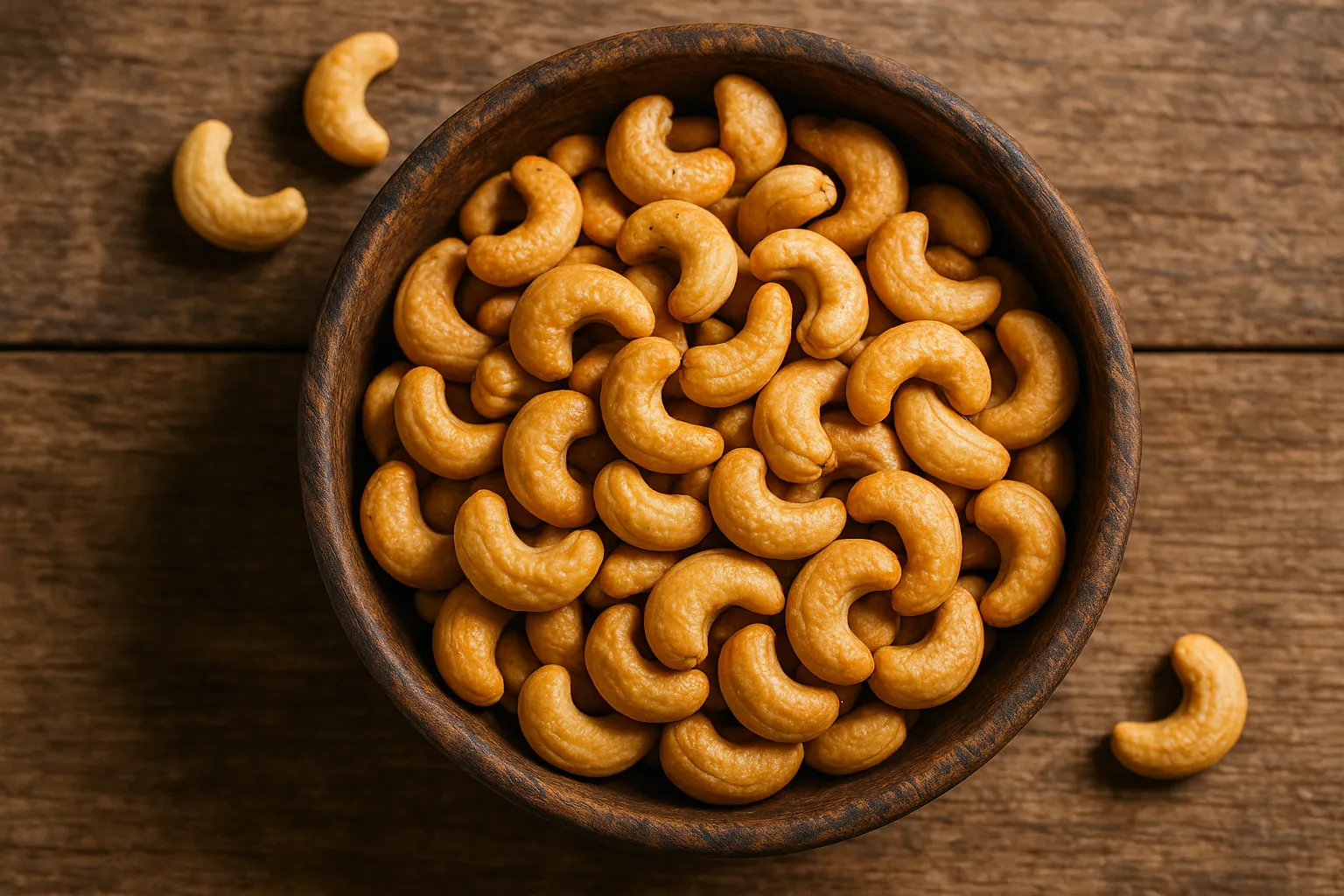
Quick Nutrition Facts
Per 1 oz / 28g (About 18 Cashews)
| Nutrient | Amount |
|---|---|
| Calories | 157 kcal |
| Protein | 5.2g |
| Carbohydrates | 8.6g |
| Fiber | 0.9g |
| Sugars | 1.7g |
| Fat | 12.4g |
| Magnesium | 83mg |
| Zinc | 1.9mg |
| Copper | 0.6mg |
| Iron | 1.9mg |
Macronutrient Breakdown
 ChatGPT
  Claude
  AI Mode
  Perplexity
NUTRITIONIST INSIGHT
Cashews provide 20% of daily magnesium needs in just 1 oz. However, their higher carb content (8.6g vs 6g in almonds) and lower fiber make portion control crucial for weight management and diabetes.
Myth Busters
MYTH #1: Cashews Are Low-Carb Like Other Nuts
TRUTH: Cashews have 8.6g carbs per ounce - 43% more than almonds (6g) and 72% more than walnuts (5g). While still nutritious, those watching carbs should measure portions carefully.
MYTH #2: All Nuts Are Equal for Weight Loss
TRUTH: Cashews' creamy texture and lower fiber (0.9g vs 3.5g in almonds) make them less filling per calorie. Studies show almonds promote greater satiety than cashews at equal calories, making portion control harder with cashews.
MYTH #3: Healthy Fats Mean Unlimited Portions
TRUTH: While cashews contain heart-healthy monounsaturated fats, 157 calories per ounce adds up fast. Eating unmeasured handfuls (2-3 oz) provides 300-450 calories - equivalent to a small meal. Always measure portions.
MYTH #4: Raw Cashews Are Healthier Than Roasted
TRUTH: True raw cashews are toxic due to urushiol. All "raw" cashews sold commercially are heat-treated. Dry-roasted cashews have minimal nutritional difference from "raw" versions. Avoid oil-roasted or heavily salted varieties for healthiest option.
MYTH #5: Cashews Have No Allergen Risk
TRUTH: Cashew allergies affect 0.5-1% of children and can be severe. Cross-reactivity with other tree nuts occurs. Cashews are among the top tree nut allergens alongside walnuts and almonds.
MYTH #6: Cashew Butter Is Lower Calorie Than Nut Butters
TRUTH: Cashew butter has 190 calories per 2 tbsp - similar to peanut butter (190 cal) and almond butter (196 cal). The creamy texture and taste lead to overconsumption. Measure tablespoons precisely.
NutriScore by Health Goals
| Health Goal | NutriScore | Why This Score? |
|---|---|---|
| Weight Loss |  | 157 calories per oz with lower fiber (0.9g) than other nuts. Easy to overconsume. Limit to 1 oz daily, measure portions. |
| Muscle Gain |  | 5.2g protein per oz plus healthy fats for calorie density. 83mg magnesium supports muscle recovery and prevents cramps. |
| Diabetes Management | | GI of 25 is low, but 8.6g carbs per oz is higher than other nuts. Count portions carefully. Pair with protein. |
| PCOS Management | | Healthy fats support hormone balance, magnesium aids insulin sensitivity. Limit to 1 oz due to carb content. Choose unsalted varieties. |
| Pregnancy Nutrition | | Copper (0.6mg) aids iron absorption crucial during pregnancy, magnesium prevents leg cramps. Safe 1 oz daily. |
| Viral/Flu Recovery | | Zinc (1.9mg) supports immune function, easy to digest, energy-dense for recovery. Copper aids white blood cell production. |
PERSONALIZED NUTRITION
Track your meals with NutriScan for personalized NutriScores based on your specific health goals and portion sizes!
Blood Sugar Response to Cashews
Understanding how cashews affect blood glucose helps make informed decisions about portions and meal pairing.
Typical Glucose Response Curve
This chart shows typical blood glucose response for general healthy individuals. Individual responses may vary. Not medical advice.
How to Optimize Blood Sugar Impact
Cashews have a low glycemic index (25) despite higher carbs. The fat and protein content slow glucose absorption:
- 🧀 Cheese cubes - Adds protein and calcium
- 🥚 Hard-boiled eggs - Complete protein source
- 🥛 Greek yogurt - Protein and probiotics
- 🍎 Apple slices - Fiber balances the carbs
These combinations further stabilize blood sugar while providing sustained energy and fullness.
Cultural Significance
Cashews originated in northeastern Brazil and were spread globally by Portuguese explorers in the 16th century.
In India:
- India produces 25% of world's cashews, primarily in Kerala, Goa, Karnataka
- Labor-intensive processing employs 500,000+ workers
- Used in curries, sweets (kaju katli), and as garnish
- Cashew apple (fruit) makes feni spirit in Goa
- Ayurveda uses cashews for heart health and energy
Global Impact:
- Vietnam and India dominate processing (>50% global supply)
- Cashew shell liquid used in brake linings, resins, and paints
- Each cashew requires hand-processing due to toxic shell oil
- Sustainable livelihood for millions in tropical regions
Compare & Substitute
Cashews vs Other Nuts (Per 1 oz / 28g)
| Nutrient | 🥜 Cashews | 🌰 Almonds | 🌰 Walnuts | 🥜 Pistachios |
|---|---|---|---|---|
| Calories | 157 kcal | 164 kcal | 185 kcal | 159 kcal |
| Carbs | 8.6g | 6g | 5g | 7.7g |
| Fiber | 0.9g | 3.5g | 1.9g | 3g |
| Protein | 5.2g | 6g | 4.3g | 5.7g |
| Fat | 12.4g | 14g | 18.5g | 12.9g |
| Magnesium | 83mg | 76mg | 45mg | 34mg |
| Zinc | 1.9mg | 0.9mg | 0.9mg | 0.7mg |
| Fiber | 0.9g | 3.5g | 1.9g | 3g |
| Best For | Minerals, creamy texture | Weight loss, fiber, protein | Omega-3s, heart health | Portion control (in-shell) |
Frequently Asked Questions
Are cashews good for weight loss?
Cashews can support weight loss in controlled portions. While 1 oz has 157 calories and 12.4g fat, research shows nuts increase satiety and support healthy weight when portioned correctly.
Best practices: Limit to 18 cashews (1 oz) daily, measure portions, eat as snacks between meals, choose unsalted varieties. Cashews have higher carbs (8.6g) than almonds (6g) and lower fiber (0.9g vs 3.5g), making them less filling per calorie - portion control is crucial.
Can diabetics eat cashews?
Diabetics can eat cashews in moderation. With glycemic index of 25 and 8.6g carbs per ounce, cashews have lower blood sugar impact than grains or fruits.
Tips for diabetics:
- Limit to 1 oz (18 cashews) daily and count toward carb intake
- Pair with protein (cheese, eggs) or fiber (vegetables)
- Choose unsalted, dry-roasted varieties
- Monitor blood sugar response, especially with larger portions
- Avoid sweetened or honey-roasted cashews
Higher carb content compared to other nuts means careful portion tracking matters more with cashews.
How many cashews should I eat per day?
General Guidelines:
- 18 cashews (1 oz) - Most people (157 calories, 20% magnesium)
- 12 cashews (0.67 oz) - Weight loss or strict calorie goals
- 1-1.5 oz - Athletes or muscle gain (extra calories welcomed)
Avoid excess: More than 2 oz daily provides 300+ calories and 17g carbs without proportional satiety due to lower fiber. The creamy taste makes overconsumption easy - always measure portions.
What are the main health benefits of cashews?
Key Benefits:
- Heart Health: Monounsaturated fats lower LDL cholesterol
- Magnesium (83mg/oz): Supports 300+ body processes, muscle function, energy
- Copper (0.6mg/oz): Essential for iron absorption and red blood cell production
- Zinc (1.9mg/oz): Immune function and wound healing
- Bone Health: Magnesium, phosphorus, and copper support bone density
- Energy: Healthy fats provide sustained energy
Are cashews healthier than almonds?
Cashews and almonds offer different nutritional profiles - choose based on your goals:
Choose Cashews For:
- Higher magnesium (83mg vs 76mg)
- More copper (0.6mg vs 0.3mg) for iron absorption
- Creamier texture in recipes
- Lower calorie density (157 vs 164 kcal)
Choose Almonds For:
- Weight loss (higher fiber: 3.5g vs 0.9g)
- More protein (6g vs 5.2g)
- Lower carbs (6g vs 8.6g)
- More vitamin E (antioxidant)
Recommendation: Weight loss/diabetes = almonds. Magnesium/copper needs = cashews. Both are healthy in measured portions.
Do cashews cause weight gain?
Cashews cause weight gain only when consumed in excess. At 157 calories per ounce, unmeasured portions quickly add up.
Why overconsumption happens:
- Creamy texture and buttery taste are addictive
- "Healthy fat" messaging leads to portion blindness
- Lower fiber (0.9g) means less fullness per calorie
- Easy to eat 2-3 oz (40-54 cashews) = 300-450 calories
Prevention: Measure 1 oz portions (18 cashews), use small bowls, track intake with NutriScan app, and avoid eating from large containers.
Can I eat cashews on an empty stomach?
Generally safe for most people - provides sustained energy and is easy to digest.
May want to pair with food if you have:
- Diabetes: Prevents faster carb absorption
- IBS/Sensitive Gut: High fat content may cause discomfort alone
- Weight Loss Goals: Better satiety when combined with protein or fiber
Better approach: Combine with protein (cheese, yogurt) or fiber (apple, vegetables) for balanced nutrition and improved satiety.


Similar Nutritious Foods
4505 Chicharrones Classic Chili Salt
7 Eleven Japan Crispy Corn Cheese
Explore More Nutrition Tools & Resources
AI Calorie Counter App - Snap a Photo, Get Macros
AI Nutritionist App That Reads Your Logged Meals
Best Protein Supplements for Women
Bulking Meal Plan App That Sets Your Surplus
ChatGPT Calorie Counter Alternative That Keeps the Total
ChatGPT Diet Plan Alternative That Tracks What You Eat
ChatGPT Weight Loss Coach Alternative With a Food Log
Fast Food Calorie Counter App That Reads the Tray
Free Calorie Tracker App with AI Photo Scans | NutriScan
Indian Diet Plan App With Veg and Non Veg Meals
Indian Food Calorie Calculator - Get Instant Nutrition Facts for Desi Meals — 2026
Intermittent Fasting for Women, Timer and Meal Log App
Intermittent Fasting Tracker App - Free Fasting Timer
Macro Tracker App That Fills the Numbers From a Photo
Mediterranean Diet Meal Plan App That Counts the Oil
Micronutrient Tracker App for Vitamins and Minerals
MyFitnessPal Alternative That Stays Free | NutriScan
NutriScore App: A Free Grade on Every Meal | NutriScan
Nutrition Label Scanner App for the Amount You Ate
Second Trimester Protein Guide
Vegetarian Meal Plan App With a Protein Target
Voice Calorie Counter - Speak to Track Meals Hands-Free
Water and Calorie Tracker App - Free Water Log