Celtuce: Calories, Nutrition and Health Benefits
A crisp, nutrient-dense stem vegetable from China with exceptional vitamin A content and only 18 calories per 100g.
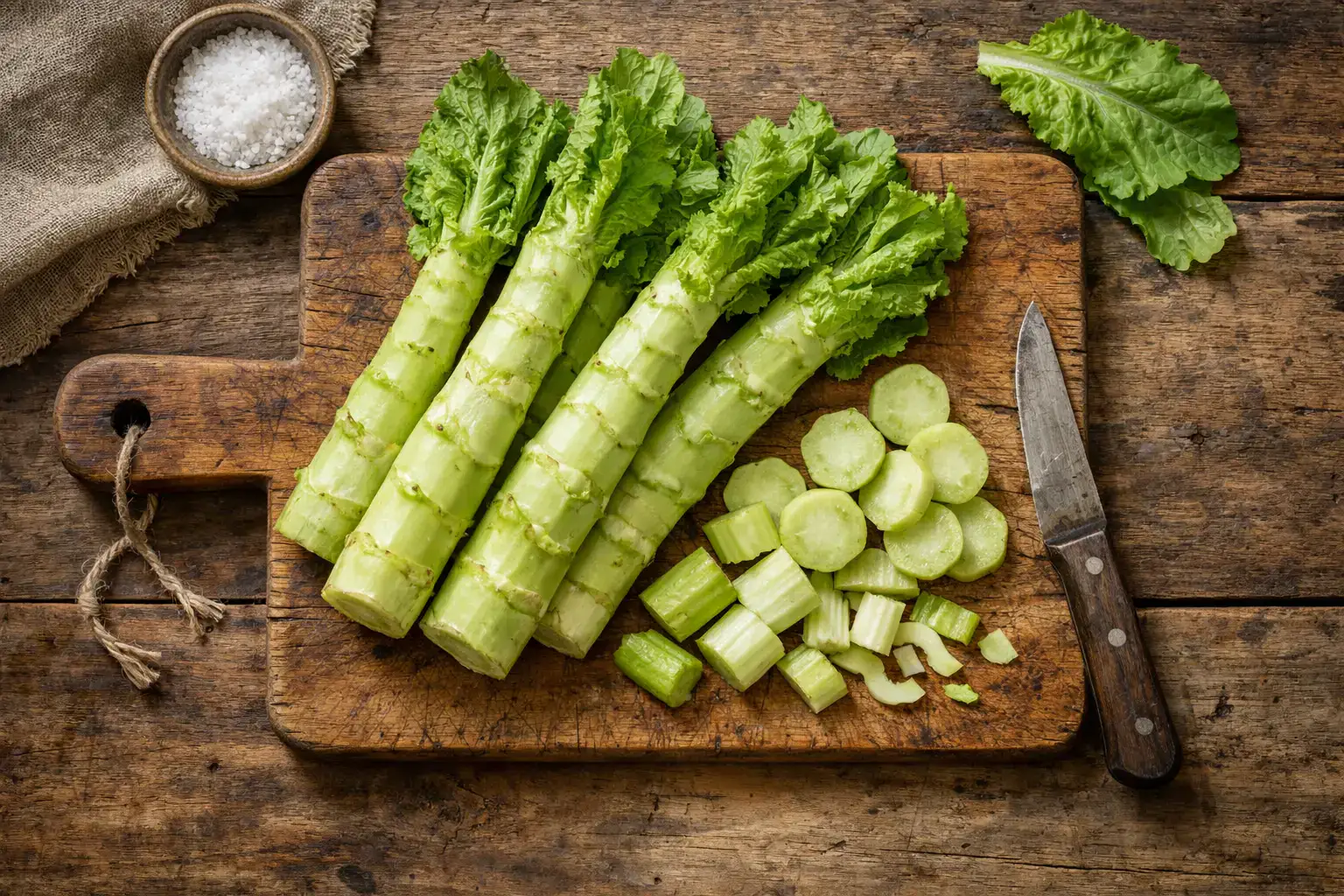
Quick Nutrition Facts
Per 100g Raw Celtuce Stem
| Nutrient | Amount |
|---|---|
| Calories | 18 kcal |
| Protein | 0.9g |
| Carbohydrates | 3.7g |
| Fiber | 1.7g |
| Sugars | 0.4g |
| Fat | 0.3g |
| Vitamin A | 3500 IU |
| Vitamin C | 19.5mg |
| Folate | 46mcg |
| Potassium | 330mg |
| Manganese | 0.69mg |
| Iron | 0.55mg |
| Magnesium | 28mg |
Macronutrient Breakdown
 ChatGPT
  Claude
  AI Mode
  Perplexity
NUTRITIONIST INSIGHT
Celtuce delivers 117% of your daily vitamin A in just 100g, making it one of the most vitamin A-dense vegetables available. Its exceptionally low calorie count (18 kcal/100g) with meaningful fiber makes it ideal for volume eating during weight loss.
Myth Busters
MYTH #1: Celtuce Leaves Are the Best Part
TRUTH: While celtuce leaves are edible, the thick stem is the prized part with superior nutrient density and antioxidant compounds. The stem contains concentrated vitamins A and C, plus unique sesquiterpene lactones not found in common lettuce varieties.
MYTH #2: Celtuce Is Just Regular Lettuce
TRUTH: Celtuce (Lactuca sativa var. angustana) is a distinct variety bred for its thick, fleshy stem. It provides significantly more vitamin A, potassium, and phytochemicals than iceberg or romaine lettuce, with a crunchier texture suited for cooking.
MYTH #3: Raw Vegetables Are Always More Nutritious
TRUTH: Celtuce retains most nutrients when lightly cooked. Brief stir-frying can actually improve the bioavailability of fat-soluble vitamin A. The key is keeping cooking time under 3-4 minutes to preserve vitamin C while enhancing carotenoid absorption.
MYTH #4: Low-Calorie Vegetables Don't Provide Real Nutrition
TRUTH: Despite having only 18 calories per 100g, celtuce delivers 117% DV vitamin A, 33% DV vitamin C, and meaningful amounts of folate and potassium. Lettuce varieties including celtuce contain bioactive flavonoids and phenolic acids with anti-inflammatory and antioxidant properties.
NutriScore by Health Goals
| Health Goal | NutriScore | Why This Score? |
|---|---|---|
| Weight Loss |  | Only 18 calories per 100g with 1.7g fiber. Extremely high volume-to-calorie ratio for satiety. Eat freely. |
| Muscle Gain |  | Very low in protein (0.9g/100g) and calories. Best as a side dish; pair with protein sources for balanced meals. |
| Diabetes Management | | Only 3.7g carbs per 100g with very low glycemic index. Leafy greens improve postprandial glucose metabolism. Eat freely. |
| PCOS Management | | Negligible sugar and carbs minimize insulin response. Rich in folate and anti-inflammatory compounds. |
| Pregnancy Nutrition |  | Good source of folate (46mcg) essential for neural tube development and vitamin A. Wash thoroughly before eating raw. |
| Viral/Flu Recovery | | Vitamin C (19.5mg) and vitamin A support immune function. Light and easy to digest when feeling unwell. |
PERSONALIZED NUTRITION
Track your meals with NutriScan for personalized NutriScores based on your specific health goals!
Blood Sugar Response to Celtuce
Celtuce has virtually no impact on blood glucose due to its extremely low carbohydrate content (3.7g per 100g) and high fiber ratio.
Typical Glucose Response Curve
*This chart shows typical blood glucose response for general healthy individuals. Individual responses may vary. Not medical advice.*
How to Flatten the Spike
Adding protein or fat to meals with vegetables helps maintain stable blood sugar throughout the day:
- 🥜 Sesame oil drizzle - Traditional Chinese preparation adds healthy fats
- 🥚 Stir-fry with eggs - Adds protein for sustained energy
- 🥩 Pair with lean meat - Classic celtuce and sliced pork stir-fry
- 🫘 Serve with tofu - Plant-based protein complement
Celtuce is one of the safest vegetables for blood sugar management and can be eaten freely by people with diabetes.
Cultural Significance
Celtuce originated in China, where it has been cultivated for over 1,000 years and remains a staple vegetable in Chinese cuisine.
In China:
- Known as "wosun" (莴笋) or "stem lettuce," it is one of the most widely consumed vegetables
- The stem is the prized part, peeled and used in stir-fries, cold salads, soups, and pickles
- Dried celtuce strips (莴笋干) are a popular preserved snack
- Traditional Chinese medicine values it for clearing heat and promoting urination
Global Adoption:
- Trending in Australian fine dining and farm-to-table restaurants (2025-2026)
- Growing popularity in European markets as a sustainable, easy-to-grow crop
- Seeds increasingly available in North American garden centers
- One whole plant provides both stem (main crop) and salad leaves
Compare & Substitute
Celtuce vs Similar Vegetables (Per 100g)
| Nutrient | 🥬 Celtuce | 🥦 Broccoli Stem | 🥒 Cucumber | 🥬 Romaine Lettuce |
|---|---|---|---|---|
| Calories | 18 kcal | 34 kcal | 15 kcal | 17 kcal |
| Carbs | 3.7g | 6.6g | 3.6g | 3.3g |
| Fiber | 1.7g | 2.6g | 0.5g | 2.1g |
| Protein | 0.9g | 2.8g | 0.7g | 1.2g |
| Fat | 0.3g | 0.4g | 0.1g | 0.3g |
| Vitamin A | 3500 IU | 623 IU | 105 IU | 8710 IU |
| Vitamin C | 19.5mg | 89mg | 2.8mg | 24mg |
| Potassium | 330mg | 316mg | 147mg | 247mg |
| Best For | Stir-fries, raw salads | Steaming, soups | Hydration, snacking | Raw salads, wraps |
Frequently Asked Questions
What is celtuce and how do you eat it?
Celtuce (Lactuca sativa var. angustana) is a lettuce variety grown for its thick, edible stem. The stem is peeled, then eaten raw in salads, stir-fried, pickled, or braised. It has a mild, slightly nutty flavor with a crisp texture similar to broccoli stems.
Common preparations: Shredded raw with sesame dressing, stir-fried with garlic, pickled in chili oil, or added to soups.
How many calories are in celtuce?
100g of raw celtuce stem contains 18 calories. A typical whole stem (300g) has approximately 54 calories, making it one of the lowest-calorie vegetables available.
Is celtuce good for weight loss?
Excellent for weight loss. At only 18 calories per 100g with 1.7g fiber, celtuce provides volume and crunch with minimal caloric impact. Its high water content promotes fullness.
Best approach: Use as a base for stir-fries, add to salads for crunch, or eat raw strips as a snack with hummus.
What vitamins does celtuce have?
100g of celtuce provides 117% DV vitamin A (3500 IU), 33% DV vitamin C (19.5mg), and 12% DV folate (46mcg). It also supplies potassium (330mg), manganese (0.69mg), iron (0.55mg), and magnesium (28mg).
Can diabetics eat celtuce?
Celtuce is ideal for diabetics. With only 3.7g carbs and 1.7g fiber per 100g, it has negligible glycemic impact. It can be eaten freely without concern for blood sugar spikes.
How do you store celtuce?
Wrap unpeeled celtuce stems in damp paper towels and store in the refrigerator crisper drawer. Properly stored, stems last 1-2 weeks. Peeled celtuce should be used within 3-4 days. The leaves wilt faster, so use them within 2-3 days.




Similar Nutritious Foods
4505 Chicharrones Classic Chili Salt
7 Eleven Japan Crispy Corn Cheese
Explore More Nutrition Tools & Resources
AI Calorie Counter App - Snap a Photo, Get Macros
AI Nutritionist App That Reads Your Logged Meals
Best Protein Supplements for Women
Bulking Meal Plan App That Sets Your Surplus
ChatGPT Calorie Counter Alternative That Keeps the Total
ChatGPT Diet Plan Alternative That Tracks What You Eat
ChatGPT Weight Loss Coach Alternative With a Food Log
Fast Food Calorie Counter App That Reads the Tray
Free Calorie Tracker App with AI Photo Scans | NutriScan
Indian Diet Plan App With Veg and Non Veg Meals
Indian Food Calorie Calculator - Get Instant Nutrition Facts for Desi Meals — 2026
Intermittent Fasting for Women, Timer and Meal Log App
Intermittent Fasting Tracker App - Free Fasting Timer
Macro Tracker App That Fills the Numbers From a Photo
Mediterranean Diet Meal Plan App That Counts the Oil
Micronutrient Tracker App for Vitamins and Minerals
MyFitnessPal Alternative That Stays Free | NutriScan
NutriScore App: A Free Grade on Every Meal | NutriScan
Nutrition Label Scanner App for the Amount You Ate
Second Trimester Protein Guide
Vegetarian Meal Plan App With a Protein Target
Voice Calorie Counter - Speak to Track Meals Hands-Free
Water and Calorie Tracker App - Free Water Log