Ceviche: Calories, Nutrition and Health Benefits
Peru's iconic citrus-cured seafood dish: high in protein, low in calories, and bursting with fresh flavors.
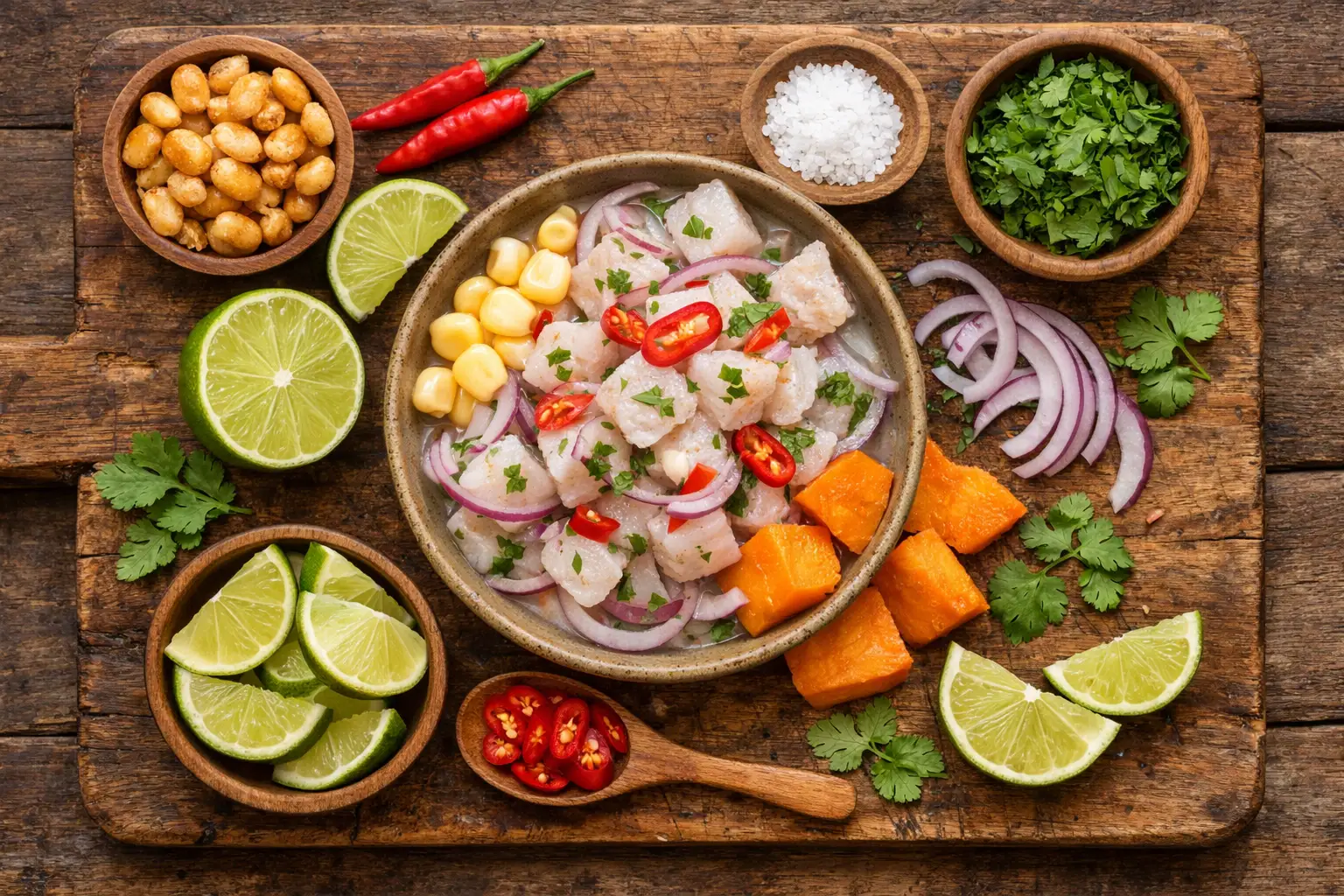
Quick Nutrition Facts
Per 1 Cup Ceviche (250g)
| Nutrient | Amount |
|---|---|
| Calories | 158 kcal |
| Protein | 26.2g |
| Carbohydrates | 8.9g |
| Fiber | 1.2g |
| Sugars | 3.4g |
| Fat | 1.9g |
| Potassium | 705mg |
| Vitamin D | 12.8mcg |
| Vitamin C | 18.6mg |
| Sodium | 373mg |
Macronutrient Breakdown
 ChatGPT
  Claude
  AI Mode
  Perplexity
NUTRITIONIST INSIGHT
Ceviche delivers 26g of lean protein per cup with only 158 calories. The citrus marinade provides vitamin C that enhances iron absorption from the fish, maximizing nutritional benefits.
Myth Busters
MYTH #1: Ceviche Is Raw and Unsafe
TRUTH: While ceviche uses uncooked fish, the citric acid from lime juice denatures the proteins similarly to heat cooking. However, it doesn't kill all pathogens, so fresh, high-quality fish is essential for safety.
MYTH #2: Ceviche Is High in Calories
TRUTH: Ceviche is remarkably low in calories with only 63 kcal per 100g. With 66% of calories from protein, it's one of the leanest protein sources available.
MYTH #3: The Lime Juice "Cooks" the Fish Completely
TRUTH: Citrus acid changes the fish's texture and appearance but doesn't provide the same food safety as heat cooking. The FDA recommends cooking fish to 145°F for vulnerable populations.
MYTH #4: Ceviche Is Bad for Diabetics
TRUTH: With only 3.6g of carbs per 100g and high protein content, ceviche has minimal impact on blood sugar. It's actually an excellent choice for blood sugar management.
MYTH #5: All Fish Works Equally Well for Ceviche
TRUTH: Firm white fish (sea bass, corvina, halibut) work best. Oily fish like salmon or mackerel have stronger flavors and different textures. Always use sushi-grade fish for safety.
NutriScore by Health Goals
| Health Goal | NutriScore | Why This Score? |
|---|---|---|
| Weight Loss |  | Only 63 cal/100g with 10.5g protein. High satiety, very low calorie density. Ideal for calorie deficit. |
| Muscle Gain | | 26g protein per cup, complete amino acid profile. Low fat allows room for other macros. |
| Diabetes Management | | Only 3.6g carbs/100g. Lean fish consumption associated with improved metabolic markers. Skip high-carb sides. |
| PCOS Management | | Low carb, high protein supports insulin sensitivity. Anti-inflammatory omega-3s may help. |
| Pregnancy Nutrition |  | Raw fish not recommended during pregnancy due to foodborne illness risk. Choose cooked fish instead. |
| Viral/Flu Recovery |  | High protein supports recovery, vitamin C boosts immunity. Avoid if immune system is compromised. |
PERSONALIZED NUTRITION
Track your meals with NutriScan for personalized NutriScores based on your specific health goals!
Blood Sugar Response to Ceviche
Understanding how ceviche affects your blood glucose can help you make informed decisions about incorporating it into your diet.
Typical Glucose Response Curve
This chart shows typical blood glucose response for general healthy individuals. Individual responses may vary. Not medical advice.
How to Optimize Blood Sugar Response
Protein-rich foods like fish help stabilize blood glucose by slowing digestion and reducing post-meal spikes:
- Avoid sweet potato chips - Traditional accompaniment adds carbs
- Skip the corn (choclo) - Common Peruvian side increases glycemic load
- Add avocado - Healthy fats further slow absorption
- Choose lettuce wraps - Instead of tostadas or crackers
This high-protein, low-carb profile makes ceviche ideal for blood sugar management and sustained energy.
Cultural Significance
Ceviche is Peru's national dish with roots dating back over 2,000 years to pre-Columbian coastal civilizations.
In Peru:
- Declared a national cultural heritage in 2004
- June 28 is National Ceviche Day (Día del Ceviche)
- Traditional preparation uses corvina or sea bass with lime, onions, cilantro, and aji peppers
- "Leche de tigre" (tiger's milk) - the citrus marinade - is consumed as a hangover cure and aphrodisiac
Regional Variations:
- Ecuador: Includes tomato sauce, served with popcorn or plantain chips
- Mexico: Often includes tomato, cucumber, and is served on tostadas
- Chile: Uses halibut, grapefruit, and mint
- Japan-Peru fusion: Nikkei ceviche incorporates soy sauce and ginger
Global Impact:
- One of Latin America's most recognized dishes internationally
- Popularized the concept of "cooking" with acid in Western cuisine
- Inspired similar preparations worldwide (Filipino kinilaw, Polynesian oka)
Compare & Substitute
Ceviche vs Similar Dishes (Per 100g)
| Nutrient | 🐟 Ceviche | 🍣 Sushi Roll | 🥗 Poke Bowl | 🦐 Shrimp Cocktail |
|---|---|---|---|---|
| Calories | 63 kcal | 150 kcal | 120 kcal | 99 kcal |
| Carbs | 3.6g | 30g | 15g | 8g |
| Fiber | 0.5g | 1g | 2g | 0g |
| Protein | 10.5g | 6g | 12g | 15g |
| Fat | 0.8g | 3g | 5g | 1g |
| Potassium | 282mg | 100mg | 250mg | 220mg |
| Sugar | 1.4g | 5g | 4g | 3g |
| Vitamin C | 18.6mg | 2mg | 5mg | 4mg |
| Best For | Weight loss, low-carb | Quick meal, convenience | Balanced macros | High protein, low fat |
Frequently Asked Questions
Is ceviche good for weight loss?
Yes, ceviche is excellent for weight loss with only 63 calories per 100g and 10.5g of high-quality protein. The high protein content promotes satiety while keeping calories extremely low.
Best practices: Avoid fried accompaniments, skip corn and sweet potato sides, choose generous portions of fresh ceviche as your main protein source.
Can diabetics eat ceviche?
Yes, ceviche is highly suitable for diabetics. With only 3.6g of carbs per 100g and minimal glycemic impact, it's an ideal protein choice for blood sugar management.
Tips for diabetics:
- Avoid traditional high-carb sides (corn, sweet potato, tostadas)
- Pair with non-starchy vegetables
- The protein helps stabilize blood sugar
- Monitor portions of any added fruits
Is ceviche safe to eat?
Ceviche is generally safe when prepared with fresh, high-quality sushi-grade fish and consumed immediately. The citric acid denatures proteins but doesn't eliminate all pathogens.
Who should avoid ceviche:
- Pregnant women
- Young children under 5
- Elderly individuals
- People with compromised immune systems
Always ensure fish is sourced from reputable vendors and consumed within 24 hours of preparation.
How much protein is in ceviche?
Ceviche provides 10.5g of protein per 100g or 26.2g per cup (250g). Approximately 66% of calories come from protein, making it one of the highest protein-to-calorie ratio foods available.
For muscle building, one cup of ceviche provides roughly the same protein as 4 eggs with significantly fewer calories.
Is ceviche keto-friendly?
Yes, ceviche is very keto-friendly with only 3.6g of net carbs per 100g serving. It fits perfectly into ketogenic macros with high protein, low fat, and minimal carbohydrates.
Keto tips: Skip corn and sweet potato accompaniments, add avocado for healthy fats, enjoy with pork rinds instead of tostadas.
What are the health benefits of ceviche?
Key Benefits:
- High-Quality Protein: 10.5g per 100g supports muscle health and satiety
- Vitamin D: 12.8mcg per cup supports bone health and immunity
- Vitamin C: 18.6mg from citrus enhances iron absorption
- Low Calorie: Only 63 cal/100g ideal for weight management
- Potassium: 705mg per cup supports heart and muscle function
- Omega-3s: Depending on fish type, provides anti-inflammatory benefits


Similar Nutritious Foods
4505 Chicharrones Classic Chili Salt
7 Eleven Japan Crispy Corn Cheese
Explore More Nutrition Tools & Resources
AI Calorie Counter App - Snap a Photo, Get Macros
AI Nutritionist App That Reads Your Logged Meals
Best Protein Supplements for Women
Bulking Meal Plan App That Sets Your Surplus
ChatGPT Calorie Counter Alternative That Keeps the Total
ChatGPT Diet Plan Alternative That Tracks What You Eat
ChatGPT Weight Loss Coach Alternative With a Food Log
Fast Food Calorie Counter App That Reads the Tray
Free Calorie Tracker App with AI Photo Scans | NutriScan
Indian Diet Plan App With Veg and Non Veg Meals
Indian Food Calorie Calculator - Get Instant Nutrition Facts for Desi Meals — 2026
Intermittent Fasting for Women, Timer and Meal Log App
Intermittent Fasting Tracker App - Free Fasting Timer
Macro Tracker App That Fills the Numbers From a Photo
Mediterranean Diet Meal Plan App That Counts the Oil
Micronutrient Tracker App for Vitamins and Minerals
MyFitnessPal Alternative That Stays Free | NutriScan
NutriScore App: A Free Grade on Every Meal | NutriScan
Nutrition Label Scanner App for the Amount You Ate
Second Trimester Protein Guide
Vegetarian Meal Plan App With a Protein Target
Voice Calorie Counter - Speak to Track Meals Hands-Free
Water and Calorie Tracker App - Free Water Log