Coconut Cookie: Calories, Nutrition and Health Benefits
Delicious coconut-flavored treats offering tropical taste and energy - best enjoyed mindfully as an occasional indulgence.
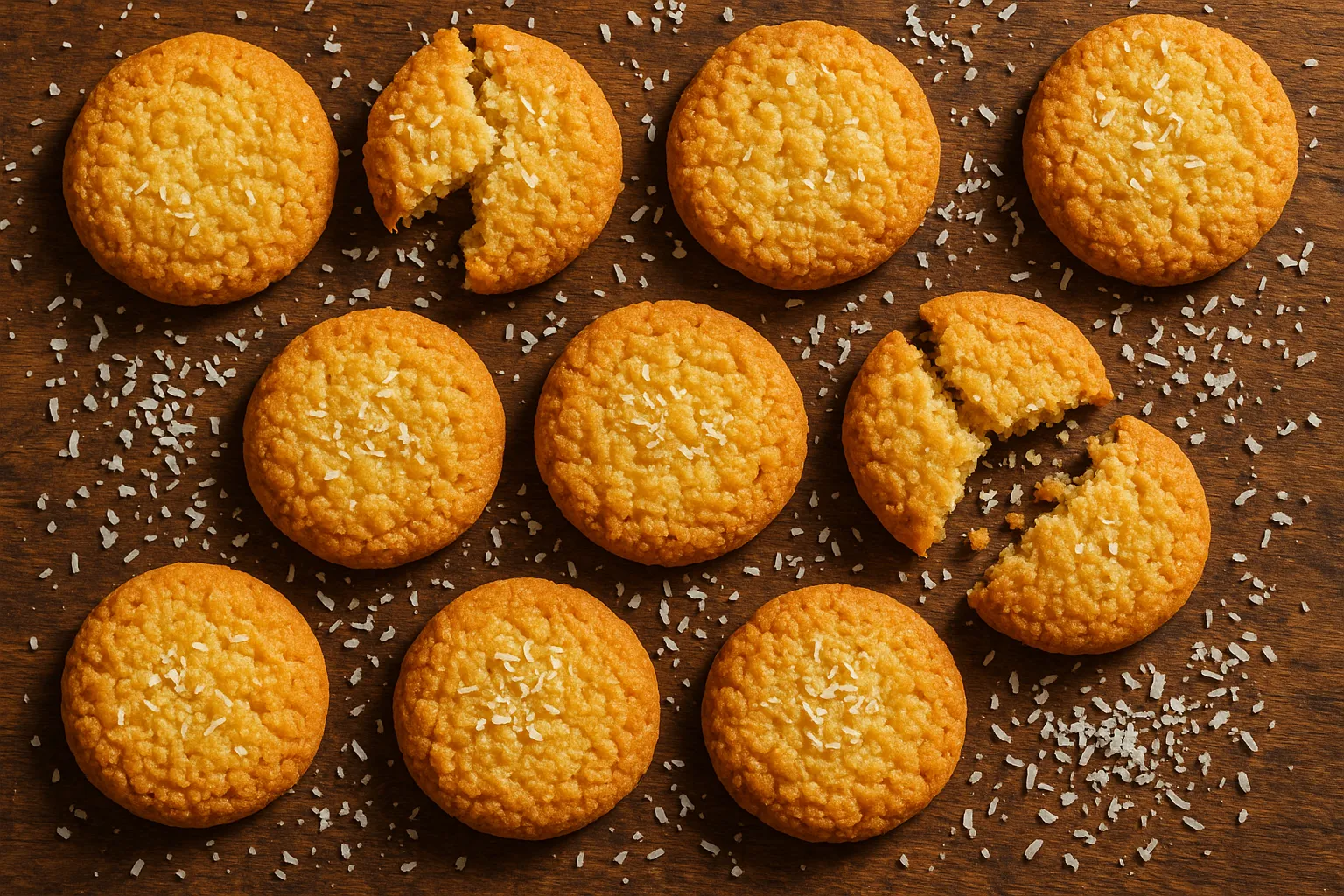
Quick Nutrition Facts
Per 1 Medium Cookie (30g)
| Nutrient | Amount |
|---|---|
| Calories | 150 kcal |
| Protein | 2g |
| Carbohydrates | 18g |
| Fiber | 1g |
| Sugars | 10g |
| Fat | 8g |
| Saturated Fat | 5g |
| Sodium | 80mg |
| Iron | 0.5mg |
| Calcium | 15mg |
Macronutrient Breakdown
 ChatGPT
  Claude
  AI Mode
  Perplexity
NUTRITIONIST INSIGHT
Coconut cookies contain medium-chain triglycerides (MCTs) from coconut, which are metabolized differently than other fats and may provide quick energy. However, the added sugar and calorie density mean they're best enjoyed as an occasional treat rather than daily snack.
Myth Busters
MYTH #1: Coconut Cookies Are Healthy Because They Have Coconut
TRUTH: While coconut provides MCTs and fiber, commercial coconut cookies contain significant added sugar (10g), refined flour, and butter. The coconut content doesn't outweigh the high calorie density (150 cal per cookie). Enjoy as a treat, not a health food.
MYTH #2: Coconut Cookies Are Good for Weight Loss
TRUTH: Coconut cookies are calorie-dense (150 calories in just 30g) and can easily derail weight loss if consumed regularly. The combination of sugar and fat triggers overconsumption. Limit to 1 cookie, 2-3 times per week maximum during weight loss.
MYTH #3: All Fat in Coconut Cookies Is Healthy
TRUTH: While coconut provides some beneficial MCTs, most coconut cookies also contain butter or vegetable oil adding saturated and trans fats. The 5g saturated fat per cookie is 25% of daily limits. Not all fat here is the "healthy" kind.
MYTH #4: Homemade Coconut Cookies Have Same Calories as Store-Bought
TRUTH: Homemade versions typically have 20-30% fewer calories (100-120 vs 150) because you control sugar, fat, and portion sizes. Using almond flour, reducing sugar, and adding oats improves nutrition significantly.
MYTH #5: Coconut Cookies Are Fine for Diabetics
TRUTH: The 18g carbs and 10g sugar create moderate glycemic load. Diabetics should limit to occasional treats (half cookie max), always pair with protein, and monitor blood sugar response. Better alternatives exist for regular snacking.
MYTH #6: Eating Coconut Cookies Boosts Metabolism
TRUTH: While MCTs in coconut may slightly increase metabolic rate, the effect is minimal (about 5% boost temporarily) and doesn't compensate for the 150 calories and sugar content. Don't eat cookies expecting weight loss benefits.
NutriScore by Health Goals
| Health Goal | NutriScore | Why This Score? |
|---|---|---|
| Weight Loss |  | 150 calories per small cookie with 10g sugar and 8g fat. High calorie density makes portion control difficult. Limit to 1 cookie, 2-3 times per week maximum. |
| Muscle Gain |  | Only 2g protein, but provides quick energy. Acceptable as occasional post-workout treat for surplus calories. Not efficient protein source. |
| Diabetes Management | | 18g carbs and 10g sugar create moderate glycemic load. Best avoided or limited to half cookie on rare occasions, always paired with protein. |
| PCOS Management | | Sugar and refined carbs worsen insulin resistance. The saturated fat may affect hormone balance negatively. Reserve for very occasional treats. |
| Pregnancy Nutrition | | Provides quick energy but minimal essential nutrients. Homemade versions with less sugar and added nuts are better. Limit to 1-2 per week. |
| Viral/Flu Recovery | | Provides quick energy calories during low appetite periods. However, sugar may temporarily suppress immunity. Plain crackers or toast are better choices. |
PERSONALIZED NUTRITION
Track your meals with NutriScan for personalized NutriScores based on your specific health goals!
Blood Sugar Response to Coconut Cookies
Understanding how coconut cookies affect blood glucose helps make informed decisions about portion size and timing.
Typical Glucose Response Curve
*This chart shows typical blood glucose response for general healthy individuals. Individual responses may vary. Not medical advice.*
How to Minimize Blood Sugar Spike
Pairing cookies with protein or fiber significantly reduces glucose impact:
- 🥜 Handful of almonds or walnuts - Protein and healthy fats slow absorption
- 🧀 Piece of cheese - Protein reduces glycemic load
- 🥛 Glass of milk - Protein buffer effect
- 🍎 Fresh fruit - Extra fiber and nutrients
Best timing: After a protein-rich meal or as post-workout treat when insulin sensitivity is higher.
Cultural Significance
Coconut cookies have rich history across tropical cuisines where coconuts grow abundantly.
In India:
- Nariyal biscuits popular in coastal regions (Kerala, Goa, Maharashtra)
- Festival treat during Ganesh Chaturthi and Diwali
- Traditional bakeries specialize in coconut-almond cookies
- Modern versions incorporate jaggery instead of white sugar
Global Variations:
- Macaroons (French): Made primarily with coconut and egg whites
- Congolais (Belgian): Dense coconut cookies with chocolate
- Bolacha de Coco (Portuguese): Thin, crispy coconut biscuits
- Thai Coconut Cookies: Often include pandan for fragrance
Compare & Substitute
Coconut Cookie vs Similar Treats (Per 30g serving)
| Nutrient | 🥥 Coconut Cookie | 🍪 Oatmeal Cookie | 🧈 Butter Cookie | 🌰 Almond Cookie |
|---|---|---|---|---|
| Calories | 150 kcal | 130 kcal | 140 kcal | 135 kcal |
| Carbs | 18g | 19g | 17g | 14g |
| Fiber | 1g | 2g | 0.5g | 2g |
| Protein | 2g | 2.5g | 1.5g | 3g |
| Fat | 8g | 5g | 7g | 8g |
| Sugar | 10g | 9g | 8g | 7g |
| Fiber | 1g | 2g | 0.5g | 2g |
| Best For | Coconut lovers, MCT energy | More fiber, heartier | Classic taste, butter flavor | Higher protein, less sugar |
Frequently Asked Questions
Are coconut cookies good for weight loss?
Coconut cookies are not ideal for weight loss due to high calorie density (150 calories in just 30g). However, they can fit into a weight loss plan when consumed very mindfully.
Guidelines for weight loss:
- Limit to 1 cookie maximum per serving
- Frequency: 2-3 times per week only (not daily)
- Timing: After a protein-rich meal to increase satiety
- Portion control: Pre-portion to avoid eating entire package
Better alternatives: Fresh fruit, Greek yogurt, nuts, homemade protein balls with less sugar.
Can diabetics eat coconut cookies?
Diabetics should approach coconut cookies with caution due to the 18g carbs and 10g sugar content per cookie.
Tips if eating:
- Limit to half a cookie on rare occasions
- Always pair with protein (cheese, nuts)
- Choose versions with less added sugar or natural sweeteners
- Time around physical activity when insulin sensitivity is higher
- Monitor blood sugar 2 hours after eating
Better diabetic-friendly options: Sugar-free coconut cookies with almond flour, coconut flakes (unsweetened), or homemade versions with stevia.
How much fat is in a coconut cookie?
A medium coconut cookie (30g) contains 8g of fat, with approximately 5g being saturated fat from coconut and butter.
Fat composition:
- Saturated fat (5g): Primarily MCTs from coconut (metabolized faster) plus some from butter
- Unsaturated fats (3g): From other ingredients
While coconut's MCTs may offer metabolic benefits, the overall fat content means cookies should be enjoyed in moderation, especially if managing cholesterol.
What are the main benefits of coconut cookies?
Potential Benefits (when consumed moderately):
- Quick Energy: Carbs and MCTs provide rapid fuel for activity
- MCT Content: Medium-chain triglycerides from coconut may boost metabolism slightly
- Satisfaction: Can satisfy sweet cravings, preventing overeating other desserts
- Mental Health: Occasional treats support sustainable eating patterns and prevent restriction-binge cycles
- Minimal Ingredients: Simple homemade versions avoid chemical additives
Important caveat: These benefits apply only when consumed occasionally (2-3 times weekly) in controlled portions. Daily consumption negates benefits.
How many coconut cookies can I eat per day?
Recommended frequency varies by goal:
- Weight Loss: 1 cookie maximum, 2-3 times per week (not daily)
- Weight Maintenance: 1-2 cookies, 3-4 times per week
- Muscle Gain: 2 cookies occasionally as calorie boost
- Active Athletes: 2 cookies post-workout acceptable
- Diabetes/PCOS: Rare treat only, half cookie maximum
Why limit? The calorie density (150 per cookie) and sugar content (10g) accumulate quickly. Two cookies daily add 300 extra calories - enough to gain 1kg per month if not compensated.
Track your treats with NutriScan app to maintain balance.
Are homemade coconut cookies healthier than store-bought?
Yes, homemade coconut cookies are significantly healthier when made with smart substitutions:
Homemade Advantages:
- Control sugar: Reduce by 30-50% or use natural sweeteners (dates, stevia)
- Better flour: Use almond flour, oat flour, or whole wheat instead of refined white flour
- More fiber: Add oats, chia seeds, or flax for extra fiber
- No preservatives: Avoid artificial additives and trans fats
- Portion control: Make smaller sizes
Calorie comparison: Homemade with healthy swaps: 100-120 calories vs store-bought: 150-170 calories.
Recipe tips: Replace half the butter with mashed banana; use unsweetened shredded coconut; add chopped nuts for protein; reduce sugar by one-third.
When is the best time to eat coconut cookies?
Optimal timing depends on your goals:
- Weight Management: After lunch or dinner (not on empty stomach), when protein meal provides satiety buffer
- Muscle Gain: Post-workout within 1 hour (carbs replenish glycogen, MCTs provide energy)
- Blood Sugar Control: After protein-rich meals, never on empty stomach
- Energy Boost: Mid-morning or pre-workout (30-45 minutes before exercise)
Avoid: Late night (affects sleep and nighttime fat storage); first thing in morning (causes blood sugar spike without protein buffer).




Similar Nutritious Foods
4505 Chicharrones Classic Chili Salt
7 Eleven Japan Crispy Corn Cheese
Explore More Nutrition Tools & Resources
AI Calorie Counter App - Snap a Photo, Get Macros
AI Nutritionist App That Reads Your Logged Meals
Best Protein Supplements for Women
Bulking Meal Plan App That Sets Your Surplus
ChatGPT Calorie Counter Alternative That Keeps the Total
ChatGPT Diet Plan Alternative That Tracks What You Eat
ChatGPT Weight Loss Coach Alternative With a Food Log
Fast Food Calorie Counter App That Reads the Tray
Free Calorie Tracker App with AI Photo Scans | NutriScan
Indian Diet Plan App With Veg and Non Veg Meals
Indian Food Calorie Calculator - Get Instant Nutrition Facts for Desi Meals — 2026
Intermittent Fasting for Women, Timer and Meal Log App
Intermittent Fasting Tracker App - Free Fasting Timer
Macro Tracker App That Fills the Numbers From a Photo
Mediterranean Diet Meal Plan App That Counts the Oil
Micronutrient Tracker App for Vitamins and Minerals
MyFitnessPal Alternative That Stays Free | NutriScan
NutriScore App: A Free Grade on Every Meal | NutriScan
Nutrition Label Scanner App for the Amount You Ate
Second Trimester Protein Guide
Vegetarian Meal Plan App With a Protein Target
Voice Calorie Counter - Speak to Track Meals Hands-Free
Water and Calorie Tracker App - Free Water Log