Cooking Oil: Calories, Nutrition and Health Benefits
Essential cooking fat that delivers concentrated energy and crucial fatty acids for health—portion control is key.
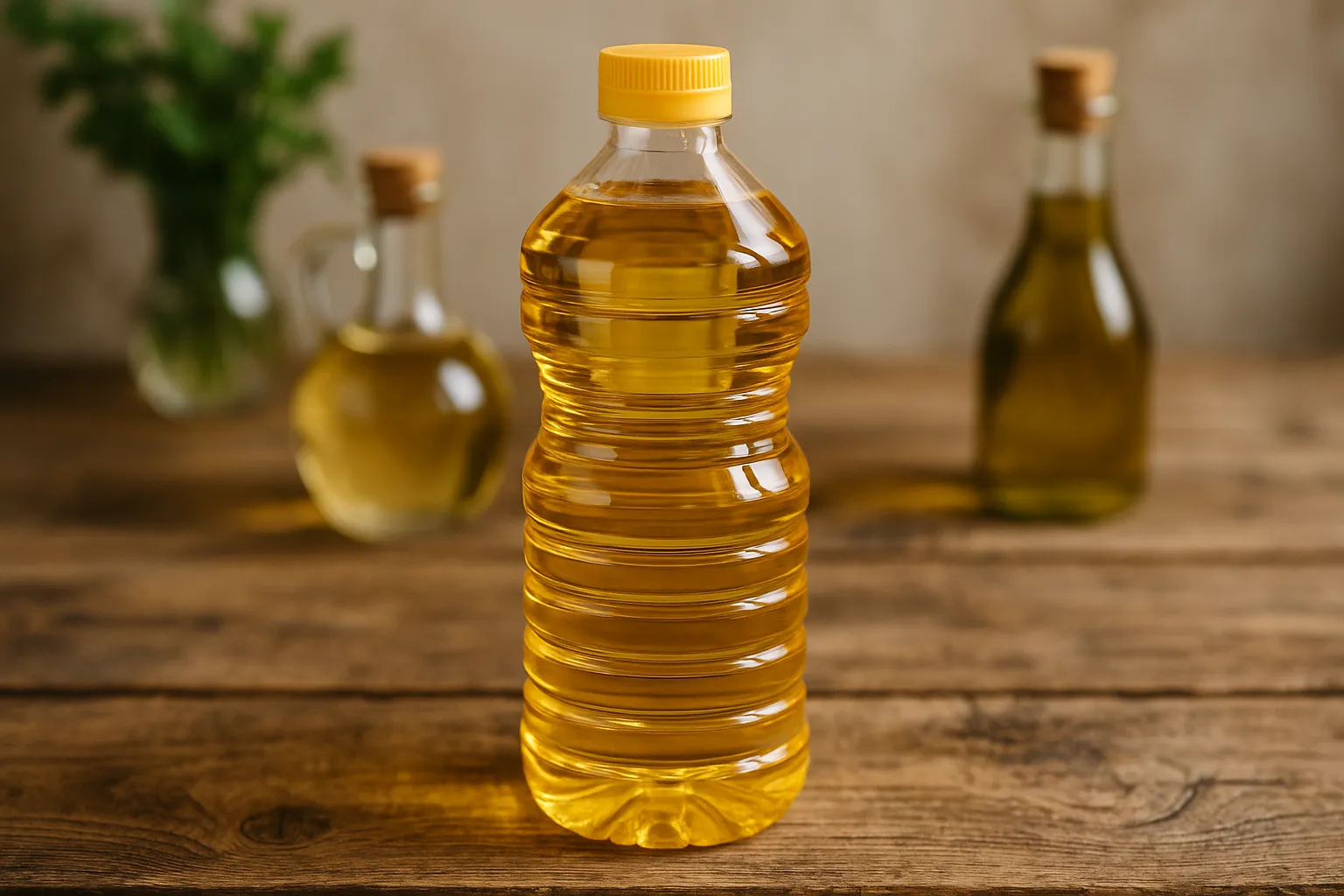
Quick Nutrition Facts
Per 1 Tablespoon (15ml)
| Nutrient | Amount |
|---|---|
| Calories | 120 kcal |
| Total Fat | 13.6g |
| Saturated Fat | ~3g* |
| Monounsaturated Fat | ~7g* |
| Polyunsaturated Fat | ~2g* |
| Omega-6 Fatty Acids | ~2g* |
| Omega-3 Fatty Acids | ~0.1g* |
| Vitamin E | 1.9mg |
| Cholesterol | 0mg |
| Carbs | 0g |
*Values vary by oil type; shown for average vegetable oil
Macronutrient Breakdown
 ChatGPT
  Claude
  AI Mode
  Perplexity
NUTRITIONIST INSIGHT
All cooking oils are 100% fat and provide 120 calories per tablespoon. The health differences lie in fatty acid composition: olive oil's monounsaturated fats support heart health; coconut oil's MCTs may boost metabolism; omega-3 oils support brain function. Variety and portion control matter most.
Myth Busters
MYTH #1: All Oils Are Unhealthy and Cause Weight Gain
TRUTH: Oils don't cause weight gain—excess calories do. Monounsaturated fats in olive oil reduce inflammation and support satiety. The key is portion: 1-2 tablespoons daily is healthy; exceeding this causes excess calories.
MYTH #2: Coconut Oil Is a Miracle Weight Loss Food
TRUTH: Coconut oil's medium-chain triglycerides (MCTs) may marginally increase metabolism by 3-4%, but the effect is modest. At 120 calories per tablespoon like other oils, it only aids weight loss through portion control and regular exercise.
MYTH #3: Vegetable Oil Is Always Bad
TRUTH: Vegetable oils vary greatly. Canola oil has healthy omega-3s; soybean oil is high in omega-6 (fine in moderation). The ratio of omega-6 to omega-3 matters for inflammation control. Use variety and balance with omega-3 sources.
MYTH #4: Olive Oil Shouldn't Be Heated
TRUTH: Extra virgin olive oil's smoke point (375°F) is lower, but refined olive oil reaches 465°F safely. Mediterranean cultures have cooked with olive oil for millennia. Use extra virgin for dressings; refined olive oil for cooking.
MYTH #5: Cooking Oil Contains Cholesterol
TRUTH: Pure cooking oils contain zero dietary cholesterol. All plant-based oils are cholesterol-free. Your body's cholesterol depends on saturated fat intake and genetics, not dietary cholesterol. Choose oils lower in saturated fat for heart health.
NutriScore by Health Goals
| Health Goal | NutriScore | Why This Score? |
|---|---|---|
| Weight Loss |  | 120 calories per tablespoon is dense energy. Portion control critical: use 1 tsp, not 1 tbsp. Olive oil's satiety-promoting fats help manage hunger. |
| Muscle Gain |  | Fat-soluble vitamins support hormone production and muscle recovery. Essential for testosterone synthesis. 1-2 tablespoons daily supports muscle gains. |
| Diabetes Management | | Pure fat doesn't spike blood sugar, but calorie density requires careful portions. Monounsaturated fats improve insulin sensitivity; limit to 1 tablespoon. |
| PCOS Management | | Monounsaturated fats in olive oil reduce inflammation and support insulin function. Balance with lean proteins and vegetables. 1-2 tablespoons daily optimal. |
| Pregnancy Nutrition |  | Omega-3 oils (flaxseed, walnut) critical for fetal brain development; olive oil provides antioxidants. Vitamin E from oil supports pregnancy outcomes. |
| Viral/Flu Recovery | | Fat-soluble vitamins (A, D, E) from oil support immune function and nutrient absorption during recovery. Essential for cellular repair. |
PERSONALIZED NUTRITION
Track your meals with NutriScan for personalized NutriScores based on your specific health goals!
Blood Sugar Response to Cooking Oil
Pure fat has zero impact on blood glucose when consumed alone, but context matters for overall glucose management.
Typical Glucose Response Curve
This chart shows typical blood glucose response for general healthy individuals when oil is consumed with carbohydrates. Individual responses may vary. Not medical advice.
How to Use Oil to Optimize Blood Sugar Response
Pairing oil with meals strategically flattens blood sugar spikes and improves nutrient absorption:
- 🥗 With vegetables - Fat-soluble vitamins (A, D, E, K) from oil absorb into greens; fat also slows carb absorption
- 🌾 With whole grains - Oil delays glucose absorption, creating steadier energy
- 🥚 With protein sources - Fat enhances satiety and slows stomach emptying
- 🥑 With nutrient-dense foods - Oil improves bioavailability of carotenoids, lycopene, and other phytonutrients
Strategic oil use enhances nutrient absorption and stabilizes energy without spiking blood sugar.
Cultural Significance
Cooking oil is foundational to global cuisines, with deep cultural and health traditions.
In India:
- Ghee (clarified butter) sacred in Hindu rituals; used for cooking and medicine (Ayurveda) for millennia
- Coconut oil dominant in South India; mustard oil in Bengal and North India
- Groundnut oil (peanut oil) traditional in Maharashtra and Gujarat
- Sesame oil used for oil massage (abhyanga) for health and wellness
- Regional preferences reflect climate and crop cultivation traditions
Global Impact:
- Mediterranean diet built on olive oil for heart health and longevity
- Southeast Asia centers on coconut oil for tropical cuisine and wellness
- Modern nutrition emphasizes balanced omega-6 to omega-3 ratios
- Sustainable sourcing debates continue as global oils consumption grows
Compare & Substitute
Cooking Oils Comparison (Per 100ml)
| Oil Type | 🫒 Olive Oil | 🥥 Coconut Oil | 🌱 Canola Oil | 🥜 Peanut Oil |
|---|---|---|---|---|
| Calories | 884 kcal | 884 kcal | 884 kcal | 884 kcal |
| Saturated Fat | 14g (16%) | 82g (92%) | 7g (8%) | 17g (19%) |
| Mono Fat | 73g (82%) | 6g (7%) | 64g (72%) | 46g (52%) |
| Poly Fat | 10g (11%) | 1.7g (2%) | 20g (22%) | 28g (31%) |
| Smoke Point | 375°F (190°C) | 450°F (232°C) | 465°F (240°C) | 450°F (232°C) |
| Taste | Fruity, robust | Mild, coconut | Neutral, bland | Nutty, distinct |
| Best For | Salads, drizzling, medium | Baking, medium-high heat | High-heat cooking, baking | Stir-fry, Asian cooking |
Frequently Asked Questions
Which cooking oil is best for weight loss?
Olive oil is optimal for weight loss. Its monounsaturated fats promote satiety and reduce inflammation, helping control appetite. Coconut oil's MCTs may marginally boost metabolism. Crucial: portion control beats oil selection—use 1 teaspoon (40 calories) per meal, not 1 tablespoon (120 calories).
Can I use cooking oil if I have diabetes?
Yes, oils don't spike blood sugar since they're pure fat. However, portion control is essential due to calorie density. Monounsaturated fats in olive oil actually improve insulin sensitivity. Limit to 1 tablespoon daily and pair with high-fiber foods to manage overall meal impact.
What's the healthiest cooking oil?
Olive oil ranks highest for heart health due to polyphenols and monounsaturated fats. Avocado oil offers similar benefits with a higher smoke point. Canola oil provides omega-3s. Optimal approach: rotate oils for diverse fatty acid profiles. Avoid oils high in omega-6 (corn, soybean) without omega-3 balance.
How much cooking oil should I eat daily?
Nutrition guidelines recommend 25-35% of calories from fat; for 2000 calories, that's 55-78g total fat. In cooking oil alone, limit to 1-2 tablespoons (120-240 calories) daily. Include other fat sources: nuts, seeds, avocado, fish. This balanced approach meets nutrient needs without excess calories.
Is cooking oil safe during pregnancy?
Yes, essential for fetal development. Omega-3 rich oils (flaxseed, walnut, chia) support fetal brain development; olive oil provides antioxidants and vitamin E. Use 1-2 tablespoons daily; avoid overheating as it destroys omega-3s. Variety ensures balanced fatty acid intake for optimal fetal health.
Which cooking oil has the best smoke point?
Avocado oil (520°F) and refined vegetable oils (450°F) handle high-heat cooking safely. Refined coconut oil reaches 450°F. Olive oil (375°F) suits medium heat. Never heat oil until smoking—this destroys nutrients and creates toxic compounds. For deep frying, use refined oils with high smoke points.
Can I reuse cooking oil?
Yes, but with limits. Reusing oil increases oxidative stress and lowers smoke point. Reuse once if strained well (filter through cheesecloth); discard when it foams, smokes easily, or smells off. Better approach: use fresh oil for deep frying, save slightly-used oil for sautéing vegetables or salads.


Similar Nutritious Foods
4505 Chicharrones Classic Chili Salt
7 Eleven Japan Crispy Corn Cheese
Explore More Nutrition Tools & Resources
AI Calorie Counter App - Snap a Photo, Get Macros
AI Nutritionist App That Reads Your Logged Meals
Best Protein Supplements for Women
Bulking Meal Plan App That Sets Your Surplus
ChatGPT Calorie Counter Alternative That Keeps the Total
ChatGPT Diet Plan Alternative That Tracks What You Eat
ChatGPT Weight Loss Coach Alternative With a Food Log
Fast Food Calorie Counter App That Reads the Tray
Free Calorie Tracker App with AI Photo Scans | NutriScan
Indian Diet Plan App With Veg and Non Veg Meals
Indian Food Calorie Calculator - Get Instant Nutrition Facts for Desi Meals — 2026
Intermittent Fasting for Women, Timer and Meal Log App
Intermittent Fasting Tracker App - Free Fasting Timer
Macro Tracker App That Fills the Numbers From a Photo
Mediterranean Diet Meal Plan App That Counts the Oil
Micronutrient Tracker App for Vitamins and Minerals
MyFitnessPal Alternative That Stays Free | NutriScan
NutriScore App: A Free Grade on Every Meal | NutriScan
Nutrition Label Scanner App for the Amount You Ate
Second Trimester Protein Guide
Vegetarian Meal Plan App With a Protein Target
Voice Calorie Counter - Speak to Track Meals Hands-Free
Water and Calorie Tracker App - Free Water Log