Cottage Cheese Protein Balls: Calories, Nutrition and Health Benefits
A no-bake, high-protein snack combining creamy cottage cheese with wholesome ingredients for sustained energy and muscle recovery.
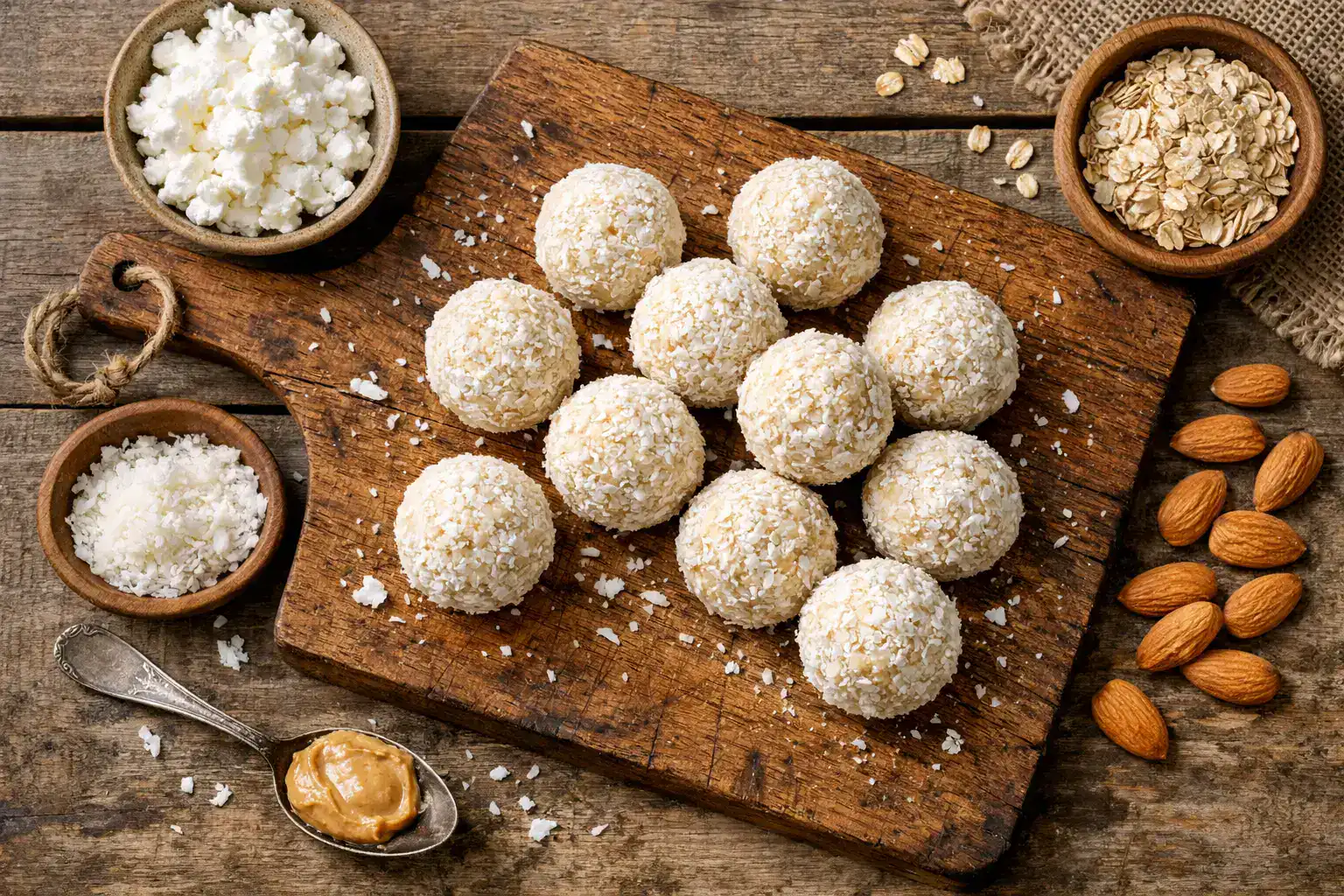
Quick Nutrition Facts
Per 1 Protein Ball (~30g)
| Nutrient | Amount |
|---|---|
| Calories | 80 kcal |
| Protein | 8g |
| Carbohydrates | 6g |
| Fiber | 1g |
| Sugars | 3g |
| Fat | 3g |
| Saturated Fat | 1g |
| Calcium | 45mg |
| Sodium | 120mg |
| Vitamin B12 | 0.3mcg |
Macronutrient Breakdown
 ChatGPT
  Claude
  AI Mode
  Perplexity
NUTRITIONIST INSIGHT
Cottage cheese protein balls deliver casein protein, which digests slowly over 6-8 hours. This makes them ideal for overnight muscle recovery or as a satiating snack that keeps hunger at bay between meals.
Myth Busters
MYTH #1: Cottage Cheese Protein Balls Are High in Fat
TRUTH: One protein ball contains only 3g of fat. The fat content comes primarily from cottage cheese and optional add-ins like nut butter. Research shows dairy fat combined with protein enhances satiety without excessive calorie intake.
MYTH #2: Protein Balls Spike Blood Sugar
TRUTH: Cottage cheese protein balls have minimal glycemic impact. Studies show adding cottage cheese to carbohydrates lowers the glycemic response by over 10% compared to carbs alone. The protein-fat combination slows glucose absorption.
MYTH #3: Homemade Protein Balls Don't Provide Enough Protein
TRUTH: Each cottage cheese protein ball delivers 8g of high-quality casein protein. Research confirms cheese protein increases muscle protein synthesis rates both at rest and during recovery from exercise.
MYTH #4: Cottage Cheese Is Not Safe During Pregnancy
TRUTH: Pasteurized cottage cheese is completely safe during pregnancy. Mayo Clinic recommends cottage cheese as a healthy protein source providing essential nutrients for fetal development.
MYTH #5: Protein Balls Are Only for Athletes
TRUTH: Cottage cheese protein balls benefit everyone needing convenient, balanced nutrition. They're ideal for busy professionals, students, seniors needing easy-to-eat protein, and anyone seeking healthy snack alternatives.
NutriScore by Health Goals
| Health Goal | NutriScore | Why This Score? |
|---|---|---|
| Weight Loss |  | Only 80 calories with 8g protein promotes satiety. High protein-to-calorie ratio supports muscle preservation during calorie deficit. |
| Muscle Gain | | Casein protein supports sustained muscle protein synthesis. Perfect post-workout or bedtime snack for recovery. |
| Diabetes Management | | Low glycemic impact; cottage cheese reduces glucose response. Only 6g carbs per ball with minimal sugar spike. |
| PCOS Management | | High protein, low sugar formula supports insulin sensitivity. Casein protein provides steady energy without hormonal disruption. |
| Pregnancy Nutrition | | Safe pasteurized dairy recommended by Mayo Clinic. Provides calcium, protein, B12 for fetal development. |
| Viral/Flu Recovery |  | Easy-to-digest protein supports immune function. Soft texture suitable when appetite is reduced. |
PERSONALIZED NUTRITION
Track your meals with NutriScan for personalized NutriScores based on your specific health goals!
Blood Sugar Response to Cottage Cheese Protein Balls
Understanding how cottage cheese protein balls affect your blood glucose helps optimize when and how to enjoy them.
Typical Glucose Response Curve
This chart shows typical blood glucose response for general healthy individuals. Individual responses may vary. Not medical advice.
How to Maintain Stable Blood Sugar
High protein foods like cottage cheese slow glucose absorption, keeping blood sugar stable:
- 🥜 Add nut butter - Increases healthy fats for even slower digestion
- 🫐 Include fiber-rich add-ins - Oats, chia seeds, or flaxseed
- ⏰ Eat with meals - Pair with other protein sources for extended satiety
- 🥤 Stay hydrated - Water aids protein digestion and nutrient absorption
The combination of casein protein and fat creates a minimal glucose response, making these ideal for blood sugar management.
Cultural Significance
Cottage cheese has been a staple in European and American diets for centuries, valued for its high protein content and versatility.
In India:
- Known as paneer in fresh form, cottage cheese is integral to vegetarian protein intake
- Protein balls align with traditional mithai (sweets) preparation methods
- Increasingly popular among fitness-conscious urban Indians
- Adapts well to Indian flavors: cardamom, saffron, rose water
Global Fitness Culture:
- Popularized by bodybuilders in the 1970s-80s for casein protein
- No-bake protein balls emerged from meal prep culture in 2010s
- Social media drove cottage cheese renaissance (TikTok, Instagram fitness)
- Now a mainstream healthy snack across gyms and health food stores worldwide
Compare & Substitute
Cottage Cheese Protein Balls vs Similar Snacks (Per 30g serving)
| Nutrient | 🧀 Cottage Cheese Protein Ball | 🥜 Peanut Butter Protein Ball | 🍫 Whey Protein Ball | 🥣 Oat Energy Ball |
|---|---|---|---|---|
| Calories | 80 kcal | 120 kcal | 95 kcal | 110 kcal |
| Carbs | 6g | 8g | 7g | 14g |
| Fiber | 1g | 2g | 1g | 2g |
| Protein | 8g | 6g | 10g | 3g |
| Fat | 3g | 8g | 3g | 5g |
| Sugar | 3g | 4g | 4g | 8g |
| Calcium | 45mg | 15mg | 60mg | 20mg |
| Best For | Slow-release protein, satiety | Pre-workout energy | Fast protein boost | Quick energy |
Frequently Asked Questions
Are cottage cheese protein balls good for weight loss?
Yes, cottage cheese protein balls are excellent for weight loss. At only 80 calories with 8g protein per ball, they offer one of the best protein-to-calorie ratios among snacks. The casein protein digests slowly, keeping you full for 3-4 hours.
Best practices: Limit to 2-3 balls per snack (160-240 calories), avoid added sugars in recipes, and pair with fiber-rich foods for maximum satiety.
Can diabetics eat cottage cheese protein balls?
Yes, cottage cheese protein balls are diabetes-friendly. They have minimal carbohydrates (6g per ball) and the protein-fat combination creates a very low glycemic response.
Tips for diabetics:
- Choose no-sugar-added recipes
- Limit to 1-2 balls per serving
- Monitor blood sugar 2 hours after eating
- Avoid recipes with dried fruits or honey
Research shows cottage cheese reduces glycemic response when paired with carbohydrates by over 10%.
How much protein is in a cottage cheese protein ball?
One cottage cheese protein ball (~30g) contains approximately 8g of protein. This is primarily casein protein, which digests slowly over 6-8 hours, making it ideal for sustained muscle protein synthesis.
For comparison: 3 protein balls provide 24g protein, equivalent to a small chicken breast.
What are the main health benefits of cottage cheese protein balls?
Key Benefits:
- Muscle Recovery: Casein protein supports overnight muscle repair
- Satiety: High protein keeps hunger controlled for hours
- Bone Health: Calcium and phosphorus support bone density
- Blood Sugar Control: Low glycemic impact with protein-fat combination
- Convenience: No-bake, portable, meal-prep friendly
- Versatility: Adapts to various dietary needs (keto, vegetarian)
When is the best time to eat cottage cheese protein balls?
Depends on your goal:
- Muscle Gain: Before bed (casein releases protein overnight) or post-workout
- Weight Loss: Mid-morning or afternoon snack to prevent overeating at meals
- Diabetes: Between meals to maintain stable blood sugar
- Energy: 1-2 hours before exercise for sustained fuel
IMPORTANT NOTE
Store cottage cheese protein balls refrigerated. They last 5-7 days in an airtight container.
How do I make cottage cheese protein balls?
Basic Recipe (makes ~12 balls):
- Blend 1 cup cottage cheese until smooth
- Mix in 1 cup oats, 2 tbsp honey, 2 tbsp nut butter
- Add optional: cocoa powder, vanilla, protein powder
- Refrigerate mixture 30 minutes
- Roll into 30g balls
- Store refrigerated in airtight container
Nutrition tip: Use low-fat cottage cheese for fewer calories, or full-fat for more satiety.
How many cottage cheese protein balls should I eat per day?
General Guidelines:
- 2-3 balls per snack - Most people (160-240 calories)
- 1-2 balls - Weight loss or diabetes management
- 3-4 balls - Athletes, muscle gain, high activity levels
- 1 ball - Light snack or appetite control
Track your meals with NutriScan app to see how cottage cheese protein balls fit your daily macros and nutrition goals.


Similar Nutritious Foods
4505 Chicharrones Classic Chili Salt
7 Eleven Japan Crispy Corn Cheese
Explore More Nutrition Tools & Resources
AI Calorie Counter App - Snap a Photo, Get Macros
AI Nutritionist App That Reads Your Logged Meals
Best Protein Supplements for Women
Bulking Meal Plan App That Sets Your Surplus
ChatGPT Calorie Counter Alternative That Keeps the Total
ChatGPT Diet Plan Alternative That Tracks What You Eat
ChatGPT Weight Loss Coach Alternative With a Food Log
Fast Food Calorie Counter App That Reads the Tray
Free Calorie Tracker App with AI Photo Scans | NutriScan
Indian Diet Plan App With Veg and Non Veg Meals
Indian Food Calorie Calculator - Get Instant Nutrition Facts for Desi Meals — 2026
Intermittent Fasting for Women, Timer and Meal Log App
Intermittent Fasting Tracker App - Free Fasting Timer
Macro Tracker App That Fills the Numbers From a Photo
Mediterranean Diet Meal Plan App That Counts the Oil
Micronutrient Tracker App for Vitamins and Minerals
MyFitnessPal Alternative That Stays Free | NutriScan
NutriScore App: A Free Grade on Every Meal | NutriScan
Nutrition Label Scanner App for the Amount You Ate
Second Trimester Protein Guide
Vegetarian Meal Plan App With a Protein Target
Voice Calorie Counter - Speak to Track Meals Hands-Free
Water and Calorie Tracker App - Free Water Log