Cucumber Raita: Calories, Nutrition and Health Benefits
India's cooling yogurt side dish packed with probiotics, hydration, and digestive benefits—perfect for every health goal.
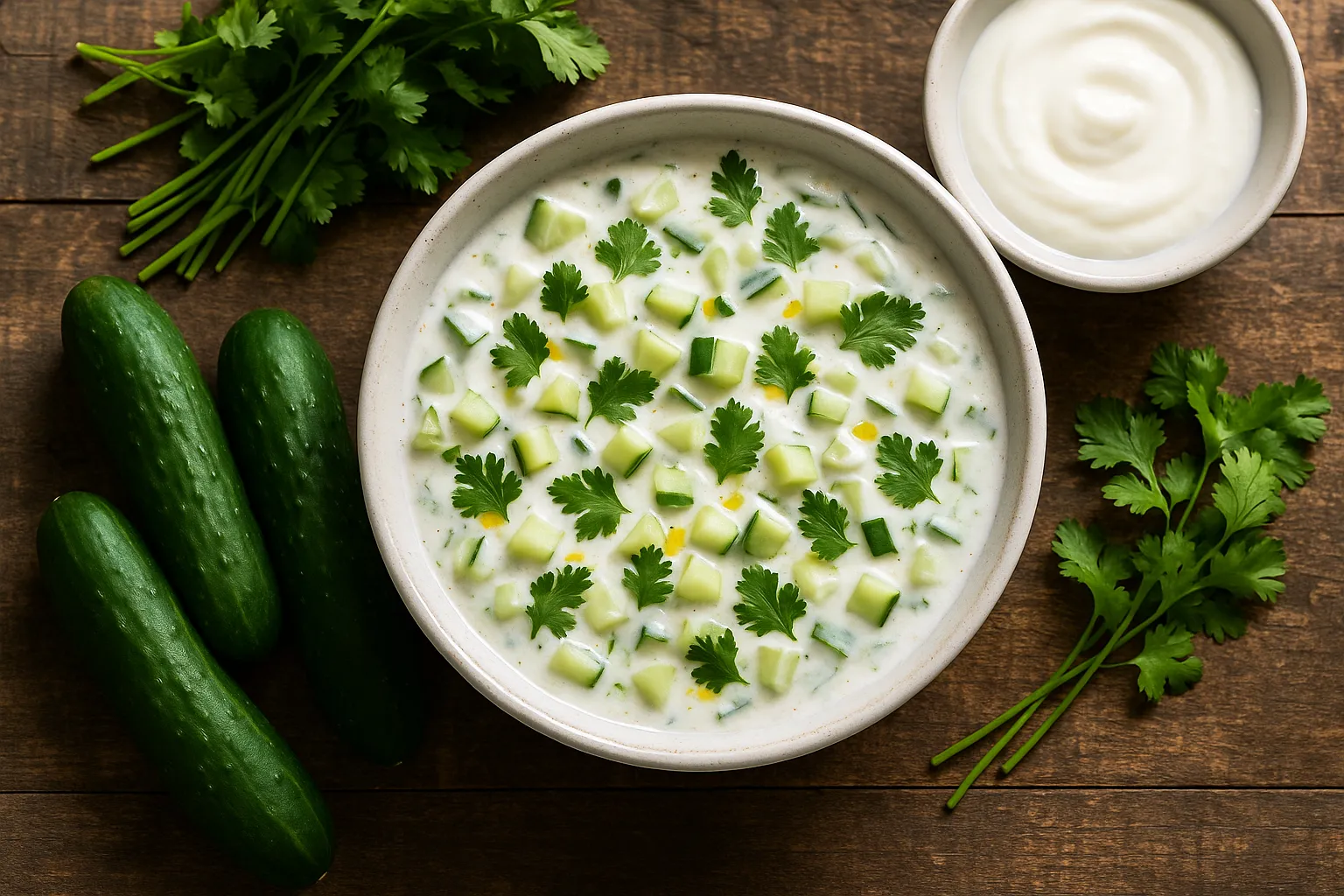
Quick Nutrition Facts
Per 1 Cup Cucumber Raita (200g)
| Nutrient | Amount |
|---|---|
| Calories | 52 kcal |
| Protein | 4.8g |
| Carbohydrates | 4.2g |
| Fiber | 0.8g |
| Sugars | 2.1g |
| Fat | 1.2g |
| Potassium | 285mg |
| Calcium | 152mg |
| Vitamin K | 18mcg |
| Probiotics | Present |
Macronutrient Breakdown
 ChatGPT
  Claude
  AI Mode
  Perplexity
NUTRITIONIST INSIGHT
Cucumber raita combines live probiotic cultures from yogurt with the hydrating power of cucumber (96% water). This cooling dish supports digestion, enhances immunity, and keeps you satisfied with just 52 calories per cup. The traditional spice blend (cumin, cilantro) adds anti-inflammatory antioxidants.
Myth Busters
MYTH #1: Raita is Too High in Calories for Weight Loss
TRUTH: At only 52 calories per cup, cucumber raita is one of the lowest-calorie side dishes. The probiotics and fiber promote satiety, helping you eat less overall. Perfect for adding volume to meals without excess calories.
MYTH #2: Yogurt-Based Raita Causes Blood Sugar Spikes
TRUTH: Cucumber raita has a very low glycemic index (5-15), minimal impact on blood glucose. The fermented yogurt may even improve insulin sensitivity through probiotics, making it ideal for diabetics.
MYTH #3: Raita with Salt is Bad for Blood Pressure
TRUTH: Traditional raita uses minimal salt (under 200mg per cup). You control sodium by adjusting salt added. Compare to processed side dishes with 300+ mg sodium; homemade raita is sodium-smart when prepared consciously.
MYTH #4: Probiotics in Raita Are Destroyed by Digestion
TRUTH: Studies confirm that probiotic cultures in yogurt survive stomach acid and colonize the gut, delivering health benefits. The key is consuming fresh raita within 2-3 days of preparation to maintain live cultures.
MYTH #5: Cucumber Raita Lacks Protein
TRUTH: One cup provides 4.8g protein from yogurt alone, supporting muscle recovery and satiety. While not a primary protein source, it's a nutritious complement to grain and protein-based meals in Indian cuisine.
MYTH #6: All Raitas Are the Same Nutritionally
TRUTH: Recipe variations matter: coconut raita has 150+ calories; mint raita is similar to cucumber; mango raita adds 30+ grams of sugar. Stick with cucumber, tomato, or beet varieties for lowest calories and best weight-loss benefits.
NutriScore by Health Goals
| Health Goal | NutriScore | Why This Score? |
|---|---|---|
| Weight Loss |  | 52 calories, 4.8g protein promotes fullness, probiotics aid metabolism, 96% water hydration. Eat freely as a cooling side. |
| Muscle Gain |  | Moderate protein (4.8g), ideal post-workout hydration with electrolytes, probiotics support nutrient absorption. |
| Diabetes Management | | Extremely low GI (5-15), minimal blood sugar impact. Serve with meals to slow carb absorption further. |
| PCOS Management | | Low calorie, anti-inflammatory spices, probiotics improve insulin sensitivity, cooling properties reduce heat in body. |
| Pregnancy Nutrition | | Probiotics support maternal health and reduce gestational diabetes risk. Provides hydration, folate, and calcium for fetal development. |
| Viral/Flu Recovery | | Light, cooling, easy to digest; probiotics strengthen immunity; hydration supports recovery; minimal sodium for gentle nutrition. |
PERSONALIZED NUTRITION
Track your meals with NutriScan for personalized NutriScores based on your specific health goals!
Blood Sugar Response to Cucumber Raita
Understanding the minimal glycemic impact of cucumber raita helps you use it strategically in your diet.
Typical Glucose Response Curve
This chart shows typical blood glucose response for general healthy individuals. Individual responses may vary. Not medical advice.
Pairing Strategy for Optimal Benefits
Serving cucumber raita with protein and healthy fats slows carb absorption and stabilizes energy:
- 🍗 With grilled chicken or fish - Complete protein prevents glucose spike
- 🥘 With rice or roti - Probiotics aid grain digestion and reduce glycemic load
- 🥗 With lentil curry - Combined fiber creates sustained satiety
- 🥚 With egg-based dishes - Healthy fats and protein extend energy release
This combination maximizes digestive benefits and prevents rapid blood sugar fluctuations.
Cultural Significance
Raita is a cornerstone of Indian cuisine dating back centuries, appearing in royal Mughal courts and household kitchens alike.
In India:
- Sacred in Indian meal structure: always served with spiced curries to cool the palate
- Regional variations: cucumber (North), coconut (South), mint (West), beet (specific regions)
- Ayurvedic cooling food (Vata-balancing), used in Pitta-dominant seasons
- Traditional wedding ceremonies often feature elaborate raita presentations
- Street food vendor essential, served fresh daily across India
Global Impact:
- Adopted in Indian restaurants worldwide as essential condiment
- Growing recognition of probiotics drives mainstream health interest
- Vegetarian/vegan protein boost when made with plant-based yogurts
- Increasingly featured in healthy meal plans for digestive wellness
Compare & Substitute
Raita Variations (Per 100g)
| Nutrient | 🥒 Cucumber | 🍅 Tomato | 🌰 Beet | 🥥 Coconut |
|---|---|---|---|---|
| Calories | 26 kcal | 24 kcal | 28 kcal | 75 kcal |
| Carbs | 2.1g | 2.0g | 2.8g | 3.2g |
| Protein | 2.4g | 2.2g | 2.0g | 1.5g |
| Fat | 0.6g | 0.5g | 0.8g | 6.2g |
| Fiber | 0.4g | 0.5g | 0.6g | 2.1g |
| Probiotics | Yes | Yes | Yes | Yes (plant-based option) |
| Best For | Weight loss, cooling | Lycopene, antioxidants | Folate, energy support | Coconut cream taste |
Frequently Asked Questions
Is cucumber raita good for weight loss?
Yes, cucumber raita is one of the best side dishes for weight loss. At 52 calories per cup with 4.8g protein and high water content, it fills you up without excess calories. The probiotics support digestive health and may boost metabolism.
Best practices: Serve as a starter before main course; use plain yogurt without added sugar or cream; portion is 1 cup per meal; pair with protein and vegetables for satiety.
Can diabetics eat cucumber raita?
Absolutely. Cucumber raita has a very low glycemic index (5-15) and minimal carbohydrates. The probiotics may improve insulin sensitivity through enhanced gut health. Consume fresh within 2-3 days to maximize probiotic benefits.
Tips for diabetics: Avoid sweetened versions; use plain yogurt; keep salt moderate (under 200mg); serve with fiber-rich meals to further reduce glycemic impact.
What are the main health benefits?
Key benefits include: (1) Probiotic yogurt improves gut health and immunity; (2) 96% water cucumber provides hydration; (3) Very low calorie content supports weight management; (4) Cooling properties aid summer digestion; (5) Cumin and cilantro provide antioxidants; (6) Supports heart health through probiotics.
Does raita have probiotics?
Yes. Traditional yogurt-based raita contains live Lactobacillus and Bifidobacterium cultures. These beneficial bacteria survive stomach acid and colonize the gut, supporting digestion, immunity, and nutrient absorption. Ensure yogurt label states "live and active cultures."
Is raita safe during pregnancy?
Yes. Probiotics are beneficial during pregnancy when using pasteurized yogurt. Cucumber provides folate and hydration. Avoid raw milk versions; prepare fresh with clean ingredients; consume within 2-3 days. Consult healthcare provider about probiotic intake.
What is the best time to eat cucumber raita?
Serve with lunch or dinner as a cooling side dish. For weight loss: eat before the main course to increase satiety. For summer: consume throughout the day for hydration and cooling effect. For digestive support: pair with heavier meals to aid enzyme production.
Can I eat raita every day?
Yes. Cucumber raita is safe for daily consumption. It supports digestive health, weight management, and overall nutrition. Vary the base vegetables (tomato, beet, radish) to expand micronutrient diversity. Fresh preparation with proper storage maintains probiotic benefits.
How should I store cucumber raita?
Keep refrigerated in airtight containers for 2-3 days maximum to preserve live probiotics. Prepare fresh when possible. Do not freeze, as this kills beneficial cultures. Use fresh yogurt within expiration date and consume raita within 1 day of opening yogurt container.


Similar Nutritious Foods
4505 Chicharrones Classic Chili Salt
7 Eleven Japan Crispy Corn Cheese
Explore More Nutrition Tools & Resources
AI Calorie Counter App - Snap a Photo, Get Macros
AI Nutritionist App That Reads Your Logged Meals
Best Protein Supplements for Women
Bulking Meal Plan App That Sets Your Surplus
ChatGPT Calorie Counter Alternative That Keeps the Total
ChatGPT Diet Plan Alternative That Tracks What You Eat
ChatGPT Weight Loss Coach Alternative With a Food Log
Fast Food Calorie Counter App That Reads the Tray
Free Calorie Tracker App with AI Photo Scans | NutriScan
Indian Diet Plan App With Veg and Non Veg Meals
Indian Food Calorie Calculator - Get Instant Nutrition Facts for Desi Meals — 2026
Intermittent Fasting for Women, Timer and Meal Log App
Intermittent Fasting Tracker App - Free Fasting Timer
Macro Tracker App That Fills the Numbers From a Photo
Mediterranean Diet Meal Plan App That Counts the Oil
Micronutrient Tracker App for Vitamins and Minerals
MyFitnessPal Alternative That Stays Free | NutriScan
NutriScore App: A Free Grade on Every Meal | NutriScan
Nutrition Label Scanner App for the Amount You Ate
Second Trimester Protein Guide
Vegetarian Meal Plan App With a Protein Target
Voice Calorie Counter - Speak to Track Meals Hands-Free
Water and Calorie Tracker App - Free Water Log