Cup Noodles Chicken Wing Ramen: Calories, Nutrition and Health Facts
Nissin's chicken wing-flavored instant ramen packs 290 calories with bold, comfort-food flavor but comes loaded with 1160mg sodium per cup.
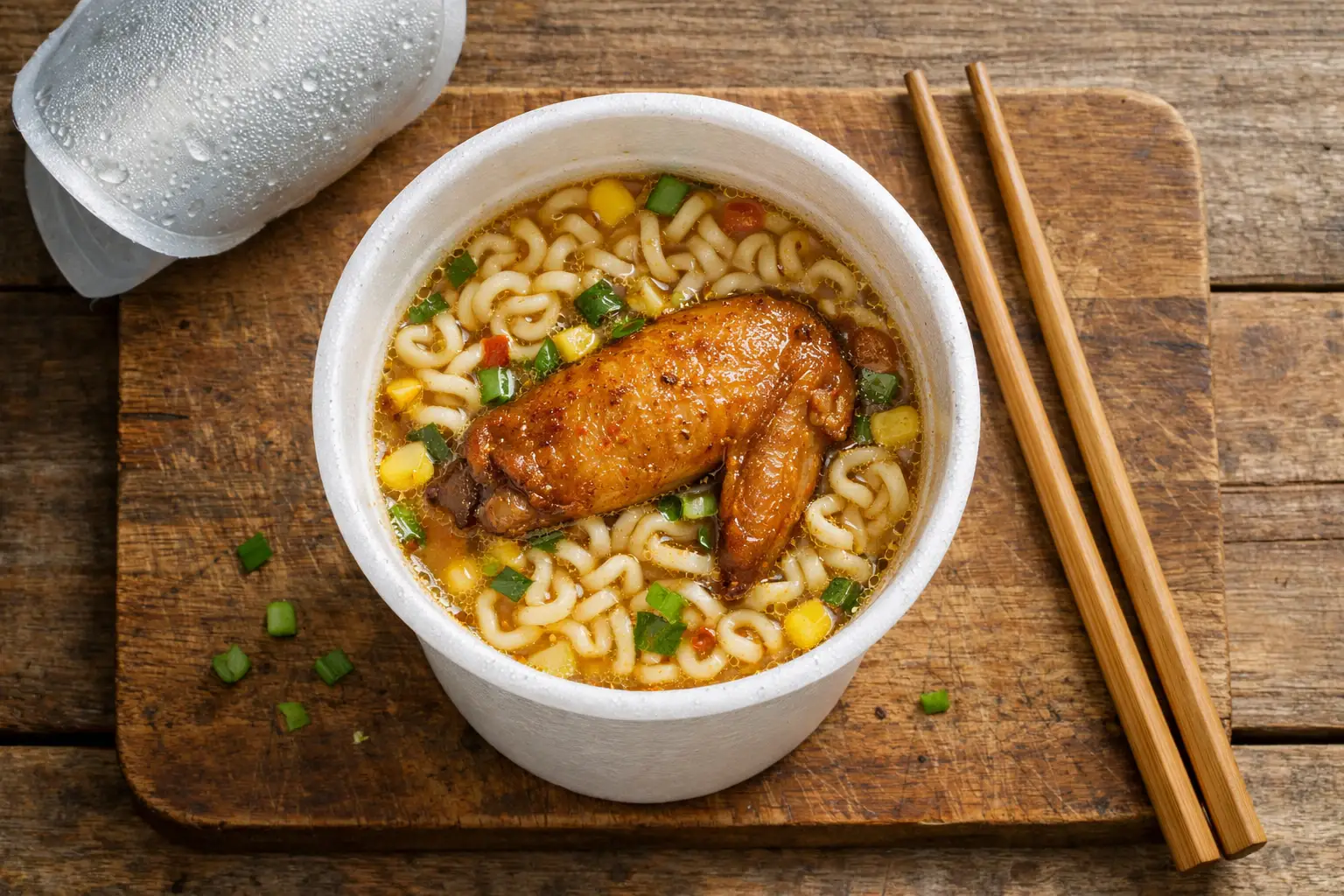
Quick Nutrition Facts
Per 1 Cup (64g dry)
| Nutrient | Amount |
|---|---|
| Calories | 290 kcal |
| Protein | 7g |
| Carbohydrates | 38g |
| Fiber | 2g |
| Sugars | 4g |
| Fat | 12g |
| Saturated Fat | 5g |
| Sodium | 1160mg |
| Iron | 2.5mg |
| Cholesterol | 5mg |
Macronutrient Breakdown
 ChatGPT
  Claude
  AI Mode
  Perplexity
NUTRITIONIST INSIGHT
One cup of Cup Noodles delivers 50% of your daily sodium limit in a single sitting. The deep-fried noodle block accounts for most of the 12g fat. Adding an egg, vegetables, or lean protein can significantly improve the nutritional balance while keeping the convenience factor.
Myth Busters
MYTH #1: Cup Noodles Are a Good Source of Protein
TRUTH: With only 7g of protein per cup, instant ramen provides less than 15% of daily needs. The refined wheat noodles lack essential amino acids found in complete protein sources like eggs, chicken, or tofu.
MYTH #2: Chicken Wing Ramen Has Real Chicken Benefits
TRUTH: The "chicken wing" flavor comes primarily from seasoning, not substantial chicken meat. The protein content (7g) is mostly from wheat gluten in the noodles, not poultry. Real chicken breast provides 31g protein per 100g.
MYTH #3: Instant Ramen Is Fine as a Daily Meal
TRUTH: Regular instant noodle consumption is linked to increased cardiometabolic risk factors, including elevated blood sugar, blood pressure, and cholesterol. Harvard researchers found women eating ramen 2+ times weekly had 68% higher metabolic syndrome risk.
MYTH #4: Draining the Broth Makes It Healthy
TRUTH: While draining removes some sodium (30-40%), most calories and fat are in the deep-fried noodle block itself. The 12g of fat and 38g of refined carbs remain regardless of whether you drink the broth.
MYTH #5: Cup Noodles Are Low in Calories
TRUTH: At 290 calories per cup with minimal fiber (2g) and protein (7g), cup noodles have poor satiety per calorie. You'll likely feel hungry again within 1-2 hours, leading to additional snacking that adds to total calorie intake.
NutriScore by Health Goals
| Health Goal | NutriScore | Why This Score? |
|---|---|---|
| Weight Loss |  | 290 calories with only 2g fiber and 7g protein means poor satiety. High sodium causes water retention. Limit to rare occasions. |
| Muscle Gain | | Only 7g protein per cup is insufficient for muscle recovery. High sodium and low micronutrient content. Add eggs or chicken to improve. |
| Diabetes Management |  | High GI (71-87) refined carbs cause rapid blood sugar spikes. 38g carbs with only 2g fiber. Avoid or eat half portion with protein. |
| PCOS Management | | Refined carbs and high GI worsen insulin resistance. High sodium promotes bloating. Choose whole grain noodle alternatives. |
| Pregnancy Nutrition | | Lacks essential pregnancy nutrients like folate, iron, and calcium. High sodium risks pregnancy-related hypertension. Occasional use only. |
| Viral/Flu Recovery |  | Warm broth provides comfort and hydration. Easy to prepare when sick. Sodium helps with electrolyte balance. Add vegetables for better nutrition. |
PERSONALIZED NUTRITION
Track your meals with NutriScan for personalized NutriScores based on your specific health goals!
Blood Sugar Response to Cup Noodles Chicken Wing Ramen
Understanding how instant ramen affects your blood glucose is critical, especially given its high glycemic index (GI 71-87) and refined carbohydrate content.
Typical Glucose Response Curve
*This chart shows typical blood glucose response for general healthy individuals. Individual responses may vary. Not medical advice.*
How to Flatten the Spike
Pairing refined carbs with protein or healthy fat slows glucose absorption and reduces the peak blood sugar level:
- 🥚 Add a boiled or poached egg - Provides 6g complete protein and healthy fats
- 🥬 Toss in leafy greens or frozen vegetables - Adds fiber to slow digestion
- 🥜 Drizzle sesame oil or add peanut butter - Healthy fats reduce glycemic response
- 🍗 Add leftover chicken or tofu - Protein improves satiety and blood sugar control
Using only half the seasoning packet reduces sodium by 30-40% without dramatically changing flavor.
Cultural Significance
Cup Noodles revolutionized instant food when Momofuku Ando invented the cup format in 1971, building on his original instant ramen creation in 1958.
In Japan:
- Cup Noodles is a cultural icon with a dedicated museum in Yokohama
- Limited-edition flavors like Chicken Wing reflect Japan's love of innovation
- Convenience store (konbini) culture made cup noodles a staple midnight snack
- Japan consumes over 5.7 billion servings of instant noodles annually
Global Impact:
- Over 120 billion servings of instant noodles consumed worldwide annually
- Essential disaster relief food due to shelf stability and easy preparation
- College and budget-friendly staple across North America and Asia
- Flavor innovations reflect local tastes: from tom yum in Thailand to chicken wing in the US
Compare & Substitute
Cup Noodles Chicken Wing vs Similar Foods (Per 100g)
| Nutrient | 🍜 Cup Noodles Chicken Wing | 🍜 Fresh Ramen | 🍝 Whole Wheat Pasta | 🍚 Brown Rice |
|---|---|---|---|---|
| Calories | 453 kcal | 138 kcal | 124 kcal | 123 kcal |
| Carbs | 59g | 26g | 26g | 26g |
| Fiber | 3g | 1g | 4g | 2g |
| Protein | 11g | 5g | 5g | 3g |
| Fat | 19g | 1g | 1g | 1g |
| Sodium | 1813mg | 450mg | 3mg | 4mg |
| Sugar | 6g | 1g | 1g | 0g |
| Best For | Quick convenience meal | Better fresh noodle option | Fiber-rich, low sodium | Whole grain, balanced meal |
Frequently Asked Questions
How many calories are in Cup Noodles Chicken Wing Ramen?
One cup (64g dry) contains 290 calories, with 38g carbohydrates, 12g fat (5g saturated), and 7g protein. The deep-fried noodle block contributes most of the fat and calories.
Per 100g (dry): 453 calories, making it one of the more calorie-dense packaged foods per weight.
Is Cup Noodles Chicken Wing Ramen bad for you?
Not inherently "bad" when eaten occasionally, but not nutritionally optimal. The main concerns are high sodium (1160mg, 50% daily limit), refined carbs with minimal fiber, and saturated fat from deep frying.
To make it healthier: Add an egg, vegetables, and use only half the seasoning packet. Limit to 1-2 times per week maximum.
Can diabetics eat Cup Noodles ramen?
Diabetics should be cautious. The high glycemic index (GI 71-87) and 38g of refined carbs cause rapid blood sugar spikes.
Tips for diabetics:
- Eat only half a cup at a time (19g carbs)
- Always add protein (egg, chicken, tofu)
- Add vegetables for fiber
- Monitor blood sugar 2 hours after eating
How much sodium is in Cup Noodles?
One cup contains 1160mg of sodium, roughly 50% of the recommended 2300mg daily limit. Most sodium comes from the seasoning packet.
Sodium reduction tips: Use half the seasoning, drain the broth, or look for reduced-sodium varieties. People with hypertension should limit consumption to occasional use only.
Can I eat Cup Noodles during pregnancy?
Occasional consumption is generally safe, but instant ramen should not replace nutritious meals. The high sodium can contribute to pregnancy-related hypertension, and the lack of folate, iron, and calcium means it doesn't support fetal development.
Better pregnancy alternatives: Whole grain noodle soup with vegetables, homemade chicken broth with rice noodles, or fortified instant oatmeal.
How can I make Cup Noodles healthier?
Simple upgrades:
- Add protein: Egg, shredded chicken, tofu, or edamame
- Add vegetables: Spinach, corn, mushrooms, or frozen mixed vegetables
- Reduce sodium: Use only half the seasoning packet
- Add healthy fat: Drizzle sesame oil or add avocado
- Boost fiber: Toss in kimchi, seaweed, or bean sprouts
These additions can nearly double the protein, triple the fiber, and significantly improve vitamin and mineral content.
Track your meals with NutriScan app to see how Cup Noodles fits your personal nutrition goals.




Similar Nutritious Foods
4505 Chicharrones Classic Chili Salt
7 Eleven Japan Crispy Corn Cheese
Explore More Nutrition Tools & Resources
AI Calorie Counter App - Snap a Photo, Get Macros
AI Nutritionist App That Reads Your Logged Meals
Best Protein Supplements for Women
Bulking Meal Plan App That Sets Your Surplus
ChatGPT Calorie Counter Alternative That Keeps the Total
ChatGPT Diet Plan Alternative That Tracks What You Eat
ChatGPT Weight Loss Coach Alternative With a Food Log
Fast Food Calorie Counter App That Reads the Tray
Free Calorie Tracker App with AI Photo Scans | NutriScan
Indian Diet Plan App With Veg and Non Veg Meals
Indian Food Calorie Calculator - Get Instant Nutrition Facts for Desi Meals — 2026
Intermittent Fasting for Women, Timer and Meal Log App
Intermittent Fasting Tracker App - Free Fasting Timer
Macro Tracker App That Fills the Numbers From a Photo
Mediterranean Diet Meal Plan App That Counts the Oil
Micronutrient Tracker App for Vitamins and Minerals
MyFitnessPal Alternative That Stays Free | NutriScan
NutriScore App: A Free Grade on Every Meal | NutriScan
Nutrition Label Scanner App for the Amount You Ate
Second Trimester Protein Guide
Vegetarian Meal Plan App With a Protein Target
Voice Calorie Counter - Speak to Track Meals Hands-Free
Water and Calorie Tracker App - Free Water Log