Domino's Supreme Pizza: Calories, Nutrition and Health Benefits
 ChatGPT
  Claude
  AI Mode
  Perplexity
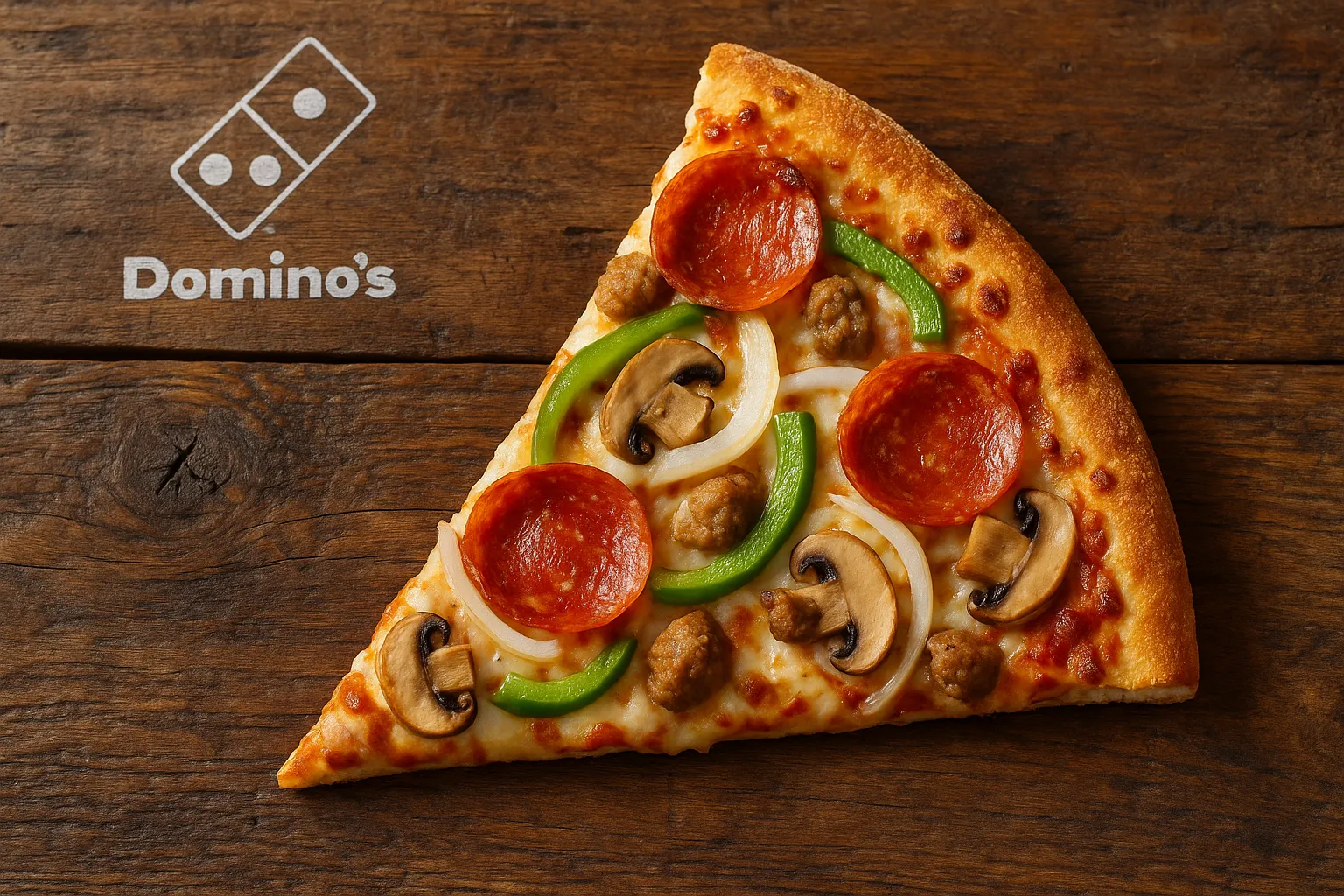
 Domino's Supreme Pizza: 295 calories, 33 g carbs, 14 g protein and 12 g fat per 1 Slice (125g).
Quick Nutrition Facts
Per 1 Slice (125g)
| Nutrient | Amount |
|---|---|
| Calories | 295 kcal |
| Protein | 14g |
| Carbohydrates | 33g |
| Fiber | 2g |
| Sugars | 2.5g |
| Fat | 12g |
| Sodium | 720mg |
| Calcium | 280mg |
| Iron | 2.5mg |
| Potassium | 180mg |
Macronutrient Breakdown

NUTRITIONIST INSIGHT
Domino's supreme pizza stands out with 14g protein per slice (20% higher than cheese pizza) from pepperoni and sausage, plus 2g fiber from vegetables. The balance of protein, carbs, and vegetables makes it a superior fast-food choice for post-workout recovery. The added vegetables provide antioxidants and micronutrients often missing in simpler pizza varieties.
Myth Busters
MYTH #1: Loaded Pizza Is Too Unhealthy
TRUTH: Supreme pizza's vegetables (peppers, onions, mushrooms) add fiber (2g) and phytonutrients without significantly increasing calories. Studies show vegetable-inclusive fast food supports better micronutrient intake compared to simple cheese options.
MYTH #2: Double Meat Pizza Ruins Weight Loss
TRUTH: The additional protein from sausage and pepperoni (14g per slice) increases satiety and reduces overall hunger. Higher protein intake supports weight loss through increased thermogenesis and appetite control. Portion control matters more than food type.
MYTH #3: Pizza With Vegetables Is Just Marketing
TRUTH: Mushrooms, peppers, and onions provide measurable nutritional benefits: mushrooms offer selenium and B vitamins, peppers deliver vitamin C and capsaicin (anti-inflammatory), and onions contain quercetin (antioxidant). These contributions support immune function and reduce inflammation.
MYTH #4: All Pizza Toppings Have Equal Calories
TRUTH: Vegetable toppings (peppers, mushrooms, onions) add 5-10 calories per slice while providing nutrients. Meat toppings add 15-25 calories but increase protein substantially. Supreme pizza's combination optimizes both nutrition and satisfaction.
MYTH #5: Fast Food Can't Provide Balanced Nutrition
TRUTH: Domino's supreme pizza provides a carb-protein-fat ratio (45%-19%-36%) similar to sports nutrition guidelines for post-workout meals when consumed immediately after exercise.
MYTH #6: You Must Avoid All Processed Foods for Health
TRUTH: Occasional consumption of processed foods like pizza fits within flexible, sustainable diets. Research demonstrates that all-or-nothing dietary approaches fail long-term; strategic inclusion of preferred foods improves adherence and outcomes.
NutriScore by Health Goals
| Health Goal | NutriScore | Why This Score? |
|---|---|---|
| Weight Loss |  | 295 calories per slice with 14g protein promotes fullness. Limit to 1 slice with salad. Higher sodium (720mg) requires moderation. |
| Muscle Gain |  | Excellent post-workout: 14g protein, 33g carbs, 2g fiber for recovery. Eat 2-3 slices within 60 minutes of training. |
| Diabetes Management | | Moderate GI (55-57). Vegetables lower glycemic impact. One slice paired with protein; monitor blood glucose 2 hours after eating. |
| PCOS Management | | Moderate carbs (33g) with higher protein (14g) reduces insulin spike. Limit to 1/2 slice; the vegetable content supports hormone balance better than plain cheese pizza. |
| Pregnancy Nutrition | | Provides calcium (280mg), iron (2.5mg for fetal development), and protein (14g). Vegetables add folate and vitamin C. Limit to 1-2 slices due to sodium; monitor total sodium intake. |
| Viral/Flu Recovery | | Easy to digest, protein (14g) supports immune recovery, carbs provide energy, vegetables offer vitamin C. Choose when appetite recovers. |
PERSONALIZED NUTRITION
Track your meals with NutriScan for personalized NutriScores based on your specific health goals and real-time macro tracking!
Blood Sugar Response to Supreme Pizza
Understanding how loaded pizza impacts blood glucose helps you time meals for optimal performance.
Typical Glucose Response Curve
This chart shows typical blood glucose response for general healthy individuals. Individual responses may vary. Not medical advice.
How to Optimize Digestion and Glucose Impact
Pairing pizza with additional vegetables and timing consumption strategically further improves glucose response:
- 🥗 Large side salad with vinaigrette - Vinegar and fiber slow glucose absorption significantly
- 🚴 Consume post-workout - Muscles preferentially store carbs as glycogen rather than fat
- 🥤 Water or green tea - Supports digestion and prevents rapid glucose spike
- 🌶️ Request extra vegetables - Each additional pepper or mushroom serving adds fiber and nutrients
For muscle gain, the combination of protein, carbs, and vegetables in supreme pizza creates an ideal post-workout meal window (within 60 minutes of training).
Cultural Significance
Supreme pizza represents the evolution of Italian-American pizza traditions into loaded American varieties. While Neapolitan pizza emphasizes simplicity, American pizza chains adapted by adding multiple toppings to appeal to broader audiences.
In India:
- Supreme pizza adapted with Indian ingredients: tandoori chicken variant, paneer supreme, reduced-spice options
- Domino's India offers "Veggie Supreme" emphasizing Indian vegetables (paneer, corn, capsicum)
- Supreme pizza positioned as "loaded" option for family sharing and celebrations
- Vegetarian preference in Indian market led to creative vegetable-forward supreme variations
Global Impact:
- Loaded pizzas account for 40%+ of fast-casual pizza sales globally
- Consumer demand for ingredient transparency increased focus on vegetable-quality
- Supreme pizza variants adapted regionally: barbecue supreme in US, tandoori supreme in India, Mediterranean supreme in Europe
Compare & Substitute
Supreme Pizza vs Similar Protein-Carb Foods (Per Serving)
| Nutrient | 🍕 Domino's Supreme (1 slice) | 🍝 Meat Lasagna (1 serving) | 🍔 Double Burger (1 burger) | 🌯 Steak Burrito (1 burrito) |
|---|---|---|---|---|
| Calories | 295 kcal | 350 kcal | 380 kcal | 410 kcal |
| Carbs | 33g | 35g | 30g | 45g |
| Protein | 14g | 18g | 20g | 18g |
| Fat | 12g | 15g | 20g | 16g |
| Fiber | 2g | 1.5g | 0.5g | 3g |
| Vegetables | Yes (peppers, onions, mushrooms) | Minimal | None | Yes (peppers, onions) |
| Best For | Post-workout, balanced macros | Higher protein, sustained energy | Higher protein, quick energy | Complete meal, higher fiber |
Frequently Asked Questions
Is Domino's supreme pizza good for muscle building?
Yes, supreme pizza is excellent for muscle building. Each slice delivers 14g protein from pepperoni and sausage, plus 33g carbohydrates for glycogen replenishment. The vegetable content (peppers, onions, mushrooms) adds micronutrients and fiber. Consume 2-3 slices within 60 minutes post-workout for optimal muscle recovery; pair with water or electrolyte beverage to support hydration and protein synthesis.
How many calories in a slice of Domino's supreme pizza?
One slice (125g, hand-tossed crust) contains 295 calories. A full 14-inch pizza yields 8 slices for approximately 2,360 total calories. This makes supreme pizza slightly more calorie-dense than plain cheese pizza (275 calories) due to additional meat toppings, but the extra protein provides superior satiety for portion control.
Can I eat Domino's supreme pizza while losing weight?
Yes, strategic consumption supports weight loss. The 14g protein per slice increases satiety and thermic effect of food (greater calorie burn during digestion). Limit to one slice, pair with a large salad, drink water, and ensure total daily calories align with your deficit. NutriScan app helps track total intake across meals.
What are the macros in Domino's supreme pizza?
Per slice (125g): 33g carbohydrates, 14g protein, 12g fat, and 2g fiber totaling 295 calories. This macro distribution (45% carbs, 19% protein, 36% fat) aligns with post-workout nutrition guidelines and supports both recovery and muscle growth when consumed appropriately.
Does Domino's supreme pizza have vegetables and nutrients?
Absolutely. Supreme pizza includes green peppers (vitamin C, capsaicin), mushrooms (selenium, B vitamins, umami compounds), and onions (quercetin, prebiotic fiber). These vegetables contribute 2g fiber per slice and measurable micronutrients often absent from simpler fast-food options, supporting immune function and reducing systemic inflammation.
What's the best time to eat Domino's supreme pizza?
Post-workout (within 30-60 minutes) is optimal. The carbohydrate-protein combination refills muscle glycogen and supports muscle protein synthesis. The vegetables provide anti-inflammatory compounds beneficial during recovery. For weight loss, eat earlier (lunch vs. dinner) to distribute calories throughout active hours. Avoid late-night consumption unless within daily calorie budgets.




Similar Nutritious Foods
4505 Chicharrones Classic Chili Salt
7 Eleven Japan Crispy Corn Cheese
Explore More Nutrition Tools & Resources
AI Calorie Counter App - Snap a Photo, Get Macros
AI Nutritionist App That Reads Your Logged Meals
Best Protein Supplements for Women
Bulking Meal Plan App That Sets Your Surplus
ChatGPT Calorie Counter Alternative That Keeps the Total
ChatGPT Diet Plan Alternative That Tracks What You Eat
ChatGPT Weight Loss Coach Alternative With a Food Log
Fast Food Calorie Counter App That Reads the Tray
Free Calorie Tracker App with AI Photo Scans | NutriScan
Indian Diet Plan App With Veg and Non Veg Meals
Indian Food Calorie Calculator - Get Instant Nutrition Facts for Desi Meals — 2026
Intermittent Fasting for Women, Timer and Meal Log App
Intermittent Fasting Tracker App - Free Fasting Timer
Macro Tracker App That Fills the Numbers From a Photo
Mediterranean Diet Meal Plan App That Counts the Oil
Micronutrient Tracker App for Vitamins and Minerals
MyFitnessPal Alternative That Stays Free | NutriScan
NutriScore App: A Free Grade on Every Meal | NutriScan
Nutrition Label Scanner App for the Amount You Ate
Second Trimester Protein Guide
Vegetarian Meal Plan App With a Protein Target
Voice Calorie Counter - Speak to Track Meals Hands-Free
Water and Calorie Tracker App - Free Water Log