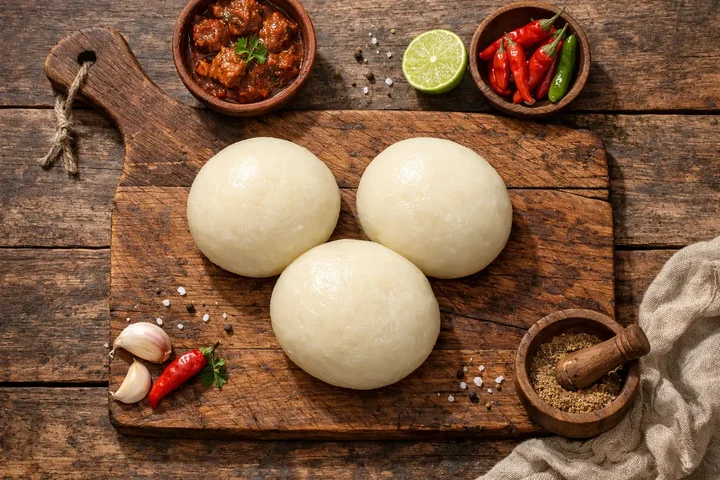
Fufu: Calories, Nutrition and Health Benefits
Fufu is a beloved West African staple made from pounded cassava, plantain, or yam. One 100g serving provides 166 calories, 33.6g carbs, 3.1g fiber, 1.5g protein, and just 0.2g fat. This smooth, dough-like food has a low glycemic index (GI 31-55) and contains resistant starch that supports digestive health.
Quick Nutrition Facts
| Nutrient | Per 100g | Per Serving (240g) |
|---|---|---|
| Calories | 166 kcal | 398 kcal |
| Carbohydrates | 33.6g | 81g |
| Fiber | 3.1g | 7.4g |
| Sugar | 1.1g | 2.6g |
| Protein | 1.5g | 3.6g |
| Fat | 0.2g | 0.5g |
| Potassium | 240mg | 576mg |
| Calcium | 30mg | 72mg |
| Vitamin C | 5mg | 12mg |
Highlights:
- Resistant Starch: 2-4g per 100g (increases with cooling)
- Low GI: 31-55 depending on preparation method
- Gluten-Free: Naturally suitable for celiac diets
- High Satiety: 3.1g fiber per 100g promotes fullness
Macronutrient Breakdown
Energy Distribution:
- Carbohydrates: 81% (energy source)
- Fiber: 7.5% (digestive health)
- Protein: 3.6% (minimal)
- Fat: 1.1% (minimal)
 ChatGPT
  Claude
  AI Mode
  Perplexity
🥼 NUTRITIONIST INSIGHT
Fufu is an excellent energy source for active individuals, providing sustained release of glucose due to its resistant starch content and low GI. The fiber supports digestive health, while the minimal fat makes it heart-friendly when paired with lean protein soups.
Myth Busters
MYTH #1: "Fufu is too starchy for weight loss"
TRUTH: Fufu's low GI (31-55) and resistant starch actually support weight management by promoting satiety and preventing blood sugar spikes. Studies show that properly prepared fufu causes slower glucose rises than many other staples.
MYTH #2: "All fufu preparations are the same"
TRUTH: Preparation method significantly impacts nutrition. Industry-processed fufu flour has GI 31 due to heating-cooling cycles that create resistant starch, while locally pounded fufu has GI 55. Research confirms these differences matter for glycemic control.
MYTH #3: "Fufu has no nutritional value"
TRUTH: Fufu provides essential energy (166 kcal per 100g), fiber (3.1g), potassium (240mg), and resistant starch that feeds beneficial gut bacteria. When paired with nutrient-dense soups, it forms a complete meal.
MYTH #4: "Cassava fufu is toxic"
TRUTH: Proper preparation removes cyanogenic compounds. Soaking, fermentation, boiling, and pounding eliminate toxicity. Studies indicate that traditionally prepared fufu is safe for regular consumption.
MYTH #5: "Fufu causes diabetes"
TRUTH: With GI ranging 31-55, fufu falls in the low-GI category. Clinical trials show fufu elicits lower glycemic responses than many rice and wheat products, making it suitable for diabetes management when portioned correctly.
💡 PERSONALIZED NUTRITION
Track fufu's impact on YOUR blood sugar and energy with NutriScan's food diary. Get AI-powered portion recommendations based on your health goals.
NutriScore by Health Goals
| Health Goal | NutriScore | Analysis | Recommendation |
|---|---|---|---|
| Weight Loss |  | Low GI (31-55) and 3.1g fiber promote fullness. 166 kcal per 100g requires portion control. | Limit to 100-150g servings with protein-rich soups. Best for lunch when activity levels are high. |
| Muscle Gain |  | High carbs (33.6g) support energy but minimal protein (1.5g per 100g). | Pair with lean meat or fish soups (30g+ protein). Consume within 2 hours post-workout for glycogen replenishment. |
| Diabetes Management |  | Industry-processed fufu (GI 31) and locally pounded (GI 55) both low-GI. Clinical data supports use in diabetes diets. | Choose processed fufu powder (GI 31). Limit to 100g servings, pair with high-fiber vegetable soups. Monitor post-meal glucose. |
| PCOS Management | | Low GI reduces insulin spikes that worsen PCOS. Fiber supports gut health and hormone balance. | 100-120g servings, combine with anti-inflammatory soups rich in omega-3s. Avoid late-night consumption. |
| Pregnancy Nutrition | | Provides energy (166 kcal) and fiber. Safe when properly prepared to remove cyanide. Research shows pregnant women traditionally consume fufu safely. | Ensure thorough cooking. Pair with iron-rich soups (spinach, meat). Limit if gestational diabetes present. 150-200g per meal. |
| Viral/Flu Recovery | | Easy to digest, provides energy (166 kcal). Minimal vitamin C (5mg per 100g). | Serve warm with vitamin C-rich soups (tomato, pepper). 150-200g servings for energy restoration. Add ginger for immunity. |
Blood Sugar Response
Fufu's blood sugar impact depends heavily on preparation. Industry-processed fufu flour (GI 31) causes minimal spikes, while locally pounded fufu (GI 55) still remains low-GI. The resistant starch content delays glucose absorption, leading to gradual rises and sustained energy release.
Pairing Tips for Stable Blood Sugar:
- With Vegetable Soup: Fiber from vegetables further slows digestion. Add okra, spinach, or ewedu for synergistic effect.
- With Protein: Combine with egusi soup (melon seeds) or fish pepper soup to reduce glycemic load by 20-30%.
- Fermented Sides: Pair with fermented cassava products like gari for enhanced gut health and lower glycemic response.
- Cooling Before Eating: Allowing cooked fufu to cool increases resistant starch content by 15-25%, lowering GI further.
Medical Disclaimer: Individual responses vary. People with diabetes should monitor blood glucose after consuming fufu and adjust portions based on their readings. Consult a registered dietitian for personalized guidance.
Cultural Significance
Fufu has been a cornerstone of West African cuisine for over 400 years, originating from cassava cultivation introduced to the region in the 16th century. Traditionally prepared by women using large wooden mortars and pestles, the rhythmic pounding is both a culinary technique and cultural ritual passed through generations.
In Ghana, Nigeria, Cameroon, and across West Africa, fufu serves as the foundational element of communal meals. Families gather around shared bowls of fufu with soups like egusi, groundnut, or light soup, eating with their hands in a gesture of togetherness. The food holds ceremonial importance at weddings, funerals, and festivals, symbolizing hospitality and abundance.
Different regions have distinct variations: Ghanaian fufu typically blends plantain and cassava (80:20 ratio), Nigerian fufu often uses pure cassava or yam, while Ivorian fufu incorporates cocoyam. The texture and taste vary from light and stretchy to dense and earthy based on ingredients and pounding technique.
Modern diaspora communities worldwide maintain fufu traditions, with instant fufu flour products enabling cultural food practices across continents. The dish has gained recognition in global cuisine, appearing on fusion menus and health food blogs for its gluten-free profile and resistant starch benefits.
Compare & Substitute
| Food (per 100g) | Calories | Carbs | Fiber | Protein | Fat | Potassium | GI |
|---|---|---|---|---|---|---|---|
| Fufu | 166 | 33.6g | 3.1g | 1.5g | 0.2g | 240mg | 31-55 |
| White Rice (cooked) | 130 | 28g | 0.4g | 2.7g | 0.3g | 35mg | 73 |
| Banku | 167 | 36g | 0.1g | 1.5g | 0.3g | 45mg | 73 |
| Pounded Yam | 118 | 28g | 4.1g | 1.5g | 0.2g | 816mg | 66 |
| Eba (Garri) | 179 | 42g | 2.5g | 0.8g | 0.2g | 155mg | 56 |
Best For:
- Fufu: Low-GI needs, resistant starch benefits, balanced meals with soup
- White Rice: Quick energy, higher protein, mild flavor
- Banku: Fermented flavor profile, similar texture to fufu
- Pounded Yam: Higher potassium, more fiber, slightly higher GI
- Eba: Higher carbs for energy, crispy texture alternative
FAQs
1. How many calories in a typical fufu meal?
A typical fufu meal (240g fufu + 150g soup) contains approximately 500-650 calories depending on soup richness. The fufu contributes 398 kcal while the soup adds 100-250 kcal from oil, meat, or fish.
2. Can I eat fufu every day?
Yes, fufu can be consumed daily as part of a balanced diet. Rotate with other whole grains, ensure adequate protein and vegetables, and monitor portion sizes (100-150g per meal) to maintain nutritional balance and prevent monotony.
3. Is frozen fufu as nutritious as fresh?
Frozen fufu retains most nutrients when properly stored. Freezing may slightly increase resistant starch content through retrogradation, potentially lowering GI by 5-10%. Thaw naturally and reheat gently to preserve texture.
4. Why does fufu make me feel full for hours?
Fufu's 3.1g fiber per 100g, resistant starch content (2-4g), and low GI (31-55) create prolonged satiety. The resistant starch resists digestion in the small intestine, fermenting in the colon to produce short-chain fatty acids that signal fullness.
5. Can children eat fufu safely?
Yes, fufu is safe for children over 12 months when properly prepared. Start with small portions (50-75g) mixed into soups. Ensure thorough cooking to eliminate any cassava toxins. The soft texture makes it easy for young children to swallow.
6. How do I reduce fufu's glycemic impact?
Use industry-processed fufu flour (GI 31), allow cooked fufu to cool before eating to increase resistant starch, pair with high-fiber vegetable soups, add protein sources, and limit portions to 100g per meal. These strategies can lower post-meal glucose by 20-40%.
Similar Nutritious Foods
4505 Chicharrones Classic Chili Salt
7 Eleven Japan Crispy Corn Cheese
Apps Grid
AI Calorie Counter App - Snap a Photo, Get Macros
AI Nutritionist App That Reads Your Logged Meals
Best Protein Supplements for Women
Bulking Meal Plan App That Sets Your Surplus
ChatGPT Calorie Counter Alternative That Keeps the Total
ChatGPT Diet Plan Alternative That Tracks What You Eat
ChatGPT Weight Loss Coach Alternative With a Food Log
Fast Food Calorie Counter App That Reads the Tray
Free Calorie Tracker App with AI Photo Scans | NutriScan
Indian Diet Plan App With Veg and Non Veg Meals
Indian Food Calorie Calculator - Get Instant Nutrition Facts for Desi Meals — 2026
Intermittent Fasting for Women, Timer and Meal Log App
Intermittent Fasting Tracker App - Free Fasting Timer
Macro Tracker App That Fills the Numbers From a Photo
Mediterranean Diet Meal Plan App That Counts the Oil
Micronutrient Tracker App for Vitamins and Minerals
MyFitnessPal Alternative That Stays Free | NutriScan
NutriScore App: A Free Grade on Every Meal | NutriScan
Nutrition Label Scanner App for the Amount You Ate
Second Trimester Protein Guide
Vegetarian Meal Plan App With a Protein Target
Voice Calorie Counter - Speak to Track Meals Hands-Free
Water and Calorie Tracker App - Free Water Log
📱 GET NUTRISCAN APP
Track fufu's impact on your health with NutriScan's AI-powered nutrition tracker. Scan fufu meals, log portions, and receive personalized recommendations for your goals.
✅ Photo, voice, or text entry for packaged fufu products ✅ Custom meal logging for homemade fufu ✅ Blood sugar tracking integration ✅ Portion size recommendations ✅ Recipe alternatives for health conditions
🏆 Trusted by 100,000+ Health-Conscious Users
4.8/5 Rating | Featured on App Store | ISO 27001 Certified
Last Updated: January 2026 Reviewed By: NutriScan Nutrition Team Sources: USDA FoodData Central, PubMed Central, Ghana Nutrition Database