Ghee: Calories, Nutrition and Health Benefits
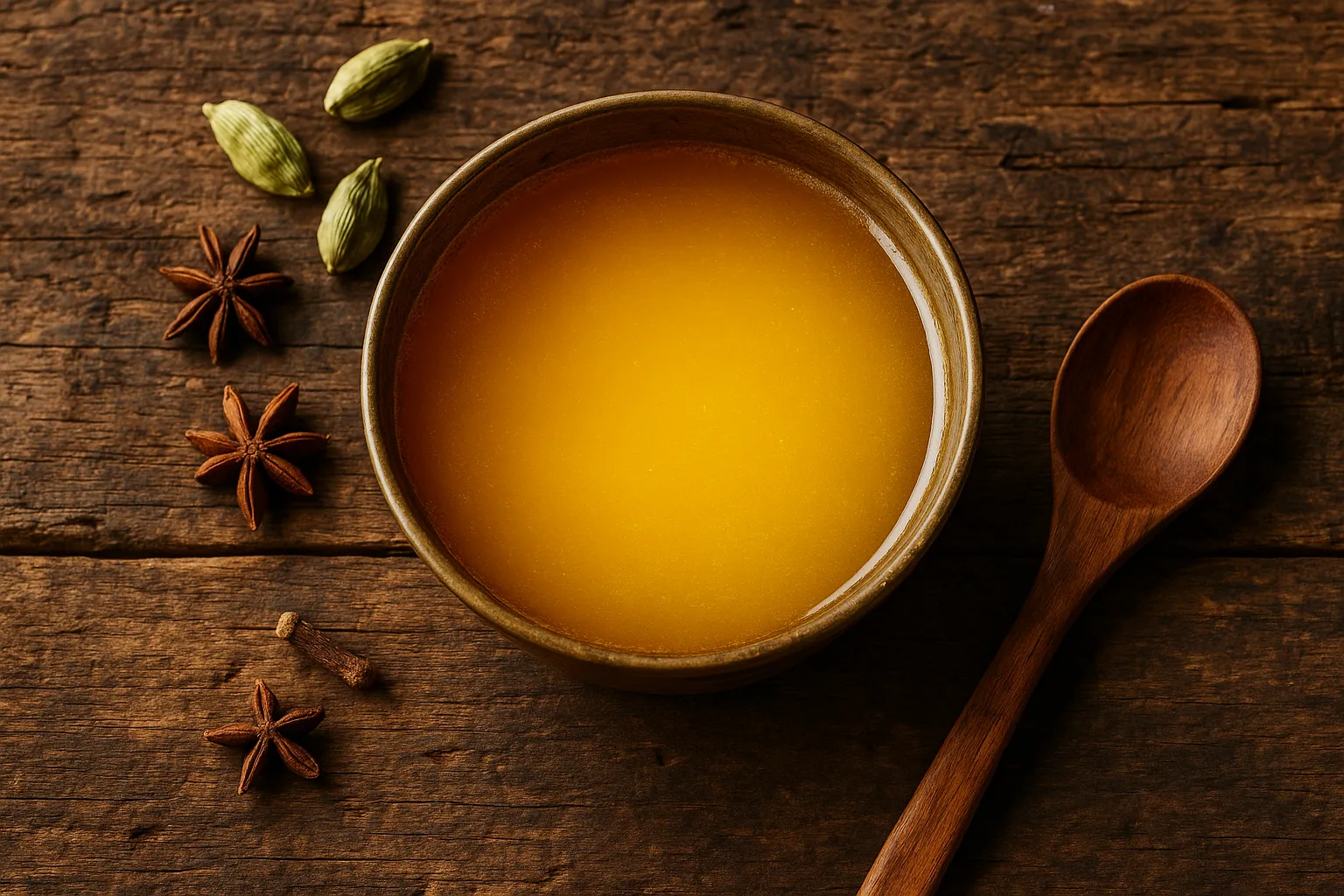
Traditional Ayurvedic superfat meets modern nutritional science in this calorie-dense cooking staple with 80-90% saturated fat.
Quick Nutrition Facts
Per 1 Tablespoon (13g)
| Nutrient | Amount |
|---|---|
| Calories | 120 kcal |
| Protein | 0g |
| Carbohydrates | 0g |
| Total Fat | 13.5g |
| Saturated Fat | 8.5g (43% DV) |
| Trans Fat | 0.5g |
| Cholesterol | 35mg (12% DV) |
| Vitamin A | 13% DV |
| Vitamin E | 2% DV |
| Smoke Point | 485°F |
Macronutrient Breakdown
 ChatGPT
  Claude
  AI Mode
  Perplexity
NUTRITIONIST INSIGHT
Ghee's high smoke point (485°F) makes it suitable for high-heat cooking where olive oil would break down. However, with 80-90% saturated fat, moderation is key - limit to 1-2 teaspoons daily and prioritize unsaturated fats for cardiovascular health.
Myth Busters
MYTH #1: Ghee Is a Superfood That Promotes Weight Loss
TRUTH: Ghee is extremely calorie-dense at 120 calories per tablespoon. While Ayurveda promotes ghee for metabolism, no modern scientific studies confirm weight loss benefits. Track portions carefully - just 2 tablespoons equals 240 calories without any filling fiber or protein.
MYTH #2: Ghee Is Healthier Than Other Cooking Oils
TRUTH: Research shows ghee increases LDL cholesterol and apolipoprotein B more than olive oil. While traditional use is culturally important, prioritizing unsaturated fats (olive, avocado oil) for daily cooking provides better cardiovascular outcomes.
MYTH #3: Grass-Fed Ghee Is Worth the 3x Price Premium
TRUTH: Grass-fed ghee may contain marginally more vitamin K2 and CLA, but evidence for superior health benefits is limited. The 2-3x price increase often reflects marketing rather than substantial nutritional differences for most consumers.
MYTH #4: Ghee Is Completely Safe for Lactose Intolerant People
TRUTH: While ghee contains minimal lactose (milk solids removed), trace amounts may remain. Most lactose-intolerant individuals tolerate ghee well, but those with severe intolerance should test small amounts first or choose 100% clarified options.
MYTH #5: Ayurvedic Ghee Can Cure Diseases
TRUTH: While medicated ghee (with herbs) showed promise for lowering cholesterol in preliminary studies, regular ghee lacks these benefits. Ayurvedic claims require more rigorous clinical trials before being accepted as medical treatments.
MYTH #6: Ghee Has Zero Carbs So It's Perfect for Keto
TRUTH: Yes, ghee has 0g carbs making it keto-friendly. However, 120 calories per tablespoon means overconsumption can still prevent weight loss on keto. Measure portions and track total daily calories.
NutriScore by Health Goals
| Health Goal | NutriScore | Why This Score? |
|---|---|---|
| Weight Loss |  | 120 cal/tbsp is extremely calorie-dense with no fiber or protein. Easy to overeat. Limit to 1 tsp per meal maximum. |
| Muscle Gain |  | Provides fat-soluble vitamins but no protein. Use sparingly for cooking protein-rich meals, not as a primary muscle-building food. |
| Diabetes Management | | Zero carbs means no blood sugar spike, but high saturated fat may worsen insulin resistance long-term. Limit to 1-2 tsp daily. |
| PCOS Management | | High saturated fat intake linked to increased inflammation. Better to prioritize anti-inflammatory fats like olive oil, nuts, and fatty fish for PCOS. |
| Pregnancy Nutrition | | Provides vitamin A (13% DV) for fetal development. Use in moderation (1 tsp daily) but prioritize diverse healthy fats like nuts, seeds, and fish. |
| Viral/Flu Recovery | | Provides fat-soluble vitamins but no immune-supporting protein or zinc. Traditional use for throat soothing is comfort-based rather than scientifically proven. |
PERSONALIZED NUTRITION
Track your meals with NutriScan for personalized NutriScores based on your specific health goals!
Cultural Significance
Ghee holds sacred and practical importance across Indian civilization, dating back over 5,000 years to Vedic texts.
In India:
- Central to Hindu ceremonies, offered in yajna (fire rituals) and to deities
- Mentioned in ancient Ayurvedic texts (Charaka Samhita, Sushruta Samhita) as "liquid gold"
- Symbol of purity, prosperity, and auspiciousness in Indian culture
- Traditional medicine uses medicated ghee (ghrita) infused with herbs for therapeutic purposes
- Regional variations: buffalo ghee in North India, cow ghee preferred in South
Ayurvedic Perspective:
- Considered "sattvic" (promoting clarity and balance) in Ayurveda
- Believed to improve digestion, memory, and longevity when consumed moderately
- Used as carrier (anupana) for herbs and medicines to enhance absorption
Modern Collision:
The Ayurveda-modern science debate centers on saturated fat. Recent studies show ghee increases LDL cholesterol compared to olive oil, while some research on medicated ghee suggests potential lipid-lowering effects. Balance cultural tradition with portion awareness for heart health.
Compare & Substitute
Ghee vs Other Cooking Fats (Per 1 Tablespoon/14g)
| Nutrient | 🧈 Ghee | 🧈 Butter | 🫒 Olive Oil | 🥥 Coconut Oil |
|---|---|---|---|---|
| Calories | 120 kcal | 102 kcal | 119 kcal | 117 kcal |
| Total Fat | 13.5g | 11.5g | 13.5g | 13.5g |
| Saturated Fat | 8.5g (43% DV) | 7.2g (36% DV) | 2g (10% DV) | 11.7g (59% DV) |
| Cholesterol | 35mg | 31mg | 0mg | 0mg |
| Smoke Point | 485°F (252°C) | 350°F (175°C) | 375-405°F (191-207°C) | 350°F (177°C) |
| Lactose | Trace amounts | Yes (0.1g) | None | None |
| Best For | High-heat Indian cooking | Baking, low-heat cooking | Salads, medium-heat sautéing | Baking, vegan cooking |
Frequently Asked Questions
Is ghee healthy or unhealthy?
Ghee contains 80-90% saturated fat. Modern cardiovascular research shows ghee increases LDL cholesterol and apolipoprotein B compared to unsaturated fats. However, some studies on medicated ghee (with herbs) show potential lipid-lowering effects. Use ghee in moderation (1 tsp daily) while prioritizing olive oil, nuts, and fish for primary fat sources.
Is ghee good for weight loss?
No. Ghee provides 120 calories per tablespoon with zero fiber or protein to promote fullness. While Ayurveda promotes ghee for metabolism, no modern studies confirm weight loss benefits. If using ghee, limit to 1 teaspoon per meal maximum and track total daily calories with apps like NutriScan.
Can diabetics eat ghee?
Diabetics can use ghee sparingly. Pure fat doesn't spike blood sugar directly, but high saturated fat intake may worsen insulin resistance over time. Limit to 1-2 teaspoons daily, pair with fiber-rich vegetables, and prefer unsaturated fats (olive oil, nuts) for most cooking.
What is the difference between ghee and butter?
Ghee is butter with milk solids and water removed through heating, resulting in 99.5% pure fat versus butter's 80% fat content. Key differences: ghee has higher smoke point (485°F vs 350°F), is lactose-free (trace amounts), contains no casein protein, and can be stored at room temperature for months without spoiling.
How much ghee should I eat per day?
Limit ghee to 1-2 teaspoons (5-10g) daily, providing 40-80 calories and 4.5-9g saturated fat. American Heart Association recommends limiting saturated fat to <13g daily (based on 2,000 calorie diet). Balance ghee with unsaturated fats from nuts, seeds, olive oil, and fatty fish.
Does grass-fed ghee have more benefits?
Grass-fed ghee may contain slightly more vitamin K2 and conjugated linoleic acid (CLA), but evidence for superior health benefits is limited and inconsistent. The 2-3x price premium often reflects marketing rather than substantial nutritional differences for average consumers. Standard ghee provides similar cooking benefits and vitamin A content.
Can I eat ghee if I'm lactose intolerant?
Most lactose-intolerant individuals tolerate ghee well since milk solids (containing lactose and casein) are removed during clarification. However, trace amounts may remain. Start with small quantities (1/2 tsp) to test tolerance. Those with severe dairy allergies should choose 100% clarified versions or alternative oils.
What is the best time to eat ghee according to Ayurveda?
Ayurveda recommends ghee in morning (with warm water for digestion), with meals for nutrient absorption, or before bed (warm ghee-milk for sleep). However, modern nutrition focuses on total daily intake and portion size rather than timing. Track your ghee consumption throughout the day regardless of meal timing.


Similar Nutritious Foods
4505 Chicharrones Classic Chili Salt
7 Eleven Japan Crispy Corn Cheese
Explore More Nutrition Tools & Resources
AI Calorie Counter App - Snap a Photo, Get Macros
AI Nutritionist App That Reads Your Logged Meals
Best Protein Supplements for Women
Bulking Meal Plan App That Sets Your Surplus
ChatGPT Calorie Counter Alternative That Keeps the Total
ChatGPT Diet Plan Alternative That Tracks What You Eat
ChatGPT Weight Loss Coach Alternative With a Food Log
Fast Food Calorie Counter App That Reads the Tray
Free Calorie Tracker App with AI Photo Scans | NutriScan
Indian Diet Plan App With Veg and Non Veg Meals
Indian Food Calorie Calculator - Get Instant Nutrition Facts for Desi Meals — 2026
Intermittent Fasting for Women, Timer and Meal Log App
Intermittent Fasting Tracker App - Free Fasting Timer
Macro Tracker App That Fills the Numbers From a Photo
Mediterranean Diet Meal Plan App That Counts the Oil
Micronutrient Tracker App for Vitamins and Minerals
MyFitnessPal Alternative That Stays Free | NutriScan
NutriScore App: A Free Grade on Every Meal | NutriScan
Nutrition Label Scanner App for the Amount You Ate
Second Trimester Protein Guide
Vegetarian Meal Plan App With a Protein Target
Voice Calorie Counter - Speak to Track Meals Hands-Free
Water and Calorie Tracker App - Free Water Log