GLP-1 Friendly High Protein Meal: Calories, Nutrition and Health Benefits
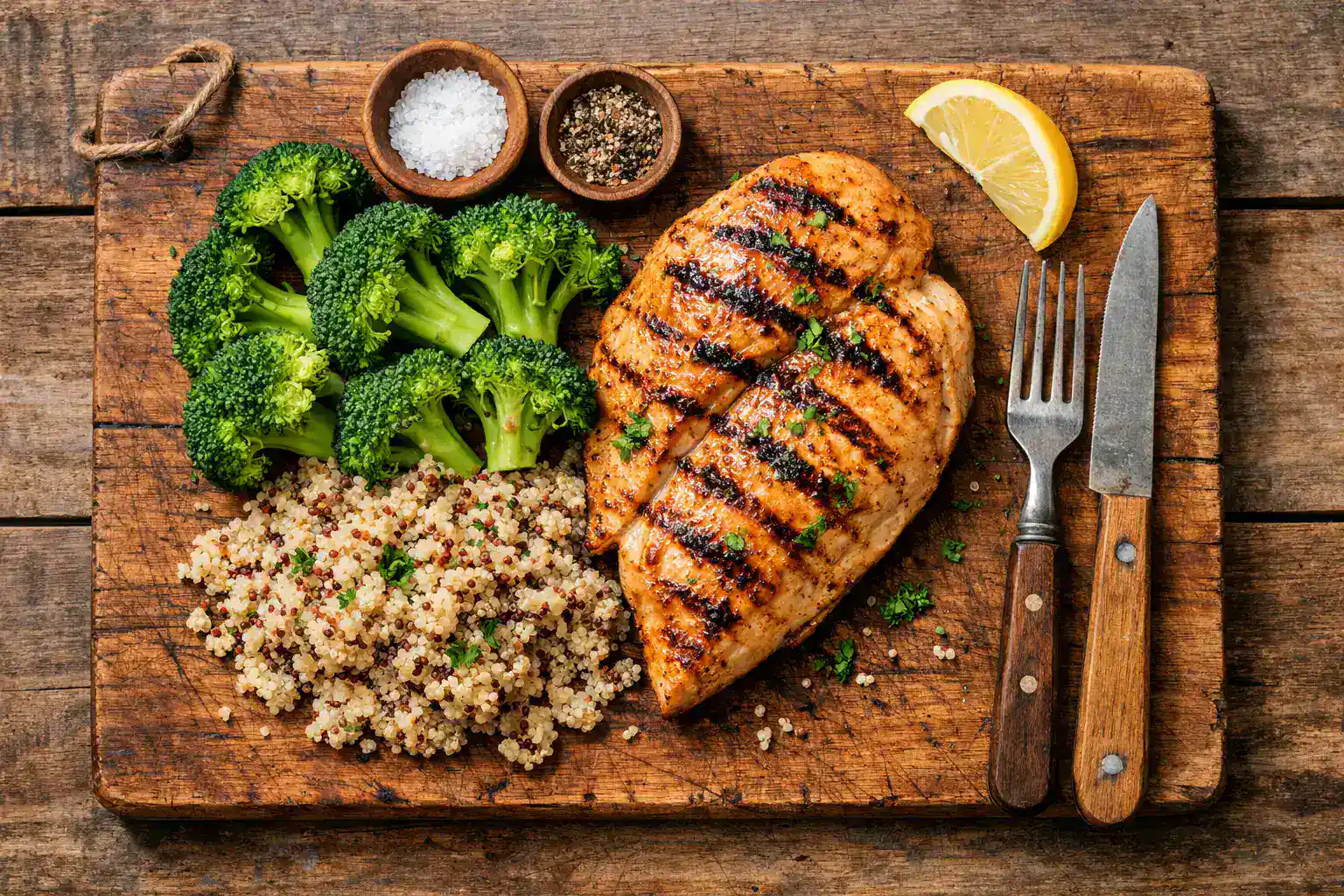
The ideal plate for GLP-1 medication users: high protein, moderate healthy fats, minimal carbs, and packed with nutrients to preserve muscle while losing weight.
Quick Nutrition Facts
Per 1 Serving Plate (280g): Grilled Chicken + Steamed Vegetables + Quinoa
| Nutrient | Amount |
|---|---|
| Calories | 300 kcal |
| Protein | 35g |
| Carbohydrates | 18g |
| Fiber | 5g |
| Sugars | 3g |
| Fat | 10g |
| Sodium | 320mg |
| Potassium | 580mg |
| Vitamin B6 | 0.8mg |
| Iron | 3.2mg |
Macronutrient Breakdown
 ChatGPT
  Claude
  AI Mode
  Perplexity
NUTRITIONIST INSIGHT
GLP-1 users lose 20-50% of weight as lean muscle mass. Eating 35g+ protein per meal (protein first, then vegetables) helps preserve muscle, maintain metabolism, and reduce lean mass loss during rapid weight loss.
Myth Busters
MYTH #1: You Don't Need to Track Food on GLP-1 Medications
TRUTH: While GLP-1s reduce appetite, most users still fall short of daily protein needs (1.2-2.0g/kg/day). Tracking ensures you hit protein targets and avoid nutrient gaps that lead to muscle loss and fatigue.
MYTH #2: Any Low-Calorie Diet Works on GLP-1s
TRUTH: Calorie quality matters more than quantity. A high-protein, nutrient-dense approach preserves lean mass far better than simply eating less. Without adequate protein, up to half your weight loss could be muscle.
MYTH #3: GLP-1 Users Should Skip Carbs Entirely
TRUTH: Complex carbs like quinoa and sweet potato provide essential fiber (5g per serving) and sustained energy. The key is portion control and eating carbs last. Fiber supports gut health and helps manage GI side effects common with GLP-1 medications.
MYTH #4: Protein Shakes Are Enough
TRUTH: Whole food protein sources provide better satiety, more micronutrients, and greater thermic effect than liquid protein alone. Use shakes as supplements, not replacements. Real food also trains your body to eat normally after medication.
MYTH #5: You Can Eat Whatever You Want Because GLP-1s Control Appetite
TRUTH: GLP-1 medications reduce hunger but don't change food quality. Poor nutrient intake on GLP-1s leads to deficiencies in vitamin D, calcium, iron, and B12. Prioritize nutrient-dense, high-protein meals for lasting results.
NutriScore by Health Goals
| Health Goal | NutriScore | Why This Score? |
|---|---|---|
| Weight Loss |  | Only 300 calories with 35g protein. High satiety, preserves muscle mass during caloric deficit. Ideal for GLP-1 medication users. |
| Muscle Gain | | 35g complete protein per serving supports muscle protein synthesis. Pair with resistance training for optimal lean mass preservation. |
| Diabetes Management | | Low glycemic load (GL ~8), high protein slows glucose absorption. Protein-first eating reduces postprandial glucose spikes. |
| PCOS Management | | High protein-to-carb ratio supports insulin sensitivity. Low sugar content (3g) minimizes insulin spikes linked to PCOS symptoms. |
| Pregnancy Nutrition |  | Excellent protein and iron for fetal development. GLP-1 medications must be stopped 2 months before pregnancy, but the meal pattern remains beneficial. |
| Viral/Flu Recovery | | High protein supports immune function and tissue repair. Easy to digest, provides potassium (580mg) for hydration balance. |
PERSONALIZED NUTRITION
Track your meals with NutriScan for personalized NutriScores based on your specific health goals!
Blood Sugar Response to GLP-1 High Protein Meal
Understanding how a high-protein, low-carb meal affects blood glucose helps you optimize meal timing, especially while on GLP-1 medications.
Typical Glucose Response Curve
This chart shows typical blood glucose response for general healthy individuals. Individual responses may vary. Not medical advice.
How to Flatten the Spike
Eating protein before carbohydrates significantly reduces postprandial glucose spikes, a strategy that complements GLP-1 medication:
- 🍗 Eat protein first - Start with chicken, fish, or eggs before touching carbs
- 🥦 Add fiber-rich vegetables - Broccoli, spinach, and asparagus slow glucose absorption
- 🥑 Include healthy fats - Avocado or olive oil further blunts the glucose curve
- 🍋 Add acidic components - Lemon juice or vinegar with meals lowers glycemic response
This protein-first eating order is especially effective for GLP-1 users managing both weight and blood sugar.
Cultural Significance
The high-protein, portion-controlled meal concept has deep roots across global food cultures, now amplified by the GLP-1 medication revolution.
Modern GLP-1 Movement:
- GLP-1 medications (Ozempic, Wegovy, Mounjaro) have created a new dietary category since 2022
- Over 15 million Americans used GLP-1 drugs by 2025, driving demand for protein-first meals
- Meal delivery services now offer dedicated GLP-1-friendly menus
- Registered dietitians recommend structured high-protein eating patterns for medication users
Global Protein-First Traditions:
- Japan: small-portion, protein-rich meals (washoku) align perfectly with GLP-1 eating
- Mediterranean: grilled fish with vegetables mirrors the ideal GLP-1 plate
- India: dal (lentils) with vegetables provides plant-based protein in controlled portions
- Korea: banchan-style small dishes naturally portion-control high-protein foods
Compare & Substitute
GLP-1 Friendly Meals Compared (Per Serving)
| Nutrient | 🍗 Chicken + Veg + Quinoa | 🐟 Salmon + Asparagus | 🥚 Egg White Omelette | 🫘 Lentil + Veg Bowl |
|---|---|---|---|---|
| Calories | 300 kcal | 320 kcal | 250 kcal | 280 kcal |
| Protein | 35g | 32g | 28g | 18g |
| Carbs | 18g | 8g | 6g | 35g |
| Fiber | 5g | 3g | 2g | 12g |
| Fat | 10g | 18g | 8g | 6g |
| Potassium | 580mg | 620mg | 280mg | 480mg |
| Sugar | 3g | 1g | 2g | 4g |
| Iron | 3.2mg | 1.2mg | 2.8mg | 4.5mg |
| Best For | Balanced GLP-1 meal, all-around | Omega-3s, heart health, keto | Lowest calorie, egg tolerance | Plant-based, high fiber |
Frequently Asked Questions
What should I eat on GLP-1 medication?
Focus on 300-400 calorie meals with 30-40g protein per serving. Eat protein first (chicken, fish, eggs, Greek yogurt), then non-starchy vegetables, then complex carbs last.
Best protein sources: Grilled chicken breast (31g/100g), salmon (25g/100g), eggs (13g/100g), cottage cheese (11g/100g), tofu (8g/100g).
How many calories should I eat on GLP-1 medications?
Most GLP-1 users consume 1,200-1,500 calories daily due to reduced appetite. Distribute across 3 meals of 300-400 calories plus 1-2 snacks of 100-150 calories.
Key targets: 80-120g protein daily, 25-30g fiber, adequate hydration (8+ glasses water).
Why is protein so important on GLP-1 drugs?
35g protein per meal preserves lean muscle mass during rapid weight loss. Without adequate protein, up to 50% of weight lost can be muscle rather than fat, slowing metabolism and reducing long-term success.
Daily target: 1.2-2.0g protein per kg body weight. For a 75kg person, that means 90-150g protein daily spread across all meals.
Can I eat high protein meals during pregnancy?
GLP-1 medications must be discontinued at least 2 months before planned pregnancy. However, the high-protein, nutrient-dense eating pattern is excellent during pregnancy.
Pregnancy adjustments: Add 300 extra calories daily, include folate-rich foods, ensure adequate iron (27mg/day), and consult your OB-GYN for personalized nutrition advice.
How do I prevent muscle loss on Ozempic or Wegovy?
4 strategies to preserve lean mass: eat 1.2-2.0g protein per kg body weight daily, distribute protein evenly across meals (30g+ each), perform resistance training 2-3 times weekly, and eat protein first at every meal.
Track your protein intake with NutriScan app to ensure you meet daily targets and preserve muscle during weight loss.
What are the best snacks for GLP-1 users?
High-protein snacks between meals help meet daily protein targets: Greek yogurt (150 cal, 15g protein), hard-boiled eggs (140 cal, 12g protein), cottage cheese with berries (130 cal, 14g protein), protein shake (180 cal, 25g protein).
Rule: Every snack should have at least 10g protein and stay under 200 calories.


Similar Nutritious Foods
4505 Chicharrones Classic Chili Salt
7 Eleven Japan Crispy Corn Cheese
Explore More Nutrition Tools & Resources
AI Calorie Counter App - Snap a Photo, Get Macros
AI Nutritionist App That Reads Your Logged Meals
Best Protein Supplements for Women
Bulking Meal Plan App That Sets Your Surplus
ChatGPT Calorie Counter Alternative That Keeps the Total
ChatGPT Diet Plan Alternative That Tracks What You Eat
ChatGPT Weight Loss Coach Alternative With a Food Log
Fast Food Calorie Counter App That Reads the Tray
Free Calorie Tracker App with AI Photo Scans | NutriScan
Indian Diet Plan App With Veg and Non Veg Meals
Indian Food Calorie Calculator - Get Instant Nutrition Facts for Desi Meals — 2026
Intermittent Fasting for Women, Timer and Meal Log App
Intermittent Fasting Tracker App - Free Fasting Timer
Macro Tracker App That Fills the Numbers From a Photo
Mediterranean Diet Meal Plan App That Counts the Oil
Micronutrient Tracker App for Vitamins and Minerals
MyFitnessPal Alternative That Stays Free | NutriScan
NutriScore App: A Free Grade on Every Meal | NutriScan
Nutrition Label Scanner App for the Amount You Ate
Second Trimester Protein Guide
Vegetarian Meal Plan App With a Protein Target
Voice Calorie Counter - Speak to Track Meals Hands-Free
Water and Calorie Tracker App - Free Water Log