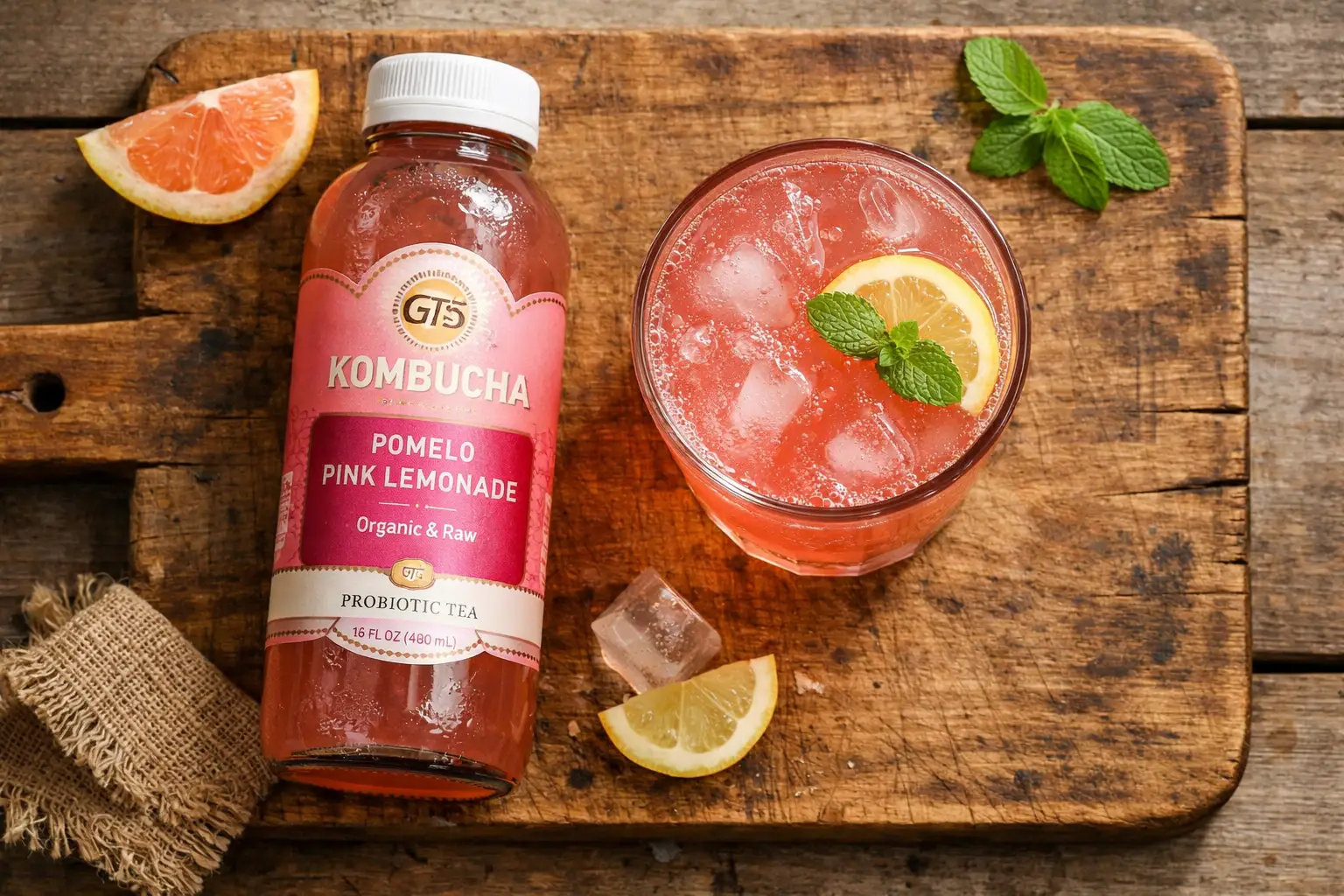
GT's Pomelo Pink Lemonade Kombucha: Calories, Nutrition and Health Benefits
A citrusy probiotic powerhouse blending pomelo, yuzu, and lemon with 9 billion living probiotics in every bottle for gut health and refreshment.
Quick Nutrition Facts
Per 1 Bottle (16 fl oz / 480ml)
| Nutrient | Amount |
|---|---|
| Calories | 60 kcal |
| Protein | 0g |
| Carbohydrates | 14g |
| Fiber | 0g |
| Sugars | 12g |
| Fat | 0g |
| Sodium | 10mg |
| Probiotics | 9 billion |
| Caffeine | ~15mg |
| Alcohol | <0.5% |
Macronutrient Breakdown
 ChatGPT
  Claude
  AI Mode
  Perplexity
NUTRITIONIST INSIGHT
At just 60 calories per 16 oz bottle, GT's Pomelo Pink Lemonade Kombucha delivers 9 billion probiotics with significantly less sugar than fruit juice. The organic acids from fermentation may support digestion and blood sugar regulation when consumed with meals.
Myth Busters
MYTH #1: Kombucha Is Just Fancy Sugar Water
TRUTH: While GT's Pomelo Pink Lemonade contains 12g sugar per bottle, the 30-day fermentation process converts most of the added cane sugar into organic acids, probiotics, and enzymes. Research shows kombucha's bioactive compounds provide antioxidant, antimicrobial, and probiotic benefits beyond what the sugar content suggests.
MYTH #2: Kombucha Spikes Blood Sugar Like Soda
TRUTH: A randomized controlled trial found kombucha significantly lowered glycemic and insulin indices compared to soda water or diet lemonade when consumed with a meal. The organic acids in kombucha slow starch digestion and flatten the glucose curve.
MYTH #3: All Probiotics in Kombucha Die in Stomach Acid
TRUTH: GT's uses a raw, unpasteurized fermentation process that preserves living cultures. Studies confirm that kombucha probiotics including Lactobacillus strains can survive transit and positively influence gut microbiota composition and diversity.
MYTH #4: Kombucha Is Dangerous Because It Contains Alcohol
TRUTH: GT's Synergy line contains less than 0.5% ABV, classified as non-alcoholic. This trace amount is a natural byproduct of fermentation, similar to levels found in ripe fruit, bread, and vinegar. It's far below the threshold for any intoxicating effect.
MYTH #5: Kombucha Benefits Are Just Hype with No Science
TRUTH: A Georgetown University pilot study found kombucha lowered fasting blood glucose from 164 to 116 mg/dL in Type 2 diabetes patients over 4 weeks. While more large-scale human trials are needed, the emerging evidence supports real metabolic and gut health benefits.
NutriScore by Health Goals
| Health Goal | NutriScore | Why This Score? |
|---|---|---|
| Weight Loss |  | Only 60 calories per bottle with zero fat. Probiotics support metabolism. Excellent soda replacement. |
| Muscle Gain |  | Zero protein content limits muscle-building value. Use as hydration supplement alongside protein sources. |
| Diabetes Management |  | Studies show kombucha lowers fasting blood glucose. 14g carbs per bottle; monitor intake and pair with protein. |
| PCOS Management | | Low calorie, probiotic-rich. Gut health improvements may support hormonal balance. Limit to 1 bottle daily. |
| Pregnancy Nutrition |  | Contains trace alcohol (<0.5%) and is unpasteurized. Most experts advise caution with unpasteurized fermented beverages during pregnancy. Consult your doctor. |
| Viral/Flu Recovery | | Probiotics support immune function. Light hydration with electrolytes. Easy to consume when appetite is low. |
PERSONALIZED NUTRITION
Track your meals with NutriScan for personalized NutriScores based on your specific health goals!
Blood Sugar Response to Kombucha
Understanding how kombucha affects your blood glucose helps you make informed decisions about when and how to drink it.
Typical Glucose Response Curve
This chart shows typical blood glucose response for general healthy individuals. Individual responses may vary. Not medical advice.
How to Flatten the Spike
Consuming kombucha with a balanced meal slows glucose absorption and reduces the peak blood sugar level:
- 🥜 Pair with nuts or seeds - Healthy fats slow carb absorption
- 🧀 Have with cheese or yogurt - Protein blunts glucose response
- 🥗 Drink alongside a salad - Fiber from vegetables extends digestion
- 🍳 Combine with eggs or avocado toast - Protein and fat for sustained energy
This combination not only reduces the glucose spike but also extends energy release, keeping you satisfied longer.
Cultural Significance
Kombucha originated in Northeast China (Manchuria) around 220 BCE, valued as a "tea of immortality" for its health-giving properties.
In America:
- GT Dave founded GT's Living Foods in 1995 after his mother's cancer recovery, making it the first commercial kombucha brand in the US
- The Pomelo Pink Lemonade flavor blends East Asian citrus (pomelo, yuzu) with Western lemonade tradition
- Kombucha grew from a niche health food to a multi-billion dollar industry
Global Impact:
- Consumed in over 100 countries with roots in Chinese, Russian, and German fermentation traditions
- Pomelo is sacred in Chinese New Year celebrations and Southeast Asian cuisine
- India's fermented beverage traditions (kanji, toddy) parallel kombucha's probiotic heritage
Compare & Substitute
GT's Pomelo Pink Lemonade vs Similar Beverages (Per 16 fl oz / 480ml)
| Nutrient | 🍋 GT's Pomelo Kombucha | 🫧 Olipop Prebiotic Soda | 🍊 Orange Juice | 🥤 Diet Soda |
|---|---|---|---|---|
| Calories | 60 kcal | 45 kcal | 220 kcal | 0 kcal |
| Carbs | 14g | 18g | 52g | 0g |
| Sugar | 12g | 5g | 42g | 0g |
| Protein | 0g | 0g | 3.4g | 0g |
| Fat | 0g | 0g | 0g | 0g |
| Probiotics | 9 billion | 0 (prebiotic fiber only) | 0 | 0 |
| Best For | Gut health, low-cal refreshment | Fiber intake, soda swap | Vitamin C, energy | Zero calorie option |
Frequently Asked Questions
How many calories are in GT's Pomelo Pink Lemonade Kombucha?
One 16 fl oz bottle contains 60 calories, 14g carbohydrates, approximately 12g sugar, 0g fat, and 0g protein. It also delivers 9 billion living probiotics per bottle at time of bottling.
Is GT's kombucha good for gut health?
Yes. GT's Synergy Kombucha contains 9 billion living probiotics per bottle including beneficial Lactobacillus and Saccharomyces strains. A systematic review found kombucha consumption positively influences gut microbiota composition and may reduce inflammation and oxidative stress.
Can diabetics drink GT's kombucha?
Kombucha shows promising results for blood sugar management. A Georgetown University pilot study found kombucha lowered fasting blood glucose from 164 to 116 mg/dL in Type 2 diabetes patients over 4 weeks. However, each bottle contains 14g carbs, so monitor your intake and consult your healthcare provider.
Is kombucha safe during pregnancy?
Most health experts recommend caution. Kombucha is unpasteurized, contains trace alcohol (<0.5%), and caffeine (~15mg). The Mayo Clinic notes limited evidence on kombucha safety and recommends consulting your doctor before consuming during pregnancy or breastfeeding.
What makes the Pomelo Pink Lemonade flavor special?
GT's Pomelo Pink Lemonade combines pomelo juice, yuzu juice, lemon juice, and jasmine extract with their signature 30-day fermented kombucha base of black and green tea. The result is a citrusy, floral, and slightly tart profile with all the probiotic benefits of their Synergy line.
How much kombucha should I drink per day?
General guidelines: 1 bottle (16 fl oz) per day is a good starting point. If you are new to kombucha, start with half a bottle and increase gradually to allow your gut to adjust. Those with sensitive stomachs, histamine intolerance, or on medication should consult a doctor first.
Track your beverage intake with NutriScan app to see how kombucha fits your personal nutrition goals.


Similar Nutritious Foods
4505 Chicharrones Classic Chili Salt
7 Eleven Japan Crispy Corn Cheese
Explore More Nutrition Tools & Resources
AI Calorie Counter App - Snap a Photo, Get Macros
AI Nutritionist App That Reads Your Logged Meals
Best Protein Supplements for Women
Bulking Meal Plan App That Sets Your Surplus
ChatGPT Calorie Counter Alternative That Keeps the Total
ChatGPT Diet Plan Alternative That Tracks What You Eat
ChatGPT Weight Loss Coach Alternative With a Food Log
Fast Food Calorie Counter App That Reads the Tray
Free Calorie Tracker App with AI Photo Scans | NutriScan
Indian Diet Plan App With Veg and Non Veg Meals
Indian Food Calorie Calculator - Get Instant Nutrition Facts for Desi Meals — 2026
Intermittent Fasting for Women, Timer and Meal Log App
Intermittent Fasting Tracker App - Free Fasting Timer
Macro Tracker App That Fills the Numbers From a Photo
Mediterranean Diet Meal Plan App That Counts the Oil
Micronutrient Tracker App for Vitamins and Minerals
MyFitnessPal Alternative That Stays Free | NutriScan
NutriScore App: A Free Grade on Every Meal | NutriScan
Nutrition Label Scanner App for the Amount You Ate
Second Trimester Protein Guide
Vegetarian Meal Plan App With a Protein Target
Voice Calorie Counter - Speak to Track Meals Hands-Free
Water and Calorie Tracker App - Free Water Log