Guava: Calories, Nutrition and Health Benefits
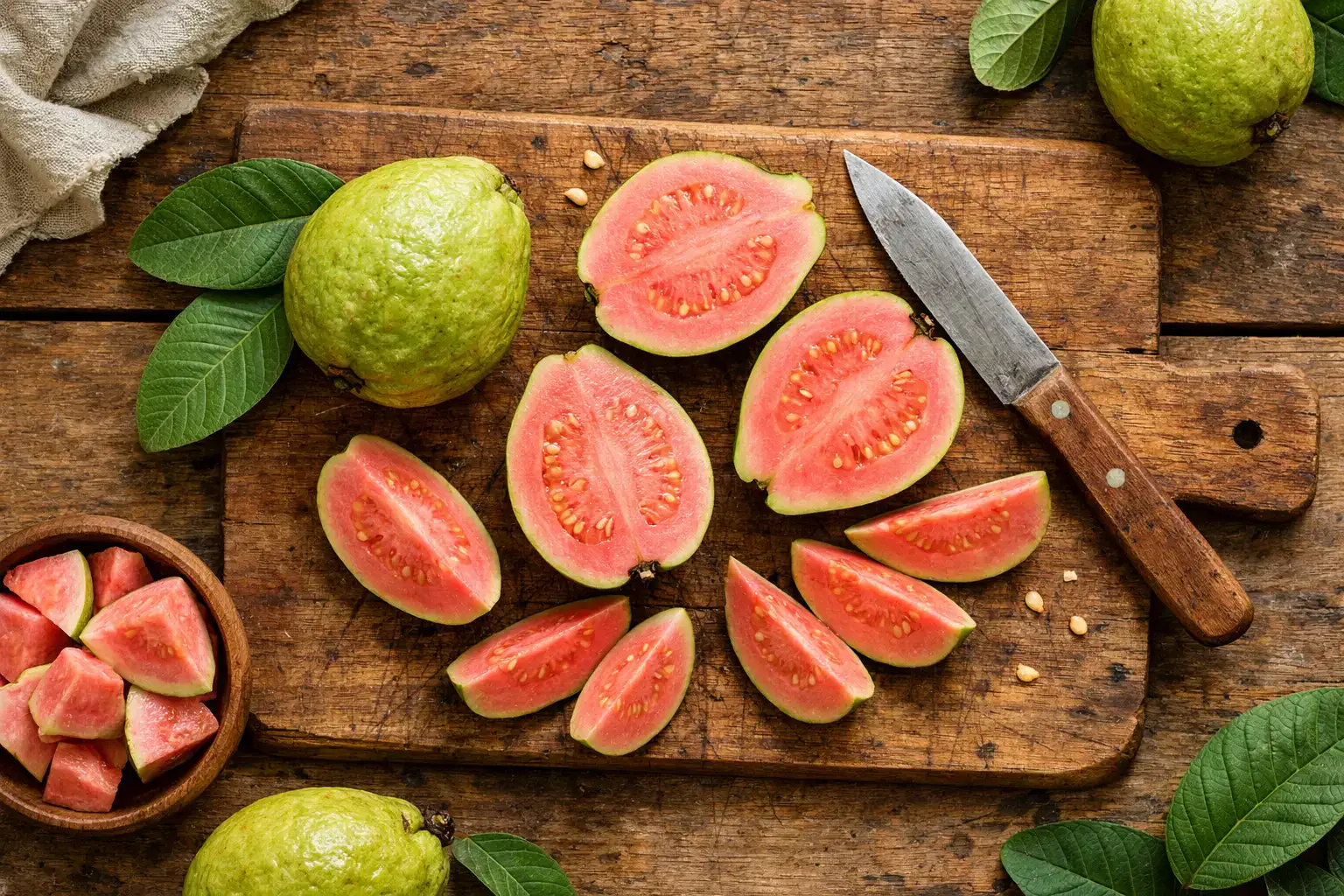
A tropical vitamin C powerhouse with 4x more vitamin C than oranges, loaded with fiber, lycopene, and antioxidants for every health goal.
Quick Nutrition Facts
Per 1 Medium Guava (~100g)
| Nutrient | Amount |
|---|---|
| Calories | 68 kcal |
| Protein | 2.6g |
| Carbohydrates | 14.3g |
| Fiber | 5.4g |
| Sugars | 8.9g |
| Fat | 1g |
| Vitamin C | 228.3mg |
| Potassium | 417mg |
| Folate | 49mcg |
| Lycopene | 5,204mcg |
Macronutrient Breakdown
 ChatGPT
  Claude
  AI Mode
  Perplexity
NUTRITIONIST INSIGHT
Guava delivers 381% of your daily vitamin C in a single fruit, making it one of nature's most potent immunity boosters. The 5.4g of dietary fiber supports gut health and blood sugar control, while lycopene in pink varieties provides powerful antioxidant protection.
Myth Busters
MYTH #1: Guava Has Too Much Sugar for Healthy Eating
TRUTH: Guava has only 8.9g of natural sugars per 100g with a very low glycemic index of 12-24. The 5.4g fiber slows sugar absorption, making it one of the most blood-sugar-friendly fruits available.
MYTH #2: You Should Avoid Guava Seeds
TRUTH: Guava seeds are fully edible and packed with dietary fiber. They act as a natural laxative and support digestive health. Chewing or swallowing them is safe and adds to the fruit's overall fiber content and antioxidant benefits.
MYTH #3: Oranges Are the Best Source of Vitamin C
TRUTH: Guava contains 228mg vitamin C per 100g compared to just 53mg in oranges. That's over 4x more vitamin C, making guava one of the richest natural sources of this essential nutrient.
MYTH #4: Guava Causes Cold and Cough
TRUTH: This is a common myth in South Asian cultures. Guava's 228mg vitamin C actually strengthens immunity and helps fight infections. There is no scientific evidence linking guava consumption to colds or coughs.
MYTH #5: Only the Fruit Flesh Is Nutritious
TRUTH: Guava peel contains higher concentrations of antioxidants and vitamin C than the flesh. Studies show guava peel has significant phenolic compounds that provide anti-inflammatory benefits. Eat the whole fruit for maximum nutrition.
NutriScore by Health Goals
| Health Goal | NutriScore | Why This Score? |
|---|---|---|
| Weight Loss |  | Only 68 calories with 5.4g fiber for exceptional satiety. Very low GI (12-24) prevents hunger spikes. |
| Muscle Gain |  | 2.6g protein for a fruit, 417mg potassium prevents cramps. Vitamin C supports collagen synthesis for recovery. |
| Diabetes Management | | Very low GI (12-24), compounds inhibit sugar-degrading enzymes, 5.4g fiber slows glucose absorption. |
| PCOS Management | | Low GI, high fiber, and antioxidants help manage insulin resistance. Anti-inflammatory lycopene supports hormonal balance. |
| Pregnancy Nutrition | | 49mcg folate for neural tube development, 228mg vitamin C boosts iron absorption, fiber prevents constipation. |
| Viral/Flu Recovery | | 381% DV vitamin C strengthens immunity, easy to digest, potassium replenishes electrolytes. |
PERSONALIZED NUTRITION
Track your meals with NutriScan for personalized NutriScores based on your specific health goals!
Blood Sugar Response to Guava
Understanding how guava affects your blood glucose can help you make informed decisions about when and how to eat it.
Typical Glucose Response Curve
*This chart shows typical blood glucose response for general healthy individuals. Individual responses may vary. Not medical advice.*
How to Flatten the Spike
Guava's naturally low GI means minimal blood sugar impact, but pairing strategies can optimize it further:
- 🥜 Handful of almonds or walnuts - Adds healthy fats for sustained energy release
- 🥛 Greek yogurt or paneer - Provides protein and probiotics
- 🌾 Oats or whole grain crackers - Complex carbs extend energy
- 🥑 Avocado slices - Healthy monounsaturated fats slow absorption
This combination ensures a virtually flat glucose curve while maximizing nutrient absorption from guava's vitamin C.
Cultural Significance
Guava (Psidium guajava) originated in Central America and has been cultivated for over 4,000 years, spreading across tropical regions worldwide.
In India:
- Known as "amrood" (Hindi), one of the most popular winter fruits
- Guava chaat with masala is a beloved street food across North India
- Ayurveda uses guava leaves for digestive ailments and blood sugar control
- India is the world's largest guava producer, growing varieties like Allahabad Safeda, Lucknow-49, and Apple Guava
Global Impact:
- Grown in over 60 tropical and subtropical countries
- Used in juices, jams, desserts, and traditional medicines across Latin America, Southeast Asia, and Africa
- Guava leaf tea is a popular traditional remedy for diarrhea and digestive issues in many cultures
Compare & Substitute
Guava vs Similar Fruits (Per 100g)
| Nutrient | Guava | 🍊 Orange | 🥝 Kiwi | 🍈 Papaya |
|---|---|---|---|---|
| Calories | 68 kcal | 47 kcal | 61 kcal | 43 kcal |
| Carbs | 14.3g | 12g | 15g | 11g |
| Fiber | 5.4g | 2.4g | 3g | 1.7g |
| Protein | 2.6g | 0.9g | 1.1g | 0.5g |
| Fat | 1g | 0.1g | 0.5g | 0.3g |
| Vitamin C | 228.3mg | 53.2mg | 92.7mg | 60.9mg |
| Potassium | 417mg | 181mg | 312mg | 182mg |
| Sugar | 8.9g | 9.4g | 9g | 7.8g |
| Best For | Immunity, diabetes, gut health | Hydration, vitamin C, snacking | Digestion, skin health, energy | Digestion, anti-inflammatory |
Frequently Asked Questions
Is guava good for weight loss?
Yes, guava is one of the best fruits for weight loss. At only 68 calories per fruit with 5.4g fiber, it keeps you full longer than most fruits. The very low glycemic index (12-24) prevents blood sugar spikes that trigger hunger.
Best practices: Eat 1-2 guavas daily as a snack, choose slightly unripe for more fiber, pair with nuts for sustained energy.
Can diabetics eat guava?
Guava is highly recommended for diabetics. Its GI of 12-24 is among the lowest of all fruits, and research shows compounds in guava inhibit sugar-degrading enzymes, slowing glucose absorption.
Tips for diabetics:
- Eat 1 medium guava as a snack between meals
- Include the peel for maximum fiber benefits
- Pair with protein for even slower glucose release
- Monitor blood sugar 2 hours after eating to calibrate portions
How much vitamin C is in guava?
One medium guava (~100g) contains 228.3mg of vitamin C, which is 381% of the daily recommended value. This makes guava the single richest common fruit source of vitamin C, surpassing oranges (53mg), kiwi (93mg), and strawberries (59mg).
What are the main health benefits of guava?
Key Benefits:
- Immunity Powerhouse: 228mg vitamin C (381% DV) strengthens immune defense
- Digestive Health: 5.4g fiber supports regular bowel movements and gut bacteria
- Blood Sugar Control: Very low GI and enzyme-inhibiting compounds regulate glucose
- Heart Health: Lycopene, potassium, and fiber support cardiovascular function
- Skin Health: Vitamin C promotes collagen production for youthful skin
- Pregnancy Support: Folate, vitamin C, and fiber support fetal development
Is guava safe during pregnancy?
Yes, guava is safe and beneficial during pregnancy. It provides 49mcg folate for neural tube development, 228mg vitamin C that enhances iron absorption (critical during pregnancy), and 5.4g fiber to prevent constipation.
Recommended: 1-2 guavas daily during pregnancy. Always wash thoroughly and consult your healthcare provider for personalized advice.
Which is better: pink or white guava?
Both are excellent, but they differ in key nutrients:
Pink/Red Guava:
- Rich in lycopene (5,204mcg per 100g) for antioxidant protection
- Higher beta-carotene and vitamin A
- Better for heart health and anti-inflammatory benefits
White Guava:
- Slightly higher vitamin C content
- Milder, sweeter flavor
- Preferred for eating fresh
Recommendation: Pink guava for maximum antioxidant benefit, white guava for vitamin C. Both are excellent for weight loss and diabetes management.




Similar Nutritious Fruits
4505 Chicharrones Classic Chili Salt
7 Eleven Japan Crispy Corn Cheese
Explore More Nutrition Tools & Resources
AI Calorie Counter App - Snap a Photo, Get Macros
AI Nutritionist App That Reads Your Logged Meals
Best Protein Supplements for Women
Bulking Meal Plan App That Sets Your Surplus
ChatGPT Calorie Counter Alternative That Keeps the Total
ChatGPT Diet Plan Alternative That Tracks What You Eat
ChatGPT Weight Loss Coach Alternative With a Food Log
Fast Food Calorie Counter App That Reads the Tray
Free Calorie Tracker App with AI Photo Scans | NutriScan
Indian Diet Plan App With Veg and Non Veg Meals
Indian Food Calorie Calculator - Get Instant Nutrition Facts for Desi Meals — 2026
Intermittent Fasting for Women, Timer and Meal Log App
Intermittent Fasting Tracker App - Free Fasting Timer
Macro Tracker App That Fills the Numbers From a Photo
Mediterranean Diet Meal Plan App That Counts the Oil
Micronutrient Tracker App for Vitamins and Minerals
MyFitnessPal Alternative That Stays Free | NutriScan
NutriScore App: A Free Grade on Every Meal | NutriScan
Nutrition Label Scanner App for the Amount You Ate
Second Trimester Protein Guide
Vegetarian Meal Plan App With a Protein Target
Voice Calorie Counter - Speak to Track Meals Hands-Free
Water and Calorie Tracker App - Free Water Log