Haldiram's Kadhi Pakoda: Calories, Nutrition Facts
Classic North Indian ready-to-eat curry featuring tangy yogurt-based gravy with crispy chickpea flour fritters—comfort food in minutes.
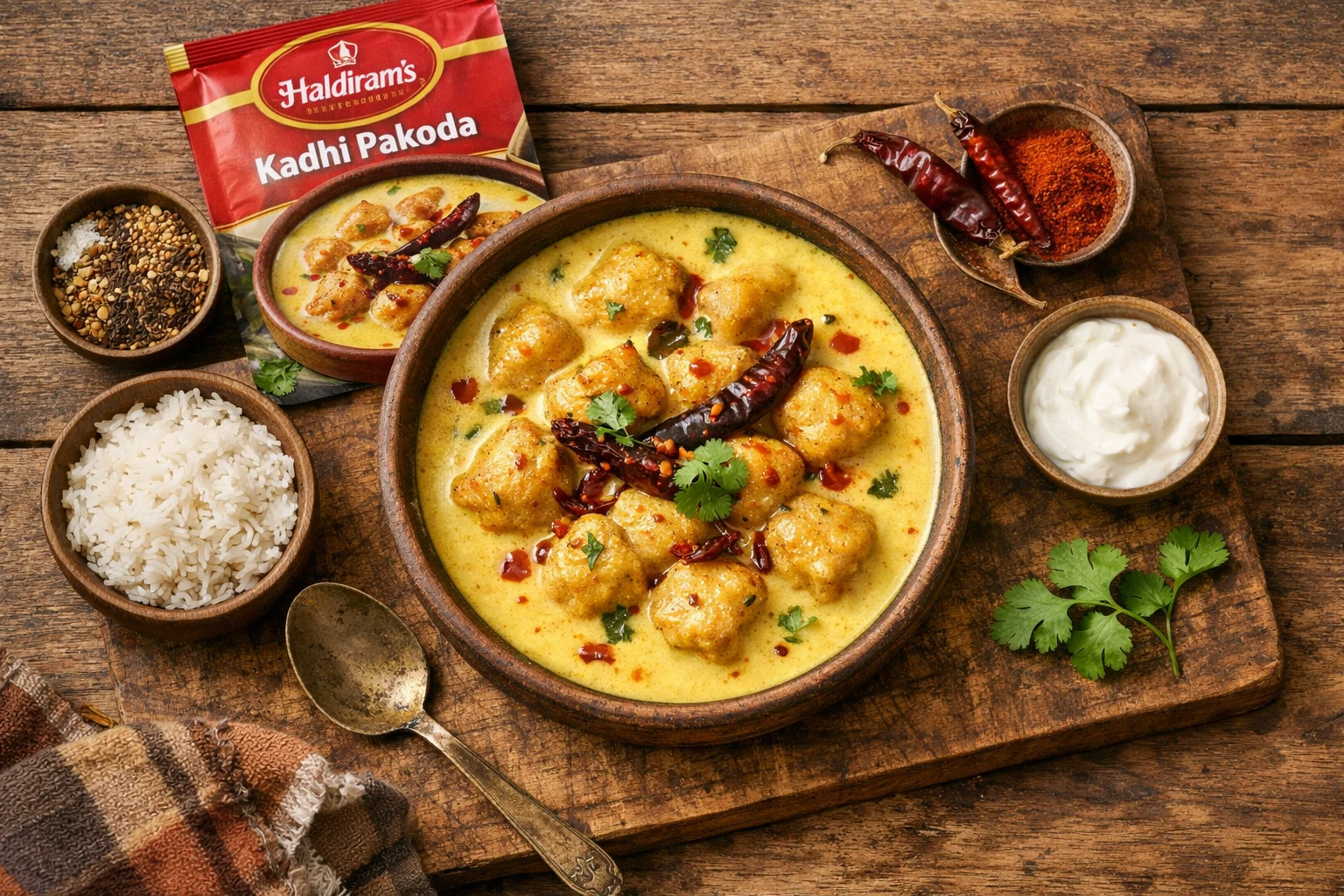
Quick Nutrition Facts
Per 1 Serving (150g)
| Nutrient | Amount |
|---|---|
| Calories | 170 kcal |
| Protein | 5g |
| Carbohydrates | 11g |
| Fiber | 2g |
| Sugars | 3g |
| Fat | 12g |
| Sodium | ~600mg |
| Calcium | ~80mg |
Macronutrient Breakdown
 ChatGPT
  Claude
  AI Mode
  Perplexity
NUTRITIONIST INSIGHT
Kadhi Pakoda combines probiotic yogurt with chickpea flour fritters. The yogurt base provides calcium and gut-friendly bacteria, but the deep-fried pakodas increase fat content. Pair with steamed rice and vegetables for balanced nutrition.
Myth Busters
MYTH #1: Ready-to-Eat Indian Food Is Always Unhealthy
TRUTH: While Haldiram's Kadhi Pakoda is convenient, it provides 5g protein and probiotics from yogurt base. Fermented dairy supports gut health, though the fried pakodas and sodium require portion control.
MYTH #2: Yogurt-Based Curries Are Low-Calorie
TRUTH: While yogurt is nutritious, the fried pakodas add 12g fat per serving. Traditional kadhi can be lighter when pakodas are baked or steamed instead of deep-fried, reducing fat by 50-60%.
MYTH #3: It's Fine to Eat the Whole Pack
TRUTH: A 300g pack contains 340 calories and 24g fat—equivalent to a full meal. Portion awareness prevents overconsumption, especially with calorie-dense ready-to-eat foods.
MYTH #4: RTE Foods Have No Nutritional Value
TRUTH: Haldiram's Kadhi Pakoda contains calcium (80mg), protein (5g), and turmeric's curcumin with anti-inflammatory properties. However, high sodium (~600mg) and preservatives make it less ideal than fresh homemade versions.
MYTH #5: Kadhi Is Good for Weight Loss
TRUTH: Traditional kadhi can support weight loss when made with low-fat yogurt and baked pakodas. Haldiram's RTE version has 12g fat per serving due to deep-frying. Fat-dense foods reduce satiety per calorie, making portion control difficult.
NutriScore by Health Goals
| Health Goal | NutriScore | Why This Score? |
|---|---|---|
| Weight Loss |  | 170 calories and 12g fat per serving from fried pakodas. Opt for homemade versions with baked pakodas and low-fat yogurt for better satiety. |
| Muscle Gain |  | 5g protein per serving is moderate. Better post-workout options: paneer bhurji, dal, Greek yogurt with higher protein density. |
| Diabetes Management | | Refined flour pakodas and high sodium affect blood sugar and blood pressure. Diabetics should limit fried foods. |
| PCOS Management | | High fat from deep-frying worsens inflammation. Choose lighter curries with vegetables and baked protein sources. |
| Pregnancy Nutrition | | Provides calcium (80mg) and protein, but excessive sodium may contribute to gestational hypertension. |
| Viral/Flu Recovery |  | Warm, comforting curry provides quick energy and probiotics from yogurt. The turmeric base has anti-inflammatory properties for immune support. |
PERSONALIZED NUTRITION
Track your meals with NutriScan for personalized NutriScores based on your specific health goals!
Blood Sugar Response to Kadhi Pakoda
The refined flour pakodas cause moderate blood sugar elevation, while yogurt slows absorption.
Typical Glucose Response Curve
This chart shows typical blood glucose response for general healthy individuals. Individual responses may vary. Not medical advice.
How to Flatten the Spike
Pairing kadhi with fiber and whole grains slows glucose absorption:
- 🍚 Brown rice or millet - Adds fiber and nutrients
- 🥗 Mixed vegetable salad - Provides fiber and vitamins
- 🥒 Cucumber raita - Adds probiotics and volume
- 🫘 Dal (lentils) - Complete protein and fiber
This combination reduces the glucose spike and provides balanced nutrition for sustained energy.
Cultural Significance
Kadhi is a traditional North Indian dish with regional variations across Gujarat, Rajasthan, Punjab, and Uttar Pradesh.
In India:
- Gujarati kadhi is sweet and thin; Punjabi kadhi is thick and tangy
- Traditional comfort food during monsoons and winter
- Served with steamed rice, khichdi, or roti across households
- Regional variations use different spices (fenugreek, curry leaves, asafoetida)
Modern Convenience:
- Haldiram's RTE versions make traditional recipes accessible to busy households
- Exported to diaspora communities in US, UK, Canada, Middle East
- Part of India's growing ₹40,000 crore ready-to-eat market (12% CAGR)
Compare & Substitute
Haldiram's Kadhi Pakoda vs Similar Ready-to-Eat Curries (Per 150g)
| Nutrient | 🍛 Kadhi Pakoda | 🫘 Dal Makhani | 🍛 Palak Paneer | 🍗 Butter Chicken |
|---|---|---|---|---|
| Calories | 170 kcal | 180 kcal | 150 kcal | 220 kcal |
| Carbs | 11g | 14g | 8g | 12g |
| Fiber | 2g | 5g | 3g | 1g |
| Protein | 5g | 7g | 9g | 12g |
| Fat | 12g | 10g | 10g | 15g |
| Sodium | ~600mg | ~650mg | ~500mg | ~700mg |
| Calcium | 80mg | 40mg | 120mg | 30mg |
| Best For | Comfort food, probiotics | High-protein vegetarian meal | Iron & calcium boost | Occasional indulgence |
Frequently Asked Questions
Is Haldiram's Kadhi Pakoda healthy?
Haldiram's Kadhi Pakoda provides probiotics from yogurt and 5g protein from chickpea flour fritters, but it's high in fat (12g) and sodium (~600mg per serving). Best consumed occasionally—once or twice monthly as a comfort food rather than weekly.
How many calories are in Haldiram's Kadhi Pakoda?
One serving (150g) contains 170 calories. A full 300g pack has approximately 340 calories total (2 servings). Always check portion sizes on the pack label as formulations may vary.
Can diabetics eat Haldiram's Kadhi Pakoda?
Diabetics should limit intake due to refined flour pakodas and high sodium. If consuming, choose half portions (75g), pair with vegetables or whole grain roti, and monitor blood sugar response 2 hours after eating. Better option: homemade kadhi with baked pakodas.
Is Haldiram's Kadhi Pakoda good for weight loss?
Not ideal for weight loss due to 12g fat per serving from deep-fried pakodas. If craving kadhi, opt for homemade versions with baked pakodas, low-fat yogurt, and added vegetables like spinach or bottle gourd.
What nutrients are in Haldiram's Kadhi Pakoda?
Per serving (150g): 170 calories, 11g carbs, 5g protein, 12g fat, 2g fiber, ~600mg sodium, 80mg calcium from yogurt base, plus turmeric's curcumin with anti-inflammatory properties.
How to store Haldiram's Kadhi Pakoda after opening?
Store unopened packs in a cool, dry place. After opening, transfer to an airtight container, refrigerate, and consume within 24 hours. Always heat thoroughly (until bubbling) before eating to ensure food safety.
Can I make a healthier version at home?
Yes. Use low-fat yogurt, bake pakodas instead of frying (reduces fat by 60%), add vegetables like spinach or bottle gourd for fiber, and reduce salt. Homemade kadhi allows better control over ingredients and nutrition.


Similar Nutritious Foods
4505 Chicharrones Classic Chili Salt
7 Eleven Japan Crispy Corn Cheese
Explore More Nutrition Tools & Resources
AI Calorie Counter App - Snap a Photo, Get Macros
AI Nutritionist App That Reads Your Logged Meals
Best Protein Supplements for Women
Bulking Meal Plan App That Sets Your Surplus
ChatGPT Calorie Counter Alternative That Keeps the Total
ChatGPT Diet Plan Alternative That Tracks What You Eat
ChatGPT Weight Loss Coach Alternative With a Food Log
Fast Food Calorie Counter App That Reads the Tray
Free Calorie Tracker App with AI Photo Scans | NutriScan
Indian Diet Plan App With Veg and Non Veg Meals
Indian Food Calorie Calculator - Get Instant Nutrition Facts for Desi Meals — 2026
Intermittent Fasting for Women, Timer and Meal Log App
Intermittent Fasting Tracker App - Free Fasting Timer
Macro Tracker App That Fills the Numbers From a Photo
Mediterranean Diet Meal Plan App That Counts the Oil
Micronutrient Tracker App for Vitamins and Minerals
MyFitnessPal Alternative That Stays Free | NutriScan
NutriScore App: A Free Grade on Every Meal | NutriScan
Nutrition Label Scanner App for the Amount You Ate
Second Trimester Protein Guide
Vegetarian Meal Plan App With a Protein Target
Voice Calorie Counter - Speak to Track Meals Hands-Free
Water and Calorie Tracker App - Free Water Log