Haldiram's Khatta Meetha: Calories, Nutrition and Health Benefits
India's iconic sweet and tangy namkeen mixture combining crispy sev, boondi, and peanuts in a flavorful blend.
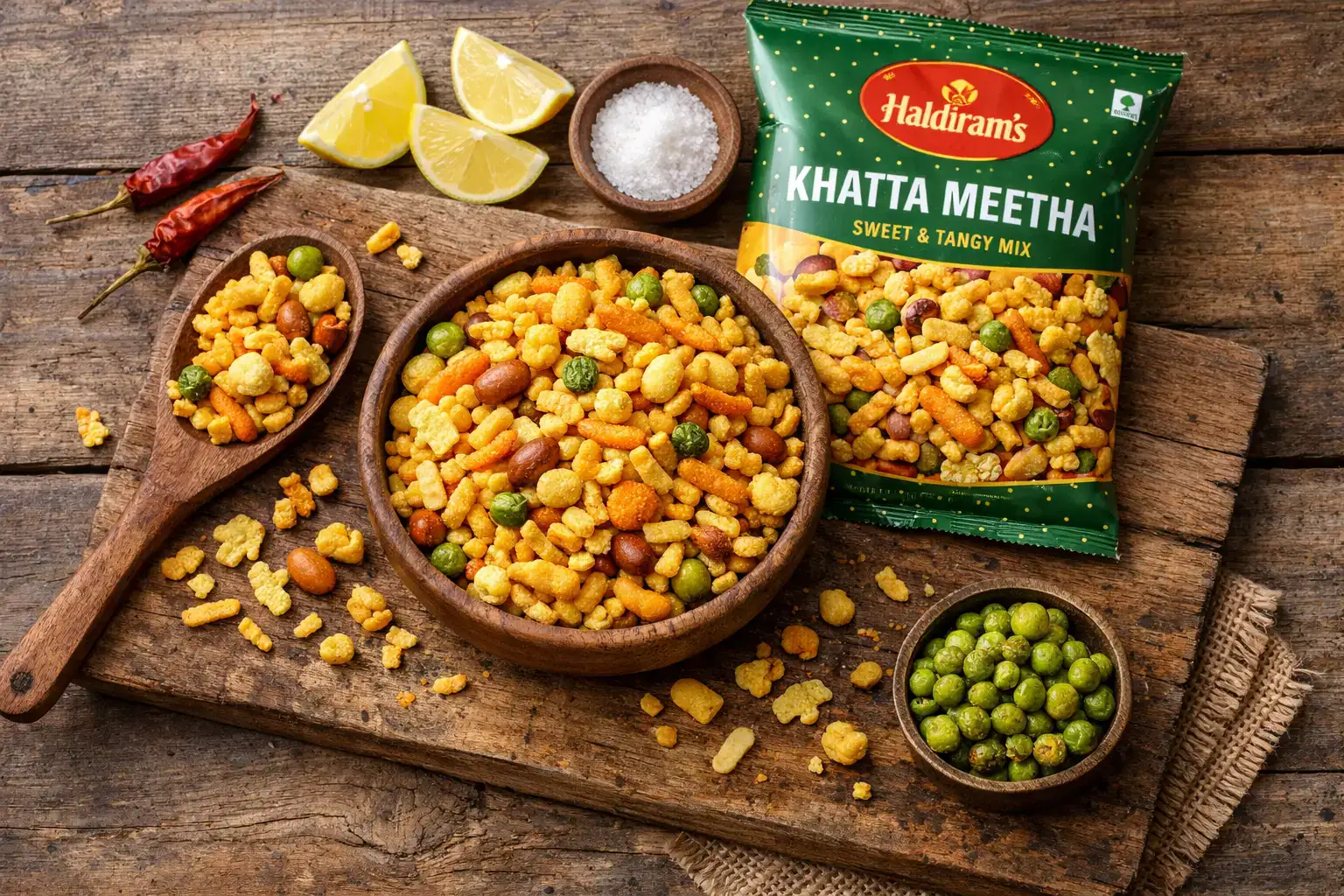
Quick Nutrition Facts
Per 100g Serving
| Nutrient | Amount |
|---|---|
| Calories | 548 kcal |
| Protein | 11.6g |
| Carbohydrates | 50g |
| Fiber | 0.5g |
| Sugars | 11.2g |
| Fat | 33.5g |
| Saturated Fat | 8.5g |
| Sodium | 647mg |
| Iron | 3mg |
Macronutrient Breakdown
 ChatGPT
  Claude
  AI Mode
  Perplexity
NUTRITIONIST INSIGHT
Khatta Meetha is a calorie-dense snack (548 kcal per 100g) best enjoyed in small portions. The mixture provides 11.6g plant-based protein from gram flour and lentils, but high fat content (33.5g) and 8.5g saturated fat limit its role in weight management diets.
Myth Busters
MYTH #1: Khatta Meetha Is Healthier Because It's Indian
TRUTH: Traditional doesn't mean healthy. Fried namkeen snacks are calorie-dense (500-600 kcal per 100g) and high in unhealthy fats. Portion control is essential regardless of cultural origin.
MYTH #2: The Protein Makes It a Healthy Snack
TRUTH: While 11.6g protein per 100g is notable, the 33.5g fat and 548 calories mean you'd need to eat a high-calorie portion for meaningful protein. Better protein sources include lentils, Greek yogurt, or paneer with fewer calories.
MYTH #3: Khatta Meetha Is Fine for Daily Snacking
TRUTH: Daily consumption contributes excess sodium (647mg per 100g) and saturated fats (8.5g). High sodium intake increases hypertension risk, especially for Indians with genetic predisposition to cardiovascular disease.
MYTH #4: Baked Versions Are Just as Tasty
TRUTH: While baked alternatives reduce fat by 40-50%, they may not replicate the traditional fried texture and flavor. However, they offer a healthier compromise for regular consumers, cutting calories from 548 to ~300-350 per 100g.
MYTH #5: Sugar Content Is Negligible
TRUTH: With 11.2g sugar per 100g, a typical 50g serving provides 5.6g added sugar. Combined with 50g refined carbs per 100g, this impacts blood glucose significantly. Excess sugar contributes to diabetes and obesity.
NutriScore by Health Goals
| Health Goal | NutriScore | Why This Score? |
|---|---|---|
| Weight Loss |  | High calories (548 kcal) and fat (33.5g) per 100g make weight loss difficult. Limit to 20g portions (110 kcal) as rare treats. |
| Muscle Gain |  | Provides quick calories (548) and 11.6g plant protein, but high fat content is inefficient for lean muscle building. Better post-workout carb sources exist. |
| Diabetes Management | | High carbs (50g) and sugars (11.2g) cause blood sugar spikes. Diabetics should avoid or limit to 15g portions with protein pairing. |
| PCOS Management | | Added sugars and refined carbs worsen insulin resistance. Not recommended for PCOS; choose whole food snacks instead. |
| Pregnancy Nutrition | | Provides iron (3mg) and calories for energy needs, but high sodium (647mg) may contribute to pregnancy hypertension. Limit portions. |
| Viral/Flu Recovery | | Provides quick energy and some protein, but high fat content may slow digestion. Better recovery foods include fresh fruits, soups, and whole grains. |
PERSONALIZED NUTRITION
Track your meals with NutriScan for personalized NutriScores based on your specific health goals!
Blood Sugar Response to Khatta Meetha
Understanding how Khatta Meetha affects blood glucose helps inform portion control and timing strategies.
Typical Glucose Response Curve
*This chart shows typical blood glucose response for general healthy individuals. Individual responses may vary. Not medical advice.*
How to Flatten the Spike
Pairing Khatta Meetha with protein or fiber slows glucose absorption and reduces peak blood sugar:
- 🥛 Buttermilk or curd (dahi) - Adds protein and probiotics to slow carb absorption
- 🥚 Boiled eggs - Complete protein source balances the refined carbs
- 🥜 Additional almonds or walnuts - Healthy fats extend energy release
- 🥗 Fresh vegetable salad - Fiber reduces glycemic load of the snack
This combination moderates the glucose spike and provides more balanced nutrition.
Cultural Significance
Khatta Meetha represents India's rich tradition of balancing sweet (meetha) and tangy (khatta) flavors in a single snack.
In India:
- Popular tea-time snack (chai nashta) across all regions
- Common offering during festivals like Diwali, Holi, and Raksha Bandhan
- Traditional hospitality gesture for guests and visitors
- Haldiram's brand established in 1937 in Bikaner, Rajasthan
- Available in countless regional variations with local spice blends
Global Impact:
- Exported to 80+ countries as ambassador of Indian snack culture
- Popular among Indian diaspora communities worldwide
- Growing market in Middle East, UK, USA, and Southeast Asia
- Modern versions include baked, low-fat, and organic options
Compare & Substitute
Khatta Meetha vs Similar Snacks (Per 100g)
| Nutrient | 🥨 Haldiram's Khatta Meetha | 🥔 Lay's Potato Chips | 🥨 Haldiram's Moong Dal | 🥜 Roasted Peanuts |
|---|---|---|---|---|
| Calories | 548 kcal | 536 kcal | 455 kcal | 567 kcal |
| Carbs | 50g | 53g | 48g | 16g |
| Fiber | 0.5g | 3g | 6g | 8g |
| Protein | 11.6g | 6g | 14g | 26g |
| Fat | 33.5g | 35g | 22g | 49g |
| Sodium | 647mg | 380mg | 650mg | 18mg |
| Sugar | 11.2g | 0g | 2g | 4g |
| Best For | Festive occasions, taste | Low-sodium alternative | Higher protein snacking | Protein, healthy fats |
Frequently Asked Questions
Is Haldiram's Khatta Meetha good for weight loss?
No, Khatta Meetha is not ideal for weight loss due to 548 calories and 33.5g fat per 100g. A typical 50g serving provides 274 calories—nearly the same as a full meal.
If you must consume it: Limit to 20g portions (110 calories) once weekly; balance with high-protein, low-calorie meals the rest of the day; avoid mindless snacking by pre-portioning servings.
Can diabetics eat Khatta Meetha?
Diabetics should minimize or avoid Khatta Meetha. With 50g carbs and 11.2g sugar per 100g, it causes significant blood glucose spikes.
Tips for diabetics: Maximum 15g portion (82 calories, 7.5g carbs); always pair with 10g protein (boiled egg, paneer); monitor blood sugar 2 hours after; choose baked versions if available; never consume on empty stomach. Consult your healthcare provider.
How much protein is in Khatta Meetha?
Haldiram's Khatta Meetha contains 11.6g protein per 100g, primarily from gram flour (besan) and lentils in the sev and boondi. While this provides decent plant-based protein, the high calorie and fat content (33.5g) make it an inefficient protein source.
For protein-focused diets, choose dal, Greek yogurt, or paneer instead.
What are the main ingredients in Khatta Meetha?
Primary ingredients: Sev (fried gram flour noodles), boondi (fried chickpea pearls), peanuts, sugar, salt, edible vegetable oil, and traditional spice blend.
Flavor profile: Sweet from sugar; tangy from amchur (dried mango powder) or citric acid; savory from salt and masalas. The crispy texture comes from deep-frying the gram flour components.
When is the best time to eat Khatta Meetha?
Depends on your goal:
- Weight Loss: Avoid or limit to 20g as rare weekend treat (not during active weight loss phase).
- Muscle Gain: Post-workout in 30g portions for quick carbs and calories; pair with protein shake.
- Diabetes: Avoid completely or maximum 15g mid-morning with protein and fiber.
- General Health: Occasional festive treat in 30-40g portions with tea.
IMPORTANT NOTE
Never consume large portions (100g+) in one sitting due to excessive sodium and calories.
Is Khatta Meetha healthier than potato chips?
Only marginally. Khatta Meetha (548 kcal, 33.5g fat) versus Lay's chips (536 kcal, 35g fat) per 100g shows similar calorie density.
Khatta Meetha advantages: Higher protein (11.6g vs 6g); contains legume-based ingredients; some iron content (3mg). Potato chips advantages: Lower sodium (380mg vs 647mg); no added sugar (0g vs 11.2g). Verdict: Both are high-calorie, high-fat snacks; portion control matters more than choosing one over the other. For health, limit both to occasional treats under 30g.
How should I store Khatta Meetha?
Store in airtight containers in cool, dry place away from direct sunlight; maintains crispness for 2-3 months; refrigeration not required but may extend shelf life in humid climates; always reseal package immediately after opening to prevent moisture absorption and staleness.




Similar Nutritious Foods
4505 Chicharrones Classic Chili Salt
7 Eleven Japan Crispy Corn Cheese
Explore More Nutrition Tools & Resources
AI Calorie Counter App - Snap a Photo, Get Macros
AI Nutritionist App That Reads Your Logged Meals
Best Protein Supplements for Women
Bulking Meal Plan App That Sets Your Surplus
ChatGPT Calorie Counter Alternative That Keeps the Total
ChatGPT Diet Plan Alternative That Tracks What You Eat
ChatGPT Weight Loss Coach Alternative With a Food Log
Fast Food Calorie Counter App That Reads the Tray
Free Calorie Tracker App with AI Photo Scans | NutriScan
Indian Diet Plan App With Veg and Non Veg Meals
Indian Food Calorie Calculator - Get Instant Nutrition Facts for Desi Meals — 2026
Intermittent Fasting for Women, Timer and Meal Log App
Intermittent Fasting Tracker App - Free Fasting Timer
Macro Tracker App That Fills the Numbers From a Photo
Mediterranean Diet Meal Plan App That Counts the Oil
Micronutrient Tracker App for Vitamins and Minerals
MyFitnessPal Alternative That Stays Free | NutriScan
NutriScore App: A Free Grade on Every Meal | NutriScan
Nutrition Label Scanner App for the Amount You Ate
Second Trimester Protein Guide
Vegetarian Meal Plan App With a Protein Target
Voice Calorie Counter - Speak to Track Meals Hands-Free
Water and Calorie Tracker App - Free Water Log