Amul Bitter Chocolate: Calories, Nutrition and Health Benefits
Rich dark chocolate packed with antioxidants, minerals, and mood-enhancing compounds for heart health and mindful indulgence.
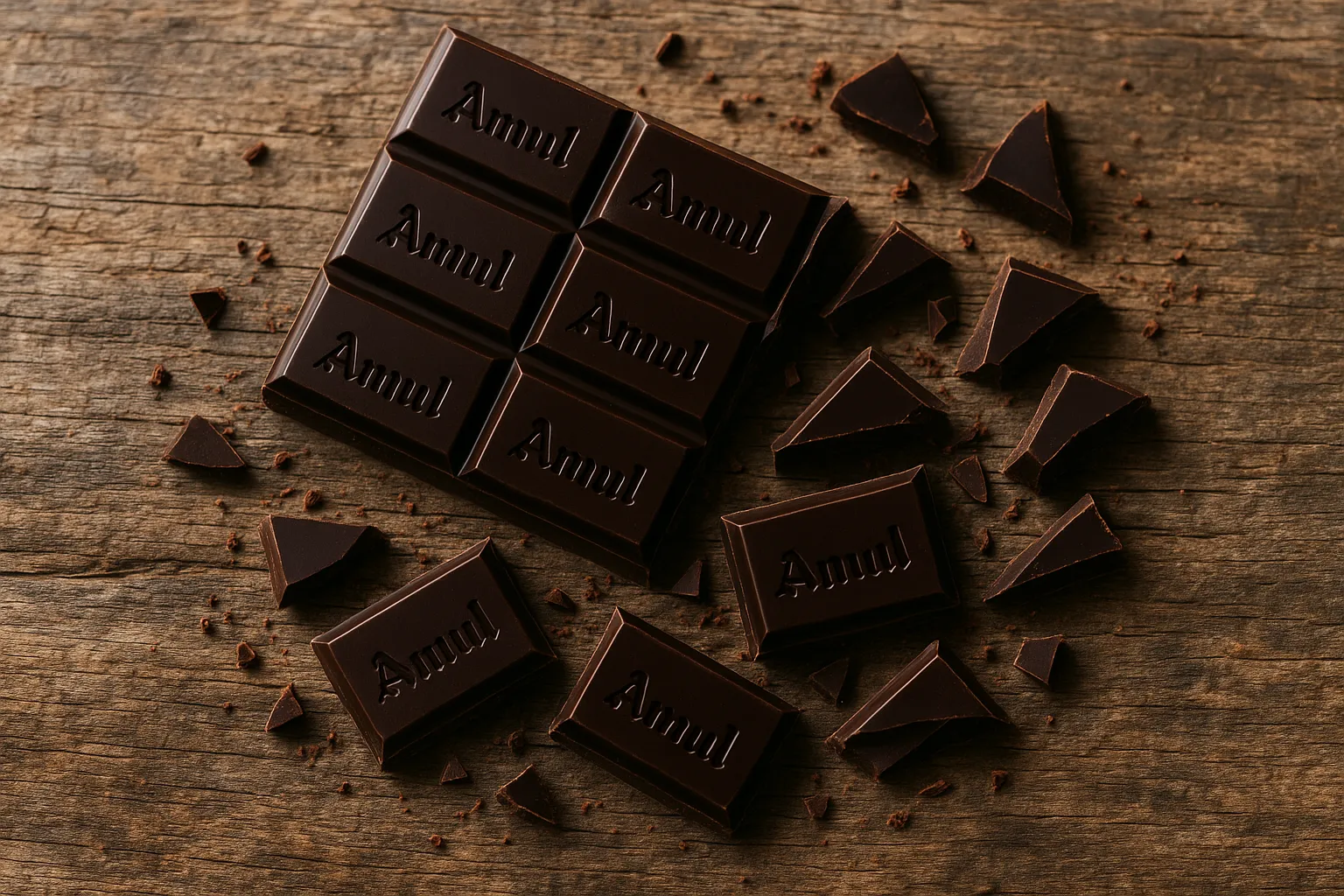
Quick Nutrition Facts
Per 100g
| Nutrient | Amount |
|---|---|
| Calories | 546 kcal |
| Protein | 7.8g |
| Carbohydrates | 54.5g |
| Fiber | 10.9g |
| Sugars | 24g |
| Fat | 31.8g |
| Iron | 11.9mg |
| Magnesium | 228mg |
| Zinc | 3.3mg |
| Copper | 1.8mg |
Macronutrient Breakdown
 ChatGPT
  Claude
  AI Mode
  Perplexity
NUTRITIONIST INSIGHT
Amul bitter chocolate (dark chocolate) contains powerful flavonoid antioxidants that support heart health and cognitive function. The key is portion control: 10-20g daily provides benefits without excess calories.
Myth Busters
MYTH #1: All Chocolate Is Unhealthy
TRUTH: Dark chocolate with high cocoa content provides flavonoid antioxidants that benefit heart health. The sugar and fat content varies by cocoa percentage; bitter chocolate (70%+ cocoa) is nutrient-dense when consumed in moderation.
MYTH #2: Chocolate Always Causes Weight Gain
TRUTH: Small portions (10-20g daily) of dark chocolate can fit weight loss diets. The key is mindful eating and portion control. Studies show dark chocolate may actually improve satiety and reduce overall calorie intake when consumed strategically.
MYTH #3: Diabetics Must Avoid All Chocolate
TRUTH: Dark chocolate has a moderate glycemic index (GI 23-48) and can fit diabetic meal plans. Choose bitter chocolate with 70%+ cocoa, limit portions to 10-20g, and pair with nuts or after protein-rich meals to minimize blood sugar impact.
MYTH #4: Chocolate Has No Nutritional Value
TRUTH: Dark chocolate provides significant amounts of iron (11.9mg per 100g), magnesium (228mg), copper, zinc, and potent antioxidants. These nutrients support blood health, muscle function, and immune system.
NutriScore by Health Goals
| Health Goal | NutriScore | Why This Score? |
|---|---|---|
| Weight Loss |  | 546 calories per 100g is calorie-dense. Limit to 10-20g daily for antioxidant benefits without excess calories. |
| Muscle Gain | | Provides quick energy and magnesium for muscle recovery, but not a primary protein source. |
| Diabetes Management |  | Low to moderate GI, flavonoids may improve insulin sensitivity. Choose 70%+ cocoa, limit to 10-20g daily. |
| PCOS Management | | Dark chocolate contains antioxidants but is calorie-dense. Limit to 10g daily, choose highest cocoa percentage available. |
| Pregnancy Nutrition | | Rich in iron and magnesium, may reduce preeclampsia risk in moderation. Limit to 20g daily due to caffeine content. |
| Viral/Flu Recovery | | Antioxidants support immune function, easy to digest. Provides quick energy when appetite is low. |
PERSONALIZED NUTRITION
Track your meals with NutriScan for personalized NutriScores based on your specific health goals!
Blood Sugar Response to Bitter Chocolate
Understanding how bitter chocolate affects blood glucose helps with portion control and timing decisions.
Typical Glucose Response Curve
This chart shows typical blood glucose response for healthy individuals to 20g dark chocolate. Individual responses vary. Not medical advice.
How to Minimize Blood Sugar Impact
Pairing dark chocolate with protein or nuts reduces glucose absorption and provides sustained satisfaction:
- 🌰 Almonds or walnuts - Healthy fats slow sugar absorption
- 🥜 Natural peanut butter - Protein and fat combination
- 🧀 Small piece of cheese - Protein balances sweetness
- ☕ Black coffee or unsweetened tea - Enhances antioxidant benefits
This combination extends satisfaction and reduces the likelihood of overeating chocolate.
Cultural Significance
Chocolate has been treasured for over 3,000 years, originating with Mayan and Aztec civilizations who used cacao beans as currency and in sacred ceremonies.
In India:
- Amul introduced bitter chocolate to make dark chocolate accessible and affordable for Indian consumers
- Indian chocolate market growing rapidly; dark chocolate gaining popularity for health benefits
- Ayurvedic practitioners recognize cocoa's mood-enhancing and antioxidant properties
- Used in festivals, celebrations, and as gifts during Diwali and other occasions
Global Impact:
- Cacao cultivation supports 40-50 million farmers worldwide
- Dark chocolate consumption linked to improved cardiovascular health in population studies
- Growing demand for ethically sourced, sustainable cacao production
Compare & Substitute
Amul Bitter Chocolate vs Similar Options (Per 100g)
| Nutrient | 🍫 Amul Bitter Chocolate | 🍫 Milk Chocolate | 🍫 85% Dark Chocolate | 🥜 Dark Chocolate with Almonds |
|---|---|---|---|---|
| Calories | 546 kcal | 535 kcal | 598 kcal | 580 kcal |
| Carbs | 54.5g | 59g | 45g | 42g |
| Fiber | 10.9g | 3.2g | 11g | 12g |
| Protein | 7.8g | 7.7g | 7.9g | 10g |
| Fat | 31.8g | 29.7g | 42.6g | 42g |
| Iron | 11.9mg | 2.4mg | 11.9mg | 10.5mg |
| Sugar | 24g | 51.5g | 14g | 18g |
| Magnesium | 228mg | 63mg | 228mg | 245mg |
| Best For | Heart health, moderation | Sweet cravings, treats | Maximum antioxidants | Protein boost, satiety |
Frequently Asked Questions
Is Amul bitter chocolate good for weight loss?
Amul bitter chocolate can support weight loss when eaten in very small portions. One small piece (10g) has 55 calories but can satisfy chocolate cravings while providing antioxidants.
Best practices: Limit to 1-2 small pieces (10-20g) daily; eat mindfully and slowly; choose after meals rather than as snacks; pair with herbal tea for satisfaction.
Can diabetics eat Amul bitter chocolate?
Diabetics can eat Amul bitter chocolate in moderation. Dark chocolate has a low to moderate glycemic index and may even improve insulin sensitivity due to flavonoid content.
Tips for diabetics:
- Limit to 10-20g per day
- Choose the highest cocoa percentage available (70%+)
- Eat after protein-rich meals, not on empty stomach
- Monitor blood sugar response 2 hours after eating
Always consult your healthcare provider about including chocolate in your diabetic meal plan.
How much protein is in Amul bitter chocolate?
Amul bitter chocolate contains approximately 7.8g of protein per 100g, or about 0.8g per 10g piece. While not a significant protein source, dark chocolate provides valuable antioxidants and minerals like iron and magnesium.
For muscle gain or high-protein diets, combine small amounts of dark chocolate with protein-rich foods like nuts, Greek yogurt, or protein shakes.
What are the main health benefits of bitter chocolate?
Key Benefits:
- Heart Health: Flavonoid antioxidants support cardiovascular function and blood pressure regulation
- Mood Enhancement: Contains theobromine and phenylethylamine that boost mood and focus
- Mineral-Rich: Provides iron, magnesium, zinc, and copper for various body functions
- Cognitive Support: Antioxidants may protect brain cells and improve memory
- Blood Sugar Control: May improve insulin sensitivity when consumed in moderation
- Antioxidant Power: Higher antioxidant content than many berries and superfoods
When is the best time to eat bitter chocolate?
Depends on your goal:
- Weight Loss: Mid-morning or afternoon (2-3 PM), avoid nighttime. Eat after meals, not as standalone snack.
- Mood Boost: Afternoon slump (2-3 PM) for energy and focus enhancement.
- Diabetes: After protein-rich meals to minimize blood sugar impact. Not on empty stomach.
- Heart Health: Any time, but consistent daily intake (10-20g) matters more than timing.
IMPORTANT NOTE
Avoid eating chocolate late at night due to caffeine and theobromine content, which may affect sleep quality.
What percentage cocoa is healthiest in bitter chocolate?
Optimal Range: 70-85% cocoa content
Higher Cocoa Benefits:
- More flavonoid antioxidants
- Less added sugar
- Higher mineral content (iron, magnesium)
- Lower glycemic impact
Lower Cocoa (60-70%):
- More palatable for beginners
- Still provides antioxidant benefits
- Slightly higher sugar content
Recommendation: Start with 70% and gradually increase to 85% as your palate adjusts. Choose the highest percentage you can enjoy without adding extra sugar or overeating.
How much Amul bitter chocolate should I eat per day?
General Guidelines:
- 10-20g daily - Most people (55-110 calories, antioxidant benefits)
- 10g daily - Weight loss, PCOS, or strict calorie control
- 20g daily - Heart health focus, pregnancy (monitor caffeine)
Avoid excess: More than 30g daily provides excessive calories, fat, and caffeine. Quality over quantity matters with dark chocolate.
Track your meals with NutriScan app to see how dark chocolate fits your personal nutrition goals.
Does bitter chocolate contain caffeine?
Yes, dark chocolate contains caffeine and theobromine (a similar stimulant). A 100g bar contains approximately 80-100mg caffeine (similar to a cup of decaf coffee) and 250-500mg theobromine.
Caffeine-sensitive individuals should:
- Limit intake to 10-20g per day
- Avoid consumption after 2 PM
- Monitor for sleep disturbances or anxiety
- Choose lower percentage cocoa if very sensitive
Pregnant women should limit total daily caffeine (including chocolate) to under 200mg.


Similar Nutritious Foods
4505 Chicharrones Classic Chili Salt
7 Eleven Japan Crispy Corn Cheese
Explore More Nutrition Tools & Resources
AI Calorie Counter App - Snap a Photo, Get Macros
AI Nutritionist App That Reads Your Logged Meals
Best Protein Supplements for Women
Bulking Meal Plan App That Sets Your Surplus
ChatGPT Calorie Counter Alternative That Keeps the Total
ChatGPT Diet Plan Alternative That Tracks What You Eat
ChatGPT Weight Loss Coach Alternative With a Food Log
Fast Food Calorie Counter App That Reads the Tray
Free Calorie Tracker App with AI Photo Scans | NutriScan
Indian Diet Plan App With Veg and Non Veg Meals
Indian Food Calorie Calculator - Get Instant Nutrition Facts for Desi Meals — 2026
Intermittent Fasting for Women, Timer and Meal Log App
Intermittent Fasting Tracker App - Free Fasting Timer
Macro Tracker App That Fills the Numbers From a Photo
Mediterranean Diet Meal Plan App That Counts the Oil
Micronutrient Tracker App for Vitamins and Minerals
MyFitnessPal Alternative That Stays Free | NutriScan
NutriScore App: A Free Grade on Every Meal | NutriScan
Nutrition Label Scanner App for the Amount You Ate
Second Trimester Protein Guide
Vegetarian Meal Plan App With a Protein Target
Voice Calorie Counter - Speak to Track Meals Hands-Free
Water and Calorie Tracker App - Free Water Log