Haldiram's Peanut Chikki Bar: Calories, Nutrition and Health Benefits
A classic Indian peanut-jaggery brittle packed with 18g protein per 100g, iron-rich jaggery, and heart-healthy fats from roasted peanuts.
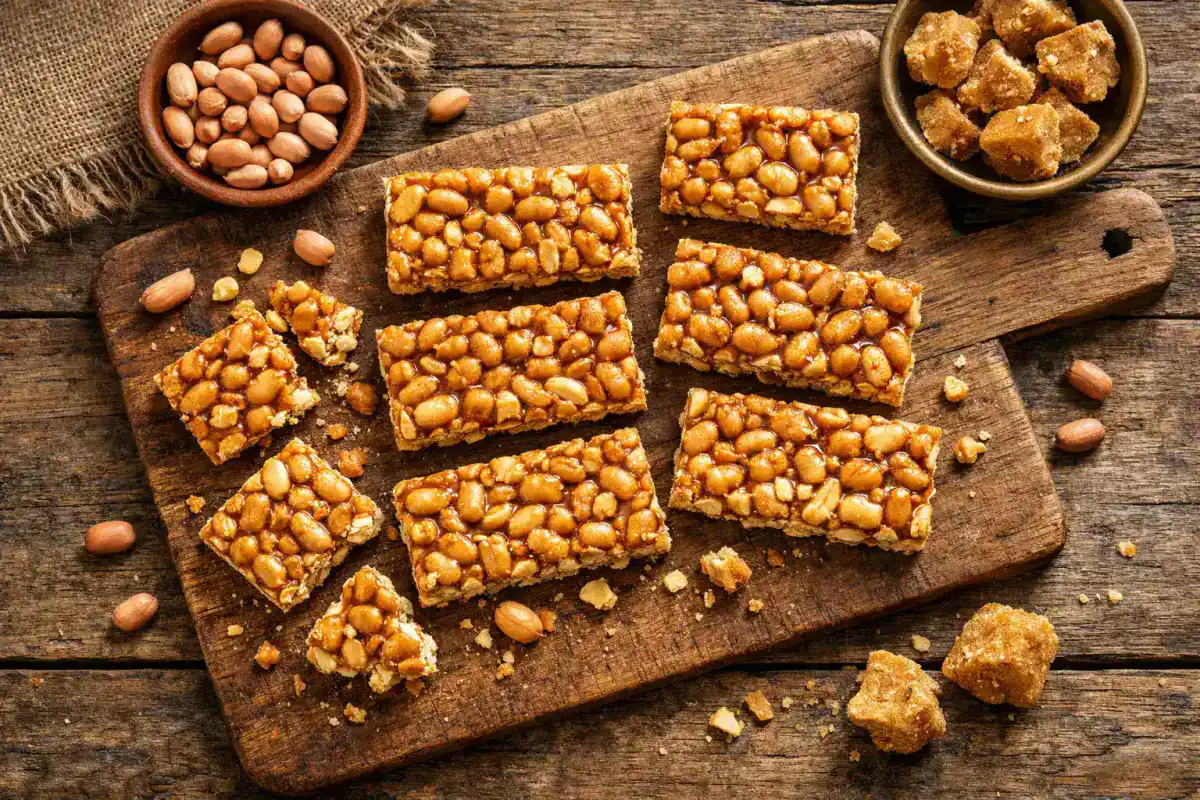
Quick Nutrition Facts
Per 1 Bar (35g)
| Nutrient | Amount |
|---|---|
| Calories | 186 kcal |
| Protein | 6.3g |
| Carbohydrates | 18.2g |
| Fiber | 1.4g |
| Sugars | 12.6g |
| Fat | 9.8g |
| Iron | 1.5mg |
| Magnesium | 30mg |
| Phosphorus | 55mg |
| Potassium | 105mg |
Macronutrient Breakdown
 ChatGPT
  Claude
  AI Mode
  Perplexity
NUTRITIONIST INSIGHT
Peanut chikki delivers 18g protein per 100g from whole roasted peanuts, making it one of the most protein-rich traditional Indian sweets. The jaggery provides iron (11mg/100g) and minerals that refined sugar lacks, while peanut fats are predominantly heart-healthy monounsaturated fatty acids.
Myth Busters
MYTH #1: Peanut Chikki Is Just Candy
TRUTH: Unlike refined sugar candies, peanut chikki provides 18g protein, 4g fiber, and minerals like iron and magnesium per 100g. The peanut component offers cardiovascular benefits including reduced LDL cholesterol and improved heart health markers.
MYTH #2: Diabetics Must Completely Avoid Chikki
TRUTH: While chikki contains sugars from jaggery, the peanut protein and fat moderate glycemic response. Half a bar (17g) paired with fiber-rich foods can be consumed occasionally. Monitor blood sugar and consult your doctor.
MYTH #3: Chikki Makes You Gain Weight
TRUTH: One bar has 186 calories with 6.3g protein and 9.8g fat that promote satiety. Peanut consumption is associated with lower body weight when portion-controlled, as the protein-fat combo reduces overall snacking.
MYTH #4: Jaggery in Chikki Is the Same as White Sugar
TRUTH: Jaggery retains minerals including iron, magnesium, potassium, and B vitamins that refining removes from white sugar. It digests slower due to longer sucrose chains, providing more gradual energy release.
MYTH #5: Peanut Chikki Has No Nutritional Value
TRUTH: Per 100g, chikki provides 18g protein (36% DV), iron from jaggery (aids anemia prevention), magnesium for nerve function, and monounsaturated fats that improve insulin sensitivity.
NutriScore by Health Goals
| Health Goal | NutriScore | Why This Score? |
|---|---|---|
| Weight Loss |  | 186 cal per bar is moderate. Protein and fat promote fullness. Limit to 1 bar/day, avoid second servings. |
| Muscle Gain |  | 18g protein per 100g, quick carbs for post-workout glycogen, magnesium for muscle recovery. |
| Diabetes Management |  | 36g sugar per 100g is high. Peanut protein moderates glucose spike but limit to half a bar with meals. |
| PCOS Management | | Sugar content affects insulin. Limit to half a bar, choose as occasional treat over refined sweets. |
| Pregnancy Nutrition | | Peanuts provide folate and choline for fetal development, jaggery iron supports increased blood volume needs. |
| Viral/Flu Recovery | | Quick energy from jaggery carbs, protein for tissue repair, iron and minerals for recovery. |
PERSONALIZED NUTRITION
Track your meals with NutriScan for personalized NutriScores based on your specific health goals!
Blood Sugar Response to Peanut Chikki
Understanding how peanut chikki affects your blood glucose can help you make informed decisions about when and how to eat it.
Typical Glucose Response Curve
This chart shows typical blood glucose response for general healthy individuals. Individual responses may vary. Not medical advice.
How to Flatten the Spike
Pairing high-sugar snacks with protein or fiber slows glucose absorption and reduces the peak blood sugar level:
- 🥛 Buttermilk or chaas - Protein and probiotics slow sugar absorption
- 🥒 Cucumber or salad - Fiber-rich sides add bulk and slow digestion
- 🍵 Green tea - Catechins may help moderate glucose response
- 🥜 Additional nuts (almonds, walnuts) - Extra protein and healthy fats buffer the sugar
This combination not only reduces the glucose spike but also extends energy release, keeping you fuller for longer.
Cultural Significance
Peanut chikki is one of India's most beloved traditional confections, with roots dating back centuries to the jaggery-making traditions of Maharashtra and Gujarat.
In India:
- Chikki-making is a wintertime tradition, especially during Makar Sankranti (January harvest festival)
- Offered as prasad in temples and distributed during festivals like Lohri and Pongal
- Lonavala (Maharashtra) is considered the chikki capital of India, with hundreds of shops
- Ayurveda recommends jaggery-peanut combinations for warmth and energy during cold months
Global Impact:
- Similar preparations exist worldwide: peanut brittle (US/UK), turron (Spain), palanqueta (Mexico)
- India produces over 25 million tonnes of sugarcane for jaggery annually
- Chikki has evolved from handmade to industrial production, with brands like Haldiram's making it accessible nationwide
Compare & Substitute
Peanut Chikki vs Similar Snacks (Per 100g)
| Nutrient | 🥜 Peanut Chikki | 🍫 Milk Chocolate | 🌰 Almond Bar | 🫘 Sesame Chikki |
|---|---|---|---|---|
| Calories | 532 kcal | 535 kcal | 510 kcal | 520 kcal |
| Carbs | 52g | 60g | 45g | 50g |
| Fiber | 4g | 1.5g | 5g | 4.5g |
| Protein | 18g | 7g | 15g | 14g |
| Fat | 28g | 30g | 32g | 30g |
| Iron | 3mg | 1.2mg | 2.5mg | 5mg |
| Sugar | 36g | 52g | 30g | 34g |
| Best For | Protein snack, winter energy | Quick treat, mood boost | Vitamin E, healthy fats | Calcium, iron boost |
Frequently Asked Questions
How many calories are in Haldiram's Peanut Chikki Bar?
1 bar (35g) has 186 calories. Per 100g, it provides 532 calories with 18g protein, 28g fat, and 52g carbohydrates. The calorie density comes primarily from peanut fats and jaggery sugars.
Per 100g breakdown: 52% calories from fat, 39% from carbs, 9% from protein.
Is peanut chikki good for weight loss?
Peanut chikki can support weight loss when portion-controlled. One bar provides 6.3g protein and healthy fats that reduce snacking urges.
Best practices: Limit to 1 bar per day (186 cal), eat as a mid-morning snack rather than post-dinner dessert, pair with green tea or water, and track intake using a calorie counter app.
Can diabetics eat peanut chikki?
Diabetics should consume peanut chikki cautiously. The 36g sugar per 100g is significant, but peanut protein and fat buffer the glycemic response.
Tips for diabetics:
- Limit to half a bar (17g, ~93 cal) at a time
- Eat with a protein-rich meal, not as standalone snack
- Choose jaggery-based chikki over sugar-based variants
- Monitor blood sugar 2 hours after eating
Consult your healthcare provider for personalized advice.
Is peanut chikki healthier than chocolate?
Per 100g, peanut chikki has significantly more protein (18g vs 7g), more fiber (4g vs 1.5g), and less sugar (36g vs 52g) than milk chocolate. Jaggery provides iron and minerals absent in refined chocolate.
When chikki wins: Protein needs, iron intake, natural sweetener preference. When chocolate wins: Antioxidants from cocoa, mood-boosting theobromine.
How much peanut chikki should I eat per day?
General guidelines:
- 1 bar (35g) daily - Most adults (186 calories, 6.3g protein)
- Half a bar (17g) daily - Diabetes, PCOS, or strict calorie diets
- 1-2 bars daily - Athletes, muscle gain, high activity levels
Avoid excess: More than 2 bars per day adds 372+ calories and 25g+ sugar, which can offset fitness goals.
Track your intake with NutriScan app to see how peanut chikki fits your nutrition targets.
When is the best time to eat peanut chikki?
Depends on your goal:
- Weight Loss: Mid-morning snack (10-11 AM) when metabolism is active. Avoid after dinner.
- Muscle Gain: Post-workout (within 30 minutes) for quick carbs and protein.
- Diabetes: With a balanced meal, never on empty stomach alone.
- Energy: 30-45 minutes before physical activity for sustained energy.
IMPORTANT NOTE
Avoid eating multiple chikki bars in one sitting. The calorie and sugar density adds up quickly.


Similar Nutritious Foods
4505 Chicharrones Classic Chili Salt
7 Eleven Japan Crispy Corn Cheese
Explore More Nutrition Tools & Resources
AI Calorie Counter App - Snap a Photo, Get Macros
AI Nutritionist App That Reads Your Logged Meals
Best Protein Supplements for Women
Bulking Meal Plan App That Sets Your Surplus
ChatGPT Calorie Counter Alternative That Keeps the Total
ChatGPT Diet Plan Alternative That Tracks What You Eat
ChatGPT Weight Loss Coach Alternative With a Food Log
Fast Food Calorie Counter App That Reads the Tray
Free Calorie Tracker App with AI Photo Scans | NutriScan
Indian Diet Plan App With Veg and Non Veg Meals
Indian Food Calorie Calculator - Get Instant Nutrition Facts for Desi Meals — 2026
Intermittent Fasting for Women, Timer and Meal Log App
Intermittent Fasting Tracker App - Free Fasting Timer
Macro Tracker App That Fills the Numbers From a Photo
Mediterranean Diet Meal Plan App That Counts the Oil
Micronutrient Tracker App for Vitamins and Minerals
MyFitnessPal Alternative That Stays Free | NutriScan
NutriScore App: A Free Grade on Every Meal | NutriScan
Nutrition Label Scanner App for the Amount You Ate
Second Trimester Protein Guide
Vegetarian Meal Plan App With a Protein Target
Voice Calorie Counter - Speak to Track Meals Hands-Free
Water and Calorie Tracker App - Free Water Log