Haldiram's Snacks Mixture: Calories, Nutrition and Health Facts
India's beloved savory snack mix combining sev, lentils, peanuts, and aromatic spices in one crunchy package.
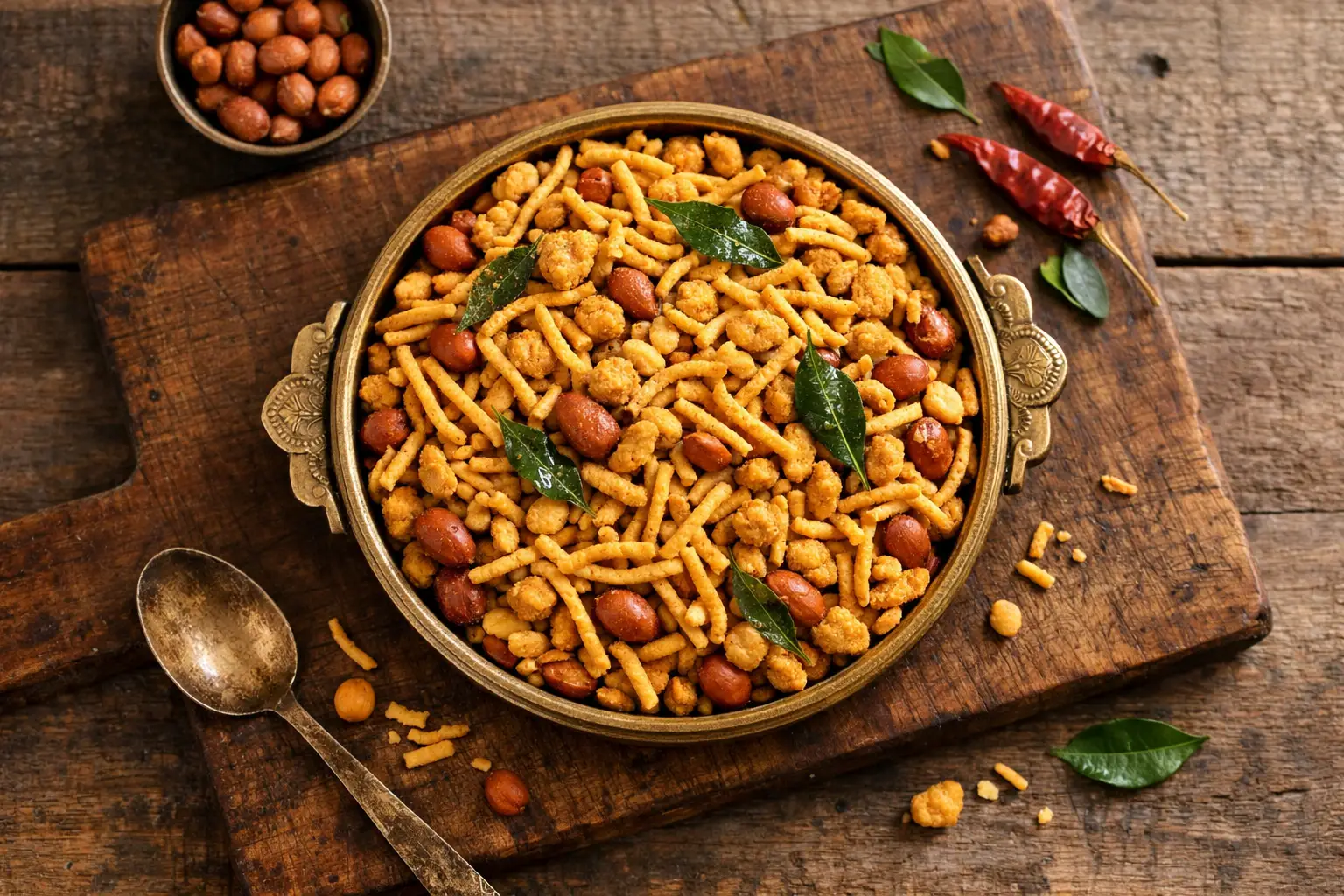
Quick Nutrition Facts
Per 50g Serving (approx. 1/4 cup)
| Nutrient | Amount |
|---|---|
| Calories | 267 kcal |
| Protein | 7.9g |
| Carbohydrates | 22.5g |
| Fiber | 2.1g |
| Sugars | 0.4g |
| Fat | 16.6g |
| Saturated Fat | 6.6g |
| Sodium | 338mg |
| Cholesterol | 0mg |
Macronutrient Breakdown
 ChatGPT
  Claude
  AI Mode
  Perplexity
NUTRITIONIST INSIGHT
Indian namkeen mixtures are high in sodium (675mg/100g) and saturated fat (13g/100g). The protein from gram flour and lentils is a plus, but portion control is critical - stick to 25-30g servings to enjoy without derailing health goals.
Myth Busters
MYTH #1: Mixture Is a Good Protein Snack
TRUTH: While mixture contains 15.8g protein per 100g, it comes packaged with 33g fat and 675mg sodium. For every gram of protein, you're getting 2g of fat. Choose roasted chana or makhana for cleaner protein sources.
MYTH #2: Namkeen Made with Vegetable Oil Is Heart-Healthy
TRUTH: Most commercial namkeens are deep-fried, creating trans fats. The American Heart Association warns that fried snacks increase cardiovascular risk regardless of oil type. Baked or roasted alternatives are safer.
MYTH #3: A Small Handful Won't Affect Your Diet
TRUTH: A "small handful" (50g) contains 267 calories - equivalent to a full meal's worth of snacking. High sodium in packaged snacks can contribute to hypertension even in modest portions.
MYTH #4: Mixture Is Better Than Chips Because It Has Lentils
TRUTH: While mixture has more protein (15.8g vs 6g) than potato chips, both are deep-fried with similar calorie density (534 vs 536 cal/100g). The lentils add nutrition but don't offset the frying process.
MYTH #5: Festival Season Snacking Doesn't Count
TRUTH: Festival indulgence matters just as much. Research shows ultra-processed snacks contribute to metabolic issues regardless of occasion. Enjoy mindfully, track portions, and balance with nutritious meals.
NutriScore by Health Goals
| Health Goal | NutriScore | Why This Score? |
|---|---|---|
| Weight Loss |  | Very calorie-dense (534 cal/100g) with 55% calories from fat. A 50g serving = 267 calories. Limit to 25g portions occasionally. |
| Muscle Gain |  | Decent protein (15.8g/100g) but high fat makes it inefficient. Better post-workout options exist like roasted chana. |
| Diabetes Management | | 45g carbs/100g with moderate-high glycemic load. Pair with fiber-rich foods to slow absorption. Limit to 20-25g portions. |
| PCOS Management | | High glycemic load and saturated fat can worsen insulin resistance. Choose roasted makhana instead. |
| Pregnancy Nutrition | | High sodium (675mg/100g) can aggravate pregnancy-related edema. Focus on nutrient-dense snacks like nuts and fruits instead. |
| Viral/Flu Recovery | | Easy to eat when appetite is low, provides quick energy. High sodium may help with electrolytes but can dehydrate. |
PERSONALIZED NUTRITION
Track your meals with NutriScan for personalized NutriScores based on your specific health goals!
Blood Sugar Response
Understanding how namkeen mixture affects your blood glucose can help you make informed snacking decisions.
Typical Glucose Response Curve
This chart shows typical blood glucose response for general healthy individuals. Individual responses may vary. Not medical advice.
How to Flatten the Spike
Pairing high-carb snacks with protein or fiber slows glucose absorption:
- Cucumber or carrot sticks - Add fiber and volume without calories
- Buttermilk (chaas) - Protein and probiotics aid digestion
- Green salad - Fiber slows carb absorption
- Handful of raw almonds - Healthy fats moderate the spike
Limiting portion to 25g and eating after a meal (not on empty stomach) significantly reduces glycemic impact.
Cultural Significance
Namkeen mixture is an integral part of Indian snacking culture, dating back centuries with regional variations across the subcontinent.
In India:
- Essential during festivals - Diwali, Holi, Raksha Bandhan
- Served at weddings, gatherings, and with evening chai
- Each region has signature variations: Bombay mix, Delhi mix, Rajasthani variants
- Haldiram's, founded in 1937 in Bikaner, popularized packaged namkeen nationwide
Global Reach:
- Available in 80+ countries as "Bombay Mix" or "Indian Mix"
- Popular in UK as pub snack and supermarket staple
- Growing demand in Middle East, USA, and Southeast Asia
- Annual Indian savory snacks market exceeds $10 billion
Compare & Substitute
Haldiram's Mixture vs Alternatives (Per 100g)
| Nutrient | Haldiram's Mixture | Roasted Makhana | Roasted Chana | Potato Chips |
|---|---|---|---|---|
| Calories | 534 kcal | 350 kcal | 350 kcal | 536 kcal |
| Carbs | 45g | 77g | 58g | 53g |
| Fiber | 4.2g | 7.5g | 12g | 4g |
| Protein | 15.8g | 9g | 20g | 6g |
| Fat | 33g | 0.5g | 5g | 35g |
| Sodium | 675mg | 150mg | 200mg | 500mg |
| Saturated | 13g | 0.1g | 0.5g | 10g |
| Best For | Occasional treat | Weight loss | Protein boost | None |
Frequently Asked Questions
How many calories are in Haldiram's Mixture?
534 calories per 100g, or 267 calories per 50g serving. The calorie density comes from deep frying - 55% of calories are from fat.
Practical perspective: A 50g serving equals about 1/4 cup or a small handful. This provides nearly 15% of daily calories for most people.
Is Haldiram's Mixture healthy?
In moderation, it's an acceptable occasional treat. Positives include 15.8g protein and 4.2g fiber per 100g. However, concerns include:
- High fat: 33g total, 13g saturated (65% of daily limit)
- High sodium: 675mg (29% of daily limit)
- Calorie-dense: Easy to overconsume
Recommendation: Limit to 25-30g portions, 2-3 times per week maximum.
Can diabetics eat Haldiram's Mixture?
Diabetics should be cautious. With 45g carbs per 100g and moderate-high glycemic load, it can spike blood sugar.
Tips for diabetics:
- Limit to 20-25g portions (11g carbs)
- Eat after a meal, never on empty stomach
- Pair with raw vegetables for fiber
- Monitor blood glucose 2 hours after eating
What is the protein content in Haldiram's Mixture?
15.8g protein per 100g, primarily from gram flour (besan), lentils, and peanuts. A 50g serving provides 7.9g protein.
However, this protein comes with 16.6g fat per serving. For cleaner protein, choose roasted chana (20g protein, 5g fat per 100g).
How much sodium is in Haldiram's Mixture?
675mg sodium per 100g (29% of the 2,300mg daily limit). A 50g serving provides 338mg sodium.
For hypertension: Choose Haldiram's "Diet Mixture" variant with reduced sodium, or switch to roasted makhana (150mg/100g).
What are healthier alternatives to Haldiram's Mixture?
| Alternative | Calories/100g | Key Benefit |
|---|---|---|
| Roasted makhana | 350 | Low fat, high fiber |
| Roasted chana | 350 | High protein, low fat |
| Air-popped popcorn | 387 | High fiber, whole grain |
| Mixed nuts (unsalted) | 607 | Healthy fats, no sodium |
| Khakhra | 400 | Baked, not fried |
When is the best time to eat namkeen mixture?
Best times:
- With evening chai - Small portion (20-25g) as an energy boost
- After meals - Reduced glycemic impact when stomach isn't empty
Avoid:
- On empty stomach (rapid blood sugar spike)
- Late night (high sodium causes water retention)
- Before exercise (fat slows digestion)
How should I store Haldiram's Mixture?
- Transfer to airtight container after opening
- Store in cool, dry place away from sunlight
- Consume within 2-3 weeks of opening for best crunch
- Avoid refrigeration (causes sogginess)


Similar Nutritious Foods
4505 Chicharrones Classic Chili Salt
7 Eleven Japan Crispy Corn Cheese
Explore More Nutrition Tools & Resources
AI Calorie Counter App - Snap a Photo, Get Macros
AI Nutritionist App That Reads Your Logged Meals
Best Protein Supplements for Women
Bulking Meal Plan App That Sets Your Surplus
ChatGPT Calorie Counter Alternative That Keeps the Total
ChatGPT Diet Plan Alternative That Tracks What You Eat
ChatGPT Weight Loss Coach Alternative With a Food Log
Fast Food Calorie Counter App That Reads the Tray
Free Calorie Tracker App with AI Photo Scans | NutriScan
Indian Diet Plan App With Veg and Non Veg Meals
Indian Food Calorie Calculator - Get Instant Nutrition Facts for Desi Meals — 2026
Intermittent Fasting for Women, Timer and Meal Log App
Intermittent Fasting Tracker App - Free Fasting Timer
Macro Tracker App That Fills the Numbers From a Photo
Mediterranean Diet Meal Plan App That Counts the Oil
Micronutrient Tracker App for Vitamins and Minerals
MyFitnessPal Alternative That Stays Free | NutriScan
NutriScore App: A Free Grade on Every Meal | NutriScan
Nutrition Label Scanner App for the Amount You Ate
Second Trimester Protein Guide
Vegetarian Meal Plan App With a Protein Target
Voice Calorie Counter - Speak to Track Meals Hands-Free
Water and Calorie Tracker App - Free Water Log