High Protein Bread: Calories, Nutrition and Health Benefits
The bakery trend of 2026 delivering 15g of protein per 100g with whole grain goodness, fiber, and essential minerals for every health goal.
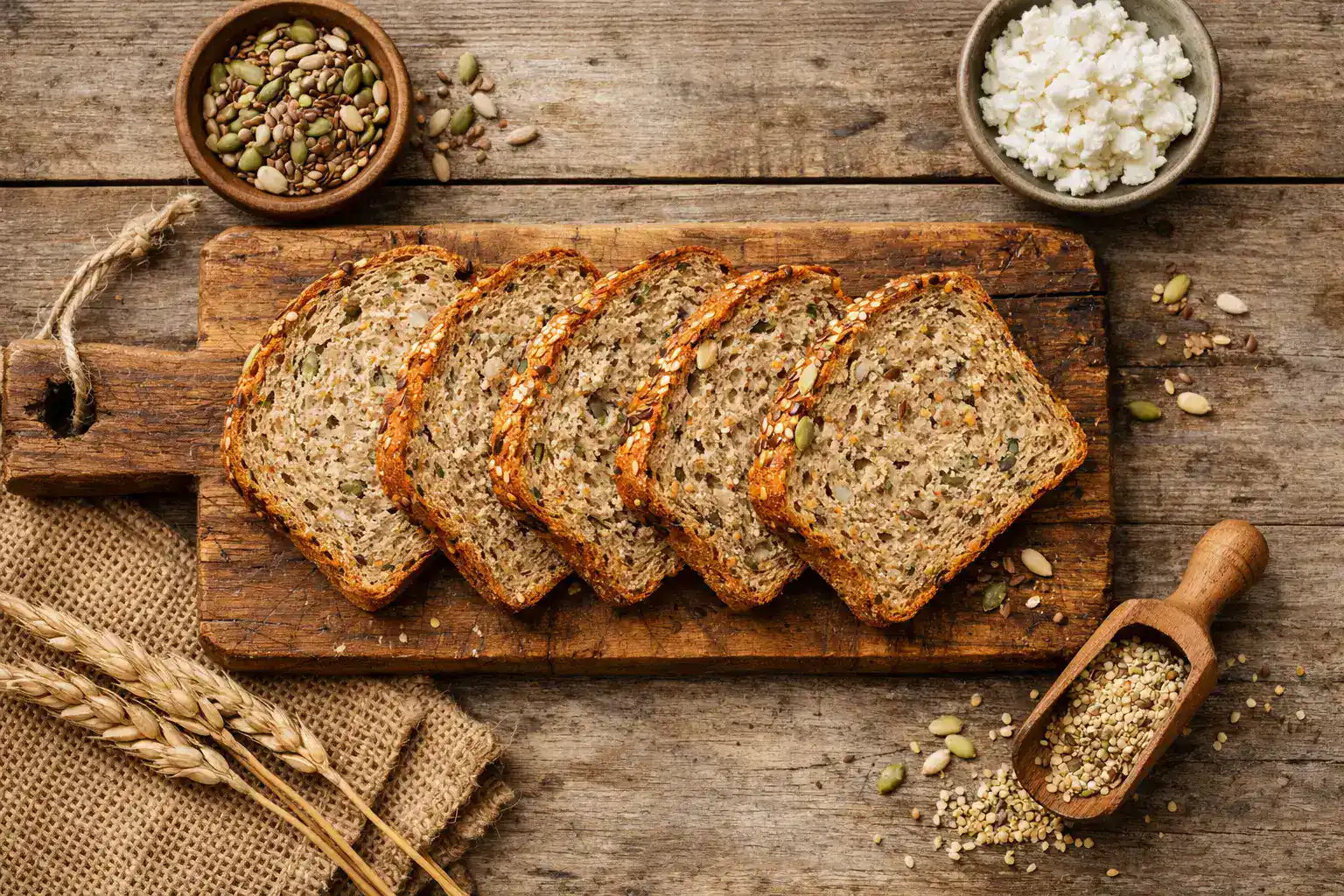
Quick Nutrition Facts
Per 1 Slice (43g)
| Nutrient | Amount |
|---|---|
| Calories | 108 kcal |
| Protein | 6.5g |
| Carbohydrates | 15.5g |
| Fiber | 2.2g |
| Sugars | 1.7g |
| Fat | 1.9g |
| Iron | 1.7mg |
| Magnesium | 28mg |
| Vitamin B1 | 0.17mg |
| Zinc | 0.8mg |
Macronutrient Breakdown
 ChatGPT
  Claude
  AI Mode
  Perplexity
NUTRITIONIST INSIGHT
High protein bread delivers 15g of protein per 100g, nearly double what regular white bread offers. The combination of protein and 5g fiber creates a sustained energy release that keeps blood sugar stable and hunger at bay for hours.
Myth Busters
MYTH #1: High Protein Bread Is Just a Marketing Gimmick
TRUTH: High protein bread genuinely contains 12-15g protein per 100g compared to 8-9g in regular white bread. The protein comes from added sources like vital wheat gluten, legume flours, and seeds. Research confirms protein-enriched breads have measurable effects on satiety and glycemic response.
MYTH #2: High Protein Bread Is Low in Carbs
TRUTH: High protein bread still contains 36g carbohydrates per 100g. While slightly lower than white bread (49g), it is not a low-carb food. The difference is that the fiber (5g) and protein slow carbohydrate absorption, resulting in a lower glycemic response.
MYTH #3: You Can Replace Protein Shakes with Protein Bread
TRUTH: A slice of high protein bread provides 6.5g protein, while a typical protein shake delivers 25-30g. Protein bread is a convenient way to boost daily intake but cannot replace dedicated protein supplementation for athletes. Use it as a complementary source alongside other high-quality protein foods.
MYTH #4: High Protein Bread Causes Bloating
TRUTH: Some people experience initial bloating due to added fibers and vital wheat gluten, but this typically resolves within a few days as gut bacteria adapt. The 5g fiber per 100g supports long-term digestive health and regular bowel movements.
MYTH #5: All High Protein Breads Are Equally Healthy
TRUTH: Not all protein breads are created equal. Some brands add excessive sodium, sugar, or artificial additives. Always check the nutrition label for whole grain ingredients, minimal added sugars (<5g), and at least 10g protein per 100g. Track with NutriScan to compare brands.
NutriScore by Health Goals
| Health Goal | NutriScore | Why This Score? |
|---|---|---|
| Weight Loss |  | 108 calories per slice, 15g protein per 100g promotes satiety, 5g fiber reduces overall calorie intake. |
| Muscle Gain | | 15g protein per 100g supports muscle protein synthesis. Pair with eggs or nut butter post-workout. |
| Diabetes Management |  | Higher protein and fiber content lowers glycemic response compared to white bread. Monitor portions: 1-2 slices per meal. |
| PCOS Management | | Lower glycemic impact helps manage insulin resistance. Choose brands with whole grains and seeds. |
| Pregnancy Nutrition | | Rich in iron (4mg/100g), folate-fortified varieties support fetal development, 15g protein supports growing demands. |
| Viral/Flu Recovery | | Easy to digest, provides sustained energy, iron supports immune function, zinc aids recovery. |
PERSONALIZED NUTRITION
Track your meals with NutriScan for personalized NutriScores based on your specific health goals!
Blood Sugar Response to High Protein Bread
Understanding how high protein bread affects your blood glucose can help you make informed decisions about when and how to eat it.
Typical Glucose Response Curve
This chart shows typical blood glucose response for general healthy individuals. Individual responses may vary. Not medical advice.
How to Flatten the Spike
Pairing high protein bread with healthy fats and additional protein further slows glucose absorption and reduces the peak blood sugar level:
- 🥑 Avocado or hummus - Adds healthy fats and fiber for slower digestion
- 🥚 Eggs (scrambled, poached, or boiled) - Complete protein doubles the protein content
- 🥜 Almond butter or peanut butter - Healthy fats and extra protein
- 🧀 Cottage cheese or paneer - High protein, low glycemic pairing
This combination not only reduces the glucose spike but also extends energy release, keeping you fuller for longer.
Cultural Significance
High protein bread reflects the global shift toward functional foods, with 67% of consumers actively seeking healthier bread options in 2026.
Modern Origins:
- Emerged from European fitness culture in the 2010s, popularized by German and Scandinavian bakeries
- Traditional German Eiweissbrot (protein bread) uses a mix of wheat protein, soy flour, and seeds
- Adopted by athletes and bodybuilders as a convenient meal prep staple
In India:
- Growing demand in urban centers with the fitness and wellness movement
- Indian bakeries now offer protein bread made with ragi (finger millet), chickpea flour, and flaxseeds
- Pairs well with Indian spreads: dal-based spreads, paneer, or chutneys
- Aligns with the Ayurvedic principle of balanced nutrition in every meal
Global Impact:
- The protein bread market is projected to grow significantly through 2030
- Drives innovation in plant-based protein sources (pea protein, lentil flour)
- Available in most major supermarkets worldwide across dozens of brands
Compare & Substitute
High Protein Bread vs Other Breads (Per 100g)
| Nutrient | 🍞 High Protein Bread | 🌾 Whole Wheat Bread | 🥖 White Bread | 🫓 Sourdough Bread |
|---|---|---|---|---|
| Calories | 250 kcal | 252 kcal | 265 kcal | 239 kcal |
| Carbs | 36g | 43g | 49g | 46g |
| Fiber | 5g | 6g | 2.7g | 3g |
| Protein | 15g | 12g | 9g | 8g |
| Fat | 4.5g | 3.5g | 3.2g | 1.5g |
| Iron | 4mg | 2.5mg | 3.6mg | 2.4mg |
| Sugar | 4g | 5g | 5g | 2g |
| Best For | Muscle gain, satiety, low GI | Fiber intake, balanced nutrition | Quick energy, kids' sandwiches | Gut health, lower GI |
Frequently Asked Questions
Is high protein bread good for weight loss?
Yes, high protein bread supports weight loss effectively. With 15g protein and 5g fiber per 100g, it keeps you fuller longer than regular bread. Studies show high-protein foods increase satiety hormones like GLP-1 and peptide YY.
Best practices: Limit to 2 slices per meal, pair with vegetables and lean protein, choose brands with whole grains, and avoid topping with high-calorie spreads like butter.
Can diabetics eat high protein bread?
High protein bread is a better option for diabetics than regular white bread. The higher protein and fiber content results in a lower and slower blood sugar rise.
Tips for diabetics:
- Choose brands with at least 12g protein per 100g
- Limit to 1-2 slices per meal (15-31g carbs)
- Pair with healthy fats (avocado, nut butter) to slow absorption
- Monitor blood sugar 2 hours after eating
Always consult your healthcare provider for personalized advice.
How much protein is in a slice of high protein bread?
A typical slice (43g) contains 6.5g of protein, nearly double regular white bread (3g per slice). Two slices provide about 13g of protein, equivalent to roughly 2 eggs.
For muscle gain or high-protein diets, combine with protein-rich toppings like eggs, cottage cheese, or turkey breast.
What are the main health benefits of high protein bread?
Key Benefits:
- Muscle Repair: 15g protein per 100g supports muscle protein synthesis
- Blood Sugar Control: Lower glycemic index than white bread due to protein and fiber
- Weight Management: High satiety value reduces overall calorie intake
- Iron-Rich: 4mg per 100g (52% DV) supports energy and oxygen transport
- Digestive Health: 5g fiber per 100g promotes regular bowel movements
- Sustained Energy: Protein and fiber provide slow, steady energy release
Is high protein bread better than whole wheat bread?
Both are excellent choices, but they serve different purposes:
High Protein Bread:
- 25% more protein (15g vs 12g per 100g)
- Lower glycemic response
- Better for muscle gain and satiety
- Higher iron content
Whole Wheat Bread:
- More fiber (6g vs 5g per 100g)
- Broader micronutrient profile
- More affordable and widely available
- Better for daily general nutrition
Recommendation: Muscle gain or weight loss = high protein bread. General health = whole wheat bread.
How many slices of high protein bread should I eat per day?
General Guidelines:
- 2 slices daily - Most adults (13g protein, 216 calories)
- 1 slice daily - Weight loss or low-carb diets (6.5g protein, 108 calories)
- 3-4 slices daily - Athletes, muscle gain, high activity levels
- 1-2 slices daily - Diabetes or PCOS management
Avoid excess: More than 4-5 slices adds significant carbs (62-78g) and calories (430-540).
Track your meals with NutriScan app to see how high protein bread fits your personal nutrition goals.


Similar Nutritious Foods
4505 Chicharrones Classic Chili Salt
7 Eleven Japan Crispy Corn Cheese
Explore More Nutrition Tools & Resources
AI Calorie Counter App - Snap a Photo, Get Macros
AI Nutritionist App That Reads Your Logged Meals
Best Protein Supplements for Women
Bulking Meal Plan App That Sets Your Surplus
ChatGPT Calorie Counter Alternative That Keeps the Total
ChatGPT Diet Plan Alternative That Tracks What You Eat
ChatGPT Weight Loss Coach Alternative With a Food Log
Fast Food Calorie Counter App That Reads the Tray
Free Calorie Tracker App with AI Photo Scans | NutriScan
Indian Diet Plan App With Veg and Non Veg Meals
Indian Food Calorie Calculator - Get Instant Nutrition Facts for Desi Meals — 2026
Intermittent Fasting for Women, Timer and Meal Log App
Intermittent Fasting Tracker App - Free Fasting Timer
Macro Tracker App That Fills the Numbers From a Photo
Mediterranean Diet Meal Plan App That Counts the Oil
Micronutrient Tracker App for Vitamins and Minerals
MyFitnessPal Alternative That Stays Free | NutriScan
NutriScore App: A Free Grade on Every Meal | NutriScan
Nutrition Label Scanner App for the Amount You Ate
Second Trimester Protein Guide
Vegetarian Meal Plan App With a Protein Target
Voice Calorie Counter - Speak to Track Meals Hands-Free
Water and Calorie Tracker App - Free Water Log