Instant Espresso Powder: Calories, Nutrition and Health Benefits
A concentrated coffee powerhouse with virtually zero calories, packed with antioxidants and caffeine for energy, metabolism, and flavor.
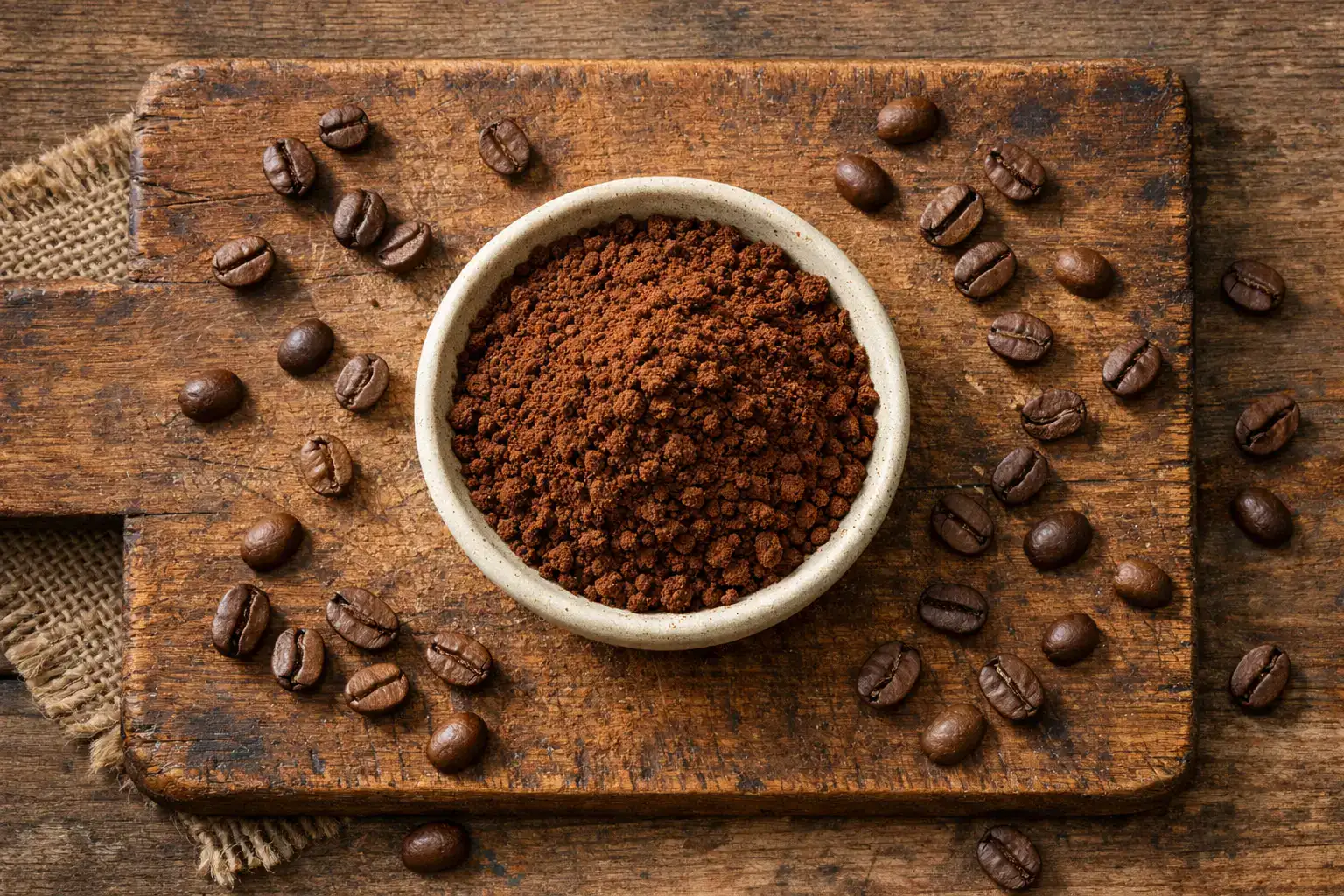
Quick Nutrition Facts
Per 1 Teaspoon (2g)
| Nutrient | Amount |
|---|---|
| Calories | 5 kcal |
| Protein | 0.1g |
| Carbohydrates | 1g |
| Fiber | 0g |
| Sugars | 0g |
| Fat | 0g |
| Caffeine | 60mg |
| Potassium | 65mg |
| Magnesium | 5mg |
| Niacin (B3) | 0.5mg |
Macronutrient Breakdown
 ChatGPT
  Claude
  AI Mode
  Perplexity
NUTRITIONIST INSIGHT
Instant espresso powder delivers 60mg caffeine per teaspoon with virtually no calories. The chlorogenic acid antioxidants may improve blood vessel function and reduce inflammation, making it a smart swap for sugary energy drinks.
Myth Busters
MYTH #1: Espresso Powder Has More Calories Than Regular Coffee
TRUTH: Instant espresso powder has only 5 calories per teaspoon, nearly identical to regular instant coffee. The concentrated flavor means you use less, keeping calories negligible.
MYTH #2: Espresso Powder Is Too Acidic for Your Stomach
TRUTH: The instant drying process actually reduces acidity compared to freshly brewed espresso. Many people who find regular coffee harsh tolerate espresso powder dissolved in hot water well.
MYTH #3: Espresso Powder Causes Dangerous Caffeine Spikes
TRUTH: One teaspoon contains about 60mg caffeine, well within safe limits. Adults can safely consume up to 400mg caffeine daily, equivalent to about 6 teaspoons of espresso powder.
MYTH #4: All Instant Espresso and Coffee Powders Are the Same
TRUTH: Espresso powder uses darker-roasted beans with a more concentrated, less bitter profile. It dissolves more smoothly, has slightly different chlorogenic acid and caffeine ratios, and works better in baking and specialty drinks.
MYTH #5: You Should Never Consume Espresso Powder Before Bed
TRUTH: While caffeine's half-life is 5-6 hours, small amounts (half teaspoon) consumed 6+ hours before sleep rarely disrupt rest. Sensitivity varies, but an absolute ban is unnecessary for most people.
NutriScore by Health Goals
| Health Goal | NutriScore | Why This Score? |
|---|---|---|
| Weight Loss |  | Only 5 cal/tsp, caffeine boosts metabolism by 3-11% and enhances fat oxidation. Zero sugar, zero fat. |
| Muscle Gain |  | Caffeine improves workout performance and endurance. No protein content, but pairs well with protein shakes. |
| Diabetes Management | | GI of 0, negligible carbs. Long-term coffee intake linked to lower type 2 diabetes risk. Monitor individual blood sugar response. |
| PCOS Management | | No sugar impact on insulin. Antioxidants may reduce inflammation. Limit to 2-3 tsp daily. |
| Pregnancy Nutrition |  | ACOG recommends under 200mg caffeine daily during pregnancy, about 3 tsp max. Moderate consumption appears safe. |
| Viral/Flu Recovery | | Antioxidants support immune function. Caffeine aids alertness during illness. Stay hydrated alongside. |
PERSONALIZED NUTRITION
Track your meals with NutriScan for personalized NutriScores based on your specific health goals!
Blood Sugar Response to Instant Espresso Powder
Understanding how espresso powder affects your blood glucose helps you time consumption for optimal energy and metabolic health.
Typical Glucose Response Curve
This chart shows typical blood glucose response for general healthy individuals. Individual responses may vary. Not medical advice.
How to Optimize Your Response
Caffeine can temporarily raise blood sugar in some individuals, but pairing with the right foods minimizes this effect:
- 🥛 Add a splash of milk or cream - Fat and protein slow caffeine absorption
- 🥜 Pair with almonds or walnuts - Healthy fats stabilize blood sugar
- 🍳 Drink with a protein-rich breakfast - Eggs, yogurt, or cottage cheese
- 🫚 Add cinnamon - May help improve insulin sensitivity
This combination ensures stable energy without glucose fluctuations, keeping you focused for longer.
Cultural Significance
Coffee is the world's second most traded commodity after oil, with roots stretching back to 15th-century Ethiopia and Yemen.
In India:
- India is the 6th largest coffee producer globally, specializing in shade-grown varieties
- South Indian filter coffee (kaapi) is a cultural institution in Karnataka and Tamil Nadu
- Coorg, Chikmagalur, and Nilgiris are premier coffee-growing regions
- Instant coffee brands like Bru and Nescafe have become household staples
Global Impact:
- Over 2 billion cups of coffee consumed daily worldwide
- Espresso culture originated in Italy in the early 1900s
- Instant coffee invented in 1901, perfected for mass production in the 1930s
- Specialty coffee movement has elevated espresso powder for home baking and gourmet drinks
Compare & Substitute
Instant Espresso Powder vs Similar Caffeine Sources (Per Serving)
| Nutrient | Espresso Powder (1 tsp) | Instant Coffee (1 tsp) | Matcha (1 tsp) | Green Tea (1 cup) |
|---|---|---|---|---|
| Calories | 5 kcal | 4 kcal | 3 kcal | 2 kcal |
| Caffeine | 60mg | 30-40mg | 35mg | 25-50mg |
| Carbs | 1g | 0.8g | 0.5g | 0g |
| Protein | 0.1g | 0.1g | 0.3g | 0g |
| Fat | 0g | 0g | 0g | 0g |
| Antioxidants | High (chlorogenic acid) | Moderate | Very High (EGCG, L-theanine) | Moderate (catechins) |
| Best For | Baking, quick espresso, energy | Budget-friendly coffee | Calm focus, antioxidants | Light caffeine, hydration |
Frequently Asked Questions
How many calories are in instant espresso powder?
5 calories per teaspoon (2g). Per 100g, it contains about 250 calories, but typical servings use only 1-2 teaspoons, making it virtually calorie-free for beverages and baking.
How much caffeine is in instant espresso powder?
60mg per teaspoon. This is more concentrated than regular instant coffee (30-40mg per tsp) but less than a brewed espresso shot (63-80mg). Safe daily limit for adults is 400mg, about 6 teaspoons.
Is instant espresso powder good for weight loss?
Yes. At only 5 calories with 60mg caffeine per teaspoon, it boosts metabolism and fat oxidation without adding calories. Studies show caffeine can increase metabolic rate by 3-11%.
Best practices: Use black (no sugar or cream), limit to 3-4 teaspoons daily, consume 30 minutes before exercise for enhanced fat burning.
Can diabetics consume instant espresso powder?
Black espresso has a glycemic index of 0 with negligible carbs. Long-term coffee consumption is associated with reduced type 2 diabetes risk.
Tips for diabetics:
- Drink without sugar or sweetened creamers
- Monitor blood sugar, as caffeine may raise glucose in some individuals
- Limit to 2-3 teaspoons daily
- Pair with protein or healthy fat
Is instant espresso powder safe during pregnancy?
In moderation. ACOG recommends limiting caffeine to under 200mg daily during pregnancy, which equals about 3 teaspoons of espresso powder. Research suggests moderate caffeine consumption does not cause miscarriage or preterm birth.
How much instant espresso powder is safe per day?
General Guidelines:
- 6 teaspoons daily - Healthy adults (stays under 400mg caffeine)
- 3 teaspoons daily - Pregnant women (under 200mg caffeine)
- 1-2 teaspoons daily - Caffeine-sensitive individuals
Avoid excess: More than 400mg caffeine daily can cause anxiety, insomnia, rapid heartbeat, and digestive issues.
Track your caffeine intake with NutriScan app to stay within your personal safe limits.


Similar Nutritious Foods
4505 Chicharrones Classic Chili Salt
7 Eleven Japan Crispy Corn Cheese
Explore More Nutrition Tools & Resources
AI Calorie Counter App - Snap a Photo, Get Macros
AI Nutritionist App That Reads Your Logged Meals
Best Protein Supplements for Women
Bulking Meal Plan App That Sets Your Surplus
ChatGPT Calorie Counter Alternative That Keeps the Total
ChatGPT Diet Plan Alternative That Tracks What You Eat
ChatGPT Weight Loss Coach Alternative With a Food Log
Fast Food Calorie Counter App That Reads the Tray
Free Calorie Tracker App with AI Photo Scans | NutriScan
Indian Diet Plan App With Veg and Non Veg Meals
Indian Food Calorie Calculator - Get Instant Nutrition Facts for Desi Meals — 2026
Intermittent Fasting for Women, Timer and Meal Log App
Intermittent Fasting Tracker App - Free Fasting Timer
Macro Tracker App That Fills the Numbers From a Photo
Mediterranean Diet Meal Plan App That Counts the Oil
Micronutrient Tracker App for Vitamins and Minerals
MyFitnessPal Alternative That Stays Free | NutriScan
NutriScore App: A Free Grade on Every Meal | NutriScan
Nutrition Label Scanner App for the Amount You Ate
Second Trimester Protein Guide
Vegetarian Meal Plan App With a Protein Target
Voice Calorie Counter - Speak to Track Meals Hands-Free
Water and Calorie Tracker App - Free Water Log