Jollof Rice: Calories, Nutrition and Health Benefits
West Africa's iconic one-pot dish combining rice, tomatoes, and spices—a flavorful, balanced meal sparking the legendary Nigeria vs Ghana rivalry.
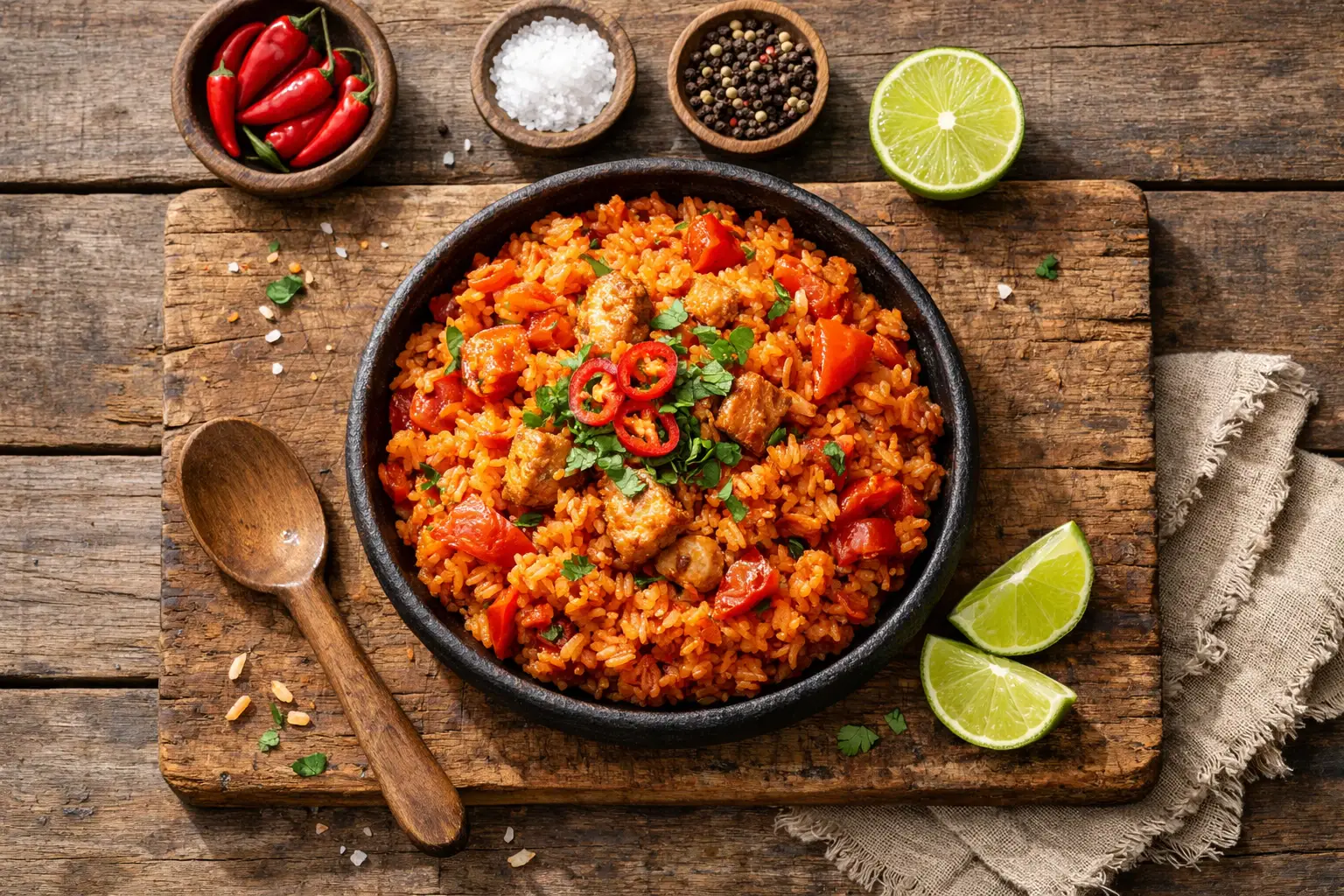
Quick Nutrition Facts
Per 1 Serving (300g)
| Nutrient | Amount |
|---|---|
| Calories | 400 kcal |
| Protein | 8g |
| Carbohydrates | 60g |
| Fiber | 3g |
| Sugars | 5g |
| Fat | 10g |
| Sodium | 580mg |
| Vitamin C | 18mg |
| Iron | 2.5mg |
| Potassium | 310mg |
Macronutrient Breakdown
 ChatGPT
  Claude
  AI Mode
  Perplexity
NUTRITIONIST INSIGHT
Jollof Rice made with brown rice and minimal oil provides complex carbohydrates, lycopene from tomatoes for heart health, and vitamin C. The key to healthier Jollof is using whole grains and controlling portion sizes.
Myth Busters
MYTH #1: Jollof Rice Is Too High in Calories to Be Healthy
TRUTH: At 400 calories per 300g serving, Jollof Rice fits into most daily calorie goals. The calorie content depends on preparation—using brown rice instead of white rice adds fiber and minerals, while limiting cooking oil to 2 tablespoons significantly reduces fat content.
MYTH #2: White Rice in Jollof Causes Blood Sugar Spikes
TRUTH: While white rice has a higher glycemic index (70+), combining it with tomatoes, vegetables, and protein in Jollof Rice lowers the overall glycemic impact. The fiber from vegetables and lycopene from tomatoes help moderate blood sugar response. For better control, use brown rice (GI 50-55).
MYTH #3: Jollof Rice Has No Nutritional Value
TRUTH: Jollof Rice is nutritionally rich—tomatoes provide lycopene and vitamin C, rice offers energy and B vitamins (especially if brown rice), onions and peppers add antioxidants, and spices like ginger have anti-inflammatory properties. It's a balanced one-pot meal when prepared with vegetables and lean protein.
MYTH #4: You Should Avoid Jollof Rice for Weight Loss
TRUTH: Portion control is key. A 200g serving (about 1 cup) provides 265 calories and can fit into weight loss plans. Pair with grilled chicken or fish and a side salad. The fiber from vegetables and rice promotes satiety, helping control overall calorie intake.
MYTH #5: Nigerian and Ghanaian Jollof Are Nutritionally Different
TRUTH: Despite the friendly rivalry, both versions are nutritionally similar—around 400 calories per 300g serving. The main differences are in rice type (long-grain vs basmati), cooking method (pot vs oven), and flavor profile (tomato-forward vs smoky). Both can be equally healthy depending on ingredients and preparation.
MYTH #6: Jollof Rice Is Just Fried Rice
TRUTH: Jollof Rice is a distinct cooking method where rice absorbs tomato sauce while cooking, unlike fried rice where cooked rice is stir-fried. Jollof uses less oil (2-3 tablespoons for 4 servings vs fried rice's 4-6 tablespoons), making it generally lower in fat when prepared traditionally.
NutriScore by Health Goals
| Health Goal | NutriScore | Why This Score? |
|---|---|---|
| Weight Loss |  | 400 calories per serving, moderate in fat. Best with brown rice, portion control (1 cup), and added vegetables. |
| Muscle Gain |  | Good carb source (60g) for energy, add chicken/fish for 25-30g protein. Perfect post-workout meal. |
| Diabetes Management | | Moderate GI when made with brown rice. Pair with protein to slow glucose absorption, limit to 1 cup serving. |
| PCOS Management | | Brown rice version better for insulin sensitivity. Use minimal oil, add vegetables, limit portion to 200g. |
| Pregnancy Nutrition | | Provides energy, iron (2.5mg), and folate when made with brown rice. Ensure proper cooking hygiene and fresh ingredients. |
| Viral/Flu Recovery | | Easy to digest, provides energy, vitamin C from tomatoes for immunity. Light version with less oil ideal during recovery. |
PERSONALIZED NUTRITION
Track your meals with NutriScan for personalized NutriScores based on your specific health goals!
Blood Sugar Response to Jollof Rice
Understanding how Jollof Rice affects your blood glucose helps you enjoy it while managing energy levels and health.
Typical Glucose Response Curve
*This chart shows typical blood glucose response for healthy individuals. Individual responses may vary. Not medical advice.*
How to Flatten the Spike
Pairing Jollof Rice with protein and fiber helps moderate blood sugar response:
- 🍗 Grilled chicken or fish - Adds lean protein, slows carb absorption
- 🥗 Side salad with greens - Fiber reduces overall glycemic load
- 🫘 Black-eyed peas or kidney beans - Adds protein and resistant starch
- 🥑 Sliced avocado - Healthy fats slow glucose release
This combination extends energy release and keeps blood sugar more stable throughout the meal.
Cultural Significance
Jollof Rice is West Africa's most celebrated dish, with origins traced to the Wolof people of Senegal in the 14th century.
Regional Variations:
- Nigeria: Uses long-grain parboiled rice, tomato paste, creates signature red color with smoky "party jollof" burnt bottom (socarrat)
- Ghana: Basmati rice, more vegetables, oven-finished for smoky flavor
- Senegal: Original "thieboudienne" includes fish, vegetables, tamarind
- Sierra Leone & Liberia: Coconut milk additions, cassava leaves
The Jollof Wars:
- Friendly rivalry between Nigeria and Ghana over "best Jollof" has become cultural phenomenon
- Social media debates, cooking competitions, and diplomatic exchanges
- Both countries host annual "Jollof Rice Festivals"
- The debate has globalized West African cuisine worldwide
Global Impact:
- Recognized by UNESCO as intangible cultural heritage candidate
- Found in West African diaspora communities across UK, US, Canada
- Adapted versions in Caribbean (Trinidad & Tobago "pelau")
- Symbol of celebration, weddings, holidays, and community gatherings
Compare & Substitute
Jollof Rice vs Similar Rice Dishes (Per 100g)
| Nutrient | 🍛 Jollof Rice | 🍚 White Rice (Plain) | 🥘 Biryani | 🍲 Jambalaya |
|---|---|---|---|---|
| Calories | 133 kcal | 130 kcal | 150 kcal | 140 kcal |
| Carbs | 20g | 28g | 22g | 21g |
| Fiber | 1g | 0.4g | 1.2g | 1.5g |
| Protein | 2.7g | 2.7g | 4.5g | 5g |
| Fat | 3.3g | 0.3g | 4.5g | 4g |
| Sodium | 193mg | 5mg | 250mg | 380mg |
| Vitamin C | 6mg | 0mg | 3mg | 8mg |
| Best For | Balanced one-pot meal | Low-calorie side dish | High-protein Indian meal | Protein-rich Cajun meal |
Frequently Asked Questions
Is Jollof Rice good for weight loss?
Jollof Rice can fit into a weight loss plan with portion control and smart preparation. One cup (200g) provides about 265 calories. To make it weight-loss friendly:
Best practices:
- Use brown rice instead of white (adds fiber, slows digestion)
- Limit cooking oil to 1-2 tablespoons for entire pot
- Load up on vegetables (bell peppers, carrots, green beans)
- Pair with grilled lean protein (chicken breast, fish)
- Stick to 1 cup servings
- Avoid late-night consumption
The fiber and vegetables help promote fullness while providing nutrients.
Can diabetics eat Jollof Rice?
Diabetics can eat Jollof Rice in moderation with proper modifications:
Tips for diabetics:
- Choose brown rice version (GI 50-55 vs white rice 70+)
- Limit portion to 1 cup (200g) per meal
- Always pair with protein (chicken, fish, beans) and vegetables
- Add extra non-starchy vegetables to bulk up the meal
- Monitor blood sugar 2 hours after eating
- Eat during lunch rather than dinner
- Avoid versions with excess oil or sugar
The combination of protein, fiber from vegetables, and controlled portions helps manage blood sugar response.
How much protein is in Jollof Rice?
A standard serving of Jollof Rice (300g) contains approximately 8 grams of protein from rice, tomatoes, and vegetables.
To increase protein content:
- Add grilled chicken (25g protein per 100g)
- Use fish or shrimp (20-25g protein per 100g)
- Mix in cooked beans or lentils (7-9g protein per 100g)
- Serve with a side of grilled meat
A complete Jollof Rice meal with chicken provides 30-35g protein, making it suitable for muscle gain and recovery.
What are the main health benefits of Jollof Rice?
Key Benefits:
- Energy Provision: 60g complex carbs provide sustained energy for 3-4 hours
- Heart Health: Lycopene from tomatoes supports cardiovascular function
- Immune Support: Vitamin C (18mg) and antioxidants from tomatoes and peppers
- Digestive Health: Fiber from rice and vegetables (3g per serving)
- Mineral Content: Iron (2.5mg) for blood health, potassium for heart function
- Anti-inflammatory: Ginger, garlic, and spices have anti-inflammatory properties
When made with brown rice, you also get B vitamins, magnesium, and selenium.
What's the difference between Nigerian and Ghanaian Jollof Rice?
While nutritionally similar (both around 400 calories per 300g), they differ in preparation and taste:
Nigerian Jollof:
- Long-grain parboiled rice
- Heavy tomato paste usage (deep red color)
- Cooked entirely on stovetop
- Signature "party jollof" has burnt bottom (socarrat)
- Typically spicier
Ghanaian Jollof:
- Basmati rice preferred
- More vegetables (carrots, green beans)
- Oven-finished for smoky flavor
- Slightly milder spice level
- Often includes shito (black pepper sauce)
Both are delicious and healthy when prepared with whole grains and controlled oil. The "best" version is purely preference!
Is Jollof Rice healthy?
Jollof Rice can be very healthy when prepared thoughtfully:
Healthy Preparation:
- Use brown rice (adds fiber, vitamins, minerals)
- Limit oil to 2 tablespoons for 4 servings
- Add plenty of vegetables (bell peppers, carrots, peas)
- Use lean protein (chicken, fish)
- Control salt (use low-sodium stock, fresh tomatoes)
- Avoid frying the rice separately
Health Profile:
- Provides complex carbs for energy
- Rich in lycopene (heart health)
- Contains vitamins A, C, and B-complex
- Good source of minerals (iron, potassium)
- Balanced macronutrients when made with protein
Watch portion sizes and frequency—enjoy as part of a varied diet rather than daily staple.




Similar Nutritious Grains & Rice Dishes
4505 Chicharrones Classic Chili Salt
7 Eleven Japan Crispy Corn Cheese
Explore More Nutrition Tools & Resources
AI Calorie Counter App - Snap a Photo, Get Macros
AI Nutritionist App That Reads Your Logged Meals
Best Protein Supplements for Women
Bulking Meal Plan App That Sets Your Surplus
ChatGPT Calorie Counter Alternative That Keeps the Total
ChatGPT Diet Plan Alternative That Tracks What You Eat
ChatGPT Weight Loss Coach Alternative With a Food Log
Fast Food Calorie Counter App That Reads the Tray
Free Calorie Tracker App with AI Photo Scans | NutriScan
Indian Diet Plan App With Veg and Non Veg Meals
Indian Food Calorie Calculator - Get Instant Nutrition Facts for Desi Meals — 2026
Intermittent Fasting for Women, Timer and Meal Log App
Intermittent Fasting Tracker App - Free Fasting Timer
Macro Tracker App That Fills the Numbers From a Photo
Mediterranean Diet Meal Plan App That Counts the Oil
Micronutrient Tracker App for Vitamins and Minerals
MyFitnessPal Alternative That Stays Free | NutriScan
NutriScore App: A Free Grade on Every Meal | NutriScan
Nutrition Label Scanner App for the Amount You Ate
Second Trimester Protein Guide
Vegetarian Meal Plan App With a Protein Target
Voice Calorie Counter - Speak to Track Meals Hands-Free
Water and Calorie Tracker App - Free Water Log