Kalua Pork: Calories, Nutrition and Health Benefits
Hawaiian luau staple featuring tender, smoky shredded pork with exceptional protein content and minimal carbs - perfect for keto and high-protein diets.
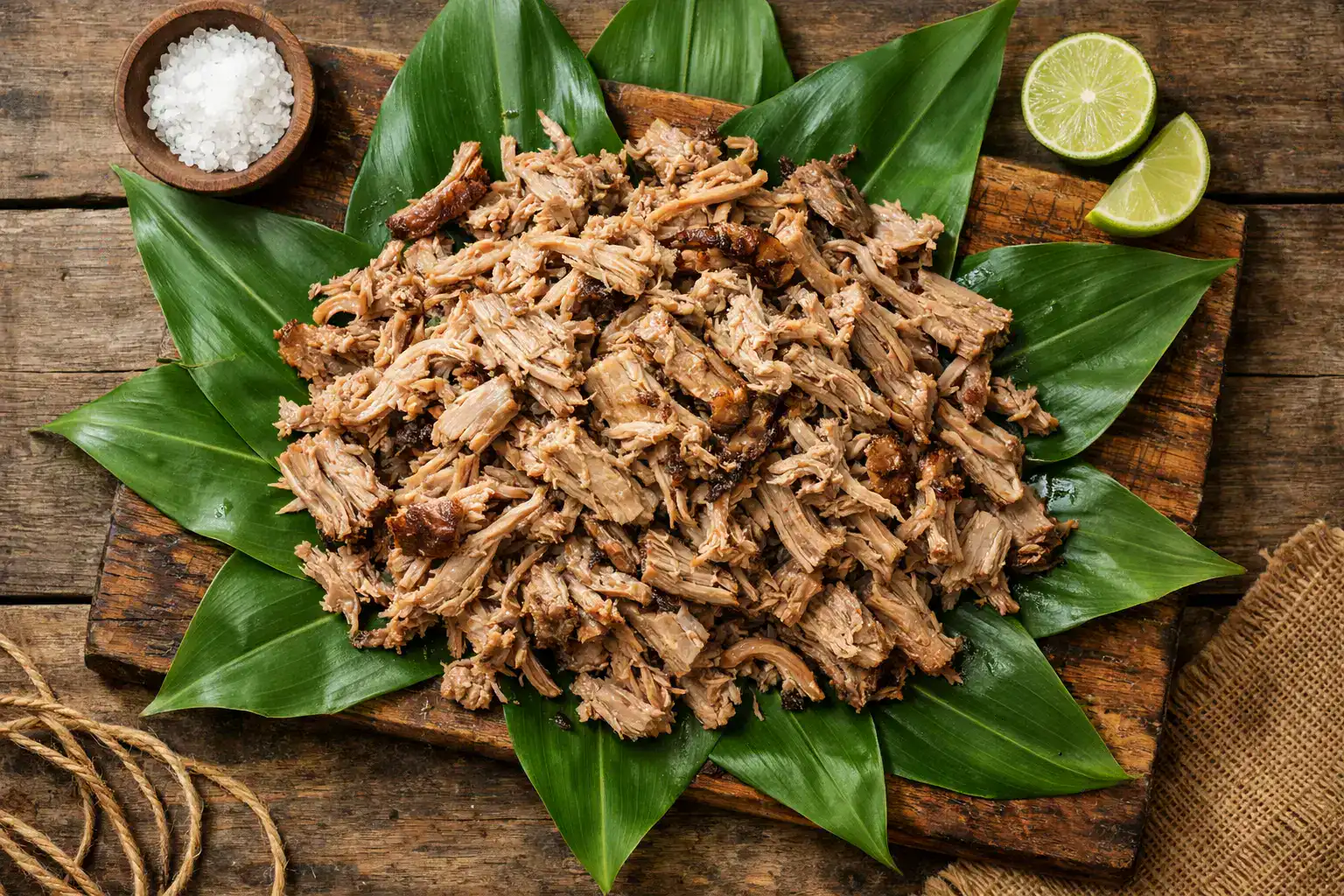
Quick Nutrition Facts
Per 100g Serving
| Nutrient | Amount |
|---|---|
| Calories | 250 kcal |
| Protein | 28g |
| Carbohydrates | 2g |
| Fiber | 0g |
| Sugars | 0g |
| Fat | 14g |
| Saturated Fat | 5g |
| Cholesterol | 95mg |
| Sodium | 1,746mg |
| Potassium | 316mg |
Macronutrient Breakdown
 ChatGPT
  Claude
  AI Mode
  Perplexity
NUTRITIONIST INSIGHT
Kalua pork delivers an impressive 28g of protein per 100g with minimal carbs, making it ideal for muscle building and keto diets. The slow-cooking method renders the fat and makes nutrients highly bioavailable. Watch portion sizes due to high sodium content.
Myth Busters
MYTH #1: Kalua Pork Is Unhealthy Because It's Fatty
TRUTH: While kalua pork contains fat, the slow-roasting process renders much of it away. The remaining fat provides satiety and helps absorb fat-soluble vitamins. High-quality protein sources like pork support muscle maintenance and metabolic health.
MYTH #2: The High Sodium Makes It Completely Off-Limits
TRUTH: Traditional kalua pork is high in sodium (~1,746mg/100g), but you can manage this by controlling portions and balancing with low-sodium foods throughout the day. High sodium is a concern for blood pressure, but occasional consumption in moderation is acceptable for most healthy adults.
MYTH #3: Kalua Pork Has No Nutritional Value Beyond Protein
TRUTH: Besides its excellent protein content, kalua pork provides significant amounts of B vitamins (especially B12 and niacin), zinc, selenium, and phosphorus - all essential for energy metabolism and immune function.
MYTH #4: You Can't Eat Kalua Pork on a Diet
TRUTH: With only 2g of carbs and 250 calories per 100g, kalua pork fits perfectly into low-carb, keto, and moderate-calorie meal plans. The high protein content promotes satiety, potentially reducing overall calorie intake.
MYTH #5: All Pulled Pork Is the Same Nutritionally
TRUTH: Traditional kalua pork has no added sugars or BBQ sauce, making it significantly lower in carbs and sugars than typical American pulled pork (which can have 15-20g carbs from sauce). The simple seasoning of Hawaiian sea salt keeps it cleaner.
NutriScore by Health Goals
| Health Goal | NutriScore | Why This Score? |
|---|---|---|
| Weight Loss |  | High protein (28g) promotes satiety, low carbs (2g). Watch portion sizes due to calorie density. |
| Muscle Gain |  | Excellent protein source with complete amino acids. Perfect post-workout meal with rice for glycogen replenishment. |
| Diabetes Management | | Minimal carbs (2g) means virtually no blood sugar impact. Monitor sodium if you have related hypertension. |
| PCOS Management | | Low-carb profile supports insulin sensitivity. Pair with vegetables for balanced meals. |
| Pregnancy Nutrition |  | Good protein source, but high sodium requires moderation during pregnancy. Ensure meat is thoroughly cooked. |
| Viral/Flu Recovery | | Easily digestible protein supports immune recovery. Sodium helps with electrolyte balance during illness. |
PERSONALIZED NUTRITION
Track your meals with NutriScan for personalized NutriScores based on your specific health goals!
Blood Sugar Response to Kalua Pork
Understanding how kalua pork affects your blood glucose helps inform meal planning, especially for diabetics.
Typical Glucose Response Curve
This chart shows typical blood glucose response for general healthy individuals. Individual responses may vary. Not medical advice.
Why Kalua Pork Has Minimal Blood Sugar Impact
As a high-protein, low-carb food, kalua pork causes virtually no blood sugar spike:
- Pure protein and fat - No significant carbohydrates to raise glucose
- Slow digestion - Protein and fat slow gastric emptying
- Gluconeogenesis is minimal - Body doesn't rapidly convert protein to glucose
- Pair with fiber - Add vegetables for even more stable blood sugar
This makes kalua pork an ideal protein choice for diabetics and those managing blood sugar.
Cultural Significance
Kalua pork is one of Hawaii's most iconic dishes, central to the traditional luau feast and Hawaiian cultural identity.
In Hawaii:
- Traditionally cooked in an imu (underground oven) for 6-12 hours
- Seasoned simply with Hawaiian sea salt and wrapped in ti leaves
- Central dish at luaus, weddings, graduations, and baby luaus
- The word "kalua" means "to cook in an underground oven"
- Represents celebration, community, and aloha spirit
Traditional Preparation:
- Whole pig rubbed with Hawaiian sea salt
- Wrapped in ti and banana leaves for moisture and flavor
- Cooked over hot lava rocks in the imu
- Modern versions use liquid smoke and slow cookers
Global Recognition:
- One of the most recognized Hawaiian dishes worldwide
- Featured in Hawaiian restaurants across the US mainland
- Popular at food festivals and cultural events
- Adapted into fusion cuisines globally
Compare & Substitute
Kalua Pork vs Similar Proteins (Per 100g)
| Nutrient | 🐷 Kalua Pork | 🐷 BBQ Pulled Pork | 🐔 Rotisserie Chicken | 🥩 Beef Brisket |
|---|---|---|---|---|
| Calories | 250 kcal | 280 kcal | 190 kcal | 310 kcal |
| Carbs | 2g | 15g | 0g | 0g |
| Protein | 28g | 22g | 27g | 26g |
| Fat | 14g | 15g | 10g | 22g |
| Sodium | 1,746mg | 680mg | 450mg | 550mg |
| Sugar | 0g | 12g | 0g | 0g |
| Best For | Keto, high-protein, luau | BBQ flavor, gatherings | Low-fat, everyday protein | Rich flavor, special meals |
Frequently Asked Questions
How many calories are in kalua pork?
Kalua pork contains 250 calories per 100g serving. A typical restaurant portion (200g) provides approximately 500 calories with 56g of protein. The calorie-to-protein ratio makes it efficient for muscle building.
Is kalua pork healthy?
Kalua pork offers excellent nutrition with 28g protein per 100g and minimal carbs. The main consideration is sodium content (1,746mg/100g). For healthy adults, occasional consumption is fine. Those with hypertension should limit portions.
Health benefits:
- Complete protein for muscle maintenance
- B vitamins for energy metabolism
- Zinc and selenium for immune function
- Low-carb for blood sugar management
Is kalua pork keto-friendly?
Yes, kalua pork is highly keto-friendly with only 2g of carbs per 100g. The high fat and protein content with minimal carbs makes it an ideal choice for ketogenic and low-carb diets. Pair with low-carb vegetables for a complete keto meal.
What is the sodium content in kalua pork?
Traditional kalua pork contains approximately 1,746mg sodium per 100g due to Hawaiian sea salt used in preparation. This is 76% of the daily recommended limit (2,300mg).
Tips to manage sodium:
- Limit portion to 100g per serving
- Balance with low-sodium foods throughout the day
- Drink plenty of water
- Make homemade versions with less salt
Can diabetics eat kalua pork?
Yes, kalua pork is excellent for diabetics with only 2g of carbs per 100g. It has virtually no impact on blood sugar levels. The high protein content also promotes satiety without glucose spikes.
Considerations:
- Watch sodium if you have related hypertension
- Pair with non-starchy vegetables
- Avoid sweet side dishes
How does kalua pork compare to pulled pork?
Kalua pork differs from typical BBQ pulled pork in several ways:
| Aspect | Kalua Pork | BBQ Pulled Pork |
|---|---|---|
| Carbs | 2g | 15g+ |
| Sugar | 0g | 12g+ |
| Seasoning | Sea salt only | Sweet sauce |
| Cooking | Underground/slow | Smoked/slow |
Kalua pork is the cleaner option with no added sugars.
What's the best way to eat kalua pork?
Traditional Hawaiian plate:
- Kalua pork with steamed rice and mac salad
- Served with poi or haupia for authentic luau experience
Low-carb options:
- Over cauliflower rice
- In lettuce wraps
- With roasted vegetables
- As protein in salads
How long does kalua pork last?
- Refrigerated: 3-4 days in airtight container
- Frozen: 2-3 months
- Reheating: Add splash of water, microwave or oven until hot


Similar Nutritious Foods
4505 Chicharrones Classic Chili Salt
7 Eleven Japan Crispy Corn Cheese
Explore More Nutrition Tools & Resources
AI Calorie Counter App - Snap a Photo, Get Macros
AI Nutritionist App That Reads Your Logged Meals
Best Protein Supplements for Women
Bulking Meal Plan App That Sets Your Surplus
ChatGPT Calorie Counter Alternative That Keeps the Total
ChatGPT Diet Plan Alternative That Tracks What You Eat
ChatGPT Weight Loss Coach Alternative With a Food Log
Fast Food Calorie Counter App That Reads the Tray
Free Calorie Tracker App with AI Photo Scans | NutriScan
Indian Diet Plan App With Veg and Non Veg Meals
Indian Food Calorie Calculator - Get Instant Nutrition Facts for Desi Meals — 2026
Intermittent Fasting for Women, Timer and Meal Log App
Intermittent Fasting Tracker App - Free Fasting Timer
Macro Tracker App That Fills the Numbers From a Photo
Mediterranean Diet Meal Plan App That Counts the Oil
Micronutrient Tracker App for Vitamins and Minerals
MyFitnessPal Alternative That Stays Free | NutriScan
NutriScore App: A Free Grade on Every Meal | NutriScan
Nutrition Label Scanner App for the Amount You Ate
Second Trimester Protein Guide
Vegetarian Meal Plan App With a Protein Target
Voice Calorie Counter - Speak to Track Meals Hands-Free
Water and Calorie Tracker App - Free Water Log