Kefir Water Raspberry Passionfruit: Calories, Nutrition and Health Benefits
A refreshing probiotic fermented water with raspberry and passionfruit, delivering live cultures and gut health benefits at just 20 calories per glass.
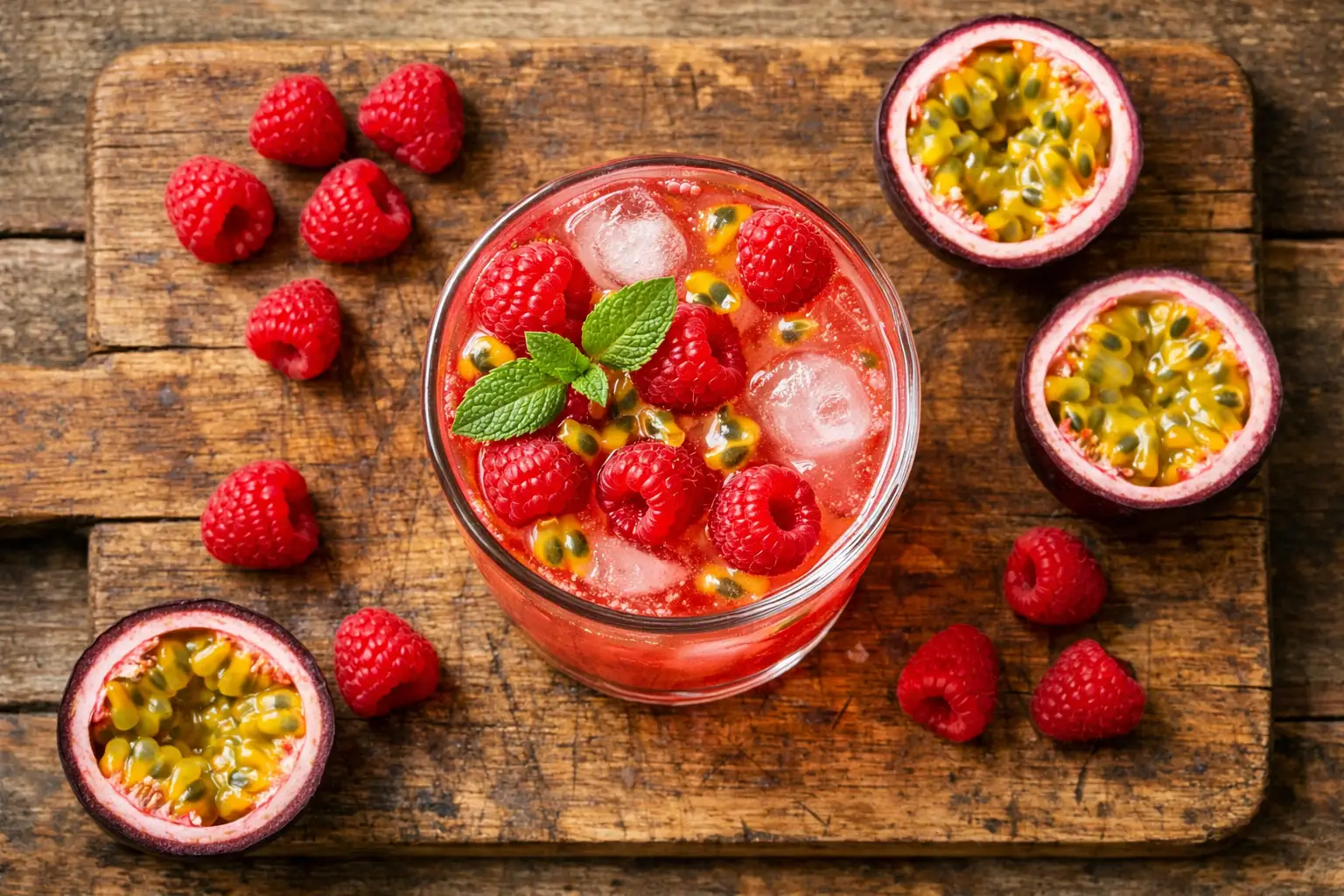
Quick Nutrition Facts
Per 1 Glass (250ml)
| Nutrient | Amount |
|---|---|
| Calories | 20 kcal |
| Protein | 0g |
| Carbohydrates | 4g |
| Fiber | 0g |
| Sugars | 3g |
| Fat | 0g |
| Potassium | Trace |
| Vitamin C | Trace |
| Probiotics | 10^6-10^8 CFU/ml |
| Alcohol | < 0.5% ABV |
Macronutrient Breakdown
 ChatGPT
  Claude
  AI Mode
  Perplexity
NUTRITIONIST INSIGHT
Kefir water is one of the lightest probiotic beverages at just 8 calories per 100ml. The live Lactobacillus and beneficial yeast cultures support gut microbiota diversity without the dairy, lactose, or calories of traditional milk kefir.
Myth Busters
MYTH #1: Kefir Water Has as Many Probiotics as Dairy Kefir
TRUTH: Water kefir contains different probiotic strains but in comparable quantities (10^6-10^8 CFU/ml). Research confirms water kefir effectively modulates gut microbiota and increases beneficial Bifidobacterium, making it a legitimate probiotic source.
MYTH #2: Fermented Drinks Are High in Sugar
TRUTH: During fermentation, kefir grains consume most of the added sugar. A 250ml glass contains only 3-4g residual sugar, far less than juice (25g) or soda (27g). The fermentation process produces beneficial bioactive metabolites instead.
MYTH #3: Kefir Water Contains Dangerous Alcohol Levels
TRUTH: Commercial kefir water contains less than 0.5% ABV, classified as non-alcoholic. This is comparable to ripe fruit or bread. Fermentation produces trace ethanol that is metabolized almost instantly.
MYTH #4: You Need Dairy for Probiotic Benefits
TRUTH: Water kefir grains harbor diverse probiotic communities including Lactobacillus, Leuconostoc, Acetobacter, and Saccharomyces yeasts. These provide anti-inflammatory, antimicrobial, and immunomodulatory benefits without any dairy.
MYTH #5: Kefir Water Is Just Flavored Sparkling Water
TRUTH: Unlike sparkling water, kefir water is a living beverage with active probiotic cultures. It contains organic acids, enzymes, and bioactive compounds produced during fermentation that actively support gut health and immune function.
NutriScore by Health Goals
| Health Goal | NutriScore | Why This Score? |
|---|---|---|
| Weight Loss |  | Only 20 calories per 250ml glass. Zero fat, zero protein. Probiotics may support metabolic health. |
| Muscle Gain |  | No protein, minimal calories or carbs. Not useful for muscle building. Use as a hydration drink alongside protein-rich foods. |
| Diabetes Management | | Very low sugar (3g/250ml), low GI. Studies suggest kefir may reduce fasting blood sugar and improve insulin sensitivity. Monitor individually. |
| PCOS Management |  | Low sugar and anti-inflammatory probiotics may benefit hormonal balance. Gut health improvements can support PCOS management. |
| Pregnancy Nutrition | | Commercial kefir water is generally safe during pregnancy. Choose pasteurized commercial brands. Avoid homemade due to Listeria risk. Consult your doctor. |
| Viral/Flu Recovery | | Probiotics support immune function. Light and hydrating. Easy to consume when appetite is low. |
PERSONALIZED NUTRITION
Track your meals with NutriScan for personalized NutriScores based on your specific health goals!
Blood Sugar Response to Kefir Water
Understanding how kefir water affects your blood glucose can help you make informed decisions about when and how to drink it.
Typical Glucose Response Curve
This chart shows typical blood glucose response for general healthy individuals. Individual responses may vary. Not medical advice.
How to Flatten the Spike
Kefir water already has a minimal glucose impact, but pairing with protein or fiber can further stabilize blood sugar:
- 🥜 A handful of nuts (almonds, walnuts) - Adds healthy fats and fiber
- 🧀 Cheese or paneer cubes - Provides protein and keeps you full
- 🥗 Fresh vegetable sticks - Extra fiber slows any sugar absorption
- 🫘 Hummus or bean dip - Plant protein and fiber combination
This combination extends satiety and provides more complete nutrition alongside the probiotic benefits.
Cultural Significance
Water kefir originated in Mexico, where kefir grains were traditionally found growing on the pads of Opuntia cacti (prickly pear). Known as "tibicos" in Latin America, the culture has been shared across generations.
Global Spread:
- Brought to Europe in the early 1900s, adopted widely in Germany and Eastern Europe
- Popular in health food movements since the 1970s as a dairy-free alternative to milk kefir
- Raspberry and passionfruit flavoring reflects modern fusion of traditional fermentation with tropical fruits
- Growing commercial market in UK, Australia, and the US as gut-health awareness rises
In Modern Wellness:
- Embraced by vegan and dairy-free communities as a probiotic alternative
- Part of the fermented foods revival alongside kombucha, kimchi, and sauerkraut
- Used in Ayurvedic-inspired wellness routines for digestive support
- India's growing health-conscious market increasingly adopting fermented beverages
Compare & Substitute
Kefir Water vs Similar Probiotic Drinks (Per 100ml)
| Nutrient | 🥤 Kefir Water | 🥛 Dairy Kefir | 🍵 Kombucha | 🥥 Coconut Water |
|---|---|---|---|---|
| Calories | 8 kcal | 64 kcal | 15 kcal | 19 kcal |
| Carbs | 1.6g | 4.7g | 3g | 3.7g |
| Fiber | 0g | 0g | 0g | 0g |
| Protein | 0g | 3.3g | 0g | 0.7g |
| Fat | 0g | 3.5g | 0g | 0.2g |
| Sugar | 1.2g | 4.7g | 2.5g | 2.6g |
| Probiotics | Yes (Lactobacillus, yeasts) | Yes (30+ strains) | Yes (SCOBY cultures) | No |
| Best For | Low-cal probiotics, dairy-free | Complete nutrition, protein | Flavor variety, antioxidants | Hydration, electrolytes |
Frequently Asked Questions
How many calories are in kefir water?
A 250ml serving of kefir water raspberry passionfruit contains approximately 20 calories with 4g carbohydrates, 0g protein, and 0g fat. Per 100ml, that is just 8 calories, making it one of the lowest-calorie probiotic beverages available.
Is kefir water good for gut health?
Yes. Kefir water contains live probiotic cultures including Lactobacillus, Leuconostoc, Acetobacter, and beneficial yeasts like Saccharomyces. These cultures increase Bifidobacterium abundance and boost short-chain fatty acid production for improved digestive health.
Best practices: Drink consistently (daily) for gut health benefits. Start with 250ml and increase gradually to avoid initial bloating.
Can diabetics drink kefir water?
Kefir water is generally suitable for diabetics due to its very low sugar content (3-4g per 250ml) and low estimated glycemic index. Research suggests kefir may help reduce fasting blood sugar and improve insulin sensitivity.
Tips for diabetics:
- Start with 250ml and monitor blood glucose response
- Choose unflavored or low-sugar varieties when possible
- Drink with meals rather than on an empty stomach
- Consult your healthcare provider before adding to your routine
Is kefir water safe during pregnancy?
Commercial kefir water is generally considered safe during pregnancy. Choose pasteurized, commercially produced brands and keep refrigerated.
Cautions:
- Avoid homemade kefir water due to potential Listeria risk
- Contains trace alcohol (< 0.5% ABV), classified as non-alcoholic
- Consult your healthcare provider before regular consumption
What is the difference between kefir water and kombucha?
Both are fermented probiotic drinks, but they differ in key ways:
- Base: Kefir water uses sugar water + kefir grains; kombucha uses sweetened tea + SCOBY
- Calories: Kefir water (8 kcal/100ml) vs kombucha (15 kcal/100ml)
- Caffeine: Kefir water has none; kombucha has trace caffeine from tea
- Taste: Kefir water is milder; kombucha has a distinct vinegar tang
How much kefir water should I drink per day?
General Guidelines:
- 250ml daily - Starting amount, good for most people
- 500-750ml daily - After gut adjustment (1-2 weeks)
- 250ml daily - For diabetes, PCOS, or sensitive digestion
Note: Excess initially may cause bloating as your gut adapts to probiotics. Increase gradually over 1-2 weeks.
Track your fermented beverage intake with NutriScan app to see how it fits your personal nutrition goals.


Similar Nutritious Foods
4505 Chicharrones Classic Chili Salt
7 Eleven Japan Crispy Corn Cheese
Explore More Nutrition Tools & Resources
AI Calorie Counter App - Snap a Photo, Get Macros
AI Nutritionist App That Reads Your Logged Meals
Best Protein Supplements for Women
Bulking Meal Plan App That Sets Your Surplus
ChatGPT Calorie Counter Alternative That Keeps the Total
ChatGPT Diet Plan Alternative That Tracks What You Eat
ChatGPT Weight Loss Coach Alternative With a Food Log
Fast Food Calorie Counter App That Reads the Tray
Free Calorie Tracker App with AI Photo Scans | NutriScan
Indian Diet Plan App With Veg and Non Veg Meals
Indian Food Calorie Calculator - Get Instant Nutrition Facts for Desi Meals — 2026
Intermittent Fasting for Women, Timer and Meal Log App
Intermittent Fasting Tracker App - Free Fasting Timer
Macro Tracker App That Fills the Numbers From a Photo
Mediterranean Diet Meal Plan App That Counts the Oil
Micronutrient Tracker App for Vitamins and Minerals
MyFitnessPal Alternative That Stays Free | NutriScan
NutriScore App: A Free Grade on Every Meal | NutriScan
Nutrition Label Scanner App for the Amount You Ate
Second Trimester Protein Guide
Vegetarian Meal Plan App With a Protein Target
Voice Calorie Counter - Speak to Track Meals Hands-Free
Water and Calorie Tracker App - Free Water Log