Kelp Chips: Calories, Nutrition and Health Benefits
A crunchy, mineral-rich sea vegetable snack with only 35 calories per serving, packed with iodine, fiber, and antioxidants for thyroid health and weight management.
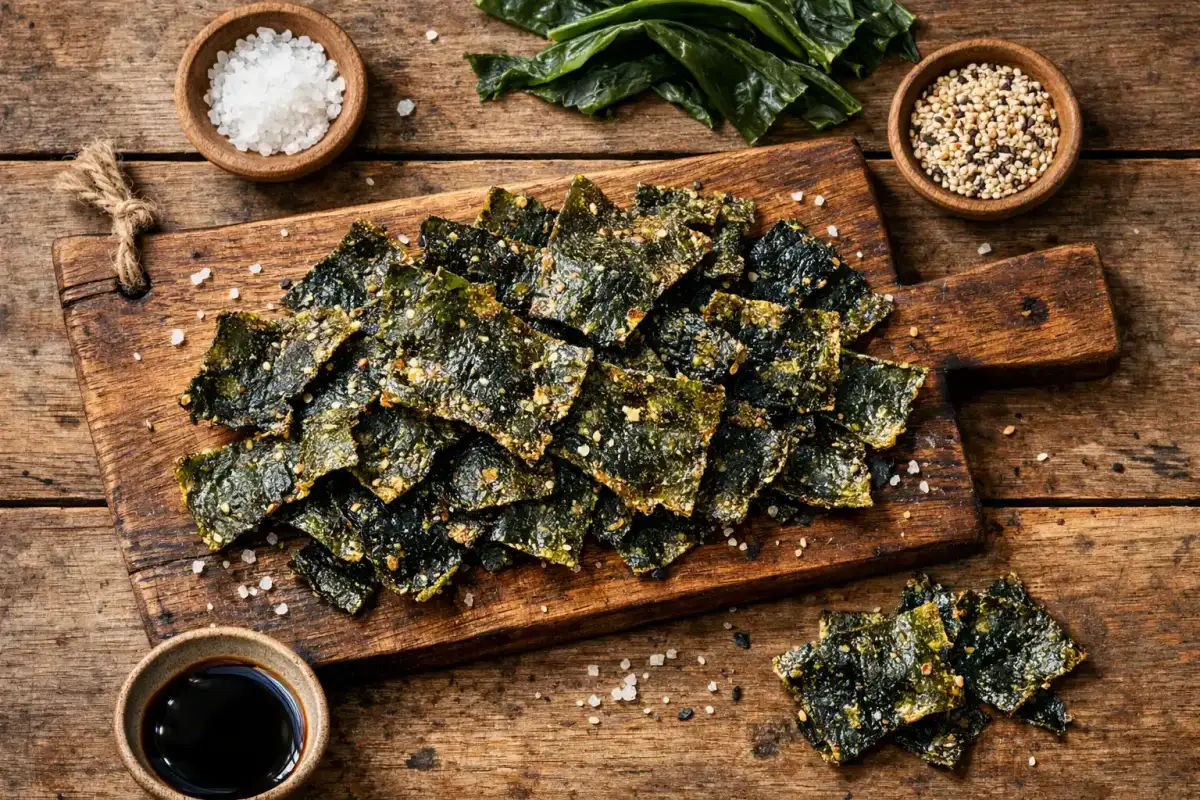
Quick Nutrition Facts
Per 1 Serving Kelp Chips (15g)
| Nutrient | Amount |
|---|---|
| Calories | 35 kcal |
| Protein | 2g |
| Carbohydrates | 6g |
| Fiber | 4g |
| Sugars | 0.5g |
| Fat | 0.5g |
| Iodine | ~120mcg |
| Calcium | 25mg |
| Magnesium | 18mg |
| Iron | 0.4mg |
Macronutrient Breakdown
 ChatGPT
  Claude
  AI Mode
  Perplexity
NUTRITIONIST INSIGHT
Kelp chips deliver a powerful dose of iodine (80-200mcg per serving) essential for thyroid function, while providing 4g of fiber in just 35 calories. The soluble fiber forms a gel in the gut that slows nutrient absorption, supporting both blood sugar control and satiety.
Myth Busters
MYTH #1: Kelp Chips Are Just Empty-Calorie Snacks
TRUTH: Unlike most chips, kelp chips are nutrient-dense. At only 35 calories per serving, they provide significant iodine, calcium, magnesium, and antioxidant polyphenols. The fiber content (4g per 15g serving) is higher than most traditional snack foods.
MYTH #2: All Seaweed Snacks Are the Same
TRUTH: Kelp (brown seaweed) is nutritionally distinct from nori or wakame. Kelp contains unique compounds like fucoxanthin and alginate that have been studied for anti-diabetic and metabolism-boosting properties not found in other seaweed varieties.
MYTH #3: Kelp Chips Will Cause Thyroid Problems
TRUTH: Moderate kelp chip consumption (1-2 servings daily) is safe for most people. Thyroid concerns arise only with excessive or long-term high-dose kelp supplement intake, not typical snacking. Those with existing thyroid conditions should consult their doctor.
MYTH #4: Seaweed Is Contaminated with Heavy Metals
TRUTH: Commercially farmed kelp for food products undergoes safety testing. Studies show that seaweed farming is actually beneficial for the environment, absorbing excess nutrients and CO2 from water. Always buy from reputable brands with quality certifications.
MYTH #5: Kelp Chips Have Too Much Sodium
TRUTH: Raw kelp contains about 233mg sodium per 100g. A typical 15g serving of kelp chips has roughly 35-50mg sodium, far less than conventional potato chips (170mg+ per serving). The natural mineral balance in kelp includes potassium which helps offset sodium effects.
NutriScore by Health Goals
| Health Goal | NutriScore | Why This Score? |
|---|---|---|
| Weight Loss |  | Only 35 calories per serving with 4g fiber for high satiety. Excellent low-calorie chip alternative. |
| Muscle Gain |  | Low in protein (2g) and calories. Better as a side snack; pair with protein-rich foods for muscle goals. |
| Diabetes Management | | Very low GI, high fiber, minimal sugars. Brown seaweed compounds improve blood glucose management. |
| PCOS Management |  | Low-calorie, low-sugar snack that supports insulin sensitivity. Iodine supports thyroid-hormone balance. |
| Pregnancy Nutrition |  | Variable iodine content poses risk of excess intake during pregnancy. Consult healthcare provider; limit to occasional small servings. |
| Viral/Flu Recovery | | Easy to digest, mineral-rich, antioxidant polyphenols support immune function. Light snack during recovery. |
PERSONALIZED NUTRITION
Track your meals with NutriScan for personalized NutriScores based on your specific health goals!
Blood Sugar Response to Kelp Chips
Understanding how kelp chips affect your blood glucose can help you make informed decisions about when and how to eat them.
Typical Glucose Response Curve
This chart shows typical blood glucose response for general healthy individuals. Individual responses may vary. Not medical advice.
How to Flatten the Spike
Seaweed fiber forms a viscous gel that naturally slows glucose absorption, but pairing with protein or fat further reduces any modest blood sugar response:
- 🥑 Avocado or guacamole - Healthy fats slow digestion further
- 🧀 Cottage cheese or cream cheese - Adds protein and creamy contrast
- 🥜 Mixed nuts (almonds, cashews) - Healthy fats and protein balance
- 🍳 Hard-boiled egg - Complete protein for sustained energy
This combination keeps blood sugar remarkably stable, making kelp chips an ideal snack for those monitoring glucose levels.
Cultural Significance
Kelp has been harvested and consumed for thousands of years across coastal cultures worldwide.
In East Asia:
- Japan uses kombu (kelp) as the foundation of dashi broth, central to Japanese cuisine
- Korean kelp soup (miyeokguk) is traditionally eaten on birthdays and by new mothers
- Chinese medicine has used kelp for goiter treatment since 3000 BCE
- Kelp farming is a multi-billion dollar industry across China, Japan, and Korea
In Australia & Pacific:
- Australian bush food traditions include native sea vegetables and kelp species
- Modern Australian kelp chip brands are driving the sea vegetable snack trend
- Sustainable kelp farming is growing along Tasmania and South Australia coastlines
Global Impact:
- Kelp forests are critical marine ecosystems supporting 800+ species
- Seaweed farming is one of the most sustainable food production methods
- Global seaweed market is valued at over $17 billion, with snacks being the fastest-growing segment
Compare & Substitute
Kelp Chips vs Similar Snacks (Per 100g)
| Nutrient | 🌿 Kelp Chips | 🥔 Potato Chips | 🍘 Rice Crackers | 🧂 Nori Sheets |
|---|---|---|---|---|
| Calories | 233 kcal | 536 kcal | 390 kcal | 35 kcal |
| Carbs | 40g | 53g | 82g | 5g |
| Fiber | 27g | 4.4g | 1.5g | 3.5g |
| Protein | 13g | 7g | 8g | 6g |
| Fat | 3g | 35g | 2.5g | 0.3g |
| Iodine | ~800mcg | 0mcg | 0mcg | ~150mcg |
| Sodium | 233mg | 525mg | 850mg | 48mg |
| Best For | Low-cal snacking, thyroid | Indulgence, quick energy | Gluten-free carb snack | Ultra-low calorie, sushi wrap |
Frequently Asked Questions
How many calories are in kelp chips?
A standard 15g serving of kelp chips contains approximately 35 calories. Per 100g, raw kelp has only 43 calories, though processed kelp chips with added seasonings may reach 200-250 calories per 100g depending on the brand.
Comparison: A 28g serving of potato chips has 150+ calories, making kelp chips roughly 75% lower in calories per gram.
Are kelp chips good for weight loss?
Yes, kelp chips are one of the best snack choices for weight loss. At 35 calories per serving with 4g of fiber, they deliver exceptional satiety relative to their calorie content.
Best practices: Enjoy 1-2 servings as an afternoon snack, pair with hummus or guacamole for added satisfaction, and choose brands with minimal added oils.
Can diabetics eat kelp chips?
Kelp chips are an excellent snack for diabetics. They have a very low glycemic index due to high fiber content and minimal sugars (0.5g per serving).
Tips for diabetics:
- Choose plain or lightly seasoned varieties
- Check labels for added sugars in flavored versions
- The natural fiber helps regulate post-meal blood sugar
- Pair with protein for an even more blood-sugar-stable snack
Research shows brown seaweed compounds can significantly improve fasting blood glucose and HbA1c levels.
Are kelp chips high in iodine?
Yes, kelp is one of the richest natural food sources of iodine. A single 15g serving can provide 80-200mcg of iodine, which is 53-133% of the recommended daily intake of 150mcg.
Important: The American Thyroid Association advises against consuming more than 500mcg of iodine daily. Limit to 1-2 servings daily and consult your doctor if you have thyroid conditions.
What minerals do kelp chips provide?
Key Minerals Per Serving (15g):
- Iodine: ~120mcg (80% DV) for thyroid function
- Calcium: 25mg for bone health
- Magnesium: 18mg for muscle and nerve function
- Iron: 0.4mg for oxygen transport
- Potassium: supports blood pressure regulation
Track your mineral intake with NutriScan app to ensure balanced nutrition from kelp chips and other foods.
Are kelp chips safe during pregnancy?
Pregnant women should exercise caution with kelp chips. While iodine is critical during pregnancy (250mcg/day recommended by WHO), kelp products have highly variable iodine content that can easily exceed safe limits.
Recommendation: Consult your healthcare provider, limit to occasional small servings, and rely on prenatal vitamins for consistent iodine intake rather than kelp products.


Similar Nutritious Foods
4505 Chicharrones Classic Chili Salt
7 Eleven Japan Crispy Corn Cheese
Explore More Nutrition Tools & Resources
AI Calorie Counter App - Snap a Photo, Get Macros
AI Nutritionist App That Reads Your Logged Meals
Best Protein Supplements for Women
Bulking Meal Plan App That Sets Your Surplus
ChatGPT Calorie Counter Alternative That Keeps the Total
ChatGPT Diet Plan Alternative That Tracks What You Eat
ChatGPT Weight Loss Coach Alternative With a Food Log
Fast Food Calorie Counter App That Reads the Tray
Free Calorie Tracker App with AI Photo Scans | NutriScan
Indian Diet Plan App With Veg and Non Veg Meals
Indian Food Calorie Calculator - Get Instant Nutrition Facts for Desi Meals — 2026
Intermittent Fasting for Women, Timer and Meal Log App
Intermittent Fasting Tracker App - Free Fasting Timer
Macro Tracker App That Fills the Numbers From a Photo
Mediterranean Diet Meal Plan App That Counts the Oil
Micronutrient Tracker App for Vitamins and Minerals
MyFitnessPal Alternative That Stays Free | NutriScan
NutriScore App: A Free Grade on Every Meal | NutriScan
Nutrition Label Scanner App for the Amount You Ate
Second Trimester Protein Guide
Vegetarian Meal Plan App With a Protein Target
Voice Calorie Counter - Speak to Track Meals Hands-Free
Water and Calorie Tracker App - Free Water Log