Kielbasa (Polish Sausage): Calories, Nutrition and Health Benefits
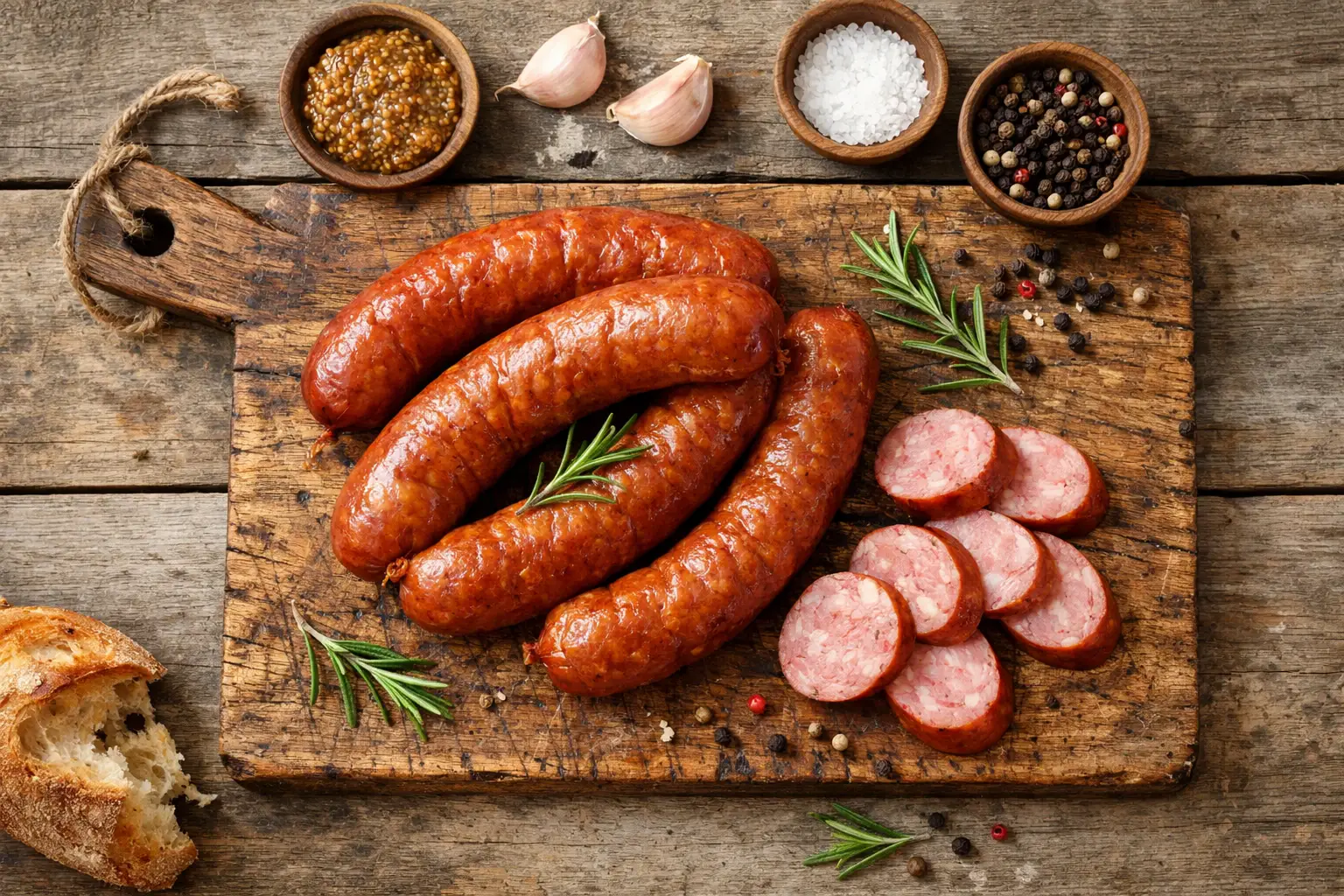
Traditional Polish smoked sausage, rich in protein and flavor, a cultural staple for centuries with distinctive garlic notes.
Quick Nutrition Facts
Per 100g (approximately 2-3 slices)
| Nutrient | Amount |
|---|---|
| Calories | 226 kcal |
| Protein | 14g |
| Carbohydrates | 4g |
| Fiber | 0g |
| Sugars | 1g |
| Fat | 18g |
| Saturated Fat | 6.5g |
| Sodium | 800mg |
| Iron | 1.5mg |
| Vitamin B12 | 0.9mcg |
Macronutrient Breakdown
 ChatGPT
  Claude
  AI Mode
  Perplexity
NUTRITIONIST INSIGHT
Kielbasa provides 14g of protein per 100g but is high in saturated fat and sodium. High-protein sausages can increase satiety for up to 90 minutes, making portion control easier when consumed mindfully.
Myth Busters
MYTH #1: All Sausages Are Equally Unhealthy
TRUTH: Quality matters. Traditional Polish kielbasa made with natural casings, minimal preservatives, and real spices is more nutritious than heavily processed varieties. Look for products with recognizable ingredients and lower sodium (under 600mg per 100g).
MYTH #2: Kielbasa Is Too High in Fat to Be Healthy
TRUTH: While 18g fat per 100g is significant, portion control makes it manageable. A 50g serving (1-2 slices) provides 7g protein with 9g fat—acceptable in moderation. Pair with vegetables to balance the meal and increase fiber intake.
MYTH #3: Smoked Meats Always Cause Cancer
TRUTH: Processed meats should be limited but not eliminated. Occasional consumption (once a week) poses minimal risk. Choose naturally smoked varieties over those with liquid smoke or nitrites, and pair with antioxidant-rich vegetables.
MYTH #4: Pregnant Women Must Avoid All Sausage
TRUTH: Pregnant women should avoid raw or undercooked sausages due to listeria risk, but fully cooked, heated-until-steaming kielbasa is safe. Avoid cold deli-style consumption; always reheat until hot.
MYTH #5: Kielbasa Has No Nutritional Value
TRUTH: Beyond protein, kielbasa provides B vitamins (B12, niacin, B6) essential for energy metabolism, plus iron for oxygen transport. While not a superfood, it offers nutrients when consumed as part of a balanced diet.
MYTH #6: Grilling Kielbasa Makes It Healthier
TRUTH: Grilling reduces some fat through dripping but creates potentially harmful compounds (HCAs, PAHs) at high temperatures. Gentler cooking methods like pan-frying at medium heat or boiling are safer. If grilling, avoid charring and marinate with herbs first.
NutriScore by Health Goals
| Health Goal | NutriScore | Why This Score? |
|---|---|---|
| Weight Loss |  | High calorie density (226 kcal/100g) and 18g fat. Limit to 50g serving, pair with vegetables, avoid fried preparation. |
| Muscle Gain |  | Good protein source (14g/100g) but high fat. Better post-workout options exist. Use occasionally with complex carbs. |
| Diabetes Management | | Low carbs (4g) have minimal blood sugar impact, but high sodium and fat affect cardiovascular health. Limit to once weekly. |
| PCOS Management | | High saturated fat worsens insulin resistance. If consuming, choose lower-fat turkey kielbasa, limit to 50g, pair with fiber-rich vegetables. |
| Pregnancy Nutrition | | Safe when fully cooked and reheated until steaming. Provides protein and B12 but high sodium. Limit to once a week. |
| Viral/Flu Recovery | | Provides protein and B vitamins for recovery but high sodium may cause water retention. Better lean protein options available. |
PERSONALIZED NUTRITION
Track your meals with NutriScan for personalized NutriScores based on your specific health goals!
Blood Sugar Response to Kielbasa
Understanding how kielbasa affects blood glucose helps with meal planning, especially for diabetes management.
Typical Glucose Response Curve
This chart shows typical blood glucose response for general healthy individuals. Individual responses may vary. Not medical advice.
How to Optimize Blood Sugar
With only 4g carbs per 100g, kielbasa has minimal direct blood sugar impact. However, the high fat content slows digestion:
- 🥗 Pair with fiber-rich vegetables - Sauerkraut, cabbage, or green beans
- 🥔 Choose complex carbs - Whole grain bread or roasted potatoes instead of white bread
- 🥒 Add fermented foods - Traditional Polish pickles provide probiotics
- 🥤 Stay hydrated - High sodium content requires extra water intake
This combination reduces overall glycemic load and provides balanced nutrition.
Cultural Significance
Kielbasa has been a cornerstone of Polish cuisine for over 500 years, with regional variations throughout Eastern Europe.
In Poland:
- Every region has unique recipes: Krakowska (garlic-heavy), Wiejska (rustic style), Biała (white sausage)
- Essential at traditional celebrations: Easter, Christmas, weddings
- Often served with żurek (sour rye soup) or bigos (hunter's stew)
- Poland exports over 80,000 tons annually, making it a cultural ambassador
Global Impact:
- Polish immigrants introduced kielbasa to North America in the late 1800s
- Chicago hosts the largest Polish population outside Poland, driving kielbasa popularity
- "Kielbasa" now refers to various sausage styles beyond Polish origins
- Traditional production methods protected under EU geographical indication
Compare & Substitute
Kielbasa vs Similar Protein Foods (Per 100g)
| Nutrient | 🌭 Kielbasa | 🥩 Grilled Chicken Breast | 🌭 Turkey Sausage | 🥓 Bacon |
|---|---|---|---|---|
| Calories | 226 kcal | 165 kcal | 196 kcal | 541 kcal |
| Carbs | 4g | 0g | 3g | 1.4g |
| Fiber | 0g | 0g | 0g | 0g |
| Protein | 14g | 31g | 17g | 37g |
| Fat | 18g | 3.6g | 12g | 42g |
| Sat. Fat | 6.5g | 1g | 3.5g | 14g |
| Sodium | 800mg | 74mg | 650mg | 1717mg |
| Iron | 1.5mg | 0.7mg | 1.2mg | 1.3mg |
| Best For | Traditional meals | Weight loss, muscle gain | Lower-fat alternative | Breakfast, high-calorie |
Frequently Asked Questions
Is kielbasa good for weight loss?
Kielbasa can fit a weight loss plan with strict portion control, but it's not ideal due to high calorie density (226 kcal per 100g) and fat content (18g).
Best practices: Limit to 50g serving (1-2 slices), grill or pan-fry without added oil, pair with 200g+ non-starchy vegetables (sauerkraut, green beans, cabbage), avoid high-calorie sides like fried potatoes or white bread.
Can diabetics eat kielbasa?
Diabetics can eat kielbasa in moderation. With only 4g carbs per 100g, it has minimal blood sugar impact.
Tips for diabetics:
- Limit to 75-100g serving once a week
- Always pair with fiber-rich vegetables to slow digestion
- Choose lower-sodium varieties (under 600mg per 100g) to protect cardiovascular health
- Avoid sweet glazes or sugary sauces
- Monitor blood pressure due to high sodium content
The low carb content makes it safer than many processed foods, but saturated fat and sodium remain concerns for diabetic cardiovascular health.
How much protein is in kielbasa?
Kielbasa contains 14g of protein per 100g. While a decent protein source, it comes with 18g fat (6.5g saturated). For comparison, 100g chicken breast provides 31g protein with only 3.6g fat—more than double the protein with less than a quarter of the fat.
For muscle gain, choose leaner proteins as primary sources and use kielbasa occasionally for variety and flavor.
What are the main health benefits of kielbasa?
Key Benefits:
- Protein Source: 14g per 100g supports muscle maintenance and satiety
- B Vitamin Complex: B12 (0.9mcg), niacin, and B6 support energy metabolism
- Iron Content: 1.5mg helps oxygen transport in blood
- Satiety Effect: High-protein foods like sausages increase fullness for up to 90 minutes
- Cultural Nutrition: Traditional preparation methods preserve beneficial garlic compounds
Important Caveat: These benefits come with high sodium (800mg) and saturated fat (6.5g), requiring moderation.
When is the best time to eat kielbasa?
Depends on your goal:
- Weight Loss: Lunch with large vegetable serving. Avoid dinner due to high fat content before sleep.
- Muscle Gain: Post-workout with complex carbs (quinoa, sweet potato) to replenish glycogen.
- Diabetes: Lunch paired with low-carb vegetables. Not on empty stomach.
- General Health: Occasional weekend meal, not more than once a week.
IMPORTANT NOTE
Avoid eating large portions of high-fat sausages late at night—slower digestion can disrupt sleep quality.
Is kielbasa healthier than regular sausage?
Kielbasa nutrition varies by brand and preparation. Traditional Polish kielbasa may have advantages:
Traditional Kielbasa Advantages:
- Often uses natural casings (collagen from animals vs synthetic)
- Higher garlic content (beneficial compounds)
- Some varieties have fewer preservatives than mass-produced sausages
- May use better meat cuts in authentic recipes
Similar to Other Sausages:
- Comparable calories (220-250 kcal per 100g)
- Similar fat content (15-20g per 100g)
- High sodium across all varieties
Recommendation: Check ingredient labels. Choose varieties with meat as first ingredient, minimal additives, lower sodium (<600mg per 100g), and natural casings. Turkey kielbasa offers 25% less fat while maintaining flavor.
How many servings of kielbasa should I eat per week?
General Guidelines:
- General health: 1 serving (75-100g) per week maximum
- Weight loss: Once every 2 weeks, 50g serving
- Muscle gain: 1-2 times per week, 100g serving with vegetables
- Diabetes/heart disease: Once weekly, 50-75g, choose lower-sodium varieties
Avoid excess: More than 2-3 servings weekly increases processed meat intake beyond healthy limits. The World Health Organization recommends limiting processed meats due to cardiovascular and cancer risk associations.
Track your meals with NutriScan app to see how kielbasa fits your personal nutrition goals.
Can I eat kielbasa raw?
No, never eat kielbasa raw. While kielbasa is typically pre-cooked during smoking, it should always be reheated to 165°F (74°C) internal temperature before consumption.
Food safety reasons:
- Listeria risk: Particularly dangerous for pregnant women, elderly, and immunocompromised individuals
- Bacterial contamination: Can occur during slicing and storage
- Proper handling: Treat like any cooked meat requiring reheating
Safe preparation methods: Boil for 10-12 minutes, pan-fry until browned and hot throughout, grill until internal temperature reaches 165°F, or microwave until steaming hot.


Similar Nutritious Foods
4505 Chicharrones Classic Chili Salt
7 Eleven Japan Crispy Corn Cheese
Explore More Nutrition Tools & Resources
AI Calorie Counter App - Snap a Photo, Get Macros
AI Nutritionist App That Reads Your Logged Meals
Best Protein Supplements for Women
Bulking Meal Plan App That Sets Your Surplus
ChatGPT Calorie Counter Alternative That Keeps the Total
ChatGPT Diet Plan Alternative That Tracks What You Eat
ChatGPT Weight Loss Coach Alternative With a Food Log
Fast Food Calorie Counter App That Reads the Tray
Free Calorie Tracker App with AI Photo Scans | NutriScan
Indian Diet Plan App With Veg and Non Veg Meals
Indian Food Calorie Calculator - Get Instant Nutrition Facts for Desi Meals — 2026
Intermittent Fasting for Women, Timer and Meal Log App
Intermittent Fasting Tracker App - Free Fasting Timer
Macro Tracker App That Fills the Numbers From a Photo
Mediterranean Diet Meal Plan App That Counts the Oil
Micronutrient Tracker App for Vitamins and Minerals
MyFitnessPal Alternative That Stays Free | NutriScan
NutriScore App: A Free Grade on Every Meal | NutriScan
Nutrition Label Scanner App for the Amount You Ate
Second Trimester Protein Guide
Vegetarian Meal Plan App With a Protein Target
Voice Calorie Counter - Speak to Track Meals Hands-Free
Water and Calorie Tracker App - Free Water Log