Kimchi Jjigae: Calories, Nutrition and Health Benefits
Korea's beloved spicy fermented stew combining probiotic-rich kimchi with protein for a warming, gut-healthy comfort food.
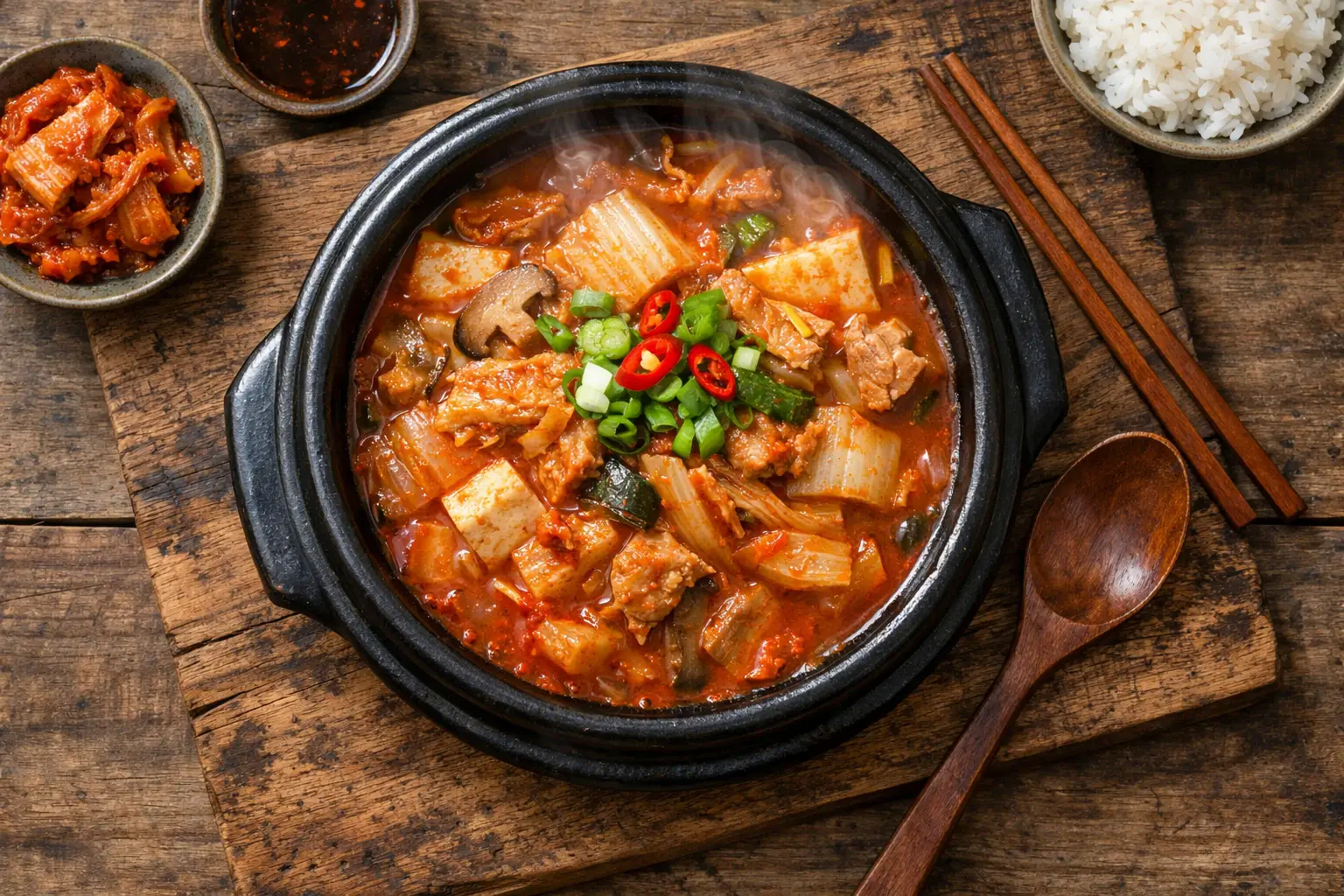
Quick Nutrition Facts
Per 1 Bowl (300g)
| Nutrient | Amount |
|---|---|
| Calories | 150 kcal |
| Protein | 14g |
| Carbohydrates | 8g |
| Fiber | 2g |
| Sugars | 3g |
| Fat | 7g |
| Sodium | 1400mg |
| Potassium | 320mg |
| Vitamin C | 12mg |
| Iron | 1.8mg |
Macronutrient Breakdown
 ChatGPT
  Claude
  AI Mode
  Perplexity
NUTRITIONIST INSIGHT
Kimchi jjigae delivers live probiotics from fermented vegetables that support gut health and immunity. The combination of protein and capsaicin helps boost metabolism while keeping you satisfied with relatively few calories.
Myth Busters
MYTH #1: Kimchi Jjigae Is Too Spicy for Everyone
TRUTH: Spice levels are fully adjustable. Use mild kimchi or add less gochugaru (red pepper flakes). Many restaurants offer mild versions, and homemade allows complete control over heat level.
MYTH #2: Fermented Foods Are Unsafe
TRUTH: Properly fermented kimchi is safe and beneficial. Lactobacillus bacteria in kimchi actually inhibit harmful bacteria growth. Fermentation has been safely practiced for thousands of years across cultures.
MYTH #3: Kimchi Jjigae Has No Nutritional Value
TRUTH: Each bowl provides 14g protein, probiotics for gut health, vitamin C for immunity, and anti-inflammatory compounds. The fermented vegetables retain nutrients better than many cooking methods.
MYTH #4: The Sodium Makes It Unhealthy
TRUTH: While sodium content is significant (1400mg), this can be managed by using low-sodium kimchi, limiting portion sizes, and balancing with potassium-rich foods. The probiotic and nutritional benefits often outweigh sodium concerns for most healthy adults.
MYTH #5: You Can't Eat Kimchi Jjigae on a Diet
TRUTH: At only 150 calories per bowl with 14g protein, kimchi jjigae is diet-friendly. The protein and fiber promote satiety, while capsaicin may boost metabolism. Skip the rice to keep calories low.
NutriScore by Health Goals
| Health Goal | NutriScore | Why This Score? |
|---|---|---|
| Weight Loss |  | Only 150 calories with 14g protein for satiety. Capsaicin may boost metabolism. Skip rice for best results. |
| Muscle Gain |  | Good protein source (14g). Add extra tofu or lean pork to increase protein. Pair with rice post-workout for glycogen. |
| Diabetes Management | | Low carb (8g) with minimal blood sugar impact. Fermented foods may improve insulin sensitivity. Monitor sodium if hypertensive. |
| PCOS Management | | Low glycemic, high protein supports hormone balance. Probiotics aid gut-hormone connection. Limit to manage sodium. |
| Pregnancy Nutrition |  | Protein aids fetal development; probiotics support maternal gut health. Ensure pork is fully cooked; watch sodium intake. |
| Viral/Flu Recovery | | Warming broth soothes throat, vitamin C supports immunity, probiotics strengthen gut barrier. Spice helps clear congestion. |
PERSONALIZED NUTRITION
Track your meals with NutriScan for personalized NutriScores based on your specific health goals!
Blood Sugar Response to Kimchi Jjigae
Understanding how kimchi jjigae affects your blood glucose can help you make informed decisions about when and how to eat it.
Typical Glucose Response Curve
This chart shows typical blood glucose response for general healthy individuals. Individual responses may vary. Not medical advice.
How to Flatten the Spike
Pairing kimchi jjigae with fiber and protein keeps blood sugar stable:
- Skip the white rice - Or use small portion of brown rice
- Add extra vegetables - Mushrooms, zucchini, or leafy greens
- Increase tofu - More protein slows glucose absorption
- Eat mindfully - Slower eating allows better satiety signals
This combination keeps blood sugar stable while maximizing the probiotic benefits.
Cultural Significance
Kimchi jjigae is one of Korea's most beloved comfort foods, deeply woven into daily life and cultural identity.
In Korea:
- Traditionally made with well-fermented "old kimchi" (mukeunji) for deeper flavor
- Served in traditional earthenware pots (ttukbaegi) that retain heat
- Common household staple using leftover kimchi before it over-ferments
- Represents Korean philosophy of waste-free cooking and fermentation mastery
Global Impact:
- Korean Wave (Hallyu) has popularized Korean cuisine worldwide
- Recognized by UNESCO as part of Korea's intangible cultural heritage (kimjang tradition)
- Fermentation science from kimchi now influences global probiotic research
- Restaurant versions vary from mild to extremely spicy based on regional preferences
Compare & Substitute
Kimchi Jjigae vs Similar Stews (Per 300g Serving)
| Nutrient | 🍲 Kimchi Jjigae | 🍜 Miso Soup | 🥣 Tom Yum | 🍲 Borscht |
|---|---|---|---|---|
| Calories | 150 kcal | 84 kcal | 120 kcal | 130 kcal |
| Carbs | 8g | 8g | 12g | 18g |
| Fiber | 2g | 1g | 1g | 3g |
| Protein | 14g | 6g | 8g | 6g |
| Fat | 7g | 3g | 5g | 4g |
| Sodium | 1400mg | 900mg | 1100mg | 800mg |
| Probiotics | Yes (fermented) | Yes (fermented) | No | No |
| Best For | Gut health, protein, immunity | Low-cal, gentle stomach | Flavor, congestion relief | Fiber, lower sodium |
Frequently Asked Questions
Is kimchi jjigae good for weight loss?
Yes, kimchi jjigae supports weight loss effectively. At 150 calories per bowl with 14g protein, it provides excellent satiety with minimal calories. The capsaicin from chili may boost metabolism, while probiotics support healthy gut bacteria linked to weight management.
Best practices: Skip the rice, choose lean pork or tofu, limit to one bowl, eat slowly for better satiety signals.
Can diabetics eat kimchi jjigae?
Diabetics can enjoy kimchi jjigae as a good meal option. With only 8g carbs per bowl and high protein content, it has minimal impact on blood sugar.
Tips for diabetics:
- Skip or minimize rice accompaniment
- Choose tofu version for even fewer carbs
- Monitor sodium if managing hypertension alongside diabetes
- Pair with non-starchy vegetables
The fermented vegetables may actually improve insulin sensitivity over time.
How much protein is in kimchi jjigae?
A standard bowl (300g) contains 14g of protein from pork, tofu, or combination. This makes it a substantial protein source comparable to 2 eggs. For higher protein, request extra tofu or lean meat.
What are the main health benefits of kimchi jjigae?
Key Benefits:
- Gut Health: Live probiotics from fermented kimchi support digestive health
- Immunity: Vitamin C and probiotics strengthen immune function
- Metabolism: Capsaicin may increase calorie burning
- Anti-inflammatory: Fermented vegetables contain anti-inflammatory compounds
- Satiety: High protein keeps you full longer
- Warmth: Traditional remedy for cold symptoms and congestion
Is kimchi jjigae high in sodium?
Yes, kimchi jjigae contains approximately 1400mg sodium per bowl (60% daily value). This is significant but manageable.
To reduce sodium impact:
- Use low-sodium kimchi when making at home
- Eat smaller portions
- Balance with potassium-rich foods (bananas, sweet potatoes)
- Drink plenty of water
- Limit other high-sodium foods the same day
Those with hypertension or kidney issues should consult their doctor about frequency.
Is kimchi jjigae safe during pregnancy?
Kimchi jjigae is generally safe during pregnancy with precautions. The probiotics support maternal gut health, and protein aids fetal development.
Pregnancy guidelines:
- Ensure all pork is thoroughly cooked
- Choose pasteurized or well-fermented kimchi
- Monitor sodium intake (may worsen swelling)
- Start with small portions if new to fermented foods
- Consult your healthcare provider if uncertain
How often can I eat kimchi jjigae?
General Guidelines:
- 2-3 times per week - Most healthy adults
- 1-2 times per week - Those watching sodium intake
- Occasionally - Hypertension or kidney concerns (consult doctor)
- Daily is fine - If using low-sodium recipe and balanced diet
Track your meals with NutriScan app to see how kimchi jjigae fits your personal nutrition goals.
Can I make kimchi jjigae vegetarian?
Absolutely. Replace pork with firm tofu, use vegetable broth instead of anchovy stock, and ensure your kimchi doesn't contain fish sauce (many traditional recipes do). Vegetarian versions provide similar probiotic benefits with slightly less protein (10-12g per bowl).


Similar Nutritious Foods
4505 Chicharrones Classic Chili Salt
7 Eleven Japan Crispy Corn Cheese
Explore More Nutrition Tools & Resources
AI Calorie Counter App - Snap a Photo, Get Macros
AI Nutritionist App That Reads Your Logged Meals
Best Protein Supplements for Women
Bulking Meal Plan App That Sets Your Surplus
ChatGPT Calorie Counter Alternative That Keeps the Total
ChatGPT Diet Plan Alternative That Tracks What You Eat
ChatGPT Weight Loss Coach Alternative With a Food Log
Fast Food Calorie Counter App That Reads the Tray
Free Calorie Tracker App with AI Photo Scans | NutriScan
Indian Diet Plan App With Veg and Non Veg Meals
Indian Food Calorie Calculator - Get Instant Nutrition Facts for Desi Meals — 2026
Intermittent Fasting for Women, Timer and Meal Log App
Intermittent Fasting Tracker App - Free Fasting Timer
Macro Tracker App That Fills the Numbers From a Photo
Mediterranean Diet Meal Plan App That Counts the Oil
Micronutrient Tracker App for Vitamins and Minerals
MyFitnessPal Alternative That Stays Free | NutriScan
NutriScore App: A Free Grade on Every Meal | NutriScan
Nutrition Label Scanner App for the Amount You Ate
Second Trimester Protein Guide
Vegetarian Meal Plan App With a Protein Target
Voice Calorie Counter - Speak to Track Meals Hands-Free
Water and Calorie Tracker App - Free Water Log