Koobideh: Calories, Nutrition and Health Benefits
Iran's beloved grilled kebab delivering premium protein, essential B vitamins, and bold flavors in every succulent bite.
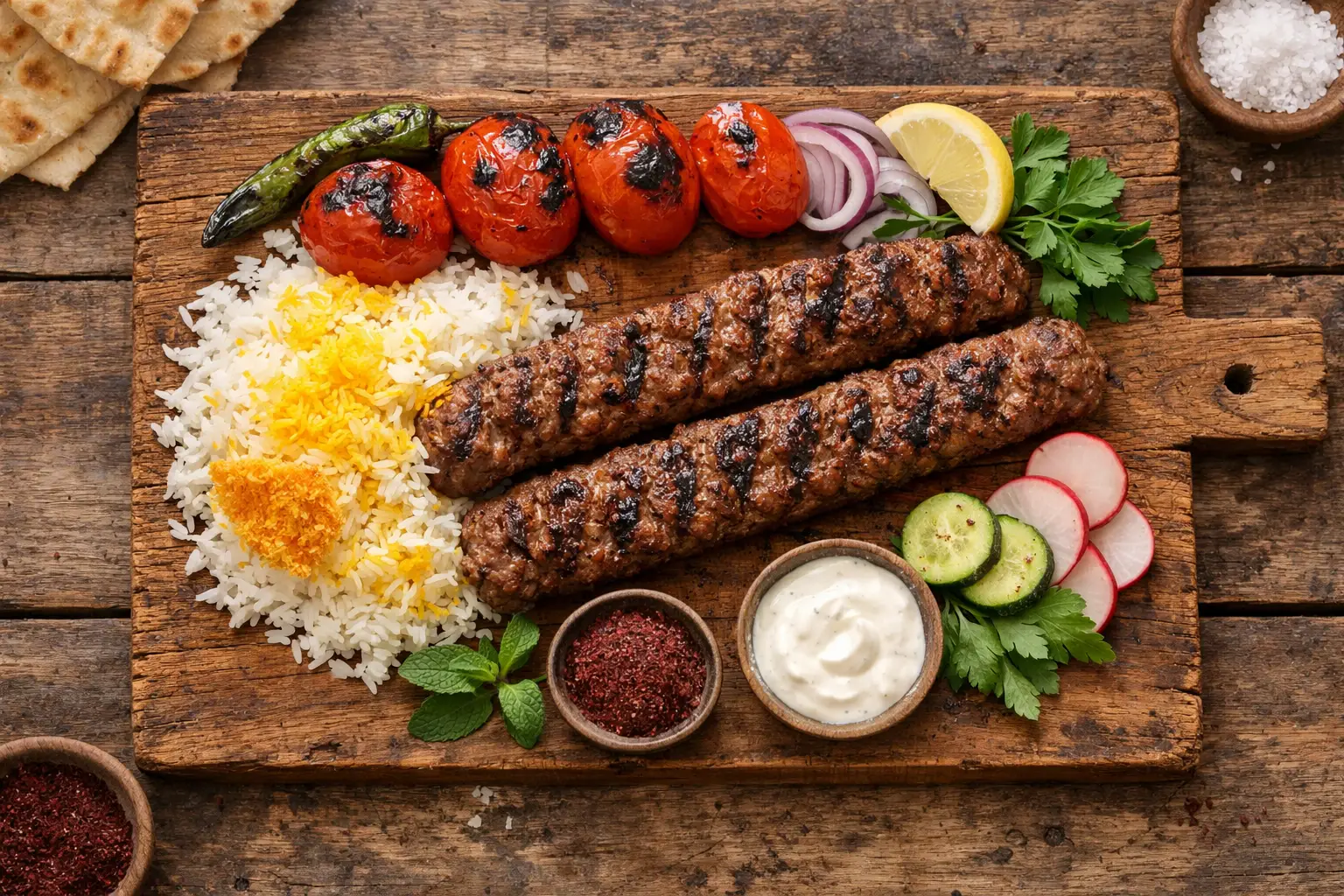
Quick Nutrition Facts
Per 2 Skewers (170g)
| Nutrient | Amount |
|---|---|
| Calories | 350 kcal |
| Protein | 30g |
| Carbohydrates | 8g |
| Fiber | 1g |
| Sugars | 2g |
| Fat | 22g |
| Saturated Fat | 9g |
| Cholesterol | 95mg |
| Vitamin B12 | 2.4mcg |
| Iron | 2.7mg |
| Zinc | 5.2mg |
Macronutrient Breakdown
 ChatGPT
  Claude
  AI Mode
  Perplexity
NUTRITIONIST INSIGHT
Koobideh delivers 30g of complete protein per serving with all essential amino acids for muscle synthesis. The combination of lamb's natural creatine and high zinc content (35% DV) makes it particularly effective for athletic performance and recovery.
Myth Busters
MYTH #1: Koobideh Is Too Fatty to Be Healthy
TRUTH: While koobideh contains fat, much of it comes from the lamb's natural oils. A 2-skewer serving provides 22g total fat with beneficial monounsaturated fats. Moderate red meat consumption (2-3 servings/week) fits within healthy dietary patterns.
MYTH #2: All Kebabs Have the Same Nutrition
TRUTH: Koobideh's unique preparation with grated onion increases moisture and reduces the need for added fats. The onion also adds prebiotic fiber and antioxidants not found in simple grilled meat cuts.
MYTH #3: Koobideh Spikes Blood Sugar
TRUTH: With only 2-8g carbohydrates per serving and high protein/fat content, koobideh has minimal impact on blood glucose. The protein and fat slow gastric emptying, resulting in stable blood sugar levels.
MYTH #4: Red Meat Provides No Essential Nutrients
TRUTH: Koobideh is rich in heme iron (15% DV), vitamin B12 (100% DV), zinc (35% DV), and selenium. These nutrients are more bioavailable from meat than plant sources, supporting energy, immunity, and cognitive function.
MYTH #5: You Can't Eat Koobideh on a Diet
TRUTH: At 350 calories for a filling 2-skewer serving with 30g protein, koobideh can fit into weight management plans. The high protein content promotes satiety and helps preserve muscle mass during calorie restriction.
NutriScore by Health Goals
| Health Goal | NutriScore | Why This Score? |
|---|---|---|
| Weight Loss |  | 350 calories per serving but very high protein (30g) promotes satiety. Limit to 1 serving, skip rice. |
| Muscle Gain |  | Excellent complete protein source (30g), natural creatine, zinc for testosterone, iron for oxygen delivery. |
| Diabetes Management |  | Very low carb (2-8g), minimal blood sugar impact. Avoid sweet sauces, limit rice portion. |
| PCOS Management | | High protein stabilizes blood sugar, zinc supports hormone balance. Choose lean cuts. |
| Pregnancy Nutrition | | Excellent source of heme iron and B12 crucial for fetal development. Ensure fully cooked (160°F internal temp). |
| Viral/Flu Recovery | | High zinc (35% DV) supports immune function, protein aids tissue repair, easy to digest when grilled. |
PERSONALIZED NUTRITION
Track your meals with NutriScan for personalized NutriScores based on your specific health goals!
Blood Sugar Response to Koobideh
Understanding how koobideh affects your blood glucose can help you make informed decisions about when and how to eat it.
Typical Glucose Response Curve
This chart shows typical blood glucose response for koobideh alone. Adding rice will increase the glucose response significantly. Individual responses may vary. Not medical advice.
Why Koobideh Has Minimal Blood Sugar Impact
Koobideh's high protein and fat content results in a very flat glucose curve:
- High protein (30g) - Triggers minimal insulin response, promotes glucagon
- Moderate fat (22g) - Slows gastric emptying significantly
- Low carbs (2-8g) - Mainly from onions in the mixture
- No added sugars - Traditional recipes use no sweeteners
When served with saffron rice (traditional), monitor total carb intake. For better blood sugar control, serve with grilled vegetables or salad instead.
Cultural Significance
Koobideh (also spelled Kabab Koobideh or Kubideh) is Iran's national dish and a cornerstone of Persian cuisine dating back over 2,000 years.
In Iran:
- Served at every celebration from Nowruz (Persian New Year) to weddings
- Traditional preparation involves hand-mixing lamb with grated onion until sticky
- Authentic cooking uses manghal (charcoal grill) with flat metal skewers
- Often served with chelo (saffron rice), grilled tomatoes, and sumac
Regional Variations:
- Tehran style: 70% lamb, 30% beef blend
- Isfahan style: Pure lamb with saffron threads
- Shiraz style: Includes dried lime powder
- Turkish Adana: Spicier cousin with red pepper flakes
Global Spread:
- Found in Persian restaurants worldwide from Los Angeles to Dubai
- UNESCO recognized Iranian kebab culture in 2017
- Modern adaptations use chicken or beef for dietary preferences
Compare & Substitute
Koobideh vs Similar Protein Sources (Per 100g)
| Nutrient | Koobideh (Lamb) | Chicken Breast | Beef Steak | Falafel (Vegetarian) |
|---|---|---|---|---|
| Calories | 256 kcal | 165 kcal | 271 kcal | 333 kcal |
| Carbs | 3g | 0g | 0g | 32g |
| Fiber | 0.5g | 0g | 0g | 5g |
| Protein | 21g | 31g | 26g | 13g |
| Fat | 18g | 3.6g | 19g | 18g |
| Iron | 1.9mg | 0.7mg | 2.6mg | 3.4mg |
| Zinc | 4.5mg | 0.9mg | 5.3mg | 1.5mg |
| B12 | 2.4mcg | 0.3mcg | 2.1mcg | 0mcg |
| Best For | Muscle gain, iron needs | Weight loss, lean protein | Strength training, B12 | Vegetarian protein, fiber |
Frequently Asked Questions
How many calories are in koobideh?
A typical serving of 2 skewers (170g) contains 350 calories. Per 100g, koobideh provides approximately 256 calories. The traditional serving with saffron rice adds 200-300 calories.
Calorie breakdown by serving:
- 1 skewer (85g): 175 calories
- 2 skewers (170g): 350 calories
- With half cup rice: 550 calories
Is koobideh good for muscle building?
Koobideh is excellent for muscle building. It provides 30g of complete protein per serving with all essential amino acids needed for muscle protein synthesis.
Benefits for athletes:
- Natural creatine content supports high-intensity performance
- Zinc (35% DV) supports testosterone production
- Iron (15% DV) enhances oxygen delivery to muscles
- B12 (100% DV) supports energy metabolism
Best consumed post-workout or as part of a high-protein meal.
Can diabetics eat koobideh?
Yes, koobideh is suitable for diabetics due to its very low carbohydrate content (2-8g per serving).
Tips for diabetics:
- Skip or minimize the saffron rice
- Pair with grilled vegetables or salad
- Avoid sweet pomegranate sauces
- Monitor blood sugar if eating with bread
The high protein and fat content results in minimal blood sugar impact, making it one of the more diabetes-friendly Persian dishes.
Is koobideh healthy?
Koobideh offers significant nutritional benefits when consumed in moderation (2-3 times per week).
Key benefits:
- High-quality complete protein (21g/100g)
- Excellent vitamin B12 source (100% DV)
- Rich in zinc for immune function (35% DV)
- Good source of heme iron (15% DV)
Considerations:
- Higher in saturated fat (9g per serving)
- Contains cholesterol (95mg per serving)
- Best balanced with vegetables and whole grains
What makes koobideh different from other kebabs?
Koobideh has a unique preparation method that sets it apart:
- Minced meat: Finely ground lamb/beef vs cubed chunks
- Grated onion: Mixed directly into the meat for moisture
- Flat skewers: Wide metal skewers create signature shape
- No fillers: Traditional recipes contain no breadcrumbs
- Charcoal grilling: Authentic manghal cooking adds smoky flavor
How should I store and reheat koobideh?
Storage:
- Refrigerate within 2 hours of cooking
- Keeps 3-4 days in airtight container
- Freeze for up to 3 months
Reheating (best methods):
- Oven: 350°F for 10-15 minutes (maintains moisture)
- Air fryer: 375°F for 5-7 minutes
- Avoid microwave (makes meat rubbery)
Track your meals with NutriScan app to see how koobideh fits your personal nutrition goals.


Similar Nutritious Foods
4505 Chicharrones Classic Chili Salt
7 Eleven Japan Crispy Corn Cheese
Explore More Nutrition Tools & Resources
AI Calorie Counter App - Snap a Photo, Get Macros
AI Nutritionist App That Reads Your Logged Meals
Best Protein Supplements for Women
Bulking Meal Plan App That Sets Your Surplus
ChatGPT Calorie Counter Alternative That Keeps the Total
ChatGPT Diet Plan Alternative That Tracks What You Eat
ChatGPT Weight Loss Coach Alternative With a Food Log
Fast Food Calorie Counter App That Reads the Tray
Free Calorie Tracker App with AI Photo Scans | NutriScan
Indian Diet Plan App With Veg and Non Veg Meals
Indian Food Calorie Calculator - Get Instant Nutrition Facts for Desi Meals — 2026
Intermittent Fasting for Women, Timer and Meal Log App
Intermittent Fasting Tracker App - Free Fasting Timer
Macro Tracker App That Fills the Numbers From a Photo
Mediterranean Diet Meal Plan App That Counts the Oil
Micronutrient Tracker App for Vitamins and Minerals
MyFitnessPal Alternative That Stays Free | NutriScan
NutriScore App: A Free Grade on Every Meal | NutriScan
Nutrition Label Scanner App for the Amount You Ate
Second Trimester Protein Guide
Vegetarian Meal Plan App With a Protein Target
Voice Calorie Counter - Speak to Track Meals Hands-Free
Water and Calorie Tracker App - Free Water Log