McDonald's French Fries: Calories, Nutrition and Health Impact
 ChatGPT
  Claude
  AI Mode
  Perplexity
 McDonald's French Fries: 320 calories, 43 g carbs, 5 g protein and 15 g fat per 1 Medium Serving (111g).
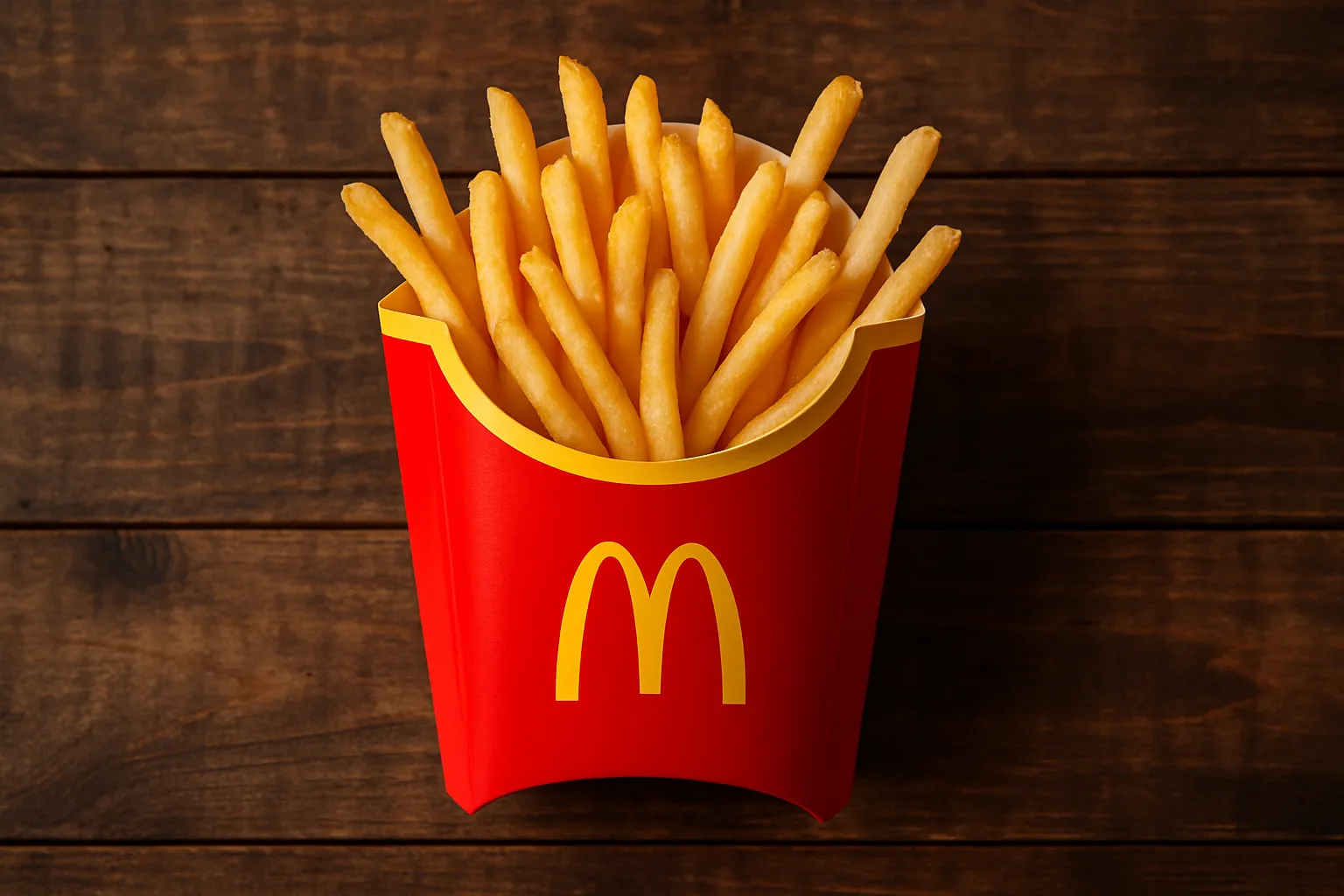
Quick Nutrition Facts
Per 1 Medium Serving (111g)
| Nutrient | Amount |
|---|---|
| Calories | 320 kcal |
| Protein | 5g |
| Carbohydrates | 43g |
| Fiber | 4g |
| Sugars | 0g |
| Fat | 15g |
| Saturated Fat | 2g |
| Sodium | 260mg |
| Potassium | 650mg |
| Iron | 1mg |
Macronutrient Breakdown
NUTRITIONIST INSIGHT
McDonald's fries are primarily carbohydrates (54%), making them a high-glycemic food that spikes blood sugar rapidly. The 2g saturated fat per serving is 10% of the daily value. The fiber (4g) comes from potatoes, but the deep-frying process reduces micronutrient retention.
McDonald's Medium Fry Calories vs Every Other Size
A medium is 320 calories on the McDonald's USA menu, which puts it in the middle of a range that runs from 110 to 480.
| Size | Calories |
|---|---|
| Kids | 110 Cal |
| Small | 230 Cal |
| Medium | 320 Cal |
| Large | 480 Cal |
McDonald's lists a medium at 15 g total fat, 43 g carbs, 5 g protein and 260 mg sodium, and a small at 11 g fat, 31 g carbs, 3 g protein and 190 mg sodium. So stepping down from medium to small saves 90 calories and 4 g of fat, while stepping up to large costs 160 calories more than the medium you probably ordered.
Two things set the number: how much potato is in the carton, and how much frying oil that potato absorbs. Thinner cuts soak up more oil per gram, which is why fries carry roughly three times the calories of the same weight of plain baked potato. Salt is added after frying, so it changes the sodium and nothing else. Portion sizes and recipes differ by country, so check your local menu before trusting a US figure. For comparison inside the same meal, McDonald's hash browns are a smaller fried portion, and potato chips run far higher per 100 g than any fry size.
Myth Busters
MYTH #1: A Serving of Fries Is Just a Side Dish, Not Harmful
TRUTH: A medium serving has 320 calories—equivalent to a light lunch. For weight loss (2,000 cal diet), fries alone represent 16% of daily intake, with minimal nutritional value beyond carbs.
MYTH #2: Potatoes Are Healthy, So Fries Must Be Too
TRUTH: While potatoes contain potassium, vitamins, and fiber, deep-frying strips away nutrients and adds 15g fat and 2g saturated fat per serving. Baked potatoes retain more nutrition.
MYTH #3: McDonald's Fries Have No Trans Fats, So They're Safe
TRUTH: Trans fats were largely eliminated in 2018, but saturated fats (2g per medium) still increase LDL cholesterol, raising heart disease risk. This is actually the main concern.
MYTH #4: You Can Burn Off the Calories from Fries with Exercise
TRUTH: While exercise burns calories, regular fries consumption (high glycemic index) disrupts blood sugar regulation and may increase hunger hormones. Diet control is more effective than exercise for weight loss.
MYTH #5: All Fast Food Fries Are the Same
TRUTH: Preparation methods differ. Baked or air-fried versions contain 40-50% fewer calories than deep-fried fries. At-home preparation allows better control over oil and salt.
MYTH #6: The Fiber in Fries Helps with Digestion
TRUTH: The 4g fiber is beneficial, but it's negated by high sodium (260mg) and lack of other micronutrients. Whole potatoes with skin provide 2x the fiber with less fat absorption.
NutriScore by Health Goals
| Health Goal | NutriScore | Why This Score? |
|---|---|---|
| Weight Loss |  | 320 calories, 15g fat, high glycemic index (70). Lacks protein and satiety. High calorie density for minimal nutrition. Avoid for weight loss goals. |
| Muscle Gain |  | 43g carbs replenish glycogen post-workout, but only 5g protein. Better paired with high-protein source. Acceptable occasional carb source. |
| Diabetes Management | | High GI (~72), 43g carbs cause rapid blood sugar spike. 2g saturated fat increases cardiovascular risk. Strongly not recommended for diabetics. |
| PCOS Management | | High glycemic load destabilizes insulin. Saturated fats worsen PCOS inflammation. Simple carbs without fiber provide minimal satiety. Avoid. |
| Pregnancy Nutrition | | Provides some folate (40mcg) and potassium (650mg), but high sodium (260mg) increases blood pressure risk in pregnancy. Consume rarely and opt for fresh potatoes when possible. |
| Viral/Flu Recovery |  | Easy to digest carbs provide energy during recovery. Sodium aids electrolyte balance (though excess). Better: home-made fries or sweet potato for superior micronutrients. |
PERSONALIZED NUTRITION
Track your meals with NutriScan for personalized NutriScores based on your specific health goals!
Blood Sugar Response to McDonald's Fries
McDonald's french fries have a high glycemic index (GI ~72), meaning they cause rapid blood sugar elevation.
Typical Glucose Response Curve
This chart shows typical blood glucose response for general healthy individuals. Individual responses may vary. Not medical advice.
How to Minimize the Spike
If you do consume McDonald's fries, pairing with protein reduces glycemic impact:
- 🍗 Grilled chicken sandwich - Protein slows carb digestion
- 🍳 Egg McMuffin - Complete protein + healthy fat combination
- 🥤 Milk or yogurt-based drink - Calcium and casein slow glucose absorption
- 🥗 Side salad - Fiber and vegetables reduce spike magnitude
This pairing strategy can reduce peak blood sugar by 20-30% compared to fries alone.
Cultural Significance
McDonald's french fries represent one of the most globally successful fast-food items, available in over 100 countries with localized variations.
In India:
- Often served with special sauces and spices (Chaat Masala, Curry Sauce)
- Vegetarian option in predominantly vegetarian regions
- Adapted to Indian taste preferences with different seasoning blends
- One of the highest-margin items on the Indian McDonald's menu
Global Impact:
- Standardized yet adapted recipe across 40,000+ locations worldwide
- Iconic product with consistent quality and taste recognition
- Environmental concern: potato farming and packaging waste represent significant ecological footprint
Compare & Substitute
McDonald's Fries vs Similar Carb Sides (Per 100g equivalent)
| Nutrient | 🍟 McD Fries | 🥔 Baked Potato | 🍠 Sweet Potato Fries | 🌽 Corn Chips |
|---|---|---|---|---|
| Calories | 288 kcal | 77 kcal | 160 kcal | 552 kcal |
| Carbs | 39g | 17g | 24g | 55g |
| Fiber | 3.6g | 2.1g | 2.8g | 3.8g |
| Protein | 4.5g | 2g | 1.6g | 4.8g |
| Fat | 13.5g | 0.1g | 5g | 29g |
| Sodium | 234mg | 6mg | 50mg | 400mg |
| GI Index | ~72 (High) | ~85 (High) | ~63 (Medium) | ~74 (High) |
| Best For | Occasional treat only | Whole-food carb alternative | Better fried alternative | Avoid; highest calorie |
Frequently Asked Questions
What is the nutritional value of McDonald's french fries?
A medium serving (111g) of McDonald's fries has 320 calories, 15g fat, 43g carbs, 4g fiber, 5g protein and 260mg sodium. Saturated fat is 2g and total sugars are 0g. These figures come from the McDonald's USA menu.
By size: kids 110 calories, small 230, medium 320, large 480.
Are McDonald's french fries bad for weight loss?
Yes. A medium serving (320 cal, 15g fat) represents significant calorie intake with minimal satiety. Fries lack protein and fiber needed for fullness, leading to increased hunger post-consumption. Studies show fast-food consumption correlates with 37% higher obesity risk. For weight loss, opt for apple slices, side salad, or skip fries entirely.
How much sodium is in McDonald's french fries?
A medium serving has 260mg sodium (11% DV). While a single serving seems moderate, consuming fries regularly—especially with other fast-food items—compounds sodium intake. Excess sodium increases blood pressure, water retention, and cardiovascular risk.
Do McDonald's french fries have trans fats?
McDonald's eliminated artificial trans fats in 2018. However, fries still contain 2g saturated fat per medium serving, which raises LDL cholesterol and heart disease risk. Saturated fat is the actual concern, not just trans fats.
Are McDonald's fries suitable for diabetics?
Not recommended. With GI ~72 and 43g carbs, fries cause rapid blood sugar spikes. Additionally, 2g saturated fat increases cardiovascular risk—a primary comorbidity in diabetes. Diabetics should choose non-starchy vegetables or whole grain carbs.
What's the healthiest way to order at McDonald's?
Choose grilled chicken sandwich (320 cal, 30g protein) instead of fries; opt for apple slices or side salad; drink water or unsweetened tea; avoid fried items and sugary drinks. If craving fries, limit to small size and pair with protein.
Can I eat McDonald's fries during pregnancy?
Rarely. While fries provide carbs and potassium (650mg), the high sodium (260mg) may worsen pregnancy-related hypertension. The high saturated fat also carries gestational metabolic risk. Choose baked potato or sweet potato for safer carb options.
How many calories are in a McDonald's medium fry?
A medium fry is 320 calories on the McDonald's USA menu, with 15g total fat, 43g carbs, 5g protein and 260mg sodium. The other sizes are 110 calories for kids, 230 for a small and 480 for a large, so a small saves 90 calories and a large costs 160 more than the medium.
Are air-fried fries healthier than deep-fried?
Yes, substantially. Air-fried versions contain 40-50% fewer calories and 30-40% less fat while maintaining similar taste. If making at home, air frying preserves potato nutrients better than deep-frying. However, McDonald's exclusively uses deep-fried preparation.
How many calories are in McDonald's fries?
A medium serving of McDonald's french fries (111 g) has 320 calories. It also has 43 g of carbohydrates and 15 g of fat.
How much sodium is in a medium fry from McDonald's?
A medium serving of McDonald's french fries (111 g) has 260 mg of sodium. It also has 650 mg of potassium.




Similar Nutritious Foods
4505 Chicharrones Classic Chili Salt
7 Eleven Japan Crispy Corn Cheese
Explore More Nutrition Tools & Resources
AI Calorie Counter App - Snap a Photo, Get Macros
AI Nutritionist App That Reads Your Logged Meals
Best Protein Supplements for Women
Bulking Meal Plan App That Sets Your Surplus
ChatGPT Calorie Counter Alternative That Keeps the Total
ChatGPT Diet Plan Alternative That Tracks What You Eat
ChatGPT Weight Loss Coach Alternative With a Food Log
Fast Food Calorie Counter App That Reads the Tray
Free Calorie Tracker App with AI Photo Scans | NutriScan
Indian Diet Plan App With Veg and Non Veg Meals
Indian Food Calorie Calculator - Get Instant Nutrition Facts for Desi Meals (2026)
Intermittent Fasting for Women, Timer and Meal Log App
Intermittent Fasting Tracker App - Free Fasting Timer
Macro Tracker App That Fills the Numbers From a Photo
Mediterranean Diet Meal Plan App That Counts the Oil
Micronutrient Tracker App for Vitamins and Minerals
MyFitnessPal Alternative That Stays Free | NutriScan
NutriScore App: A Free Grade on Every Meal | NutriScan
Nutrition Label Scanner App for the Amount You Ate
Second Trimester Protein Guide
Vegetarian Meal Plan App With a Protein Target
Voice Calorie Counter - Speak to Track Meals Hands-Free
Water and Calorie Tracker App - Free Water Log