M&S Good Gut Honey Ginger Kefir Drink: Calories, Nutrition and Health Benefits
A probiotic-rich kefir drink blending honey sweetness, ginger warmth, and live cultures for daily gut health support at just 90 calories per bottle.
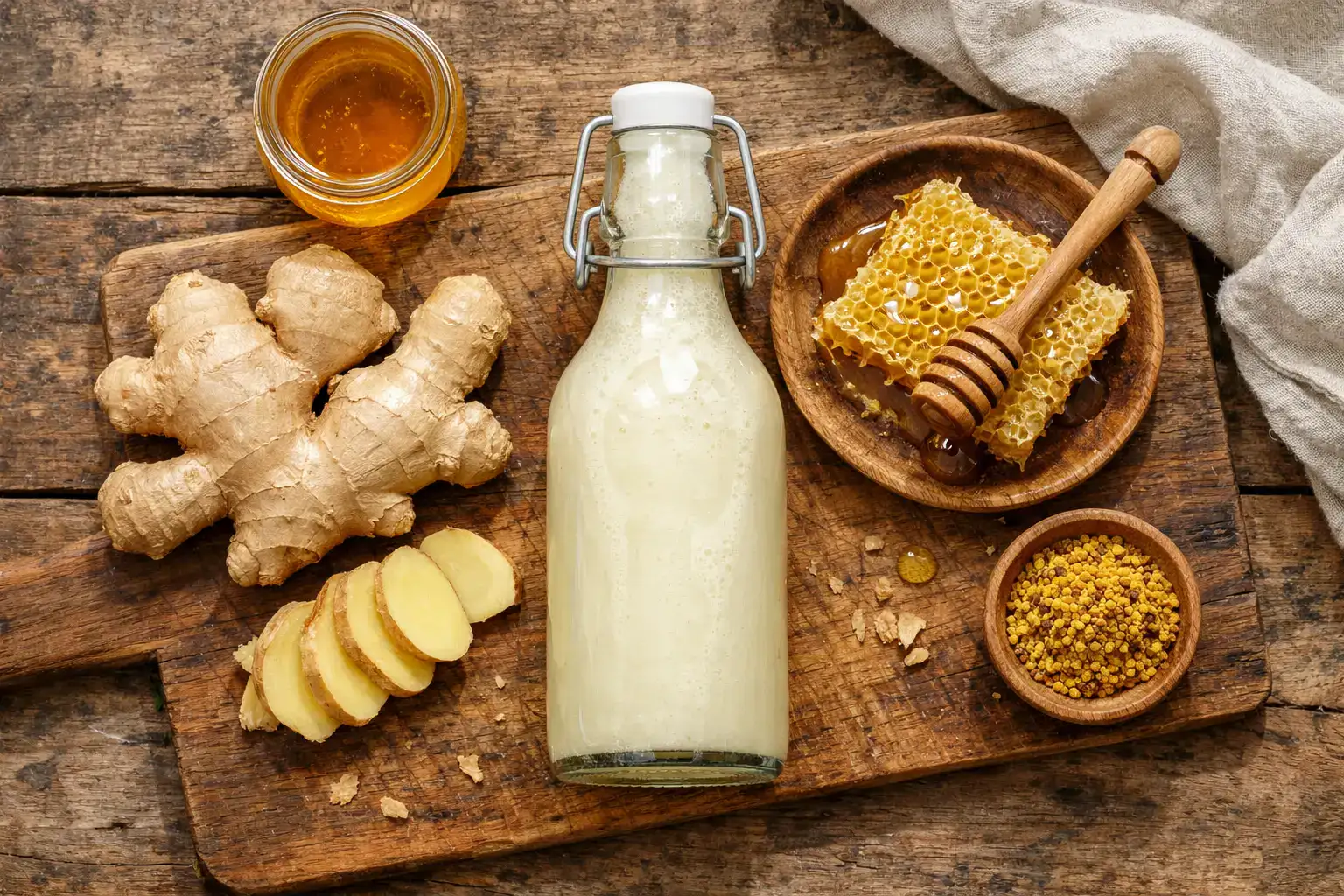
Quick Nutrition Facts
Per 1 Bottle (500ml)
| Nutrient | Amount |
|---|---|
| Calories | 90 kcal |
| Protein | 4g |
| Carbohydrates | 14g |
| Fiber | 0.5g |
| Sugars | 12g |
| Fat | 2g |
| Saturated Fat | 1.3g |
| Calcium | ~300mg |
| Vitamin B12 | ~0.5mcg |
| Probiotics | Live cultures |
Macronutrient Breakdown
 ChatGPT
  Claude
  AI Mode
  Perplexity
NUTRITIONIST INSIGHT
This kefir drink packs over 50 species of probiotic bacteria in a light 90-calorie bottle. The honey and ginger combination enhances both flavour and function - ginger supports digestion and reduces inflammation, while honey provides natural prebiotics that feed beneficial gut bacteria.
Myth Busters
MYTH #1: Kefir Is Just Fancy Yogurt
TRUTH: Kefir contains up to 61 strains of bacteria and yeasts - far more diverse than yogurt's typical 2-3 strains. The fermentation process also produces unique bioactive peptides and organic acids not found in standard yogurt.
MYTH #2: Flavoured Kefir Is Too High in Sugar
TRUTH: This honey ginger kefir has 12g sugar per 500ml bottle - less than a glass of orange juice (21g per 250ml). The probiotic fermentation process partially breaks down lactose, reducing natural sugars compared to unfermented milk.
MYTH #3: Kefir Causes Bloating and Digestive Discomfort
TRUTH: While initial consumption may cause mild bloating as gut flora adjusts, regular kefir intake actually improves digestive comfort by increasing beneficial bacteria and short-chain fatty acids. Start with small amounts and gradually increase.
MYTH #4: All Kefir Products Have the Same Benefits
TRUTH: Probiotic content varies significantly by brand and production method. M&S Good Gut range uses a proprietary TriMarks blend including Plenibiotic (inactivated Lacticaseibacillus paracasei 327) alongside live cultures including Bifidobacterium and multiple Lactobacillus strains.
MYTH #5: You Need Expensive Supplements Instead of Kefir
TRUTH: Kefir is one of the most cost-effective probiotic sources available. A single bottle provides a broad spectrum of live cultures that many capsule-form probiotics cannot match, plus calcium, protein, and B vitamins.
NutriScore by Health Goals
| Health Goal | NutriScore | Why This Score? |
|---|---|---|
| Weight Loss |  | Only 90 calories per full 500ml bottle. Protein and probiotics promote satiety. Low fat (2g) makes it an ideal snack replacement. |
| Muscle Gain |  | Modest 4g protein per bottle. Better as a recovery drink paired with a protein source. Calcium supports bone health for training. |
| Diabetes Management |  | Low GI (~36). Clinical trials show kefir can reduce fasting blood sugar. Monitor portion - 250ml at a time is ideal. |
| PCOS Management | | Probiotics may help improve insulin sensitivity. Low calorie and anti-inflammatory ginger support hormonal balance. Limit to 250ml daily. |
| Pregnancy Nutrition | | Made from pasteurized milk, safe per NHS guidelines. Provides calcium, protein, and probiotics. Always check label for pasteurization. |
| Viral/Flu Recovery | | Ginger's anti-inflammatory properties, live probiotics for immune support, easy to digest when unwell. Gentle on stomach during illness. |
PERSONALIZED NUTRITION
Track your meals with NutriScan for personalized NutriScores based on your specific health goals!
Blood Sugar Response to Honey Ginger Kefir
Understanding how this kefir drink affects your blood glucose helps you plan when and how much to consume.
Typical Glucose Response Curve
This chart shows typical blood glucose response for general healthy individuals. Individual responses may vary. Not medical advice.
How to Flatten the Spike
Kefir's low glycemic index means a naturally gentle glucose curve, but pairing with protein or fibre can flatten it further:
- Handful of almonds or walnuts - Adds healthy fats and fibre
- Oat crackers or wholegrain toast - Provides complex carbs and fibre
- Hard-boiled egg - Complete protein slows glucose absorption
- A few slices of avocado - Healthy fats extend energy release
This combination ensures sustained energy and optimal probiotic benefit.
Cultural Significance
Kefir originated in the Caucasus Mountains over 2,000 years ago, where shepherds discovered that milk carried in leather pouches would ferment into a tangy, probiotic-rich drink.
In the UK:
- M&S Good Gut range launched as part of the UK's growing gut health movement
- Kefir sales in Britain grew over 400% between 2018-2023
- Part of the "biohacking" wellness trend in British supermarkets
- Honey and ginger flavouring reflects British preference for warming, functional beverages
Global Impact:
- Kefir is a staple in Russian, Turkish, and Eastern European diets
- The word "kefir" comes from the Turkish "keyif" meaning "feeling good"
- Traditional kefir grains are passed down through generations as family heirlooms
- Now produced commercially in over 40 countries worldwide
Compare & Substitute
M&S Good Gut Honey Ginger Kefir vs Similar Drinks (Per 100ml)
| Nutrient | Honey Ginger Kefir | Plain Kefir | Greek Yogurt Drink | Kombucha |
|---|---|---|---|---|
| Calories | 18 kcal | 41 kcal | 55 kcal | 15 kcal |
| Carbs | 2.8g | 4.5g | 6g | 3g |
| Fiber | 0.1g | 0g | 0g | 0g |
| Protein | 0.8g | 3.8g | 4g | 0.1g |
| Fat | 0.4g | 0.9g | 2g | 0g |
| Probiotics | Live cultures + Plenibiotic | Live cultures | Limited strains | Live cultures (yeast-based) |
| Sugar | 2.4g | 4g | 5g | 2.5g |
| Best For | Gut health, low-cal probiotic | High protein, plain option | Protein + probiotics | Low-cal, caffeine-free option |
Frequently Asked Questions
How many calories are in M&S Good Gut Honey Ginger Kefir?
A full 500ml bottle contains approximately 90 calories, with 4g protein, 2g fat, and 14g carbohydrates. Per 100ml, that is just 18 calories - making it one of the lowest-calorie probiotic drink options available.
Is this kefir good for gut health?
Yes. This kefir contains multiple live culture strains including Bifidobacterium, Lactobacillus acidophilus, L. bulgaricus, L. paracasei, and L. rhamnosus plus Plenibiotic (inactivated L. paracasei 327) and chicory fibre as a prebiotic. Research shows these strains support microbiota diversity and digestive function.
Can diabetics drink this kefir?
Kefir has a low glycemic index (~36). Clinical trials show regular kefir consumption can reduce fasting blood sugar and insulin levels. This flavoured variant has 12g sugar per 500ml - consume 250ml portions and monitor blood sugar response. Always consult your healthcare provider.
Is this kefir safe during pregnancy?
M&S Good Gut kefir is made from pasteurized milk, which aligns with NHS pregnancy food safety guidelines. It provides calcium, protein, and probiotics beneficial during pregnancy. Always verify pasteurization on the label and consult your midwife or doctor.
What does ginger add to this kefir?
Ginger provides anti-inflammatory compounds (gingerols and shogaols) that support digestion and reduce nausea. Research shows 1-3g of ginger daily can ease digestive discomfort and lower inflammatory markers. Combined with kefir's probiotics, it offers synergistic gut support.
How much kefir should I drink per day?
General Guidelines:
- 250ml daily - Good starting point for gut health maintenance
- 500ml daily - Full bottle for maximum probiotic benefit
- 150ml daily - Start here if new to kefir to let your gut adjust
- 250ml daily - Recommended for diabetes, PCOS, or sensitive stomachs
Storage: Keep refrigerated. Consume within use-by date for maximum live culture viability.
Track your meals with NutriScan app to see how kefir fits your personal nutrition goals.


Similar Nutritious Foods
4505 Chicharrones Classic Chili Salt
7 Eleven Japan Crispy Corn Cheese
Explore More Nutrition Tools & Resources
AI Calorie Counter App - Snap a Photo, Get Macros
AI Nutritionist App That Reads Your Logged Meals
Best Protein Supplements for Women
Bulking Meal Plan App That Sets Your Surplus
ChatGPT Calorie Counter Alternative That Keeps the Total
ChatGPT Diet Plan Alternative That Tracks What You Eat
ChatGPT Weight Loss Coach Alternative With a Food Log
Fast Food Calorie Counter App That Reads the Tray
Free Calorie Tracker App with AI Photo Scans | NutriScan
Indian Diet Plan App With Veg and Non Veg Meals
Indian Food Calorie Calculator - Get Instant Nutrition Facts for Desi Meals — 2026
Intermittent Fasting for Women, Timer and Meal Log App
Intermittent Fasting Tracker App - Free Fasting Timer
Macro Tracker App That Fills the Numbers From a Photo
Mediterranean Diet Meal Plan App That Counts the Oil
Micronutrient Tracker App for Vitamins and Minerals
MyFitnessPal Alternative That Stays Free | NutriScan
NutriScore App: A Free Grade on Every Meal | NutriScan
Nutrition Label Scanner App for the Amount You Ate
Second Trimester Protein Guide
Vegetarian Meal Plan App With a Protein Target
Voice Calorie Counter - Speak to Track Meals Hands-Free
Water and Calorie Tracker App - Free Water Log