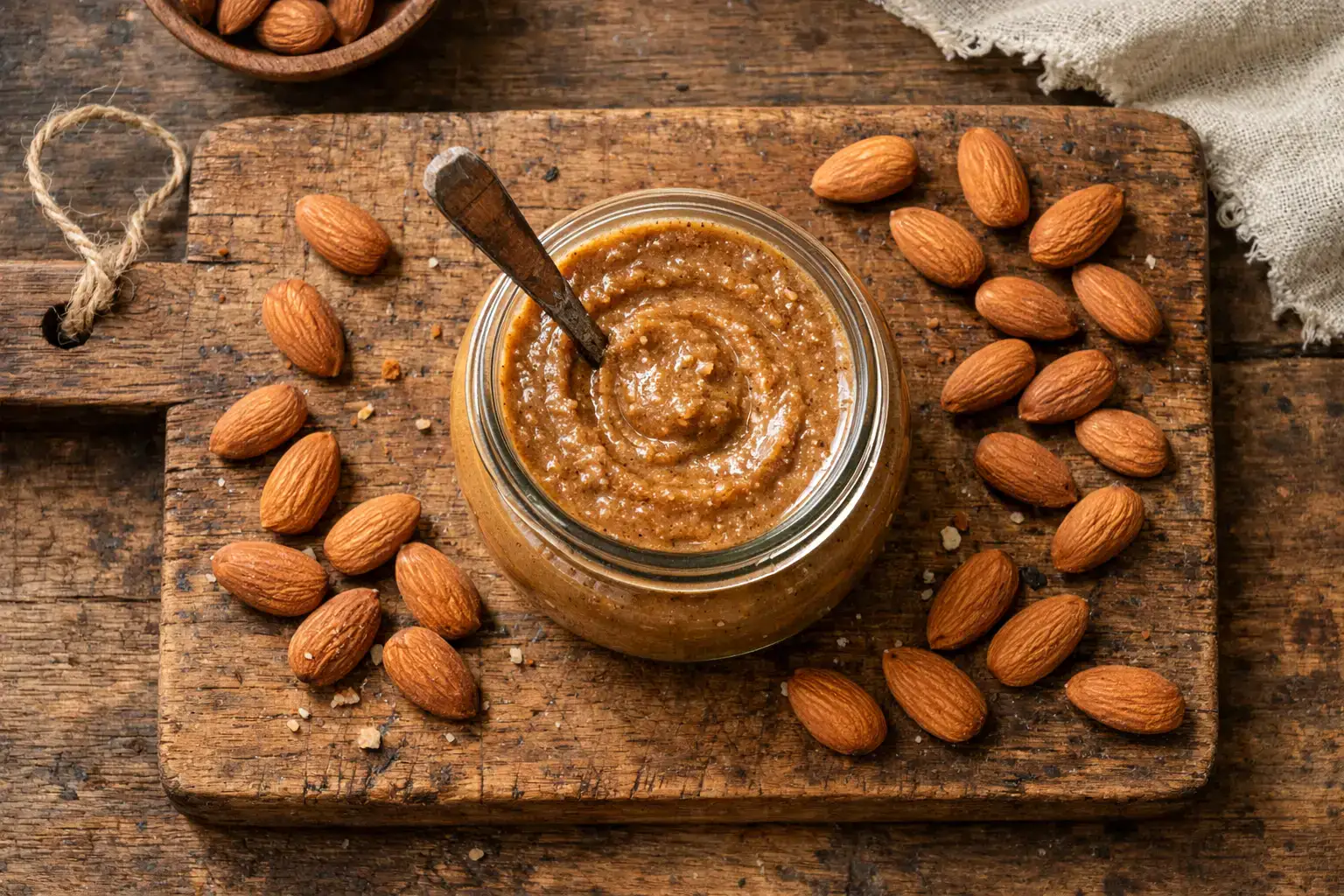
M&S Plant Kitchen Almond Creamy Spread: Calories, Nutrition and Health Benefits
A nutrient-dense vegan almond butter spread packed with heart-healthy monounsaturated fats, vitamin E, and plant protein for every health goal.
Quick Nutrition Facts
Per 1 Tablespoon (16g) | Per 100g shown in brackets
| Nutrient | Amount |
|---|---|
| Calories | 99 kcal (620/100g) |
| Protein | 3.4g (21g/100g) |
| Carbohydrates | 1.9g (12g/100g) |
| Fiber | 1.6g (10g/100g) |
| Sugars | 0.6g (4g/100g) |
| Fat | 8.3g (52g/100g) |
| Vitamin E | 4mg (25mg/100g) |
| Magnesium | 43mg (270mg/100g) |
| Calcium | 43mg (269mg/100g) |
| Iron | 0.5mg (3.3mg/100g) |
Macronutrient Breakdown
 ChatGPT
  Claude
  AI Mode
  Perplexity
NUTRITIONIST INSIGHT
Almond butter delivers 167% of your daily vitamin E in just 100g, making it one of the richest natural sources of this antioxidant. The high monounsaturated fat content (31g per 100g) mirrors the heart-protective profile of olive oil and Mediterranean diets.
Myth Busters
MYTH #1: Almond Butter Is Too Fattening to Eat
TRUTH: While calorie-dense at 620 kcal/100g, the monounsaturated fats in almonds actually promote satiety and may help reduce visceral fat. A 1-tablespoon serving is just 99 calories with 3.4g protein and healthy fats that keep you full.
MYTH #2: Almond Butter Spikes Blood Sugar
TRUTH: Almond butter has a very low glycemic index. Studies show almonds decrease postprandial glycemia and insulinemia in healthy individuals. The high fat and fiber content slows glucose absorption significantly.
MYTH #3: All Nut Butters Are the Same
TRUTH: Almond butter has more vitamin E, magnesium, calcium, and fiber than peanut butter. Per 100g, almond butter provides 25mg vitamin E (167% DV) vs peanut butter's 9mg (60% DV).
MYTH #4: Vegan Spreads Lack Protein
TRUTH: M&S Plant Kitchen Almond Creamy Spread provides 21g protein per 100g, comparable to many animal-based spreads. Almonds provide all essential amino acids except lysine, easily complemented by pairing with whole grains.
MYTH #5: Almond Butter Is Bad for Cholesterol
TRUTH: The opposite is true. Almond consumption improves lipid profiles, lowering LDL cholesterol while maintaining HDL levels. The monounsaturated fats in almond butter are the same heart-healthy fats found in olive oil.
NutriScore by Health Goals
| Health Goal | NutriScore | Why This Score? |
|---|---|---|
| Weight Loss |  | Calorie-dense at 620 kcal/100g, but healthy fats promote satiety. Limit to 1 tbsp (99 kcal) per day. |
| Muscle Gain |  | 21g protein per 100g, 270mg magnesium for muscle function, calorie-dense for bulking. |
| Diabetes Management | | Very low GI, high in monounsaturated fats that improve insulin sensitivity. 10g fiber per 100g slows glucose absorption. |
| PCOS Management |  | Healthy fats support hormone balance, magnesium aids insulin sensitivity. Watch portions due to calorie density. |
| Pregnancy Nutrition | | Rich in vitamin E, magnesium, and calcium essential during pregnancy. Folate and iron support fetal development. |
| Viral/Flu Recovery | | Vitamin E antioxidant support, calorie-dense for maintaining energy, easy to consume when appetite is low. |
PERSONALIZED NUTRITION
Track your meals with NutriScan for personalized NutriScores based on your specific health goals!
Blood Sugar Response to Almond Butter
Understanding how almond butter affects your blood glucose can help you make informed decisions about when and how to eat it.
Typical Glucose Response Curve
This chart shows typical blood glucose response for general healthy individuals. Individual responses may vary. Not medical advice.
How to Flatten the Spike
Pairing almond butter with fiber-rich foods further slows glucose absorption and keeps blood sugar stable:
- 🍞 Whole grain toast - Fiber-rich base for sustained energy release
- 🍎 Apple or celery sticks - Added fiber and water content slow absorption
- 🥣 Oatmeal or porridge - Soluble fiber plus almond butter's healthy fats
- 🫐 Berries and yogurt bowl - Antioxidants with protein and healthy fats
Almond butter is already naturally low-GI, so these pairings help maintain an exceptionally stable glucose response.
Cultural Significance
Almonds have been cultivated for over 5,000 years, originating in the Middle East and Mediterranean regions before becoming one of the world's most valued nuts.
In India:
- Almonds (badam) are central to Ayurvedic medicine for brain health and vitality
- Badam paste used in traditional Indian sweets like barfi, halwa, and kheer
- Soaked almonds consumed daily as a morning health ritual across many Indian households
- India is one of the largest importers of almonds, primarily from California
Global Impact:
- California produces 80% of the world's almonds
- Almond butter has grown from a niche health food to a mainstream pantry staple
- M&S Plant Kitchen range represents the growing demand for vegan, plant-based alternatives to dairy spreads
- The UK vegan spread market has grown over 30% in recent years
Compare & Substitute
Almond Butter vs Similar Spreads (Per 100g)
| Nutrient | 🥜 Almond Butter | 🥜 Peanut Butter | 🌰 Cashew Butter | 🌻 Tahini (Sesame) |
|---|---|---|---|---|
| Calories | 620 kcal | 588 kcal | 574 kcal | 595 kcal |
| Carbs | 12g | 20g | 27g | 21g |
| Fiber | 10g | 6g | 2g | 9g |
| Protein | 21g | 25g | 18g | 17g |
| Fat | 52g | 50g | 46g | 54g |
| Vitamin E | 25mg | 9mg | 0.9mg | 2.4mg |
| Magnesium | 270mg | 168mg | 260mg | 95mg |
| Calcium | 269mg | 43mg | 45mg | 426mg |
| Best For | Heart health, vitamin E boost | Budget protein, muscle gain | Mild flavor, low allergen | Calcium, Middle Eastern dishes |
Frequently Asked Questions
Is M&S Plant Kitchen Almond Creamy Spread good for weight loss?
Almond butter is calorie-dense at 620 kcal per 100g, so portion control is essential. 1 tablespoon (16g) provides 99 calories with 3.4g protein and 8.3g healthy fats that promote lasting fullness.
Best practices: Stick to 1 tablespoon per serving, spread on whole grain toast or apple slices, avoid eating directly from the jar, and pair with fiber-rich foods for better satiety.
Can diabetics eat almond butter?
Almond butter is excellent for diabetics. It has a very low glycemic index, and research shows almonds can improve glycemic control and insulin sensitivity.
Tips for diabetics:
- Use 1-2 tablespoons per serving (12-24g carbs total with pairing food)
- Spread on low-GI bread or pair with vegetables
- The high fiber (10g/100g) and fat content slow glucose absorption
- Monitor blood sugar response when first introducing
Almond butter can actually help flatten blood sugar spikes when paired with higher-GI foods. Always consult your healthcare provider.
How much protein is in almond butter?
M&S Plant Kitchen Almond Creamy Spread contains 21g of protein per 100g. One tablespoon (16g) provides about 3.4g of plant-based protein.
While not as high as peanut butter (25g/100g), almond butter provides superior micronutrients including vitamin E (167% DV) and magnesium (64% DV) per 100g.
What are the main health benefits of almond butter?
Key Benefits:
- Heart Health: Monounsaturated fats lower LDL cholesterol and support cardiovascular function
- Blood Sugar Control: Low GI with fiber and healthy fats that slow glucose absorption
- Bone Health: 269mg calcium and 270mg magnesium per 100g support bone density
- Antioxidant Protection: 25mg vitamin E per 100g (167% DV) fights oxidative stress
- Muscle Function: 270mg magnesium prevents cramps and supports recovery
- Skin Health: Vitamin E promotes healthy skin and may reduce UV damage
Is almond butter healthier than peanut butter?
Both are nutritious, but almond butter has advantages in several areas:
Almond butter wins: More vitamin E (25mg vs 9mg), more magnesium (270mg vs 168mg), more calcium (269mg vs 43mg), more fiber (10g vs 6g), fewer carbs (12g vs 20g).
Peanut butter wins: More protein (25g vs 21g), more affordable, wider availability.
Recommendation: Almond butter for micronutrient density and lower carbs. Peanut butter for budget-friendly protein. Rotate both for variety.
How much almond butter should I eat per day?
General Guidelines:
- 1 tablespoon (16g) daily - Weight loss or calorie-conscious diets (99 kcal)
- 2 tablespoons (32g) daily - General health and maintenance (198 kcal)
- 2-3 tablespoons daily - Muscle gain, bulking, or high-energy needs (198-297 kcal)
Avoid excess: More than 3 tablespoons daily adds significant calories (297+ kcal) without proportional nutrient benefit.
Track your meals with NutriScan app to see how almond butter fits your personal nutrition goals.
Can I eat almond butter on an empty stomach?
Generally safe for most people. The healthy fats and protein provide sustained energy and are gentle on digestion.
May want to avoid if you have:
- Nut allergies: Tree nut allergy makes all almond products unsafe
- IBS: High fat content may trigger symptoms in some individuals
- Gallbladder issues: High fat foods can cause discomfort
Better approach: Spread on whole grain toast or mix into oatmeal for a balanced breakfast with carbs, protein, and fats.


Similar Nutritious Foods
4505 Chicharrones Classic Chili Salt
7 Eleven Japan Crispy Corn Cheese
Explore More Nutrition Tools & Resources
AI Calorie Counter App - Snap a Photo, Get Macros
AI Nutritionist App That Reads Your Logged Meals
Best Protein Supplements for Women
Bulking Meal Plan App That Sets Your Surplus
ChatGPT Calorie Counter Alternative That Keeps the Total
ChatGPT Diet Plan Alternative That Tracks What You Eat
ChatGPT Weight Loss Coach Alternative With a Food Log
Fast Food Calorie Counter App That Reads the Tray
Free Calorie Tracker App with AI Photo Scans | NutriScan
Indian Diet Plan App With Veg and Non Veg Meals
Indian Food Calorie Calculator - Get Instant Nutrition Facts for Desi Meals — 2026
Intermittent Fasting for Women, Timer and Meal Log App
Intermittent Fasting Tracker App - Free Fasting Timer
Macro Tracker App That Fills the Numbers From a Photo
Mediterranean Diet Meal Plan App That Counts the Oil
Micronutrient Tracker App for Vitamins and Minerals
MyFitnessPal Alternative That Stays Free | NutriScan
NutriScore App: A Free Grade on Every Meal | NutriScan
Nutrition Label Scanner App for the Amount You Ate
Second Trimester Protein Guide
Vegetarian Meal Plan App With a Protein Target
Voice Calorie Counter - Speak to Track Meals Hands-Free
Water and Calorie Tracker App - Free Water Log