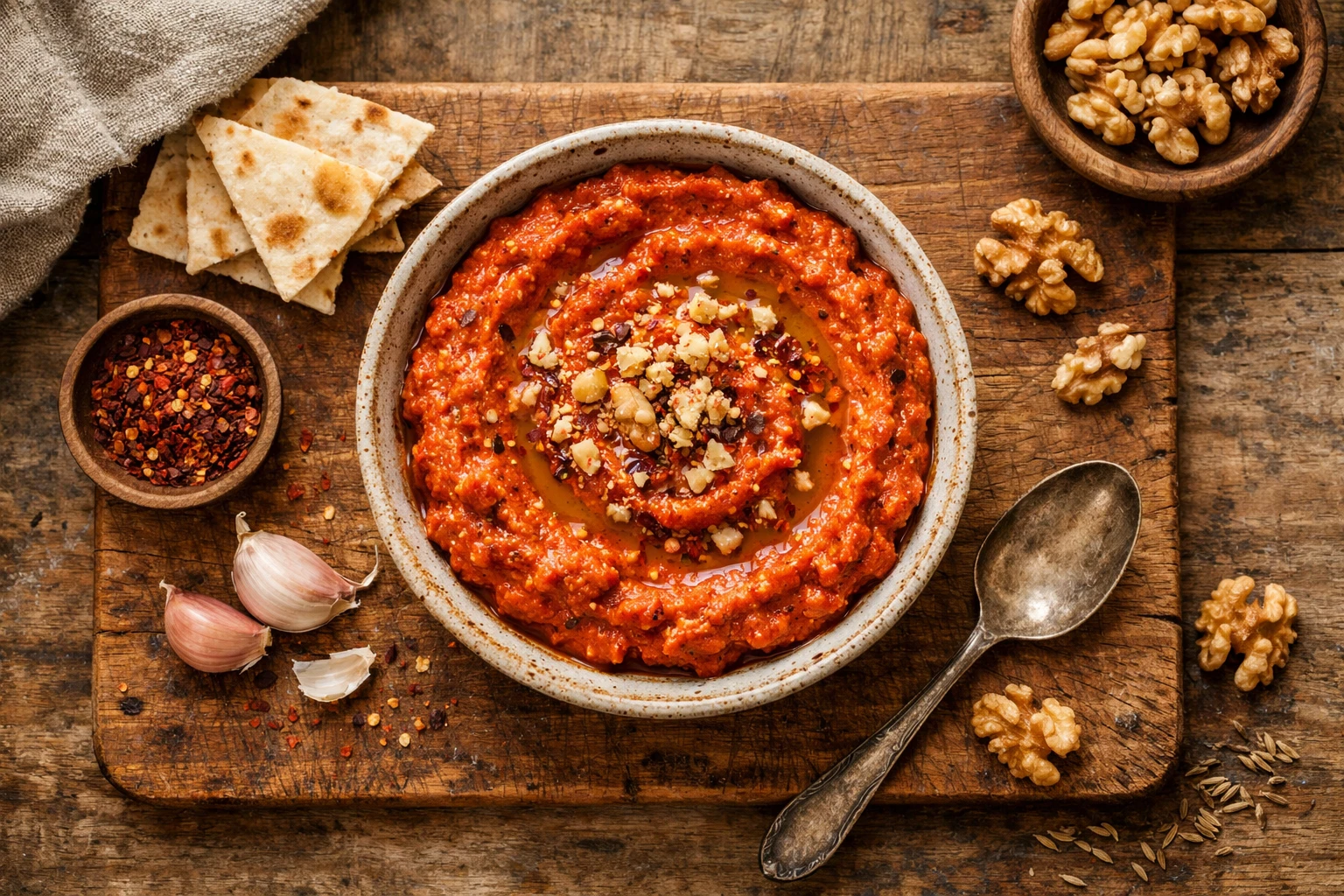
Muhammara Dip: Calories, Nutrition and Health Benefits
Vibrant Middle Eastern red pepper and walnut dip rich in omega-3 fats, antioxidants, and Mediterranean flavor.
Quick Nutrition Facts
Per 100g (About 1/2 Cup)
| Nutrient | Amount |
|---|---|
| Calories | 200 kcal |
| Protein | 3.3g |
| Carbohydrates | 13.3g |
| Fiber | 3g |
| Sugars | 6g |
| Fat | 13.3g |
| Omega-3 (ALA) | 2-3g |
| Vitamin C | 18mg |
| Vitamin E | 2.5mg |
| Iron | 1.2mg |
Macronutrient Breakdown
 ChatGPT
  Claude
  AI Mode
  Perplexity
NUTRITIONIST INSIGHT
Muhammara combines omega-3-rich walnuts with antioxidant-packed roasted red peppers, creating a nutrient-dense dip. The pomegranate molasses adds depth while the healthy fats support vitamin absorption from vegetables.
Myth Busters
MYTH #1: Muhammara Is Too High in Fat for Weight Loss
TRUTH: While calorie-dense, muhammara provides healthy unsaturated fats promoting satiety. Walnut consumption supports weight management despite calorie content. Portion control (2-3 tablespoons) with vegetables creates a satisfying, nutrient-rich snack under 100 calories.
MYTH #2: All Dips Are Unhealthy
TRUTH: Muhammara provides substantial nutrition: 2-3g omega-3 fatty acids for heart health, vitamin C and antioxidants from peppers, vitamin E from walnuts, and fiber for digestive wellness. Unlike cream-based dips, it offers anti-inflammatory compounds.
MYTH #3: Diabetics Should Avoid Muhammara Due to Sugar Content
TRUTH: Despite containing pomegranate molasses, muhammara has a low glycemic index. Healthy fats slow glucose absorption, while fiber (3g per 100g) moderates blood sugar response. Best paired with vegetables and consumed in 2-3 tablespoon portions.
MYTH #4: Store-Bought Is As Good As Homemade
TRUTH: Commercial versions often contain added sugars, preservatives, and lower-quality oils reducing omega-3 content. Homemade muhammara controls ingredients, maximizes nutrient density, and eliminates unnecessary additives while preserving authentic flavor.
MYTH #5: Muhammara Cannot Fit Mediterranean Diet
TRUTH: Muhammara is a traditional Mediterranean/Middle Eastern staple perfectly aligned with heart-healthy eating patterns. It combines nuts, vegetables, olive oil, and minimal processing - all Mediterranean diet cornerstones supporting cardiovascular wellness.
MYTH #6: The Calories Make It Unsuitable for Healthy Eating
TRUTH: Calorie density doesn't determine health value. Muhammara's calories come from nutrient-rich walnuts and peppers providing essential fatty acids, vitamins, minerals, and antioxidants. When portion-controlled and paired with vegetables, it enhances overall diet quality.
NutriScore by Health Goals
| Health Goal | NutriScore | Why This Score? |
|---|---|---|
| Weight Loss |  | 200 calories per 100g requires portion control. Healthy fats promote satiety. Best consumed 2-3 tablespoons (30-45g) with vegetables. |
| Muscle Gain |  | Moderate protein (3.3g per 100g). Healthy fats support hormone production. Pair with high-protein foods like grilled chicken or Greek yogurt. |
| Diabetes Management | | Low glycemic index due to healthy fats and fiber. Walnuts improve glycemic control. Limit to 2-3 tablespoons, pair with vegetables. |
| PCOS Management | | Omega-3 fats support hormonal balance. Antioxidants reduce inflammation. Moderate portions (2-3 tbsp) align with anti-inflammatory eating. |
| Pregnancy Nutrition | | Omega-3 ALA supports fetal brain development, vitamin E supports maternal health. Vitamin C aids iron absorption. |
| Viral/Flu Recovery | | Vitamin C for immune support, antioxidants for cellular health, easy to digest, calorie-dense for energy needs during illness. |
PERSONALIZED NUTRITION
Track your meals with NutriScan for personalized NutriScores based on your specific health goals!
Blood Sugar Response to Muhammara
Understanding how muhammara affects blood glucose helps optimize portion sizes and pairings.
Typical Glucose Response Curve
This chart shows typical blood glucose response for general healthy individuals. Individual responses may vary. Not medical advice.
How to Flatten the Spike
Pairing muhammara with protein and vegetables creates balanced blood sugar response:
- 🥒 Cucumber slices - Low-calorie vehicle adding hydration
- 🥕 Carrot and celery sticks - Fiber-rich, crunchy vegetables
- 🫑 Bell pepper strips - Additional vitamin C and antioxidants
- 🧀 Whole grain crackers with cheese - Protein balances carbohydrates
This combination provides sustained energy, prevents glucose spikes, and increases meal satisfaction.
Cultural Significance
Muhammara originated in Aleppo, Syria, with roots dating back centuries as part of Levantine mezze traditions.
In Middle Eastern Culture:
- Essential mezze component at gatherings and celebrations
- Symbol of Syrian culinary heritage and regional pride
- Traditionally prepared during holidays and family occasions
- Passed down through generations with regional variations
Regional Variations:
- Syrian: Traditional version with Aleppo pepper and pomegranate molasses
- Turkish: Often includes cumin and more breadcrumbs
- Lebanese: May add extra lemon juice for tangier profile
- Modern: Variations with different peppers or nut combinations
Global Impact:
- Growing popularity in Mediterranean and fusion restaurants
- Recognized superfood dip in health food movements
- Featured in plant-based and vegan cuisine globally
Compare & Substitute
Muhammara vs Similar Dips (Per 100g)
| Nutrient | 🌶️ Muhammara | 🧆 Hummus | 🥑 Guacamole | 🧄 Baba Ganoush |
|---|---|---|---|---|
| Calories | 200 kcal | 166 kcal | 160 kcal | 120 kcal |
| Carbs | 13.3g | 14g | 9g | 8g |
| Fiber | 3g | 6g | 7g | 3g |
| Protein | 3.3g | 8g | 2g | 2g |
| Fat | 13.3g | 10g | 15g | 9g |
| Omega-3 | 2-3g (ALA) | 0.1g | 0.1g | 0.05g |
| Vitamin C | 18mg | 4mg | 10mg | 3mg |
| Vitamin E | 2.5mg | 0.5mg | 2mg | 0.4mg |
| Best For | Omega-3, antioxidants | Protein, lower calories | Healthy fats, fiber | Low calorie, smoky flavor |
Frequently Asked Questions
Is muhammara good for weight loss?
Muhammara can support weight loss when portion-controlled. While calorie-dense (200 calories per 100g), it provides healthy fats promoting satiety and reducing overall food intake. Best practices: limit to 2-3 tablespoons (30-45g, 60-90 calories); pair with raw vegetables instead of pita bread; use as flavor enhancer rather than main component; measure portions to prevent overconsumption.
The omega-3 fats and fiber create lasting fullness, potentially reducing snacking between meals.
Can diabetics eat muhammara?
Yes, diabetics can enjoy muhammara in moderation. The combination of healthy fats (13.3g), fiber (3g), and protein (3.3g) creates a low glycemic index food that doesn't spike blood sugar significantly.
Tips for diabetics:
- Limit to 2-3 tablespoons (30-45g)
- Pair with non-starchy vegetables (cucumber, celery, peppers)
- Avoid pairing with white bread; choose whole grain crackers if needed
- Monitor blood sugar 2 hours after consumption
- Homemade versions allow sugar control
The walnut content may improve insulin sensitivity and glycemic control over time.
How much omega-3 is in muhammara?
Muhammara contains approximately 2-3 grams of omega-3 fatty acids per 100g, primarily as ALA (alpha-linolenic acid) from walnuts. This represents a significant plant-based omega-3 source.
Context: 100g muhammara (about 1/2 cup) provides 100-150% of daily ALA recommendations for adults. While not as potent as fish-based omega-3s (EPA/DHA), plant-based ALA still supports heart health, reduces inflammation, and contributes to brain wellness.
What are the main health benefits of muhammara?
Key Benefits:
- Heart Health: 2-3g omega-3 fats reduce cardiovascular disease risk
- Antioxidant Protection: Roasted red peppers provide vitamin C and carotenoids
- Anti-Inflammatory: Walnuts and peppers contain compounds reducing chronic inflammation
- Skin Health: Vitamin E (2.5mg) supports skin integrity and protection
- Digestive Wellness: 3g fiber per 100g promotes healthy digestion
- Brain Support: Omega-3 fats support cognitive function and mood
Is muhammara healthier than hummus?
Both are nutritious with different strengths. Muhammara excels in omega-3 content (2-3g vs 0.1g in hummus) and antioxidants from red peppers; hummus provides more protein (8g vs 3.3g) and fiber (6g vs 3g) while being lower in calories (166 vs 200).
Choose muhammara for: Omega-3 needs, antioxidant boost, vitamin E, unique flavor
Choose hummus for: Higher protein, more fiber, fewer calories, versatility
Best approach: Include both in rotation for complementary nutritional benefits.
What is the traditional way to serve muhammara?
Traditional muhammara is served as part of mezze spread, presented in a shallow bowl with olive oil drizzled on top, garnished with chopped walnuts and sometimes pomegranate seeds, accompanied by warm pita bread or fresh vegetables.
Classic serving suggestions:
- Drizzle high-quality extra virgin olive oil over surface
- Sprinkle chopped walnuts and fresh parsley
- Serve at room temperature for best flavor
- Pair with raw vegetables, pita chips, or whole grain bread
- Include as part of larger Mediterranean appetizer spread
This presentation enhances flavor while adding healthy fats from olive oil.
How long does homemade muhammara last?
Homemade muhammara lasts 5-7 days refrigerated in airtight container. The acidity from pomegranate molasses and lemon juice acts as natural preservative. Always use clean utensils to prevent contamination.
Storage tips: Store in glass container with tight lid; drizzle olive oil layer on top before refrigerating (preserves freshness); bring to room temperature 30 minutes before serving (enhances flavor); freeze for up to 3 months in portions; stir well after refrigeration as ingredients may separate.
Can I make muhammara healthier at home?
Yes, homemade muhammara allows complete ingredient control: reduce olive oil slightly (maintains texture with fewer calories); use roasted red peppers without added oils; control pomegranate molasses amount (reduces sugar); add extra walnuts (increases omega-3 and protein); include cumin or smoked paprika (flavor without calories).
Healthier variations: Substitute half the breadcrumbs with ground oats (more fiber); add roasted eggplant (increases volume, lowers calories per gram); use fresh roasted peppers instead of jarred (reduces sodium); blend in white beans (increases protein and fiber). These modifications maintain traditional flavor while optimizing nutritional profile.


Similar Nutritious Fruits
4505 Chicharrones Classic Chili Salt
7 Eleven Japan Crispy Corn Cheese
Explore More Nutrition Tools & Resources
AI Calorie Counter App - Snap a Photo, Get Macros
AI Nutritionist App That Reads Your Logged Meals
Best Protein Supplements for Women
Bulking Meal Plan App That Sets Your Surplus
ChatGPT Calorie Counter Alternative That Keeps the Total
ChatGPT Diet Plan Alternative That Tracks What You Eat
ChatGPT Weight Loss Coach Alternative With a Food Log
Fast Food Calorie Counter App That Reads the Tray
Free Calorie Tracker App with AI Photo Scans | NutriScan
Indian Diet Plan App With Veg and Non Veg Meals
Indian Food Calorie Calculator - Get Instant Nutrition Facts for Desi Meals — 2026
Intermittent Fasting for Women, Timer and Meal Log App
Intermittent Fasting Tracker App - Free Fasting Timer
Macro Tracker App That Fills the Numbers From a Photo
Mediterranean Diet Meal Plan App That Counts the Oil
Micronutrient Tracker App for Vitamins and Minerals
MyFitnessPal Alternative That Stays Free | NutriScan
NutriScore App: A Free Grade on Every Meal | NutriScan
Nutrition Label Scanner App for the Amount You Ate
Second Trimester Protein Guide
Vegetarian Meal Plan App With a Protein Target
Voice Calorie Counter - Speak to Track Meals Hands-Free
Water and Calorie Tracker App - Free Water Log