Mushroom Coffee (Lion's Mane Blend): Calories, Nutrition and Health Benefits
A functional coffee blend combining reduced caffeine with lion's mane mushroom for focused energy, cognitive support, and adaptogenic benefits at just 5 calories per cup.
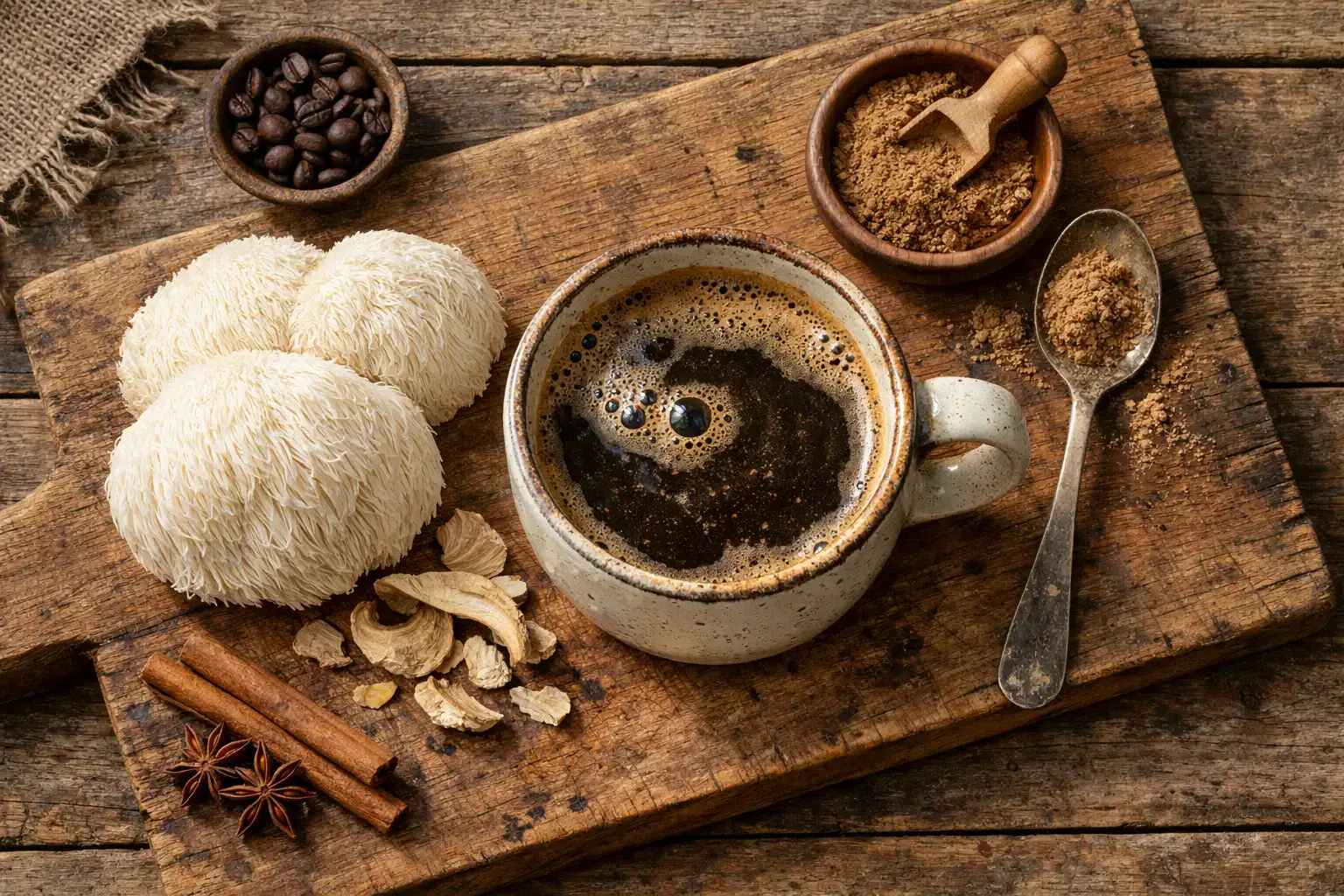
Quick Nutrition Facts
Per 1 Cup Brewed Mushroom Coffee (240ml)
| Nutrient | Amount |
|---|---|
| Calories | 5 kcal |
| Protein | 0g |
| Carbohydrates | 1g |
| Fiber | 0g |
| Sugars | 0g |
| Fat | 0g |
| Caffeine | 40-50mg |
| Beta-Glucans | 250-500mg |
| Potassium | 49mg |
| Riboflavin | 0.1mg |
Macronutrient Breakdown
 ChatGPT
  Claude
  AI Mode
  Perplexity
NUTRITIONIST INSIGHT
Mushroom coffee delivers cognitive-boosting lion's mane beta-glucans with roughly half the caffeine of regular coffee. The adaptogens provide sustained mental clarity without the crash, making it ideal for focus-heavy work or caffeine-sensitive individuals.
Myth Busters
MYTH #1: Mushroom Coffee Tastes Like Mushrooms
TRUTH: Mushroom coffee has a rich, earthy flavor similar to dark roast coffee. The mushroom extracts are subtle and most people cannot distinguish it from regular coffee in blind taste tests. The lion's mane and other adaptogens add depth, not a mushroom flavor.
MYTH #2: Mushroom Coffee Has No Real Health Benefits
TRUTH: A double-blind clinical study found lion's mane supplementation improved cognitive task performance and reduced subjective stress in young adults. The beta-glucans in medicinal mushrooms also support immune function and gut health.
MYTH #3: Mushroom Coffee Is Caffeine-Free
TRUTH: Most mushroom coffee blends contain 40-50mg caffeine per cup (about half of regular coffee's 95mg). It is not caffeine-free. The reduced caffeine combined with L-theanine-like effects from adaptogens provides smoother, longer-lasting alertness.
MYTH #4: You Can Get the Same Benefits from Regular Mushrooms
TRUTH: Mushroom coffee uses concentrated extracts of medicinal mushrooms (lion's mane, chaga, reishi) that contain far higher levels of bioactive compounds like hericenones and erinacines than culinary mushrooms. These compounds stimulate nerve growth factor (NGF) production.
MYTH #5: Mushroom Coffee Is Just a Marketing Gimmick
TRUTH: Research on Hericium erinaceus shows oral intake improves cognitive function. The beta-glucans in medicinal mushrooms have documented immunomodulatory effects. While more human trials are needed, current evidence supports meaningful benefits.
NutriScore by Health Goals
| Health Goal | NutriScore | Why This Score? |
|---|---|---|
| Weight Loss |  | Only 5 calories per cup with zero fat or sugar. Adaptogens support cortisol balance, reducing stress-related cravings. |
| Muscle Gain |  | Low-calorie pre-workout option. Caffeine enhances exercise performance; lion's mane supports mind-muscle connection and focus during training. |
| Diabetes Management | | Virtually zero carbs, very low GI. Mushroom polysaccharides may improve insulin sensitivity and support blood sugar regulation. |
| PCOS Management | | No sugar impact on insulin. Lower caffeine reduces cortisol and androgen stimulation. Adaptogenic properties support hormonal balance. |
| Pregnancy Nutrition |  | Lower caffeine (40-50mg) is within ACOG's 200mg daily limit, but medicinal mushroom extracts lack pregnancy safety studies. Consult your doctor. |
| Viral/Flu Recovery | | Beta-glucans support immune cell activation. Warm beverage soothes throat. Hydrating with mild caffeine for alertness during recovery. |
PERSONALIZED NUTRITION
Track your meals with NutriScan for personalized NutriScores based on your specific health goals!
Blood Sugar Response to Mushroom Coffee
Understanding how mushroom coffee affects your blood glucose can help you make informed decisions about when and how to drink it.
Typical Glucose Response Curve
This chart shows typical blood glucose response for general healthy individuals. Individual responses may vary. Not medical advice.
How to Flatten the Spike
Mushroom coffee consumed black has minimal glucose impact. However, adding sweeteners or milk changes the response:
- 🥛 Unsweetened almond milk - Adds minimal calories with no sugar spike
- 🥥 Coconut oil or MCT oil - Healthy fats for sustained energy, no glucose impact
- 🧈 Grass-fed butter or ghee - Keto-friendly, provides fatty acids for brain fuel
- 🍯 Avoid honey/sugar - Adding sweeteners defeats the low-GI advantage
This makes mushroom coffee one of the most blood-sugar-friendly beverages available, especially for those managing diabetes or insulin resistance.
Cultural Significance
Mushroom coffee builds on centuries of traditional medicine practices across multiple cultures.
In Asia:
- Traditional Chinese Medicine has used lion's mane (hou tou gu) for digestive and cognitive health for over 1,000 years
- Reishi mushroom (lingzhi) is called the "mushroom of immortality" in Chinese folklore
- Japanese monks used lion's mane to enhance meditation focus
- Cordyceps was prized in Tibetan medicine for endurance at high altitudes
Global Adoption:
- Finland pioneered modern mushroom coffee during WWII when coffee was scarce, using chaga as a substitute
- The global functional mushroom market is projected to exceed $19 billion by 2030
- Silicon Valley adopted mushroom coffee as a biohacking staple for sustained productivity
- India's Ayurveda recognizes medicinal mushrooms as rasayana (rejuvenating) tonics
Compare & Substitute
Mushroom Coffee vs Similar Functional Beverages (Per Serving)
| Nutrient | 🍄 Mushroom Coffee | ☕ Regular Coffee | 🍵 Matcha Latte | 🧉 Yerba Mate |
|---|---|---|---|---|
| Calories | 5 kcal | 2 kcal | 70 kcal | 5 kcal |
| Caffeine | 40-50mg | 95mg | 70mg | 85mg |
| Carbs | 1g | 0g | 10g | 0g |
| Protein | 0g | 0.3g | 3g | 0g |
| Fat | 0g | 0g | 2.5g | 0g |
| Antioxidants | Beta-glucans, polyphenols | Chlorogenic acid | EGCG, L-theanine | Polyphenols, saponins |
| Best For | Focus, low caffeine, immunity | Quick energy, alertness | Calm focus, antioxidants | Sustained energy, social |
Frequently Asked Questions
How many calories are in mushroom coffee?
A standard cup of mushroom coffee (lion's mane blend) contains approximately 5 calories when consumed black. This is comparable to regular black coffee (2-5 calories) and makes it an excellent low-calorie functional beverage.
Adding milk/sweeteners increases calories significantly: Oat milk adds 60 calories, honey adds 64 calories, and cream adds 50 calories per tablespoon.
Does mushroom coffee really improve focus?
Research supports cognitive benefits from lion's mane. A double-blind study found participants performed quicker on cognitive tasks (Stroop test) after lion's mane supplementation, with reduced subjective stress after 28 days.
Best practices for focus: Drink 30 minutes before focused work, consume consistently for cumulative benefits, pair with adequate sleep and hydration.
Is mushroom coffee safe for diabetics?
Mushroom coffee is generally considered diabetes-friendly. It has virtually no carbs or sugar, a very low glycemic index, and the adaptogenic mushrooms may help improve insulin sensitivity.
Tips for diabetics:
- Drink black or with unsweetened almond milk
- Avoid adding sugar, honey, or flavored syrups
- Monitor blood sugar if taking glucose-lowering medications (lion's mane may lower blood sugar)
- Consult your healthcare provider before regular use
How much caffeine is in mushroom coffee?
Mushroom coffee typically contains 40-50mg of caffeine per cup, roughly half the amount in regular coffee (95mg). This lower caffeine content reduces jitters and anxiety while the lion's mane and other adaptogens provide complementary cognitive support.
Caffeine comparison: Mushroom coffee (40-50mg) < green tea (28mg) < regular coffee (95mg) < espresso (63mg per shot).
Can I drink mushroom coffee during pregnancy?
The caffeine content (40-50mg) is within ACOG's recommended 200mg daily limit for pregnancy. However, concentrated medicinal mushroom extracts (lion's mane, chaga, reishi) have not been adequately studied for pregnancy safety.
Recommendation: Consult your healthcare provider before consuming mushroom coffee during pregnancy or breastfeeding. If approved, limit to 1 cup per day.
What are the side effects of mushroom coffee?
Most people tolerate mushroom coffee well. Potential side effects include:
- Digestive discomfort in sensitive individuals (start with half a cup)
- Allergic reactions in those with mushroom allergies (avoid entirely)
- Drug interactions with blood thinners, immunosuppressants, or diabetes medications
- Mild headaches during the transition from regular coffee (lower caffeine)
Who should avoid it: People with mushroom allergies, those on immunosuppressant drugs, and individuals with autoimmune conditions should consult their doctor first.


Similar Nutritious Foods
4505 Chicharrones Classic Chili Salt
7 Eleven Japan Crispy Corn Cheese
Explore More Nutrition Tools & Resources
AI Calorie Counter App - Snap a Photo, Get Macros
AI Nutritionist App That Reads Your Logged Meals
Best Protein Supplements for Women
Bulking Meal Plan App That Sets Your Surplus
ChatGPT Calorie Counter Alternative That Keeps the Total
ChatGPT Diet Plan Alternative That Tracks What You Eat
ChatGPT Weight Loss Coach Alternative With a Food Log
Fast Food Calorie Counter App That Reads the Tray
Free Calorie Tracker App with AI Photo Scans | NutriScan
Indian Diet Plan App With Veg and Non Veg Meals
Indian Food Calorie Calculator - Get Instant Nutrition Facts for Desi Meals — 2026
Intermittent Fasting for Women, Timer and Meal Log App
Intermittent Fasting Tracker App - Free Fasting Timer
Macro Tracker App That Fills the Numbers From a Photo
Mediterranean Diet Meal Plan App That Counts the Oil
Micronutrient Tracker App for Vitamins and Minerals
MyFitnessPal Alternative That Stays Free | NutriScan
NutriScore App: A Free Grade on Every Meal | NutriScan
Nutrition Label Scanner App for the Amount You Ate
Second Trimester Protein Guide
Vegetarian Meal Plan App With a Protein Target
Voice Calorie Counter - Speak to Track Meals Hands-Free
Water and Calorie Tracker App - Free Water Log