Natural Almond Butter: Calories, Nutrition and Health Benefits
A nutrient-dense powerhouse packed with heart-healthy monounsaturated fats, plant protein, and essential minerals for every health goal.
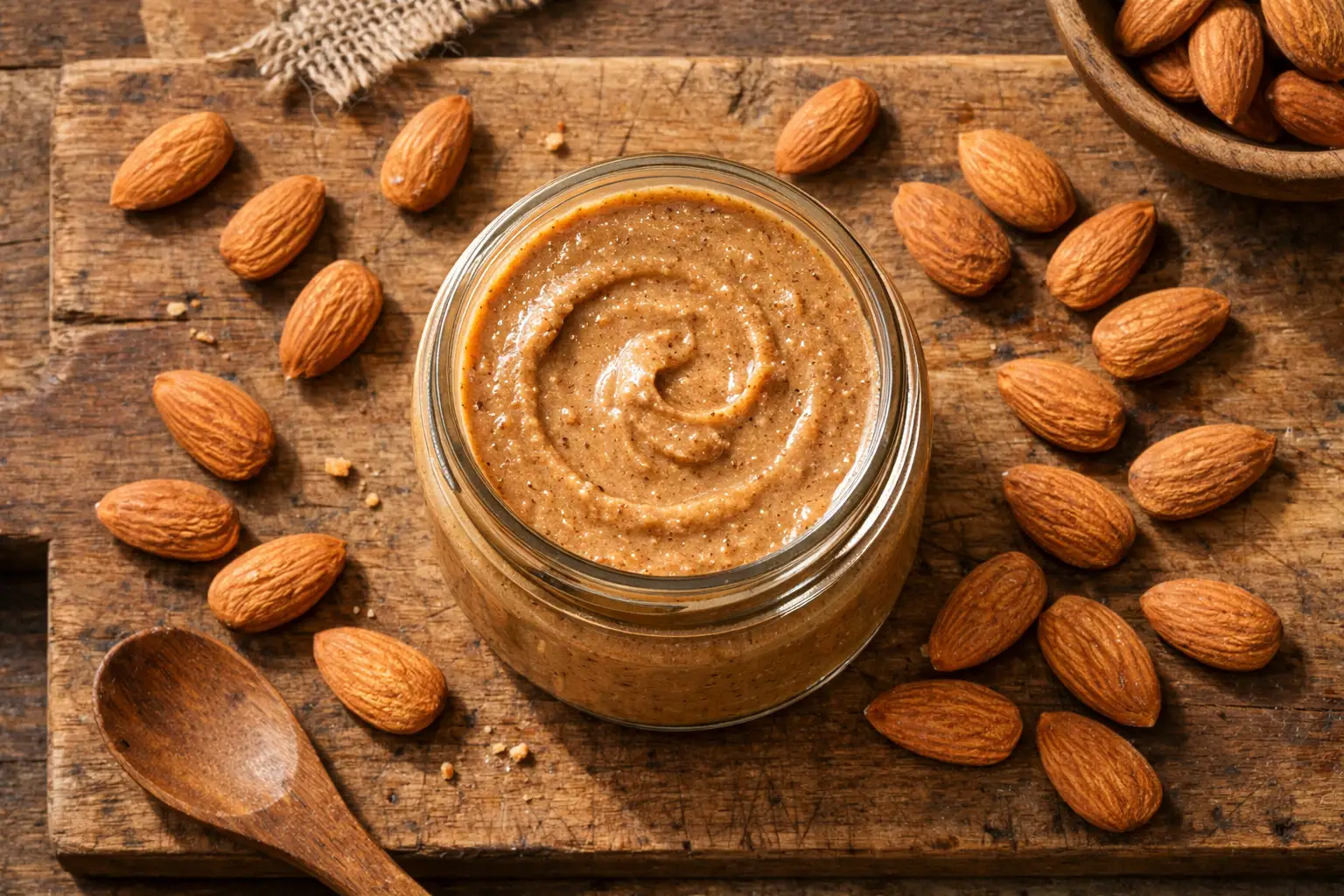
Quick Nutrition Facts
Per 2 Tablespoons (32g)
| Nutrient | Amount |
|---|---|
| Calories | 196 kcal |
| Protein | 6.7g |
| Carbohydrates | 6.1g |
| Fiber | 3.3g |
| Sugars | 1.4g |
| Fat | 18g |
| Vitamin E | 8.3mg |
| Calcium | 111mg |
| Magnesium | 89mg |
| Iron | 1.1mg |
Macronutrient Breakdown
 ChatGPT
  Claude
  AI Mode
  Perplexity
NUTRITIONIST INSIGHT
Natural almond butter delivers 173% of your daily vitamin E in just 100g, making it one of the richest whole-food sources of this antioxidant. The 3:1 ratio of monounsaturated to polyunsaturated fats mirrors the heart-protective Mediterranean diet pattern.
Myth Busters
MYTH #1: Almond Butter Is Too High in Fat to Be Healthy
TRUTH: The 56g fat per 100g is predominantly monounsaturated (33g), the same heart-healthy fat in olive oil. Studies show almonds lower LDL cholesterol and reduce heart disease risk without causing weight gain when eaten in appropriate portions.
MYTH #2: Almond Butter Causes Weight Gain
TRUTH: Despite being calorie-dense (614 kcal/100g), the combination of protein, fiber, and healthy fats promotes satiety and reduces overall calorie intake. Studies associate nut consumption with lower obesity risk, not higher.
MYTH #3: Diabetics Should Avoid Almond Butter
TRUTH: Almond butter has a near-zero glycemic index. Research shows almonds decrease postprandial glycemia and improve insulin sensitivity in both healthy individuals and those with type 2 diabetes.
MYTH #4: Natural Almond Butter Lacks Protein
TRUTH: With 21g protein per 100g (6.7g per serving), almond butter provides more protein than eggs per calorie. It contains all essential amino acids, making it a valuable plant-based protein source for vegetarians and vegans.
MYTH #5: The Oil Separation Means It's Gone Bad
TRUTH: Oil separation in natural almond butter is completely normal. It means no hydrogenated oils or stabilizers were added. Simply stir it back in and store in the refrigerator to slow separation.
NutriScore by Health Goals
| Health Goal | NutriScore | Why This Score? |
|---|---|---|
| Weight Loss |  | High satiety from protein (21g) and fiber (10g). Calorie-dense, so limit to 1 tbsp (98 cal) per serving for weight loss. |
| Muscle Gain |  | 21g plant protein, 347mg calcium, 279mg magnesium per 100g. Excellent post-workout with banana or toast for carb-protein combo. |
| Diabetes Management | | Near-zero GI, almonds improve glycemic control in type 2 diabetes. Pair with apple slices or whole grain crackers. |
| PCOS Management | | Monounsaturated fats support hormone balance. Magnesium helps insulin sensitivity. Limit to 2 tbsp daily due to calorie density. |
| Pregnancy Nutrition | | Rich in folate, calcium (347mg), iron (3.5mg), and vitamin E. ACOG recommends nuts as part of healthy pregnancy nutrition. |
| Viral/Flu Recovery | | Vitamin E (26mg, 173% DV) supports immune function. Easy to consume, calorie-dense for maintaining energy during illness. |
PERSONALIZED NUTRITION
Track your meals with NutriScan for personalized NutriScores based on your specific health goals!
Blood Sugar Response to Natural Almond Butter
Understanding how natural almond butter affects your blood glucose can help you make informed decisions about when and how to eat it.
Typical Glucose Response Curve
This chart shows typical blood glucose response for general healthy individuals. Individual responses may vary. Not medical advice.
How to Flatten the Spike
Pairing almond butter with carbohydrate-rich foods significantly blunts the glucose response by slowing digestion:
- 🍎 Apple slices with almond butter - Classic pairing that reduces fruit sugar absorption
- 🍞 Whole grain toast - Fiber plus healthy fats for sustained energy
- 🍌 Banana with almond butter - Pre-workout combo with controlled glucose release
- 🥣 Oatmeal topped with almond butter - Adds protein and fats to slow-digesting carbs
Almond butter is itself a blood sugar stabilizer. Adding it to high-GI foods reduces their overall glycemic impact.
Cultural Significance
Almond butter traces its roots to the almond tree, cultivated for over 5,000 years in the Middle East and Mediterranean regions.
Historical Roots:
- Ancient Persians and Arabs ground almonds into pastes for cooking and medicinal use
- European marzipan tradition dates to the Middle Ages, using almond paste as a base
- Modern almond butter gained popularity in the US health food movement of the 1990s
In India:
- Almonds (badam) hold cultural significance in Ayurveda as a brain and memory tonic
- Badam paste is a staple in Indian sweets: badam barfi, badam halwa, badam milk
- Soaked almonds are a traditional morning ritual believed to boost cognitive function
- India is the world's largest almond importer, reflecting deep cultural demand
Global Impact:
- California produces 80% of the world's almonds, making it a major agricultural crop
- Almond butter market valued at $800M+ globally, growing 8% annually
- Increasingly popular as a dairy-free, plant-based protein alternative
Compare & Substitute
Natural Almond Butter vs Similar Nut Butters (Per 100g)
| Nutrient | 🥜 Almond Butter | 🥜 Peanut Butter | 🌰 Cashew Butter | 🥥 Tahini (Sesame) |
|---|---|---|---|---|
| Calories | 614 kcal | 588 kcal | 574 kcal | 595 kcal |
| Carbs | 19g | 20g | 28g | 21g |
| Fiber | 10g | 6g | 2g | 9g |
| Protein | 21g | 25g | 18g | 17g |
| Fat | 56g | 50g | 47g | 54g |
| Vitamin E | 26mg | 9mg | 0.9mg | 2.4mg |
| Calcium | 347mg | 54mg | 43mg | 426mg |
| Magnesium | 279mg | 168mg | 260mg | 95mg |
| Best For | Heart health, vitamin E | Budget protein, muscle gain | Creamy texture, mild flavor | Calcium, cooking versatility |
Frequently Asked Questions
Is almond butter good for weight loss?
Yes, almond butter supports weight loss when eaten in controlled portions. Two tablespoons provide 196 calories with 6.7g protein and 3.3g fiber that promote satiety and reduce overall calorie intake throughout the day.
Best practices: Limit to 1 tablespoon (98 cal) per serving for active weight loss, measure portions carefully, pair with fruits or vegetables rather than bread, and choose natural varieties without added sugars or oils.
Can diabetics eat almond butter?
Almond butter is excellent for diabetics. It has a near-zero glycemic index due to its high fat and protein content with minimal carbohydrates.
Tips for diabetics:
- Use 2 tablespoons daily as a snack with celery or apple
- Spread on whole grain bread to reduce the bread's glycemic impact
- Add to smoothies for blood sugar stabilization
- Choose natural varieties without added sugars
Research confirms almonds improve glycemic control in type 2 diabetes patients. Always consult your healthcare provider.
How much protein is in almond butter?
Natural almond butter provides 21g of protein per 100g, or about 6.7g per 2-tablespoon serving. While not as high as whey protein, it offers a complete amino acid profile suitable for plant-based diets.
For muscle gain, combine almond butter with complementary proteins like whole grains or dairy to optimize amino acid intake.
Is almond butter healthier than peanut butter?
Almond butter edges ahead on several micronutrients: 6x more vitamin E, 6x more calcium, 67% more magnesium, and 67% more fiber per 100g. Peanut butter offers slightly more protein (25g vs 21g) at a lower price point.
Bottom line: Both are healthy choices. Choose almond butter for heart health and micronutrients, peanut butter for budget-friendly protein.
What are the main health benefits of almond butter?
Key Benefits:
- Heart Health: Monounsaturated fats lower LDL cholesterol and reduce cardiovascular risk
- Bone Strength: 347mg calcium and 279mg magnesium per 100g support bone density
- Antioxidant Protection: 26mg vitamin E (173% DV) fights oxidative stress
- Blood Sugar Control: Near-zero GI helps regulate glucose levels
- Digestive Health: 10g fiber per 100g supports gut microbiome
- Brain Function: Vitamin E, magnesium, and healthy fats support cognitive health
How much almond butter should I eat per day?
Depends on your goal:
- Weight Loss: 1 tablespoon (16g, 98 cal) per day
- Maintenance: 2 tablespoons (32g, 196 cal) per day
- Muscle Gain: 2-3 tablespoons (32-48g, 196-294 cal) per day
- Pregnancy: 2 tablespoons daily for calcium, iron, and vitamin E
IMPORTANT NOTE
Always measure portions. Almond butter is calorie-dense and easy to overconsume directly from the jar.


Similar Nutritious Foods
4505 Chicharrones Classic Chili Salt
7 Eleven Japan Crispy Corn Cheese
Explore More Nutrition Tools & Resources
AI Calorie Counter App - Snap a Photo, Get Macros
AI Nutritionist App That Reads Your Logged Meals
Best Protein Supplements for Women
Bulking Meal Plan App That Sets Your Surplus
ChatGPT Calorie Counter Alternative That Keeps the Total
ChatGPT Diet Plan Alternative That Tracks What You Eat
ChatGPT Weight Loss Coach Alternative With a Food Log
Fast Food Calorie Counter App That Reads the Tray
Free Calorie Tracker App with AI Photo Scans | NutriScan
Indian Diet Plan App With Veg and Non Veg Meals
Indian Food Calorie Calculator - Get Instant Nutrition Facts for Desi Meals — 2026
Intermittent Fasting for Women, Timer and Meal Log App
Intermittent Fasting Tracker App - Free Fasting Timer
Macro Tracker App That Fills the Numbers From a Photo
Mediterranean Diet Meal Plan App That Counts the Oil
Micronutrient Tracker App for Vitamins and Minerals
MyFitnessPal Alternative That Stays Free | NutriScan
NutriScore App: A Free Grade on Every Meal | NutriScan
Nutrition Label Scanner App for the Amount You Ate
Second Trimester Protein Guide
Vegetarian Meal Plan App With a Protein Target
Voice Calorie Counter - Speak to Track Meals Hands-Free
Water and Calorie Tracker App - Free Water Log